Kitchen Utensils
CN → US| HS Code | Tariff Rate | Origin | Destination | Doc |
|---|---|---|---|---|
| 4419909100 | 20.7% | CN | US | Official Doc |
| 4419901100 | 15.3% | CN | US | Official Doc |
| 4421916000 | 22.6% | CN | US | Official Doc |
| 4421996000 | 15.1% | CN | US | Official Doc |
| 8215992400 | 0.0% | CN | US | Official Doc |
| 8215994060 | 15.0% | CN | US | Official Doc |
Product Images
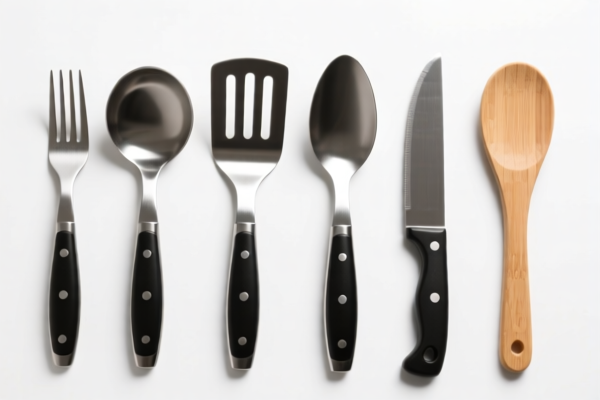
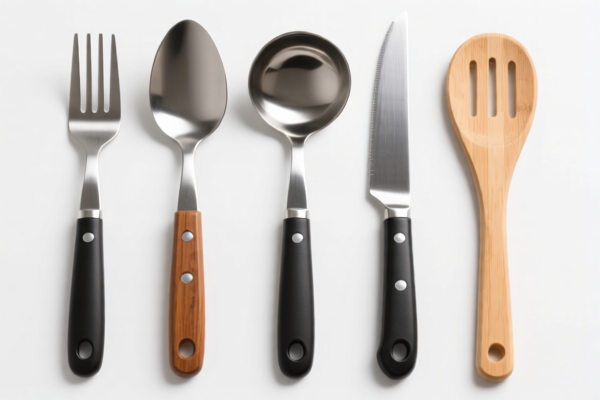
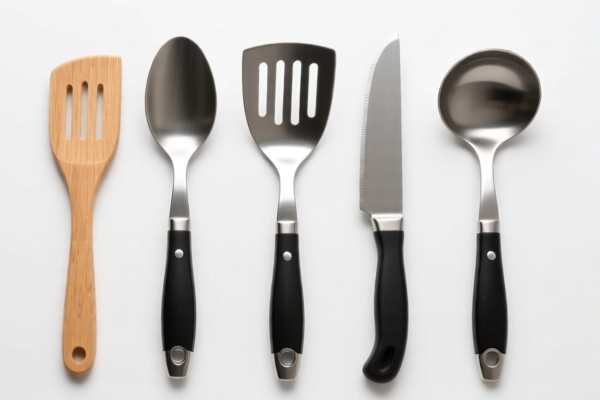
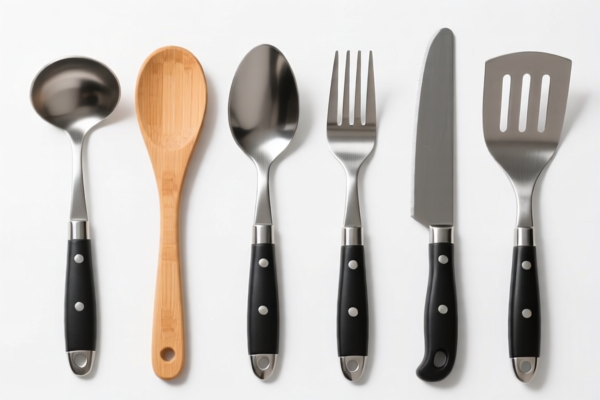
AI Analysis
🍴 Kitchen Utensils (Wooden & Metal)
🌐 HS Code Reference & Customs Clearance Guide | 2026 Latest Tariff Analysis | Professional Level Clearance Strategy
📌 I. Product Definition & Classification: Do You Really Understand "Kitchen Utensils"?
Kitchen utensils are essential tools in domestic and commercial food preparation. In international trade, they are primarily divided based on material (Wood/Bamboo vs. Metal) and specific form (General vs. Specific Cutlery).
Wooden Kitchen Utensils: Spatulas, spoons, cutting boards, salad servers. These fall under Chapter 44 (Wood and Articles of Wood).
Metal Kitchen Utensils: Spoons, forks, knives (excluding those of precious metal). These fall under Chapter 82 (Tools, Implements, Spoons and Forks of Base Metal).
⚠️ Key Distinction Point:
- If made of wood/bamboo → Generally classified under HS 4419 (Table/Kitchen woodware) or HS 4421 (Other wood articles).
- If made of base metal (stainless steel, etc.) → Generally classified under HS 8215 (Spoons, forks, ladles, skimmers, cake-knives, etc.).
📦 II. HS Code Classification Details (2026 Latest Tariff Authority Comparison)
| HS Code | Product Description | Application Scenario | Total Tax Rate* | Tax Detail Breakdown |
|---|---|---|---|---|
4419.90.91.00 |
Wooden Kitchen Utensils Material and use fully comply with classification requirements. |
General wooden kitchen tools (e.g., wooden spoons, spatulas) not specifically listed elsewhere. | 20.7% | Base: 3.2% Additional: 7.5% Section 301 (122): 10% |
4419.90.11.00 |
Wooden Kitchen Utensils Conforms to the category of wooden tableware and kitchenware. |
Standard wooden tableware and kitchen tools. | 15.3% | Base: 5.3% Additional: 0.0% Section 301 (122): 10% |
4421.91.60.00 |
Small Wooden Kitchen Utensils Conforms to bamboo/wood products and small utensils category. |
Small wooden items (e.g., skewers, small stirrers) classified as other wood articles. | 22.6% | Base: 5.1% Additional: 7.5% Section 301 (122): 10% |
4421.99.60.00 |
Other Small Wooden Kitchen Items Conforms to inferred category of wood articles and similar small items. |
Miscellaneous small wooden kitchen accessories not covered by 4419. | 15.1% | Base: 5.1% Additional: 0.0% Section 301 (122): 10% |
8215.99.24.00 |
Kitchen Utensils (Metal) Potentially includes forks and other cutlery; use aligns with cutlery category. |
Metal cutlery (spoons, forks, knives) made of base metal. | 0.3¢/ea + 22.0% (Ad Valorem + Specific) |
Base: 0.3¢/ea + 4.5% Additional: 7.5% Section 301 (122): 10% |
Note: Tax rates reflect import duties into the United States for products originating from China*, including Section 301 tariffs.
🔍 Important Reminder:
- Wooden vs. Metal: Misclassification between Chapter 44 (Wood) and Chapter 82 (Metal) is a common error. Wood utensils cannot be classified under 8215. - Section 301 Impact: Almost all kitchen utensils from China are subject to additional tariffs (10% for most, plus others). Always check the "Additional Tax" component. - Specific Duty: HS 8215.99.24.00 has a specific duty (0.3¢ per piece) plus an ad valorem rate. This means small, high-volume items may face a different calculation base.
💰 III. 2026 Latest Tariff Rate Details (Including Additional Taxes, Policy Add-ons)
✅ Applicable Country: United States (US)
✅ Origin: China (CN)
✅ Effective Date: Current Section 301 Tariffs Apply
🎯 1. 4419.90.91.00 & 4421.91.60.00 – Wooden Utensils (Higher Additional Tax)
| Item | Content |
|---|---|
| Base Rate | 3.2% – 5.1% (ad valorem) |
| Additional Tax (Section 301 / Trade War) | +7.5% |
| Section 301 (List 4 / 122) | +10% |
| Total Effective Rate | 20.7% – 22.6% |
| Tax Calculation | CIF Value × Total Rate + Specific Duties (if any) |
| De Minimis Exemption | ❌ No (Section 301 tariffs generally apply to all shipments, regardless of value, though enforcement varies for very low-value packages, but legally it applies) |
📌 Explanation:
- The 7.5% additional tax is part of the Section 301 "List 4" or related tariffs for wood products. - The 10% is the standard Section 301 tariff for many Chinese goods. - Total Burden: Over 20% of the CIF value is lost to duties for these HS codes.
🎯 2. 4419.90.11.00 & 4421.99.60.00 – Wooden Utensils (Lower Additional Tax)
| Item | Content |
|---|---|
| Base Rate | 5.1% – 5.3% (ad valorem) |
| Additional Tax | 0.0% |
| Section 301 (List 4 / 122) | +10% |
| Total Effective Rate | 15.1% – 15.3% |
| Tax Calculation | CIF Value × Total Rate |
| De Minimis Exemption | ❌ No |
📌 Note:
- These codes benefit from 0% Additional Tax, making them ~5-7% cheaper to import than the 7.5% additional tax codes. - Crucial: You must ensure your product description matches the "summary" in the data to qualify for these lower rates. Misclassification to4419.90.91could cost you an extra 5.4%.
🎯 3. 8215.99.24.00 – Metal Kitchen Utensils (Specific + Ad Valorem)
| Item | Content |
|---|---|
| Base Rate | 0.3¢ per piece + 4.5% (ad valorem) |
| Additional Tax | +7.5% |
| Section 301 (List 4 / 122) | +10% |
| Total Effective Rate | 0.3¢/ea + 22.0% (4.5% + 7.5% + 10%) |
| Tax Calculation | (Quantity × $0.003) + (CIF Value × 22%) |
| De Minimis Exemption | ❌ No |
📌 Warning:
- The 0.3¢ per piece specific duty can be significant for low-value items (e.g., cheap plastic-handled metal forks).
- The 22% ad valorem total is the highest among these options.
- Example: For $100 worth of metal forks (100 pieces):
- Specific Duty: 100 × $0.003 = $0.30
- Ad Valorem: $100 × 22% = $22.00
- Total Tax: $22.30 (22.3% effective rate)
🛠️ IV. Customs Clearance Practical Advice (Practical Pitfall Avoidance Guide)
✅ 1. Preparation Checklist (None Can Be Omitted)
| Document | Required | Description |
|---|---|---|
| ✅ Product Specification Sheet | ✔️ | Material (Wood Type: Bamboo, Acacia, etc.), Dimensions, Weight. |
| ✅ Product Photos | ✔️ | Clear images of the utensil, handle, and any packaging labels. |
| ✅ Commercial Invoice | ✔️ | Must specify "Kitchen Utensils" and Material (e.g., "Wooden Spoons, 100% Acacia"). |
| ✅ Packing List | ✔️ | Quantity per box, total pieces (critical for HS 8215 specific duty). |
| ✅ Origin Certificate | ✔️ | Proof of origin from China (if claiming benefits elsewhere, though here we are incurring penalties). |
| ✅ Material Declaration | ✔️ | Explicitly state if treated, lacquered, or natural wood. |
✅ 2. Declaration Tips (Key Mantras)
🔥 “Material First, Use Second, Code Right, Taxes Down!”
| Scenario | Correct Declaration | Wrong Practice | Consequence |
|---|---|---|---|
| Wooden Spoon | 4419.90.11.00 (if fits) |
4419.90.91.00 |
Pay 20.7% instead of 15.3% → Extra 5.4% cost! |
| Metal Fork | 8215.99.24.00 |
4419.90.91.00 (Wood) |
Misclassification → Delay, Fine, or Rejection. |
| Bamboo Utensil | 4421.91.60.00 |
4419.90.91.00 |
Tax varies (22.6% vs 20.7%). Check specific HS list. |
| Plastic Handle + Metal Head | 8215.99.24.00 |
4419.90.91.00 |
Major Error → Base metal parts determine classification. |
✅ 3. Special Circumstances Handling
| Situation | Handling Advice |
|---|---|
| Mixed Materials | If a utensil has both wood and metal parts (e.g., wooden handle, metal blade), it is generally classified under Chapter 82 (Metal) if the metal component gives it its essential character. |
| Gift Sets | Declared as a "Set" under the component that gives the set its essential character (usually the more expensive or primary item). |
| OEM Custom Products | Provide design drawings to prove specific use. Avoid generic terms like "Tool." Use "Kitchen Utensil." |
| Low-Value Packages (De Minimis) | While Section 301 tariffs theoretically apply, enforcement on <$800 shipments may vary. However, do not rely on this for large shipments. Legal risk remains. |
🌍 V. Global Main Market Clearance Comparison (2026 Latest)
| Country/Region | Recommended HS Code | Tariff Rate (China Origin) | Certification Required | Notes |
|---|---|---|---|---|
| 🇺🇸 USA | 4419.90.11.00 / 8215.99.24.00 |
15.3% – 22.6% | FDA (Food Contact) | High Section 301 tariffs apply. |
| 🇨🇳 China | 4419.90.11.00 / 8215.99.24.00 |
5% – 8% | None | Lowest duty, but import/export balance matters. |
| 🇪🇺 EU | 4419.90 / 8215.99 |
0% – 6% | LFGB (Germany) / EU 10/2011 | No Section 301 tariffs. Lower base rates. |
| 🇬🇧 UK | 4419.90 / 8215.99 |
0% – 6% | UKCA / Food Standards | Post-Brexit rules similar to EU. |
| 🇦🇺 Australia | 4419.90 / 8215.99 |
0% – 5% | ACCC | Low tariffs, strong food safety checks. |
📌 Conclusion:
- The US market is the most expensive for kitchen utensils from China due to Section 301 tariffs.
- EU and UK offer significantly lower duty burdens (0-6%) but have stricter Food Contact Material (FCM) regulations (e.g., migration limits for wood finishes).
- Consider diversifying sourcing to Southeast Asia (Vietnam, Thailand) to avoid US Section 301 tariffs, as these countries often have lower or zero tariffs for similar goods.
📌 VI. Common Errors & Pitfall Guide (Blood & Tears Lessons)
❌ Error 1: Classifying Metal Utensils under Wooden HS Codes (4419)
👉 Consequence: Customs Seizure. Metal and wood are in different chapters. Misdeclaration leads to fines and delays.
❌ Error 2: Ignoring the Specific Duty in 8215.99.24.00
👉 Consequence: Underpayment. If you import 10,000 metal forks, the 0.3¢/ea adds up to $30 just in specific duties, which is easy to miss if only calculating ad valorem.
❌ Error 3: Using Generic Names like "Cooking Tool"
👉 Consequence: Customs Query. Customs may detain the shipment for clarification. Use specific terms: "Wooden Salad Servers," "Stainless Steel Spoons."
❌ Error 4: Failing to Declare Section 301 Applicability
👉 Consequence: Back Taxes + Penalties. If you claim exemption erroneously, you will owe the additional 10-17.5% later, plus interest.
✅ Correct Practice:
“Wooden Spoons, 100% Acacia, Unfinished, for Kitchen Use, Model A, FDA Compliant”
“Stainless Steel Table Spoons, Base Metal, with Plastic Handle, Model B”
🎯 VII. Conclusion: Professional Declaration, Save Time, Reduce Costs!
🎯 Remember the Mantra:
🔹 "Wood vs. Metal is the First Step; Section 301 is the Biggest Cost."
🔹 "Check the 0.3¢ Specific Duty for Metal; Don't Let Penny Dimes Drain Your Pocket."
🔹 "Use4419.90.11if Possible to Save 5.4% on Wood."
📌 Pro Tip:
If your kitchen utensils are originally from Vietnam, Mexico, or Thailand, you may qualify for Section 301 Exemptions or lower MFN tariffs.
Recommendation: Apply for an Advance Ruling from US Customs (CBP) for high-volume shipments to ensure HS Code accuracy and avoid surprise bills.
📣 Immediate Action:
📞 Contact a Professional Customs Broker + Provide Product Samples + Request HS Code Advance Ruling
🚀 Let your kitchen utensils Clear Customs Smoothly, Export Efficiently, and Boost Profits!
✨ Professional Clearance Starts with Accurate Classification!
💼 Every Penny of Your Cost Deserves Precise Calculation!
Customer Reviews
About HS Code Classification
The Harmonized System (HS) is an internationally standardized nomenclature developed by the World Customs Organization (WCO) to classify traded products. Over 200 countries use the HS system as the basis for customs tariffs, trade statistics, and import/export regulations.
Each HS code follows a hierarchical structure:
- Chapter (2 digits) — Broad category of goods (e.g., Chapter 84: Machinery and Mechanical Appliances)
- Heading (4 digits) — More specific grouping within the chapter
- Subheading (6 digits) — Internationally standardized breakdown, used by all WCO member countries
- National subdivisions (8-10 digits) — Country-specific extensions for further classification, such as US HTSUS 10-digit codes
Correct HS code classification is essential for smooth customs clearance, accurate duty payment, and compliance with trade regulations. Misclassification can lead to customs delays, overpayment of duties, or penalties.
When importing from CN to US, the applicable tariff rates may include:
- Most-Favored-Nation (MFN) rate — The standard duty rate applied to WTO members
- General rate — Applied to countries without trade agreements
- Trade remedy duties — Additional tariffs such as Section 301 (anti-dumping), Section 232 (national security), or countervailing duties
The information provided on this page is for reference purposes only. For official classification, please consult with your local customs authority or a licensed customs broker.