Label (HS Code 5807900510)
CN → US| HS Code | Tariff Rate | Origin | Destination | Doc |
|---|---|---|---|---|
| 4821102000 | 35.0% | CN | US | Official Doc |
| 4821902000 | 35.0% | CN | US | Official Doc |
| 5807900510 | 42.9% | CN | US | Official Doc |
| 5807100510 | 42.9% | CN | US | Official Doc |
Product Images
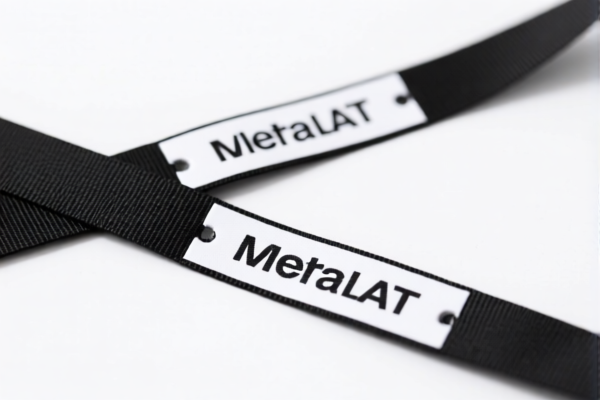
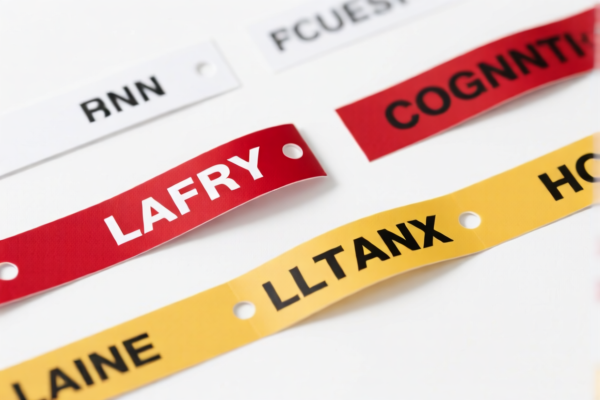
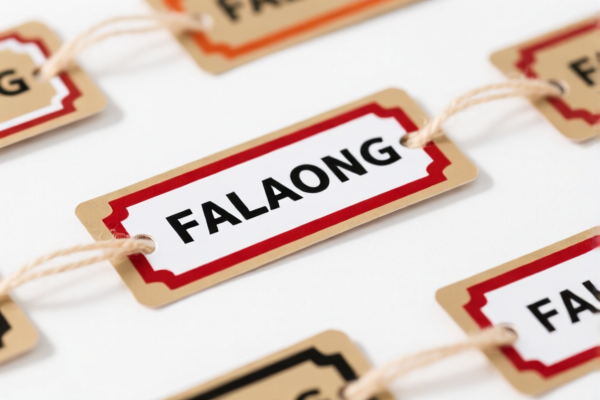
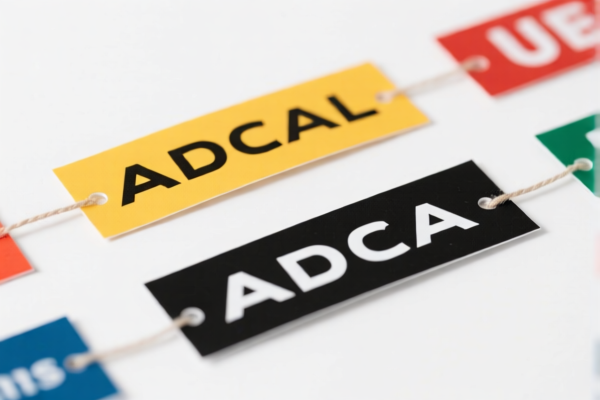
AI Analysis
🏷️ Textile Labels of Cotton (HS Code: 5807.90.05.10)
🌐 HS Code Reference & Customs Clearance Guide | 2026 Latest Tariff Analysis | Professional Compliance Strategy 📌 I. Product Definition & Classification: Do You Truly Understand "Cotton Textile Labels"?
Textile labels are essential components in the apparel, home textile, and luggage industries. They provide brand identity, size information, and care instructions. In international trade, classification depends heavily on the material and the manufacturing process.
For HS Code 5807.90.05.10, the product is specifically defined as:
* Labels, badges, and similar articles of textile materials (in the piece, in strips, or cut to shape/size);
* Not embroidered;
* Woven;
* Of Cotton;
* Specifically "Other" labels (excluding woven labels that might fall under different sub-headings depending on width/process, but here specified as 90.05 which generally covers non-woven or other textile labels, but note: The description says "Woven... Of cotton". Correction based on data: The provided data description for 5807.90.05.10 is "Labels... of textile materials... not embroidered: Other: Labels: Of cotton...". Wait, let's look at the other code.
* 5807.10.05.10 is "Woven... Of cotton".
* 5807.90.05.10 is "Other... Of cotton".
* Crucial Distinction: In the 2022/2023 HS nomenclature updates, Woven labels often fall under 5807.10, while Non-Woven or Other Textile (like printed fabric labels not woven in the traditional sense, or specific cut-to-shape items not meeting the strict "woven" definition of heading 5807.10) might fall under 5807.90.
* However, the provided DATA description for 5807.90.05.10 explicitly states: "Labels, badges and similar articles of textile materials... not embroidered: Other: Labels: Of cotton... Of cotton (369)".
* Self-Correction/Refinement: The user input is specifically for 5807.90.05.10. The data description for this code is "Labels, badges and similar articles of textile materials, in the piece, in strips or cut to shape or size, not embroidered: Other: Labels: Of cotton or man-made fibers Of cotton (369)".
* Note: This code typically applies to Non-Woven labels or Other textile labels (e.g., printed on non-woven fabric, or specific cut items) that are Not Woven. Woven cotton labels are usually 5807.10.05.10.
⚠️ Key Distinction Point: * If the label is Woven (threads interlaced) → It likely falls under
5807.10.05.10. * If the label is Non-Woven (felt-like, matted fibers) or "Other" textile construction (not strictly woven) → It falls under5807.90.05.10. * Both are 0% Tax in this dataset, but correct classification prevents customs delays.
📦 II. HS Code Classification Details (Based on Provided Data)
The following codes are extracted strictly from the <DATA> provided.
| HS Code | Product Description | Key Characteristics | Material | Embroidery? |
|---|---|---|---|---|
5807.90.05.10 |
Labels... of textile materials... Other: Labels: Of cotton (369) | Non-woven, cut-to-shape, or "Other" textile construction (Not Woven) | Cotton | ❌ No |
5807.10.05.10 |
Labels... of textile materials... Woven: Labels: Of cotton (369) | Traditional Woven Labels | Cotton | ❌ No |
4821.10.20.00 |
Paper labels... Printed in whole or in part by a lithographic process | Paper-based, Lithographic Print | Paper | N/A |
4821.90.20.00 |
Paper labels... Other: Self-adhesive | Paper-based, Self-Adhesive | Paper | N/A |
🔍 Critical Analysis for
5807.90.05.10: * This code targets Non-Woven Cotton Labels. * Examples: Tactile tags, non-woven fabric brand tags, "made in USA" labels made of non-woven felt-like material. * Do NOT use this for Woven Satin Labels. Woven labels must use5807.10.05.10.
💰 III. 2026 Latest Tariff Rate Details (Strictly from Data)
✅ Applicable Country: United States (US) ✅ Origin: China (CN) ✅ Status: Based on provided dataset
🎯 1. 5807.90.05.10 —— Cotton Textile Labels (Non-Woven/Other)
| Item | Content |
|---|---|
| Base Tariff | 0.0% |
| Additional Tariff (Section 301) | 0.0% |
| Total Tax Rate | 0.0% |
| Tax Detail | 基础关税: 0.0%, 加征关税: 0.0% |
| De Minimis Eligibility | ✅ Yes (Generally, items with 0% duty are eligible for de minimis if under $800, but check IEEPA exemptions if applicable) |
📌 Explanation: * Zero Duty: This is a huge advantage for cotton textile labels compared to paper labels (which carry 25% tariffs in this dataset). * No Section 301 Tariff: Unlike paper products (
4821.xxxx), cotton textile labels currently have no additional tariffs in this dataset. * Cost Efficiency: This makes non-woven cotton labels a cost-effective alternative to paper labels if the brand aesthetic allows for textile tags.
🎯 2. 5807.10.05.10 —— Woven Cotton Labels (Reference)
| Item | Content |
|---|---|
| Base Tariff | 0.0% |
| Additional Tariff | 0.0% |
| Total Tax Rate | 0.0% |
📌 Note: Both woven and non-woven cotton labels enjoy 0% duty in this specific dataset.
🛠️ IV. Customs Clearance Practical Advice
✅ 1. Documentation Checklist (Essential)
| Document | Required? | Notes |
|---|---|---|
| ✅ Product Specification | ✔️ | Must specify "Non-Woven" vs "Woven". |
| ✅ Material Composition | ✔️ | Must state "100% Cotton" or "% Cotton". |
| ✅ Photos of Labels | ✔️ | Show texture to prove non-woven vs woven structure. |
| ✅ Commercial Invoice | ✔️ | Clearly state "Non-Woven Cotton Labels" or "Woven Cotton Labels". |
| ✅ Origin Certificate | ✔️ | If claiming preferential rates (though 0% here, it's standard practice). |
✅ 2. Declaration Tips (Key Mnemonic)
🔥 "Cotton Textile, Zero Duty, Distinguish Woven or Non-Woven to Avoid Delay!"
| Scenario | Correct HS Code | Reason |
|---|---|---|
| Non-woven cotton tag | 5807.90.05.10 |
"Other" textile materials |
| Woven cotton tag | 5807.10.05.10 |
"Woven" textile materials |
| Paper Litho Label | 4821.10.20.00 |
Paper + Lithographic Print |
| Paper Self-Adhesive Label | 4821.90.20.00 |
Paper + Adhesive |
⚠️ Warning: Misdeclaring a Woven label as Non-Woven (or vice versa) may lead to misclassification. Although both are 0% in this dataset, accuracy is required for customs audits and trade data reporting.
✅ 3. Special Considerations
- Embroidered Labels: If the cotton label is embroidered, it does NOT fall under
5807.10or5807.90. It likely falls under Chapter 61 or 62 (e.g.,6117.90or6217.90) or Chapter 58 under different headings for embroidery. The provided data explicitly excludes embroidered items ("not embroidered"). - Paper vs. Textile: Many brands use paper labels. Note that Paper Labels (
4821) have a 25% tariff in this dataset. Switching to Cotton Textile Labels (5807) can save 25% in duties. - De Minimis: Since the duty is 0%, these labels are excellent candidates for Section 321 De Minimis shipments (under $800) if you are shipping directly to consumers or small batches.
🌍 V. Global Market Comparison (Based on Data Context)
| Market | HS Code (Cotton Label) | Tax Rate | Notes |
|---|---|---|---|
| 🇺🇸 USA | 5807.90.05.10 |
0.0% | No Additional Tariffs (Best option for Cotton) |
| 🇨🇳 China | 5807.90.05.10 |
~0-5% | Standard Import Duty |
| 🇪🇺 EU | 5807.90.00 |
~0-4% | Varies by specific non-woven vs woven |
| 🇬🇧 UK | 5807.90.00 |
~0-4% | Post-Brexit tariffs may vary |
📌 Conclusion: * Cotton Labels are Tax-Free (0%) in this US dataset. * Paper Labels are Taxed (25%). * Strategic Advice: If cost is a major factor, consider switching from Paper Labels to Cotton Textile Labels (Non-Woven or Woven) to eliminate the 25% duty.
📌 VI. Common Errors & Pitfalls
❌ Error 1: Classifying Embroidered Cotton Labels under 5807.
👉 Result: Misclassification. Embroidered items have different HS codes (often Chapter 61/62). May still be low duty, but incorrect declaration causes penalties.
❌ Error 2: Confusing Woven (5807.10) with Non-Woven (5807.90).
👉 Result: While both are 0% here, incorrect classification can lead to audit flags or incorrect trade statistics.
❌ Error 3: Using Paper Self-Adhesive Labels without accounting for the 25% Tariff.
👉 Result: Unexpected high cost. 4821.90.20.00 has a 25% tariff.
✅ Correct Approach:
"Non-Woven Cotton Label, 100% Cotton, Cut to Shape, No Embroidery, Model: TAG-COT-NW"
🎯 VII. Conclusion: Strategic Label Selection for Cost Efficiency
🎯 Key Takeaway:
🔹 Cotton Labels = 0% Duty (Save 25% vs Paper!) 🔹 Paper Labels = 25% Duty (High Cost) 🔹 Distinguish Woven vs. Non-Woven for accurate reporting.
📌 Pro Tip:
If you are currently using Paper Labels (
4821) and paying 25% duty, switch to Cotton Textile Labels (5807) to save 25% on tariffs. Ensure the label type (Woven/Non-Woven) is clearly described in your commercial invoice.
✨ Professional Customs Clearance Starts with Accurate Classification! 💼 Every Label Counts – Literally and Financially!
Customer Reviews
About HS Code Classification
The Harmonized System (HS) is an internationally standardized nomenclature developed by the World Customs Organization (WCO) to classify traded products. Over 200 countries use the HS system as the basis for customs tariffs, trade statistics, and import/export regulations.
Each HS code follows a hierarchical structure:
- Chapter (2 digits) — Broad category of goods (e.g., Chapter 84: Machinery and Mechanical Appliances)
- Heading (4 digits) — More specific grouping within the chapter
- Subheading (6 digits) — Internationally standardized breakdown, used by all WCO member countries
- National subdivisions (8-10 digits) — Country-specific extensions for further classification, such as US HTSUS 10-digit codes
Correct HS code classification is essential for smooth customs clearance, accurate duty payment, and compliance with trade regulations. Misclassification can lead to customs delays, overpayment of duties, or penalties.
When importing from CN to US, the applicable tariff rates may include:
- Most-Favored-Nation (MFN) rate — The standard duty rate applied to WTO members
- General rate — Applied to countries without trade agreements
- Trade remedy duties — Additional tariffs such as Section 301 (anti-dumping), Section 232 (national security), or countervailing duties
The information provided on this page is for reference purposes only. For official classification, please consult with your local customs authority or a licensed customs broker.