Laundry Basin
CN → US| HS Code | Tariff Rate | Origin | Destination | Doc |
|---|---|---|---|---|
| 4602110900 | 45.0% | CN | US | Official Doc |
| 3926909989 | 22.8% | CN | US | Official Doc |
| 7326908688 | 87.9% | CN | US | Official Doc |
| 4602191800 | 39.5% | CN | US | Official Doc |
| 3926901000 | 20.9% | CN | US | Official Doc |
Product Images
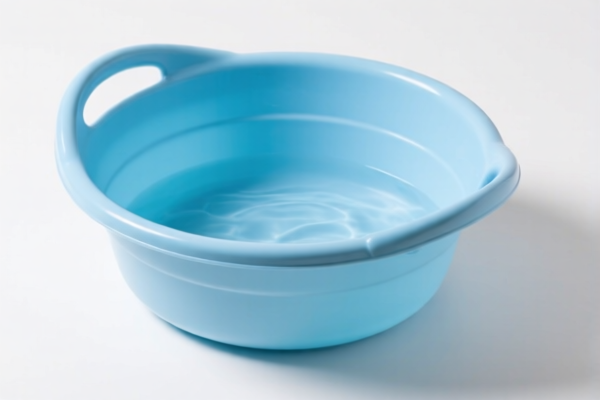
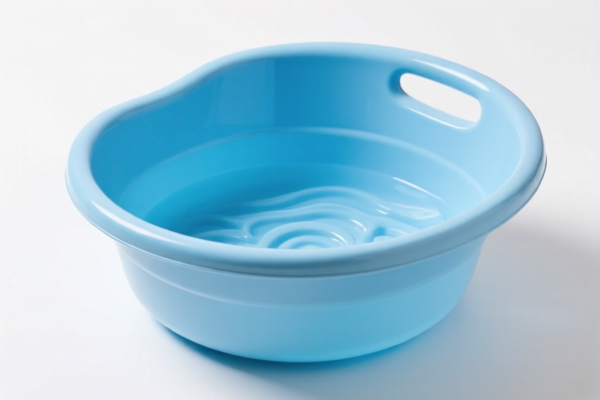
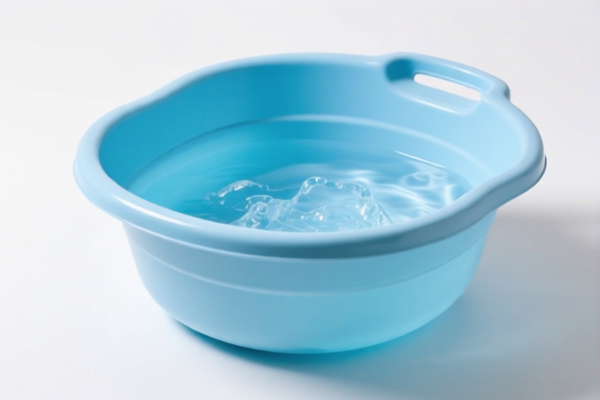
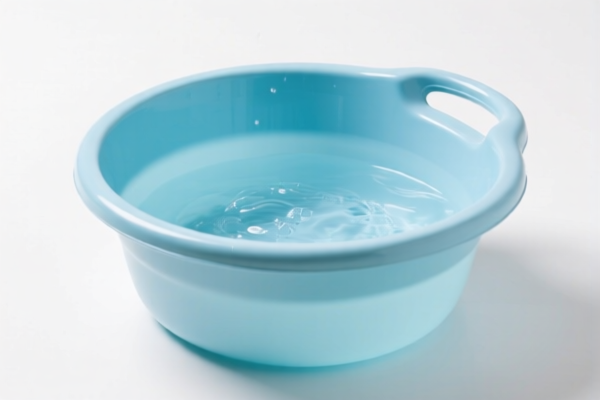
AI Analysis
🧺 Laundry Baskets & Containers: The Ultimate HS Code & Tax Guide | 2026 Customs Clearance Strategy
🌐 HS Code Reference & Clearance Guide | Latest 2026 Tariff Analysis | Professional Compliance Strategy
📌 Part 1: Product Definition & Classification – Do You Really Understand "Laundry Basins"?
In the context of international trade and customs declarations, "Laundry Basin" (often referred to as Laundry Basket or Laundry Hamper) generally refers to a container used for holding dirty or clean laundry. It is not a fixed sanitary fixture like a bathroom sink (which would be HS Code 7324 or 6910).
International trade classifies these items based on their material composition: 1. Bamboo/Rattan/Wicker: Natural plant materials woven into baskets. 2. Plastic: Moulded or formed plastic containers. 3. Metal (Iron/Steel): Wire or solid metal frames/containers. 4. Other Plant Materials: Woven items not specifically bamboo or rattan.
⚠️ Critical Distinction:
- If the item is a fixed sink/basin attached to plumbing → It is HS 7324 (Sanitary ware) or HS 6910 (Ceramic sanitary ware).
- If the item is a portable basket/hamper for laundry → It falls under Chapter 46 (Vegetable Plaiting Materials), Chapter 39 (Plastics), or Chapter 73 (Iron/Steel articles).
- This guide focuses on PORTABLE Laundry Baskets/Hampers based on the provided data.
📦 Part 2: HS Code Classification Details (2026 Latest Tariff Authority)
| HS Code | Product Description | Material/Type | Key Characteristics |
|---|---|---|---|
4602.11.09.00 |
Bamboo or Rattan Laundry Basket | Bamboo/Rattan | Specifically made of bamboo or rattan strips, woven into basket form. |
4602.19.18.00 |
Other Plant Material Basket | Other Vegetables | Made from other plant materials (e.g., straw, seagrass, reed) woven into baskets/bags. |
3926.90.99.89 |
Other Plastic Articles | Plastic | Plastic laundry baskets that do not fit specific plastic article subheadings; general "other" plastics. |
3926.90.10.00 |
Plastic Bottles/Baskets | Plastic | Plastic containers, bottles, or baskets specifically classified under this subheading for plastic vessels. |
7326.90.86.88 |
Other Articles of Iron/Steel | Metal (Iron/Steel) | Wire-frame or solid iron/steel laundry baskets; excludes standard household kitchenware. |
🔍 Key Reminder:
- Bamboo/Rattan has its own specific chapter (Ch. 46). Do not classify bamboo baskets as "Wicker" under furniture (Ch. 94) unless they are upholstered/seated.
- Plastic baskets are split between3926.90.10(specific plastic containers) and3926.90.99(other plastic articles).
- Metal baskets are classified under general iron/steel articles (Ch. 73), NOT as parts of household goods (Ch. 94) if they are standalone baskets.
💰 Part 3: 2026 Latest Tariff Rate Breakdown (Including Surcharges)
✅ Applicable Country: United States (US)
✅ Origin: China (CN)
✅ Effective Date: Current tariffs as per provided data (reflects 301 Section and IEEPA surcharges)
🎯 1. 4602.11.09.00 – Bamboo or Rattan Laundry Basket
| Item | Detail |
|---|---|
| Basic Tariff | 10.0% |
| Additional Tariff (Section 301) | 25.0% |
| 122 Clause Tariff | 10.0% |
| Total Tax Rate | 45.0% |
| Calculation | CIF Value × 45.0% |
| Legal Basis Path | Basic Tariff → Section 301 Footnote → 122 Clause (Specific Trade Remedy) |
📌 Explanation:
- Bamboo/Rattan items from China face a high total tax burden of 45%.
- The "122 Clause" refers to specific US trade remedy provisions often applied to certain Chinese manufacturing inputs or finished goods depending on the year's trade policy updates.
- Action: High cost implication. Consider sourcing from non-China origins (e.g., Vietnam) if possible, or price accordingly.
🎯 2. 3926.90.99.89 – Other Plastic Laundry Baskets (General)
| Item | Detail |
|---|---|
| Basic Tariff | 5.3% |
| Additional Tariff (Section 301) | 7.5% |
| 122 Clause Tariff | 10.0% |
| Total Tax Rate | 22.8% |
| Calculation | CIF Value × 22.8% |
| Legal Basis Path | Basic Tariff → Section 301 List 4B → 122 Clause |
📌 Explanation:
- Plastic baskets in the "other" category have a moderate total tax of 22.8%.
- The Section 301 rate for many plastic goods was lowered from 25% to 7.5% in later lists, which is why this is significantly cheaper than metal baskets.
- Action: Competitive tariff level. Ensure the plastic type (e.g., PE, PP) is correctly declared to avoid misclassification into higher-tariff "other plastics."
🎯 3. 7326.90.86.88 – Iron or Steel Laundry Baskets
| Item | Detail |
|---|---|
| Basic Tariff | 2.9% |
| Additional Tariff (Section 301) | 25.0% |
| 122 Clause Tariff | 10.0% |
| Steel/Aluminum/Copper Surcharge | +50.0% |
| Total Tax Rate | 87.9% |
| Calculation | CIF Value × 87.9% |
| Legal Basis Path | Basic Tariff → Section 301 List 3 → 122 Clause → Special Steel/Aluminum/Copper Tariff (Section 232/Other) |
📌 CRITICAL WARNING:
- 87.9% is an EXTREMELY HIGH TAX RATE.
- This includes the 50% surcharge for Steel/Aluminum/Copper products (likely linked to Section 232 or specific steel tariffs) ON TOP of the 301 tariffs and 122 clause.
- Impact: Metal laundry baskets from China are prohibitively expensive for the US market due to these compounded taxes.
- Action: Strongly reconsider importing steel baskets from China. Explore alternatives or verify if the specific steel type qualifies for any exemptions (rare for consumer goods).
🎯 4. 4602.19.18.00 – Other Plant Material Baskets
| Item | Detail |
|---|---|
| Basic Tariff | 4.5% |
| Additional Tariff (Section 301) | 25.0% |
| 122 Clause Tariff | 10.0% |
| Total Tax Rate | 39.5% |
| Calculation | CIF Value × 39.5% |
| Legal Basis Path | Basic Tariff → Section 301 List 4A/4B → 122 Clause |
📌 Explanation:
- Baskets made from other plant materials (not bamboo/rattan) face a 39.5% total tax.
- The basic tariff is lower than bamboo/rattan, but the 25% Section 301 surcharge remains high for woven goods.
- Action: Compare with bamboo baskets. If the "other plant material" is cheaper to source, the tax difference (39.5% vs 45%) might justify it, but both are high.
🎯 5. 3926.90.10.00 – Plastic Bottles/Baskets (Specific Plastic Vessels)
| Item | Detail |
|---|---|
| Basic Tariff | 3.4% |
| Additional Tariff (Section 301) | 7.5% |
| 122 Clause Tariff | 10.0% |
| Total Tax Rate | 20.9% |
| Calculation | CIF Value × 20.9% |
| Legal Basis Path | Basic Tariff → Section 301 List 4B → 122 Clause |
📌 Explanation:
- This is the lowest tax rate among all plastic baskets at 20.9%.
- Classification as "Plastic Bottles/Baskets" (3926.90.10) instead of "Other Plastic Articles" (3926.90.99) yields a savings of 1.9% (20.9% vs 22.8%).
- Action: Ensure the product description and physical characteristics (e.g., shape, closure) support classification under3926.90.10if possible, to minimize tax.
🛠️ Part 4: Customs Clearance Practical Advice (Avoiding Pitfalls)
✅ 1. Documentation Checklist (Mandatory)
| Document | Required? | Description |
|---|---|---|
| ✅ Commercial Invoice | ✔️ | Must clearly state "Laundry Basket/Hamper" and Material (e.g., "Bamboo," "PP Plastic"). |
| ✅ Packing List | ✔️ | Detail net/gross weight and number of pieces. |
| ✅ Product Photos | ✔️ | Clear images showing material texture (woven bamboo vs. molded plastic vs. wire metal). |
| ✅ Material Declaration | ✔️ | Explicitly state: "Made of 100% Bamboo" or "Made of Polypropylene (PP)." |
| ✅ Origin Certificate | ✔️ | Crucial for Tariff Calculation. Must prove origin is China (CN) to apply the correct high tariffs. If from Vietnam/Malaysia, different rates may apply. |
✅ 2. Classification Tips (Key Mnemonics)
🔥 "Material Defines Code, Metal Kills Profit!"
| Scenario | Correct HS Code | Tax Rate | Why? |
|---|---|---|---|
| Bamboo Woven | 4602.11.09.00 |
45.0% | Specific to Bamboo/Rattan in Ch. 46. |
| Plastic Moulded | 3926.90.10.00 |
20.9% | Best for plastics; specific subheading. |
| Other Plant Woven | 4602.19.18.00 |
39.5% | Non-bamboo plant materials. |
| Wire Metal Basket | 7326.90.86.88 |
87.9% | AVOID. Steel surcharge makes it uncompetitive. |
| Generic Plastic | 3926.90.99.89 |
22.8% | Default for plastics if not specific. |
📌 Note:
- Do NOT classify plastic baskets as "Household Articles" (Ch. 94) or "Furniture" (Ch. 94) unless they are part of a larger furniture set. Standalone baskets go to Ch. 39 or Ch. 46.
- Do NOT confuse "Laundry Basket" with "Laundry Sink." Sinks are Ch. 7324 (Metal) or Ch. 6910 (Ceramic).
✅ 3. Special Situations
| Situation | Recommendation |
|---|---|
| Mixed Materials | If a basket has a bamboo frame and plastic lining, classify based on essential character. Usually, the basket material (bamboo/plastic) dominates. |
| Origin Shift | If sourced from Vietnam, Indonesia, or Malaysia, Section 301 and IEEPA tariffs may not apply. Always verify country of origin to avoid 25-50% surcharges. |
| Steel Baskets | Strongly advise against importing steel laundry baskets from China due to the 87.9% effective tax rate. |
🌍 Part 5: Global Market Comparison (2026)
| Country/Region | Recommended HS Code | Est. Tariff (China Origin) | Notes |
|---|---|---|---|
| 🇺🇸 USA | 3926.90.10.00 |
20.9% | High surcharges for steel (87.9%) and bamboo (45%). |
| 🇨🇳 China | 3926.90.10.00 |
~5-10% | Lower import duties; no US surcharges. |
| 🇪🇺 EU | 4602.11.00.00 |
~5-12% | No Section 301 surcharges. VAT applies separately. |
| 🇬🇧 UK | 3926.90.00.00 |
~6.5% | Post-Brexit tariffs; no US-style surcharges. |
| 🇦🇺 Australia | 4602.11.00.00 |
~5% | Low basic tariffs; no additional trade war taxes. |
📌 Conclusion:
- USA is the most expensive market for Chinese-made laundry baskets due to Section 301, IEEPA, and 122 Clause surcharges.
- Plastic baskets (3926.90.10.00) are the most tax-efficient option (20.9%) compared to metal (87.9%) and bamboo (45%).
- Steel baskets are commercially unviable for the US market from China.
📌 Part 6: Common Errors & Pitfalls (Lessons Learned)
❌ Error 1: Classifying Steel Baskets as "Household Goods"
👉 Result: Misclassification penalty + Back taxes of ~60% (missing the steel surcharge).
❌ Error 2: Declaring "Plastic Basket" but importing Mixed Material
👉 Result: Customs may classify based on essential character, potentially leading to higher tax (e.g., if bamboo handle, may shift to Ch. 46).
❌ Error 3: Ignoring Country of Origin
👉 Result: If origin is China, but declared as Vietnam, customs will deny preferential treatment and levy full US surcharges (25-50%) + penalties.
❌ Error 4: Confusing Basket with Sink
👉 Result: Incorrect HS Code (Ch. 7324) may have different duties and certification requirements (e.g., plumbing codes).
✅ Correct Practice:
"Clear Material Declaration + Accurate HS Code + Verified Origin = Smooth Clearance."
🎯 Part 7: Final Recommendations
🎯 Remember:
🔹 Plastic is King:
3926.90.10.00offers the lowest tax (20.9%) for US imports.
🔹 Steel is Suicide: Avoid7326.90.86.88(87.9%) unless you have no other choice.
🔹 Bamboo is Expensive:4602.11.09.00(45%) is significant; ensure quality justifies cost.
📌 Action Plan:
1. Verify Material: Confirm if your product is Bamboo, Plastic, or Steel.
2. Check Origin: If non-China, recalculate taxes (surcharges may not apply).
3. Use Lowest Tax HS Code: For plastics, use 3926.90.10.00 if applicable.
4. Prepare Docs: Invoice must clearly state material and origin.
📣 Immediate Action:
📞 Consult a Customs Broker for pre-classification ruling if materials are mixed.
🚀 Optimize Supply Chain: Consider sourcing plastic baskets from low-tariff regions if US market is critical.
✨ Professional Clearance Starts with Accurate Classification!
💼 Every Percent of Tax Saved is Pure Profit!
Customer Reviews
About HS Code Classification
The Harmonized System (HS) is an internationally standardized nomenclature developed by the World Customs Organization (WCO) to classify traded products. Over 200 countries use the HS system as the basis for customs tariffs, trade statistics, and import/export regulations.
Each HS code follows a hierarchical structure:
- Chapter (2 digits) — Broad category of goods (e.g., Chapter 84: Machinery and Mechanical Appliances)
- Heading (4 digits) — More specific grouping within the chapter
- Subheading (6 digits) — Internationally standardized breakdown, used by all WCO member countries
- National subdivisions (8-10 digits) — Country-specific extensions for further classification, such as US HTSUS 10-digit codes
Correct HS code classification is essential for smooth customs clearance, accurate duty payment, and compliance with trade regulations. Misclassification can lead to customs delays, overpayment of duties, or penalties.
When importing from CN to US, the applicable tariff rates may include:
- Most-Favored-Nation (MFN) rate — The standard duty rate applied to WTO members
- General rate — Applied to countries without trade agreements
- Trade remedy duties — Additional tariffs such as Section 301 (anti-dumping), Section 232 (national security), or countervailing duties
The information provided on this page is for reference purposes only. For official classification, please consult with your local customs authority or a licensed customs broker.