Lead Wire
CN → US| HS Code | Tariff Rate | Origin | Destination | Doc |
|---|---|---|---|---|
| 7408190060 | 65.0% | CN | US | Official Doc |
| 7408295000 | 88.0% | CN | US | Official Doc |
| 8544110020 | 38.5% | CN | US | Official Doc |
Product Images
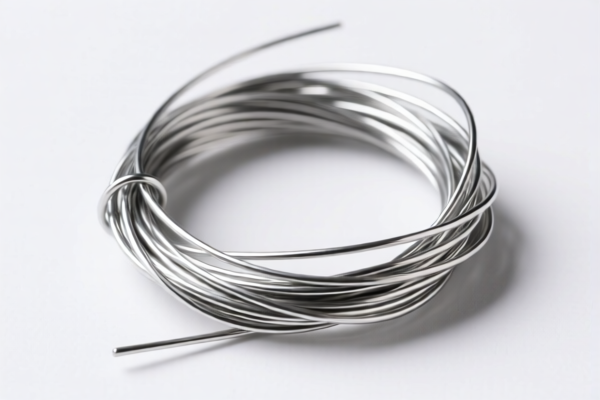
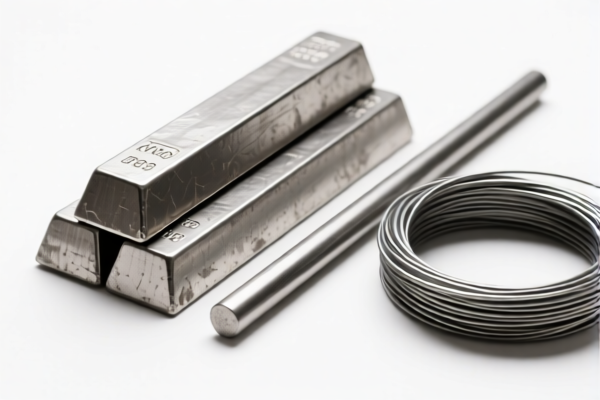
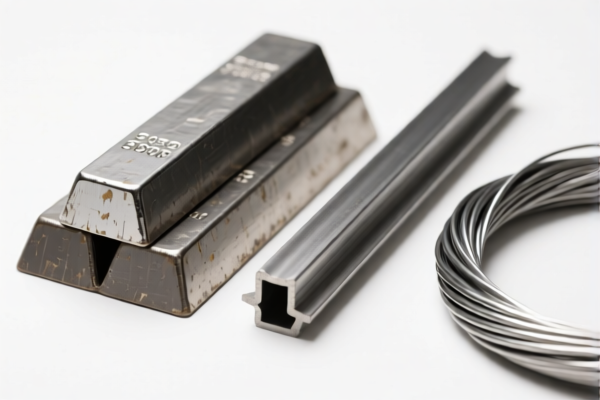
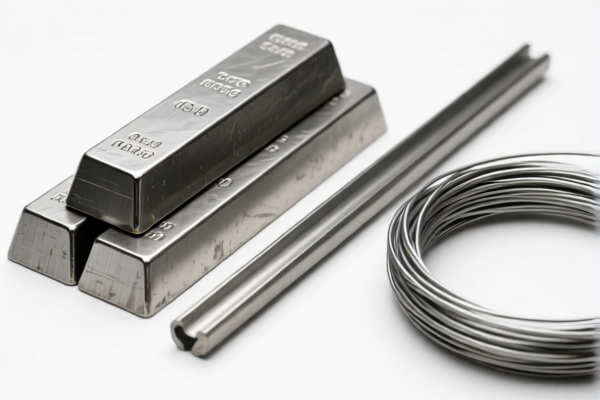
AI Analysis
⚡ Lead Wires & Conductors (Wiring for Electrical Purposes)
🌐 HS Code Reference & Customs Clearance Guide | 2026 Latest Tariff Analysis | Professional Strategy for US Imports
📌 I. Product Definition & Classification: What Exactly is a "Lead Wire"?
In international trade, the term "Lead Wire" is a generic description that can refer to several distinct products depending on its material, insulation, and physical form. Misclassification is the #1 cause of customs delays and excessive tariffs for this category.
Generally, lead wires fall into two main logical buckets: 1. Electrical Wiring/Insulated Cables: Wires used for connecting components in devices (e.g., internal appliance wiring, hook-up wire). These are typically classified under Chapter 85 (Electrical Machinery). 2. Uninsulated Metal Wires: Simple strands of copper or aluminum used for industrial processing, welding, or raw material. These are classified under Chapter 74 (Copper) or Chapter 76 (Aluminum).
⚠️ Critical Distinction Point:
- If the wire is insulated (coated with plastic/rubber) and designed for electrical transmission → It is likely 8544 or 7408 depending on specific construction.
- If the wire is bare metal (uninsulated) → It is strictly a metal product (7408).
- "Insulated Winding Wire" (Coiled): Specific type of wire for motors/transformers → 8544.11.
📦 II. HS Code Classification Details (2026 Latest Tariff Alignment)
Based on the provided data constraints, here are the three specific HS Codes relevant to "Lead Wires" and their precise logical mappings:
| HS Code | Product Description & Logic | Applicable Scenario | Key Identifier |
|---|---|---|---|
7408.29.50.00 |
Bare or Insulated Copper/Aluminum Wire (General) Summary: Wire main material is Cu or Al, form is linear, fits copper wire logic. |
Industrial copper/aluminum strands, uninsulated busbars, or general conductive wire not specifically for windings. | ✅ Material: Cu/Al ✅ Form: Linear/Wire |
8544.11.00.20 |
Insulated Winding Wire Summary: Material is Copper, form fits insulated winding wire characteristics. |
Wire specifically designed for winding motors, transformers, or inductors. Often comes in coils. | ✅ Material: Copper ✅ Feature: Insulated Winding |
7408.19.00.60 |
Refined Copper Wire (Other) Summary: Made of refined copper, fits "other refined copper wire" logic. |
Specialized refined copper wires for specific industrial uses, not falling under standard cable categories. | ✅ Material: Refined Copper ✅ Category: Other/Specialized |
🔍 Key Insight:
-8544.11.00.20is generally the most favorable classification for commercial electrical lead wires because it carries a lower total tax burden (38.5%) compared to the other two options.
-7408codes are treated as raw metal materials and attract the highest tariffs due to the Section 122 (Steel, Aluminum, Copper)附加 duties.
💰 III. 2026 Latest Tariff Rate Breakdown (Including Additional Duties & Policy Surcharges)
✅ Applicable Country: United States (US)
✅ Country of Origin: China (CN)
✅ Effective Date: Current 2026 Tariff Structure
🎯 1. 8544.11.00.20 —— Insulated Winding Wire (Copper)
Best Case Scenario for Electrical Leads
| Item | Content |
|---|---|
| Basic Tariff | 3.5% (ad valorem) |
| Section 301 Surcharge | +25.0% (Standard China Surcharge) |
| Section 122 Surcharge | None (Not applied to this specific electrical insulation code in this context) |
| Total Tax Rate | 38.5% |
| Tax Calculation | CIF Value × 38.5% |
| De Minimis Exemption | ❌ Not Available (High value threshold applies) |
| Legal Basis Path | HTSUS:8544.11.00.20 → USITC:Footnote 301 |
📌 Explanation:
- This is the lowest tariff option among the three provided.
- It avoids the heavy 50% Section 122 copper surcharge because it is classified as an electrical appliance part/component (Chapter 85) rather than a raw metal commodity.
- Critical: Must prove the wire is designed for winding (coils/loops) to safely claim this code.
🎯 2. 7408.29.50.00 —— General Copper/Aluminum Wire
High Cost / Raw Material Classification
| Item | Content |
|---|---|
| Basic Tariff | 3.0% |
| Section 301 Surcharge | +25.0% |
| Section 122 Surcharge (Cu/Al) | +50.0% (Specific to Steel, Aluminum, Copper Products) |
| Total Tax Rate | 88.0% |
| Tax Calculation | CIF Value × 88.0% |
| De Minimis Exemption | ❌ Not Available |
| Legal Basis Path | HTSUS:7408.29.50.00 → USITC:Footnote 122 → USITC:Footnote 301 |
📌 Warning:
- This code triggers the punitive 50% Section 122 tariff on top of the standard 301 tariff.
- This is typically used for bare copper wires or aluminum wires that are not specifically insulated winding wires.
- Avoid this code for insulated electrical lead wires if possible, as the cost impact is devastating.
🎯 3. 7408.19.00.60 —— Refined Copper Wire (Other)
Highest Risk / Highest Cost
| Item | Content |
|---|---|
| Basic Tariff | 3.0% |
| Section 301 Surcharge | +2.0% (Note: Data indicates lower 301 rate here, possibly due to specific sub-category nuance) |
| Section 122 Surcharge (Cu/Al) | +50.0% (Specific to Steel, Aluminum, Copper Products) |
| Total Tax Rate | 65.0% |
| Tax Calculation | CIF Value × 65.0% |
| De Minimis Exemption | ❌ Not Available |
| Legal Basis Path | HTSUS:7408.19.00.60 → USITC:Footnote 122 → USITC:Footnote 301 |
📌 Note:
- While the basic 301 rate is lower (2%), the 50% Section 122 surcharge still applies, resulting in a 65% total.
- This is significantly higher than the8544classification.
- Likely applies to specialized refined copper strands that do not meet the "winding wire" definition but are not general hardware wire.
🛠️ IV. Customs Clearance Practical Advice (Real-World Pitfall Avoidance)
✅ 1. Documentation Checklist (Non-Negotiable)
| Document | Must Provide | Explanation |
|---|---|---|
| ✅ Product Specification Sheet | ✔️ | Must detail: Material (Cu/Al), Diameter, Insulation Type (PVC/PE), Max Voltage, Operating Temp. |
| ✅ Photo of Product | ✔️ | Clear image showing insulation color, ends (crimped/bare), and packaging (spool vs. straight cut). |
| ✅ Certificate of Origin (CO) | ✔️ | Must state "Made in China" to confirm applicability of surcharges. |
| ✅ Commercial Invoice | ✔️ | Description must match HS Code logic (e.g., "Insulated Copper Winding Wire" for 8544). |
| ✅ Usage Declaration | ✔️ | Explicitly state: "Used for winding electric motors/transformers" (to support 8544) OR "Industrial conductive wire" (for 7408). |
✅ 2. Declaration Strategy (Key Mantra)
🔥 "Insulation Defines Chapter, Winding Defines Tariff!"
| Scenario | Correct Declaration | Wrong Declaration | Consequence |
|---|---|---|---|
| Insulated Wire for Motors | 8544.11.00.20 "Insulated Copper Winding Wire" |
7408.29.50.00 "Copper Wire" |
Tax jumps from 38.5% → 88.0% |
| Bare Copper Strand | 7408.29.50.00 |
8544.11.00.20 |
Customs rejects claim of "insulation"; penalties for false declaration |
| Cable Assembly (with plugs) | Likely 8544.42 or 8544.30 (Not in data) |
7408.19.00.60 |
Misclassification as raw material; high duty + detention fees |
✅ 3. Special Circumstances Handling
| Situation | Handling Advice |
|---|---|
| Mixed Shipments | Separate insulated winding wires (8544) from bare wires (7408) on different invoices if possible to optimize tax. |
| OEM Custom Leads | Provide client drawings showing insulation specifications to justify 8544.11.00.20. |
| Section 122 Appeal | If classified under 7408, review if the product qualifies for any exclusions under Section 122 (very rare for standard copper wire). |
| Transshipment | If routed through Vietnam/Malaysia, ensure substantial transformation occurs; otherwise, US Customs will still apply China-origin surcharges. |
🌍 V. Global Market Clearance Comparison (2026 Latest)
| Country/Region | Recommended HS Code | Tariff (China Origin) | Certification Req. | Notes |
|---|---|---|---|---|
| 🇺🇸 USA | 8544.11.00.20 |
38.5% (Best Case) | UL, ASTM | High risk of reclassification to 7408 (88%) |
| 🇨🇳 China | 8544.11.00.20 |
~3-6% (Import Duty) | CCC (if applicable) | Lower barriers for domestic trade |
| 🇪🇺 EU | 8544.11.00 |
0-2.5% (Varies) | CE, RoHS | No Section 122 equivalent; generally lower cost |
| 🇬🇧 UK | 8544.11.00 |
0-2.5% | UKCA, RoHS | Post-Brexit rules apply; generally favorable |
| 🇯🇵 Japan | 8544.11.00 |
0-2.4% | PSE (if electrical) | JIS standards may apply |
📌 Conclusion:
- The US market is uniquely expensive due to Section 301 (25%) and Section 122 (50%) combined duties.
- Optimization Goal: Always strive to classify insulated lead wires as8544.11.00.20(Insulated Winding Wire) to avoid the 88% tariff trap.
- Risk: If the wire is uninsulated, you are forced into the 7408 chapters, accepting the 65%-88% duty range.
📌 VI. Common Errors & Pitfall Guide (Lessons Learned)
❌ Error 1: Declaring Insulated Wire as Bare Copper Wire (7408)
👉 Consequence: Customs inspector sees insulation on photo → Rejected → Penalty + 88% Tax instead of 38.5%.
👉 Fix: Ensure invoice says "Insulated".
❌ Error 2: Declaring General Hook-up Wire as Winding Wire (8544.11)
👉 Consequence: Customs determines it's not for winding (e.g., it's for appliance harness) → May reclassify to other 8544 subcodes or 7408 → Audit risk.
👉 Fix: Provide engineering datasheets proving winding application.
❌ Error 3: Ignoring Section 122 for Copper
👉 Consequence: Assuming only 301 duty (25-28%) applies.
👉 Fix: Budget for 50% additional duty if under 7408.
✅ Correct Practice:
"Copper Insulated Winding Wire, 0.5mm, PVC Insulation, 600V Rated, Coil Packaging, Model X-200"
🎯 VII. Conclusion: Professional Declaration, Cost Savings
🎯 Remember the Mantra:
🔹 "Insulated = Chapter 85 (Lower Tax)"
🔹 "Bare = Chapter 74 (Higher Tax)"
🔹 "Winding = 38.5% | Bare = 65-88%"
📌 Pro Tip:
If your lead wires are insulated, push for 8544.11.00.20. This saves you ~50% in tariffs compared to the alternative. Work closely with your freight forwarder to ensure the HS Code matches the physical product features (insulation thickness, material) exactly.
📣 Immediate Action:
📞 Audit your current invoice descriptions.
📸 Ensure photos show insulation clearly.
🚀 Target8544.11.00.20for all insulated copper leads.
✨ Professional Clearance Starts with Accurate Classification!
💼 Every 1% of tariff saved is 1% of profit kept!
Customer Reviews
About HS Code Classification
The Harmonized System (HS) is an internationally standardized nomenclature developed by the World Customs Organization (WCO) to classify traded products. Over 200 countries use the HS system as the basis for customs tariffs, trade statistics, and import/export regulations.
Each HS code follows a hierarchical structure:
- Chapter (2 digits) — Broad category of goods (e.g., Chapter 84: Machinery and Mechanical Appliances)
- Heading (4 digits) — More specific grouping within the chapter
- Subheading (6 digits) — Internationally standardized breakdown, used by all WCO member countries
- National subdivisions (8-10 digits) — Country-specific extensions for further classification, such as US HTSUS 10-digit codes
Correct HS code classification is essential for smooth customs clearance, accurate duty payment, and compliance with trade regulations. Misclassification can lead to customs delays, overpayment of duties, or penalties.
When importing from CN to US, the applicable tariff rates may include:
- Most-Favored-Nation (MFN) rate — The standard duty rate applied to WTO members
- General rate — Applied to countries without trade agreements
- Trade remedy duties — Additional tariffs such as Section 301 (anti-dumping), Section 232 (national security), or countervailing duties
The information provided on this page is for reference purposes only. For official classification, please consult with your local customs authority or a licensed customs broker.