Leather Goods (HS 4205008000)
CN → US| HS Code | Tariff Rate | Origin | Destination | Doc |
|---|---|---|---|---|
| 4205006000 | 39.9% | CN | US | Official Doc |
| 4205008000 | 35.0% | CN | US | Official Doc |
| 4203104030 | 41.0% | CN | US | Official Doc |
| 4203102000 | 39.7% | CN | US | Official Doc |
| 4103901140 | 17.5% | CN | US | Official Doc |
Product Images
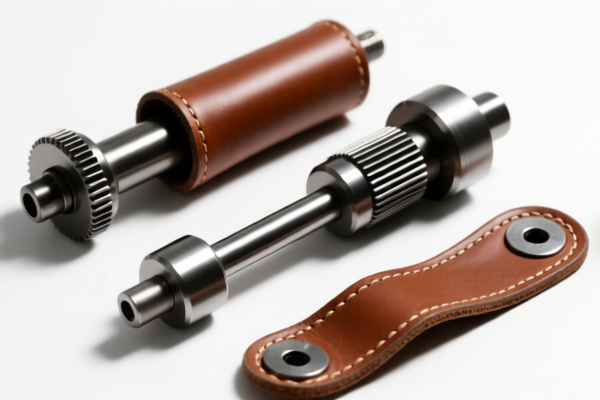
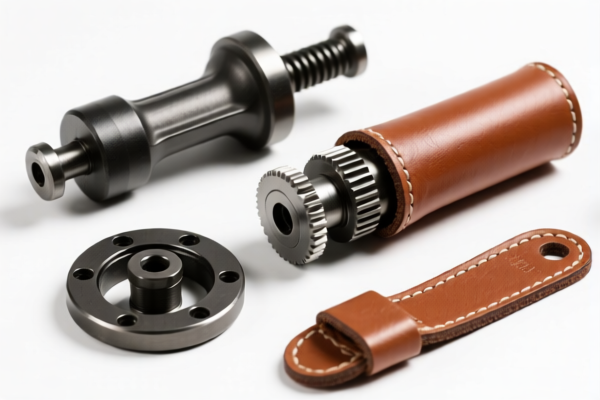
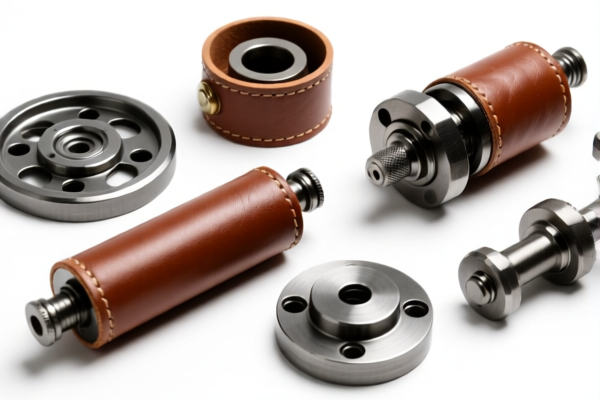

AI Analysis
👜 Leather Goods (General) | HS Code 4205.00.80.00 & 4205.00.60.00
🌐 HS Code Reference & Customs Clearance Guide | 2026 Latest Tariff Analysis | Professional Clearance Strategy 📌 Part 1: Product Definition & Classification: What Exactly Are "Leather Goods"?
In international trade, "Leather Goods" (HS Chapter 42) is a broad category covering articles of leather or composition leather that are not specifically listed elsewhere (e.g., gloves, shoes, or luggage). They are generally categorized into two distinct sub-groups based on material type:
- Standard Leather/Composition Leather Articles: Items made from cowhide, sheepskin, synthetic leather, or other non-reptile materials.
- Reptile Leather Articles: Items made from snake, crocodile, alligator, or lizard skin, which often carry stricter regulatory and tax scrutiny.
⚠️ Key Distinction: - If the product is made from standard leather (bovine, ovine, synthetic) → It falls under 4205.00.80.00. - If the product is made from reptile skin → It falls under 4205.00.60.00. - Note: Both are "Other articles of leather," meaning they are not bags, wallets, or belts if those specific categories have their own codes, but often small accessories fall here.
📦 Part 2: HS Code Classification Details (2026 Latest Tariff Alignment)
| HS Code | Product Description | Applicable Scenario | Material Type |
|---|---|---|---|
4205.00.80.00 |
Other articles of leather or of composition leather: Other: Other: Other | General leather accessories (straps, patches, non-reptile goods) | ✅ Standard/Composite Leather |
4205.00.60.00 |
Other articles of leather or of composition leather: Other: Other: Of reptile leather | Luxury accessories made from snake, crocodile, alligator skin | ✅ Reptile Leather |
🔍 Important Reminder: - Do not confuse with Handbags (4202): If the item is a bag, suitcase, or wallet, it usually belongs to Heading 4202. Heading 4205 is for other leather articles (e.g., belts, straps, decorative pieces, non-standard accessories). - Reptile Leather Complexity: Importing reptile leather goods requires CITES permits (Convention on International Trade in Endangered Species) in addition to standard customs clearance.
💰 Part 3: 2026 Latest Tariff Rate Breakdown (Including Surtaxes)
✅ Applicable Country: United States (US) ✅ Country of Origin: China (CN) ✅ Effective Time: Current tariffs apply (25% Section 301 Surtax)
🎯 1. 4205.00.80.00 —— General Leather Articles (Non-Reptile)
| Item | Content |
|---|---|
| Base Duty Rate | 0% (Most Favored Nation rate) |
| Section 301 Surcharge | +25% (Added by USITC for Chinese origin) |
| Total Effective Duty | 25.0% |
| Calculation Basis | CIF Value × 25% |
| De Minimis Eligibility | ❌ No (Section 301 goods are generally excluded from de minimis exemptions if value exceeds thresholds, but generally 4205 items are subject to standard scrutiny) |
| Legal Path | HTSUS:4205.00.80.00 → Section 301 Footnote 9903.88.01 |
📌 Explanation: - Although the base duty is 0%, the 25% Section 301 tariff is applied specifically to goods originating from China. - This is a high-cost category for Chinese exporters to the US. - No additional IEEPA tax is listed in the provided data for this specific code beyond the 25%.
🎯 2. 4205.00.60.00 —— Reptile Leather Articles
| Item | Content |
|---|---|
| Base Duty Rate | 4.9% (Most Favored Nation rate) |
| Section 301 Surcharge | +25% (Added by USITC for Chinese origin) |
| Total Effective Duty | 29.9% |
| Calculation Basis | CIF Value × 29.9% |
| De Minimis Eligibility | ❌ No |
| Legal Path | HTSUS:4205.00.60.00 → Section 301 Footnote 9903.88.01 |
📌 Explanation: - Reptile leather starts with a 4.9% base duty because it is considered a higher-value luxury material. - The 25% Section 301 surcharge is added on top of the base duty. - Total: 29.9%. This is the highest tariff in the provided dataset. - Regulatory Warning: In addition to tariffs, reptile leather imports require CITES documentation. Failure to provide these can lead to seizure, regardless of tariff payment.
🛠️ Part 4: Customs Clearance Practical Advice (Real-World Pitfall Avoidance)
✅ 1. Required Documentation Checklist
| Document | Mandatory? | Notes |
|---|---|---|
| ✅ Commercial Invoice | ✔️ | Must clearly state "Leather Goods" and specify material (e.g., "Genuine Cowhide" vs. "Python Skin"). |
| ✅ CITES Permits | ✔️ | Required for 4205.00.60.00. If the leather is from an endangered species, you must have USFWS permits. |
| ✅ Material Composition Statement | ✔️ | Must declare % of leather vs. synthetic components. |
| ✅ Product Photos | ✔️ | Show texture and craftsmanship to prove it's not footwear/bags (which have different codes). |
| ✅ Packing List | ✔️ | Detail weight and dimensions. |
✅ 2. Classification Tips (Critical!)
🔥 “Know Your Skin: Reptile vs. Standard”
| Scenario | Correct HS Code | Wrong Approach |
|---|---|---|
| Leather belt made of cowhide | 4205.00.80.00 |
Misclassifying as reptile → Overpaying tax |
| Belt made of genuine snake skin | 4205.00.60.00 |
Misclassifying as standard leather → Seizure risk (CITES violation) |
| Leather shoe accessory (non-footwear) | 4205.00.80.00 |
Classifying as footwear (Chapter 64) → Wrong chapter entirely |
| Synthetic leather strap | 4205.00.80.00 |
Correct if classified as "composition leather" |
📌 Key Advice: - Reptile leather is a "Hot Category": Customs and USFWS closely monitor this. Even small amounts of exotic skin require permits. - Standard leather is simpler: Focus on accurate material declaration to avoid "misdeclaration" penalties.
✅ 3. Special Cases & Exemptions
| Case | Handling Advice |
|---|---|
| OEM Custom Leather Goods | Provide design specs to prove it’s not a standard bag/shoe. |
| Mixed Materials | If >50% leather by weight, classify under 4205. If <50%, may fall under different chapters (e.g., 39 for plastic, 60 for textile). |
| Reptile Leather Samples | Even samples may require CITES permits. Contact USFWS before shipping. |
| Origin Tracing | If leather is tanned in Vietnam but sourced from China, ensure proper documentation to avoid "Chinese origin" surcharge if eligible (check Rules of Origin). |
🌍 Part 5: Global Market Comparison (2026)
| Country/Region | Recommended HS Code | Duty Rate (China Origin) | Certification | Notes |
|---|---|---|---|---|
| 🇺🇸 USA | 4205.00.80.00 / 4205.00.60.00 |
25.0% / 29.9% | CITES (for reptile) | Highest tariffs due to Section 301. |
| 🇨🇳 China | 4205.00.80.00 / 4205.00.60.00 |
Low (Import Duty) | N/A | China is a major exporter; domestic rules apply for export. |
| 🇪🇺 EU | 4205 |
~3-4% | REACH (Chemicals) | No Section 301 surcharge, but CITES still applies. |
| 🇬🇧 UK | 4205 |
~3-4% | UKCA/REACH | Post-Brexit rules similar to EU but separate licensing. |
| 🇯🇵 Japan | 4205 |
3-4% | FSC (if reptile) | Moderate tariffs, strict animal welfare checks. |
📌 Conclusion: - The US is the most expensive market for Chinese leather goods due to the 25% Section 301 surcharge. - Reptile leather is double-sensitive: High tariffs + CITES regulations. - Consider supply chain diversification (e.g., sourcing leather from non-China origins) if targeting the US market to mitigate the 25% surcharge.
📌 Part 6: Common Errors & Pitfall Guide (Lessons Learned)
❌ Error 1: Declaring "Reptile Leather" as "Genuine Leather" to avoid CITES. 👉 Consequence: Product Seizure, fines, and legal action. Customs can identify skin type through DNA or microscopic analysis.
❌ Error 2: Assuming all "Leather Goods" are 0% duty. 👉 Consequence: Underpayment of the 25% Section 301 tariff → Back taxes + interest + penalties.
❌ Error 3: Splitting a single leather item into multiple parts to lower value. 👉 Consequence: Customs may reject the split and assess duty on the total value of the assembled item.
❌ Error 4: Not having CITES permits for 4205.00.60.00.
👉 Consequence: Refusal of Entry into the US, even if duties are paid.
✅ Correct Approach:
"Leather Accessory, Cowhide, Black, for Decorative Use, Model XYZ, No CITES Required" vs. "Leather Accessory, Python Skin, Patterned, for Luxury Bag Strap, CITES Permit #12345 Attached"
🎯 Part 7: Conclusion: Precision Matters, Savings Increase!
🎯 Remember These Key Points:
🔹 "Standard Leather = 25% (US); Reptile Leather = 29.9% + CITES." 🔹 "One misclassification, one CITES violation, one seized shipment." 🔹 "Always declare material type accurately. 'Leather' is not enough."
📌 Pro Tip:
- For US imports, factor in the 25% Section 301 surcharge in your pricing model.
- For Reptile Leather, start the CITES permit process weeks in advance. It’s not just about money; it’s about legality.
- Consider Advance Rulings from US Customs (CBP) if your product is borderline (e.g., is it a bag or an accessory?).
📣 Immediate Action Required:
📞 Consult a Customs Broker for HS Code Pre-determination. 🚀 Secure CITES Permits for any reptile skin products. 💼 Accurate Declaration saves money and prevents legal trouble.
✨ Professional Clearance Starts with Accurate Classification! 💼 Every cent saved counts in global trade!
Customer Reviews
About HS Code Classification
The Harmonized System (HS) is an internationally standardized nomenclature developed by the World Customs Organization (WCO) to classify traded products. Over 200 countries use the HS system as the basis for customs tariffs, trade statistics, and import/export regulations.
Each HS code follows a hierarchical structure:
- Chapter (2 digits) — Broad category of goods (e.g., Chapter 84: Machinery and Mechanical Appliances)
- Heading (4 digits) — More specific grouping within the chapter
- Subheading (6 digits) — Internationally standardized breakdown, used by all WCO member countries
- National subdivisions (8-10 digits) — Country-specific extensions for further classification, such as US HTSUS 10-digit codes
Correct HS code classification is essential for smooth customs clearance, accurate duty payment, and compliance with trade regulations. Misclassification can lead to customs delays, overpayment of duties, or penalties.
When importing from CN to US, the applicable tariff rates may include:
- Most-Favored-Nation (MFN) rate — The standard duty rate applied to WTO members
- General rate — Applied to countries without trade agreements
- Trade remedy duties — Additional tariffs such as Section 301 (anti-dumping), Section 232 (national security), or countervailing duties
The information provided on this page is for reference purposes only. For official classification, please consult with your local customs authority or a licensed customs broker.