Lightweight Grinding Tools (DIY)
CN → US| HS Code | Tariff Rate | Origin | Destination | Doc |
|---|---|---|---|---|
| 6804230000 | 35.0% | CN | US | Official Doc |
| 8205598000 | 38.7% | CN | US | Official Doc |
| 8203103000 | 35.0% | CN | US | Official Doc |
| 6804300000 | 35.0% | CN | US | Official Doc |
| 8203106000 | 35.0% | CN | US | Official Doc |
Product Images
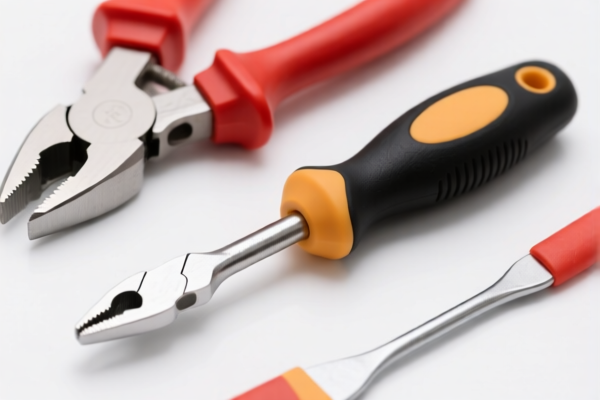
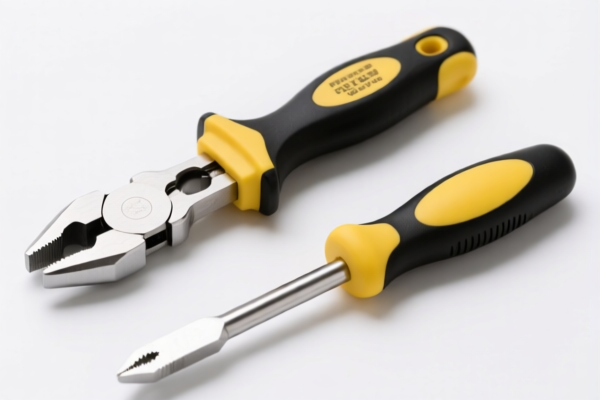
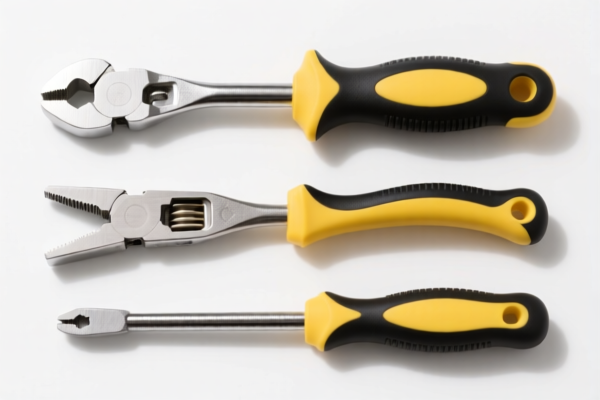
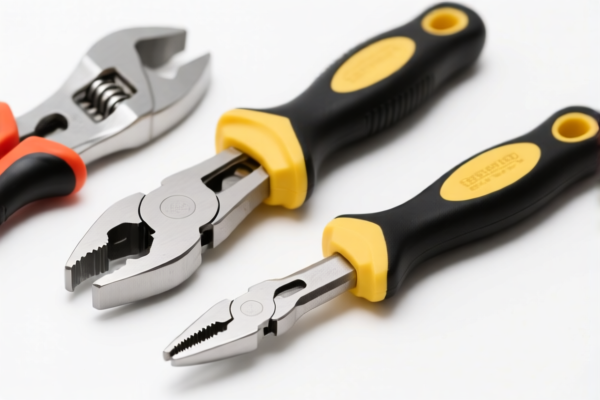
AI Analysis
🛠️ Lightweight Grinding Tools (DIY)
🌐 HS Code Reference & Customs Clearance Guide | 2026 Latest Tariff Analysis | Professional Entry Strategy
📌 I. Product Definition & Classification: Do You Really Understand "Grinding Tools"?
Lightweight Grinding Tools (DIY) are handheld devices designed for abrasive tasks such as grinding, polishing, deburring, or sharpening materials like stone, metal, or ceramics. In international trade, they are primarily classified based on their material composition and intended use.
These tools generally fall into two main categories in customs classifications: 1. Stone/Abrasive Material Tools: Made from natural stone, synthetic abrasive, or similar materials (e.g., whetstones, grinding wheels made of abrasive material). 2. Metal/Alloy Tools: Made of metal (e.g., files, rasps, or metal-backed grinding tools).
⚠️ Key Distinction:
- If the tool is made of stone, ceramic, or abrasive material → Classify under Chapter 68 (Articles of Stone, Plaster, Cement, Asbestos, Mica or Similar Materials).
- If the tool is made of metal (e.g., metal files, metal-backed grinders) → Classify under Chapter 82 (Tools, Implements, Cutlery, Spoons and Forks, of Base Metal).
📦 II. HS Code Classification Details (2026 Latest Tariff Authority Comparison)
Based on the provided data, here are the five most likely HS Code classifications for Lightweight Grinding Tools (DIY), along with the reasoning for each.
| HS Code | Product Description | Reason for Classification | Material/Type |
|---|---|---|---|
6804.23.00.00 |
Grinding Tools & Hand Millstones, with working surface of stone other than agate, sintered corundum, or natural cinder | Matches the use (grinding) and form (handheld). Inferred as stone or similar abrasive material. | Stone / Abrasive |
8205.59.80.00 |
Hand tools (including glaziers' diamonds), not elsewhere specified or included | Matches the category (grinding wheel) and handheld attribute. Falls under other catch-all categories. | Metal / Other |
8203.10.30.00 |
Files, rasps & similar tools | Matches the similar tool use and handheld form. Inferred as metal material. | Metal |
6804.30.00.00 |
Grinding tools & hand millstones, with working surface of ceramic | Matches handheld and grinding use. Inferred as whetstone or abrasive tool. | Ceramic / Stone |
8203.10.60.00 |
Files, rasps & similar tools | Matches file-like tool use and handheld form. No material conflict. | Metal |
🔍 Key Reminder:
- If the tool is a standard metal file or rasp, it likely falls under 8203.10.30.00 or 8203.10.60.00.
- If it is a grinding wheel or stone block, it likely falls under 6804.23.00.00 or 6804.30.00.00.
- If it is a specialty handheld tool not fitting standard categories, 8205.59.80.00 may apply as a residual category.
💰 III. 2026 Latest Tariff Rate Details (Including Additional Taxes & Policy Surcharges)
✅ Applicable Country: United States (US)
✅ Origin: China (CN)
✅ Effective Date: From November 10, 2025 (including subsequent imports)
🎯 1. 6804.23.00.00 —— Grinding Tools (Stone/Abrasive Material)
| Item | Content |
|---|---|
| Base Duty Rate | 0.0% (ad valorem) |
| USITC Additional Duty | +25.0% (Under USITC Footnote for Chinese goods) |
| IEEPA Additional Duty | +10.0% (For Chinese/HK products, effective from Nov 10, 2025) |
| Total Duty Rate | 35.0% |
| Tax Calculation | CIF Value × 35% |
| De Minimis Exemption Available? | ❌ No (deny_de_minimis applies) |
| Legal Basis Path | IEEPA:9903.01.25 → IEEPA:9903.01.24 → USITC:6804.23.00.00 → FOOTNOTE:9903.88.01 |
📌 Explanation:
- "USITC Additional Duty 25%" comes from the Section 301 tariffs under the US Trade Act.
- "IEEPA 10%" is an additional tariff under the International Emergency Economic Powers Act for Chinese products.
- Total 35% is considered high, so proper classification is critical!
🎯 2. 8205.59.80.00 —— Hand Tools (Catch-All Category)
| Item | Content |
|---|---|
| Base Duty Rate | 3.7% (ad valorem) |
| USITC Additional Duty | +25.0% |
| IEEPA Additional Duty | +10.0% |
| Total Duty Rate | 38.7% |
| Tax Calculation | CIF Value × 38.7% |
| De Minimis Exemption Available? | ❌ No (deny_de_minimis applies) |
| Legal Basis Path | IEEPA:9903.01.25 → IEEPA:9903.01.24 → USITC:8205.59.80.00 → FOOTNOTE:9903.88.01 |
📌 Note:
- This category applies to handheld grinding tools that do not fit specific metal or stone tool categories.
- The base duty is higher (3.7%) compared to stone tools (0%), resulting in a higher total rate (38.7%).
🎯 3. 8203.10.30.00 —— Files & Similar Metal Tools
| Item | Content |
|---|---|
| Base Duty Rate | 0.0% (ad valorem) |
| USITC Additional Duty | +25.0% |
| IEEPA Additional Duty | +10.0% |
| Total Duty Rate | 35.0% |
| Tax Calculation | CIF Value × 35% |
| De Minimis Exemption Available? | ❌ No (deny_de_minimis applies) |
| Legal Basis Path | IEEPA:9903.01.25 → IEEPA:9903.01.24 → USITC:8203.10.30.00 → FOOTNOTE:9903.88.01 |
📌 Explanation:
- If your product is a metal file or rasp, this is the most likely code.
- Base duty is 0%, but with additional taxes, it reaches 35%.
🎯 4. 6804.30.00.00 —— Grinding Tools (Ceramic)
| Item | Content |
|---|---|
| Base Duty Rate | 0.0% (ad valorem) |
| USITC Additional Duty | +25.0% |
| IEEPA Additional Duty | +10.0% |
| Total Duty Rate | 35.0% |
| Tax Calculation | CIF Value × 35% |
| De Minimis Exemption Available? | ❌ No (deny_de_minimis applies) |
| Legal Basis Path | IEEPA:9903.01.25 → IEEPA:9903.01.24 → USITC:6804.30.00.00 → FOOTNOTE:9903.88.01 |
📌 Note:
- If the grinding tool is made of ceramic, it falls here.
- Same tax structure as stone tools (35% total).
🎯 5. 8203.10.60.00 —— Files & Similar Tools (Other)
| Item | Content |
|---|---|
| Base Duty Rate | 0.0% (ad valorem) |
| USITC Additional Duty | +25.0% |
| IEEPA Additional Duty | +10.0% |
| Total Duty Rate | 35.0% |
| Tax Calculation | CIF Value × 35% |
| De Minimis Exemption Available? | ❌ No (deny_de_minimis applies) |
| Legal Basis Path | IEEPA:9903.01.25 → IEEPA:9903.01.24 → USITC:8203.10.60.00 → FOOTNOTE:9903.88.01 |
📌 Explanation:
- If your product is a metal file but doesn't fit the specific subcategory8203.10.30.00, it may fall here.
- Total duty is 35%.
🛠️ IV. Customs Clearance Practical Advice (Battle-Tested Pitfall Guide)
✅ 1. Required Documentation Checklist (Non-negotiable)
| Document | Mandatory | Description |
|---|---|---|
| ✅ Product Specification Sheet | ✔️ | Include dimensions, material (stone/metal/ceramic), usage (grinding/sharpening) |
| ✅ Product Photos (with label) | ✔️ | Clear images of the tool, showing material type and model |
| ✅ Commercial Invoice | ✔️ | Clearly state "Lightweight Grinding Tool, Handheld, for DIY Use" |
| ✅ Packing List | ✔️ | Detail contents to avoid splitting shipments |
| ✅ Material Certification | ✔️ | Proof of material (e.g., stone vs. metal) if requested |
| ✅ Origin Certificate (CO) | ✔️ | If non-Chinese origin, may qualify for preferential rates |
✅ 2. Declaration Tips (Key Mnemonic)
🔥 "Material First, Use Second, Name Precise, Tax Lower!"
| Scenario | Correct Declaration | Wrong Practice |
|---|---|---|
| Metal File/Rasp | 8203.10.30.00 or 8203.10.60.00 |
Misdeclare as "Stone Tool" → 35% vs. 0% base |
| Stone/Ceramic Grinding Block | 6804.23.00.00 or 6804.30.00.00 |
Misdeclare as "Metal Tool" → 35% vs. 38.7% |
| Specialty Handheld Grinder | 8205.59.80.00 |
Misdeclare as "Machine Part" → Higher rates |
| Handheld vs. Machine | Clearly state "Handheld" | Declare as "Power Tool" → Different Chapter |
✅ 3. Special Cases Handling
| Scenario | Handling Advice |
|---|---|
| OEM Custom Tools | Provide customer order + design drawings to avoid "non-standard" classification |
| Multi-Material Tools | Declare based on primary functional material (e.g., stone head + metal handle → Chapter 68) |
| DIY Kits (Tool + Accessories) | Declare as whole unit if sold together |
| Export to US from China | 35%-38.7% total duty. Plan for cash flow impact. |
🌍 V. Global Market Customs Comparison (2026 Latest)
| Country/Region | Recommended HS Code | Duty Rate | Certification | Notes |
|---|---|---|---|---|
| 🇺🇸 USA | 6804.23.00.00 / 8203.10.30.00 |
35% (China Origin) | No specific certs | High tariff due to 301/IEEPA |
| 🇨🇳 China | 6804.23.00.00 / 8203.10.30.00 |
0-10% | CCC (if applicable) | No additional tariffs |
| 🇪🇺 EU | 6804.23.00.00 / 8203.10.30.00 |
0-4% | CE + RoHS | No additional tariffs |
| 🇦🇺 Australia | 6804.23.00.00 / 8203.10.30.00 |
5% | RCM | No additional tariffs |
| 🇯🇵 Japan | 6804.23.00.00 / 8203.10.30.00 |
0-3% | PSE | No additional tariffs |
📌 Conclusion:
- USA is the only market with high additional tariffs (35%-38.7%) for Chinese-origin grinding tools.
- China-origin tools face significantly higher clearance costs in the US. Consider supply chain adjustment if possible.
📌 VI. Common Errors & Pitfall Guide (Lessons Learned)
❌ Error 1: Misclassifying stone tools as metal tools
👉 Consequence: Duty jumps from 35% to 38.7% → Unnecessary cost!
❌ Error 2: Declaring handheld tools as power tools
👉 Consequence: Wrong HS Code → Delay, penalty, or return!
❌ Error 3: Not specifying material in declaration
👉 Consequence: Customs cannot determine correct code → Held for inspection or reclassification
❌ Error 4: Using vague terms like "Grinding Tool" without detail
👉 Consequence: Ambiguity leads to higher duty rates or audits
✅ Correct Approach:
"Handheld Grinding Stone, Ceramic, for DIY Stone Polishing, Model XYZ, Non-Powered"
🎯 VII. Conclusion: Professional Declaration Saves Money!
🎯 Remember the Mantra:
🔹 "Material Matters, Use Follows, Name Precise, Tax Drops!"
🔹 "HS Code is King, 3.7% vs 0% base, one step wrong, thousands lost!"
📌 Pro Tip:
If your grinding tools are originally from Vietnam, Mexico, Thailand, or Malaysia, you may apply for IEEPA Exemption, reducing duty to 0%~5%.
Recommend applying for Advance Ruling to avoid clearance risks.
📣 Take Action Now:
📞 Contact Professional Customs Broker + Provide Product Photos + Apply for HS Code Advance Ruling
🚀 Ensure your grinding tools pass customs smoothly, export efficiently, and maximize profits!
✨ Professional Clearance Starts with Precise Classification!
💼 Every cent of cost deserves precise calculation!
Customer Reviews
About HS Code Classification
The Harmonized System (HS) is an internationally standardized nomenclature developed by the World Customs Organization (WCO) to classify traded products. Over 200 countries use the HS system as the basis for customs tariffs, trade statistics, and import/export regulations.
Each HS code follows a hierarchical structure:
- Chapter (2 digits) — Broad category of goods (e.g., Chapter 84: Machinery and Mechanical Appliances)
- Heading (4 digits) — More specific grouping within the chapter
- Subheading (6 digits) — Internationally standardized breakdown, used by all WCO member countries
- National subdivisions (8-10 digits) — Country-specific extensions for further classification, such as US HTSUS 10-digit codes
Correct HS code classification is essential for smooth customs clearance, accurate duty payment, and compliance with trade regulations. Misclassification can lead to customs delays, overpayment of duties, or penalties.
When importing from CN to US, the applicable tariff rates may include:
- Most-Favored-Nation (MFN) rate — The standard duty rate applied to WTO members
- General rate — Applied to countries without trade agreements
- Trade remedy duties — Additional tariffs such as Section 301 (anti-dumping), Section 232 (national security), or countervailing duties
The information provided on this page is for reference purposes only. For official classification, please consult with your local customs authority or a licensed customs broker.