Matcha Bowl
CN → US| HS Code | Tariff Rate | Origin | Destination | Doc |
|---|---|---|---|---|
| 6911108010 | 38.3% | CN | US | Official Doc |
| 7013496010 | 24.7% | CN | US | Official Doc |
| 6911108090 | 38.3% | CN | US | Official Doc |
| 6912003510 | 19.8% | CN | US | Official Doc |
| 6912003550 | 19.8% | CN | US | Official Doc |
Product Images
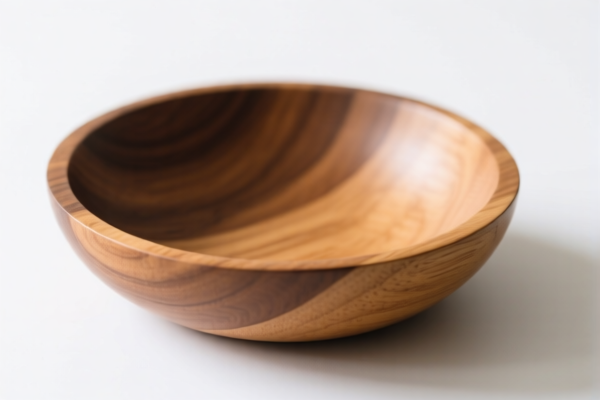
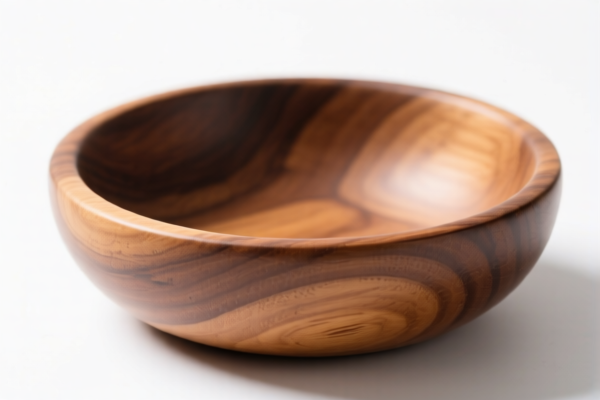
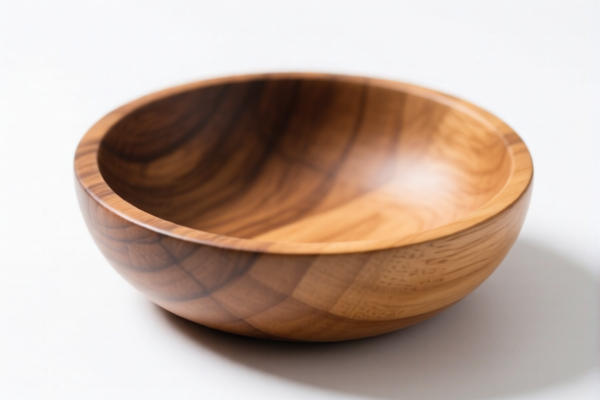
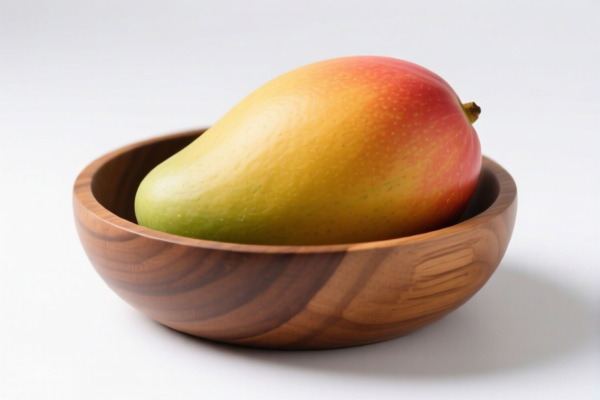
AI Analysis
🍵 Matcha Bowl (Chawan) – HS Code Classification & US Customs Clearance Guide
🌐 HS Code Reference & Customs Clearance Guide | 2026 Latest Tariff Analysis | Professional Entry Strategy
📌 I. Product Definition & Classification: What Exactly is a "Matcha Bowl"?
The Matcha Bowl (Chawan) is a specialized ceramic vessel used in the traditional Japanese tea ceremony (Chanoyu) for whisking and drinking matcha green tea. In international trade, its classification depends heavily on material (porcelain vs. non-porous ceramic) and intended use (food contact vs. general kitchenware).
⚠️ Key Distinction Point:
- Porcelain Tableware (6911): Made from refined clay, fired at high temperatures, translucent, and non-porous. Classified as "Tableware, kitchenware, other household articles of porcelain."
- Non-Porous Ceramic/Tableware (6912): Made from earthenware or stoneware, opaque, porous but glazed for food safety. Classified as "Tableware, kitchenware, other household articles of ceramic other than porcelain."
- Glassware (7013): If the bowl is made of glass or crystal (rare for traditional matcha, but possible for modern design). Classified as "Glassware of a kind used for table, kitchen, toilet, office, indoor decoration or similar purposes."
📦 II. HS Code Classification Details (2026 Latest Tariff Authority Comparison)
| HS Code | Product Description | Material/Type | Food Contact? | Tax Detail Summary |
|---|---|---|---|---|
6911.10.80.10 |
Porcelain tableware; of a kind used for food contact | Porcelain | ✅ Yes | Base: 20.8%, Add'l: 7.5%, Section 301: 10% → Total: 38.3% |
7013.49.60.10 |
Glass tableware; not for use as laboratory, pharmaceutical, medical, or technical/industrial glassware | Glass/Crystal | ✅ Yes | Base: 7.2%, Add'l: 7.5%, Section 301: 10% → Total: 24.7% |
6911.10.80.90 |
Porcelain tableware; other | Porcelain | ✅ Yes | Base: 20.8%, Add'l: 7.5%, Section 301: 10% → Total: 38.3% |
6912.00.35.10 |
Tableware, kitchenware, other household articles of ceramic other than porcelain; of a kind used for food contact | Non-Porous Ceramic | ✅ Yes | Base: 9.8%, Add'l: 0.0%, Section 301: 10% → Total: 19.8% |
6912.00.35.50 |
Tableware, kitchenware, other household articles of ceramic other than porcelain; other | Non-Porous Ceramic | ✅ Yes | Base: 9.8%, Add'l: 0.0%, Section 301: 10% → Total: 19.8% |
🔍 Critical Note:
- Porcelain (6911) incurs a higher base tariff (20.8%) compared to non-porous ceramic (6912) (9.8%).
- Glass (7013) has the lowest base tariff (7.2%) but is less common for traditional matcha bowls.
- All classifications assume origin: China (CN) and import into the USA (US).
💰 III. 2026 Latest Tariff Rate Breakdown (Including Supplementary Taxes)
✅ Applicable Country: United States (US)
✅ Country of Origin: China (CN)
✅ Effective Date: November 10, 2025 (and onwards)
🎯 1. 6911.10.80.10 & 6911.10.80.90 —— Porcelain Tableware
| Item | Details |
|---|---|
| Base Tariff | 20.8% (ad valorem) |
| Section 301 Tariff (122-Clause) | +10% (Targeting Chinese goods) |
| USITC Supplementary Tariff | +7.5% |
| Total Tariff Rate | 38.3% |
| Calculation | CIF Value × 38.3% |
| De Minimis Exemption? | ❌ No (denied_de_minimis) |
| Legal Basis Path | IEEPA:9903.01.25 → IEEPA:9903.01.24 → USITC:6911.10.80.10 → FOOTNOTE:9903.88.01 |
📌 Explanation:
- Base Tariff (20.8%): Applies to porcelain tableware under HTSUS Chapter 69.
- Section 301 (10%): Added due to "122-Clause" provisions targeting Chinese imports.
- USITC Supplementary (7.5%): Additional duty imposed by the U.S. International Trade Commission.
- Total 38.3%: High cost for porcelain matcha bowls imported from China.
🎯 2. 7013.49.60.10 —— Glass/Crystal Tableware
| Item | Details |
|---|---|
| Base Tariff | 7.2% |
| Section 301 Tariff (122-Clause) | +10% |
| USITC Supplementary Tariff | +7.5% |
| Total Tariff Rate | 24.7% |
| Calculation | CIF Value × 24.7% |
| De Minimis Exemption? | ❌ No |
| Legal Basis Path | IEEPA:9903.01.25 → IEEPA:9903.01.24 → USITC:7013.49.60.10 → FOOTNOTE:9903.88.01 |
📌 Note:
- Lower base tariff than porcelain, but still subject to both Section 301 and USITC supplementary duties.
- Suitable for modern, western-style matcha bowls made of glass.
🎯 3. 6912.00.35.10 & 6912.00.35.50 —— Non-Porous Ceramic Tableware
| Item | Details |
|---|---|
| Base Tariff | 9.8% |
| Section 301 Tariff (122-Clause) | +10% |
| USITC Supplementary Tariff | +0.0% |
| Total Tariff Rate | 19.8% |
| Calculation | CIF Value × 19.8% |
| De Minimis Exemption? | ❌ No |
| Legal Basis Path | IEEPA:9903.01.25 → IEEPA:9903.01.24 → USITC:6912.00.35.10 → FOOTNOTE:9903.88.01 |
📌 Key Advantage:
- Lowest Total Tariff (19.8%) among all options.
- No USITC Supplementary Tariff (0%) applies to non-porous ceramic tableware, unlike porcelain.
- Ideal for traditional Japanese-style chawan made from stoneware or earthenware.
🛠️ IV. Customs Clearance Practical Advice (Real-World Pitfall Guide)
✅ 1. Documentation Checklist (Mandatory)
| Document | Required? | Description |
|---|---|---|
| ✅ Product Specification Sheet | ✔️ | Must specify material (e.g., "Stoneware," "Porcelain," "Glass"), dimensions, and capacity. |
| ✅ Material Declaration | ✔️ | Explicitly state if the item is "Porcelain" or "Non-Porous Ceramic." Misclassification leads to penalties. |
| ✅ Product Photos (Including Label) | ✔️ | Show the bottom of the bowl for manufacturer marks, and the inside for glaze/finish. |
| ✅ Commercial Invoice | ✔️ | Clearly describe as "Matcha Bowl" or "Chawan," specify material, and state "For Food Contact." |
| ✅ Packing List | ✔️ | Detail quantities, weights, and packaging materials. |
| ✅ FDA Compliance Statement (if applicable) | ✔️ | While not always required for ceramics, a statement confirming food-safe glaze is helpful. |
✅ 2. Declaration Tips (Critical Mnemonics)
🔥 "Material Defines Tariff, 'Other' Saves Money, Don't Split Shipment!"
| Scenario | Correct Declaration | Wrong Practice |
|---|---|---|
| Traditional Japanese Chawan (Stoneware) | 6912.00.35.10 (Ceramic, Food Contact) |
Misdeclare as Porcelain → 38.3% |
| Modern Glass Matcha Bowl | 7013.49.60.10 (Glass) |
Misdeclare as Ceramic → Wrong tax rate |
| Fine White Porcelain Bowl | 6911.10.80.10 (Porcelain, Food Contact) |
Misdeclare as Ceramic → 19.8% (Risk of Audit) |
| Set of Matcha Bowls + Whisk | Declare Set as Tableware | Split into "Bowl" + "Whisk" → Higher combined duties |
✅ 3. Special Case Handling
| Case | Recommendation |
|---|---|
| Mixed Materials | If a bowl has a wooden base or metal rim, it may be classified as a "Composite Good." Declare as the primary material (usually ceramic/glass). |
| Gift Sets | If sold as a set (e.g., Bowl + Whisk + Scoop), declare the set under the primary item (Bowl) if it forms the essential character. |
| Custom Handmade | Provide artisan certification to support "Handcrafted" description, but do not use this to avoid tariffs. |
| Origin Evasion | Attempting to misdeclare origin (e.g., claiming "Vietnamese" when made in China) leads to seizure, fines, and legal action. |
🌍 V. Global Market Customs Comparison (2026 Latest)
| Country/Region | Recommended HS Code | Tariff (China Origin) | Certification | Notes |
|---|---|---|---|---|
| 🇺🇸 USA | 6912.00.35.10 (Ceramic) |
19.8% | FDA Food Contact Safe | Lowest US tariff for ceramics |
| 🇺🇸 USA | 6911.10.80.10 (Porcelain) |
38.3% | FDA Food Contact Safe | High tariff due to base + supplementary |
| 🇨🇳 China | 6912.00.35.10 |
9.8% | CCC (if applicable) | No additional duties |
| 🇪🇺 EU | 6912.00.35.10 |
6.5% | CE + LFGB (Germany) | No US-style supplementary duties |
| 🇬🇧 UK | 6912.00.35.10 |
6.5% | UKCA | Post-Brexit rules apply |
📌 Conclusion:
- USA is the most expensive market due to Section 301 and USITC supplementary tariffs.
- Non-porous ceramic (6912) is the most cost-effective classification for US imports from China.
- Porcelain (6911) should be avoided if cost is a concern, unless branding justifies the 38.3% tariff.
📌 VI. Common Mistakes & Pitfalls (Lessons Learned)
❌ Mistake 1: Declaring a Stoneware Bowl as Porcelain
👉 Consequence: Pay 38.3% instead of 19.8%.
👉 Fix: Verify material composition. Stoneware is opaque and porous; porcelain is translucent and vitrified.
❌ Mistake 2: Splitting a Matcha Set into multiple shipments
👉 Consequence: Each item may be subject to minimum duties or higher combined rates.
👉 Fix: Declare as a single set under the primary item (Bowl).
❌ Mistake 3: Omitting "Food Contact" in description
👉 Consequence: Customs may classify under general household articles, leading to delays or incorrect classification.
👉 Fix: Always specify "For Food Use" or "Food Safe."
❌ Mistake 4: Using Glass HS Code for Ceramic
👉 Consequence: Customs will reclassify and impose back taxes + penalties.
👉 Fix: Ensure material matches the HS code description.
✅ Correct Declaration Example:
"Handcrafted Stoneware Matcha Bowl, Chawan, Non-Porous Ceramic, Food Safe Glaze, Model MC-2026, For Kitchen/Tableware Use"
🎯 VII. Conclusion: Professional Declaration, Cost Optimization
🎯 Remember the Mnemonic:
🔹 "Ceramic is Cheaper, Porcelain is Pricier, Glass is Middle, Always Check Material!"
🔹 "19.8% vs 38.3%, That's a Huge Difference, Declare Correctly or Pay the Price!"
📌 Pro Tip:
If your matcha bowls are originally from Japan, Vietnam, or Thailand, you may qualify for lower or zero tariffs under existing trade agreements. However, for China-origin goods, the 19.8% rate for non-porous ceramic is the best available option.
Recommend Advance Ruling (Pre-classification) with CBP for large shipments to avoid clearance delays.
📣 Immediate Action:
📞 Contact a licensed Customs Broker + Provide Product Material Details + Apply for HS Code Pre-classification
🚀 Ensure Smooth Clearance, Reduced Costs, and Profit Maximization for your Matcha Bowl Business!
✨ Professional Clearance Starts with Accurate Classification!
💼 Every Percent Saved is Pure Profit!
Customer Reviews
About HS Code Classification
The Harmonized System (HS) is an internationally standardized nomenclature developed by the World Customs Organization (WCO) to classify traded products. Over 200 countries use the HS system as the basis for customs tariffs, trade statistics, and import/export regulations.
Each HS code follows a hierarchical structure:
- Chapter (2 digits) — Broad category of goods (e.g., Chapter 84: Machinery and Mechanical Appliances)
- Heading (4 digits) — More specific grouping within the chapter
- Subheading (6 digits) — Internationally standardized breakdown, used by all WCO member countries
- National subdivisions (8-10 digits) — Country-specific extensions for further classification, such as US HTSUS 10-digit codes
Correct HS code classification is essential for smooth customs clearance, accurate duty payment, and compliance with trade regulations. Misclassification can lead to customs delays, overpayment of duties, or penalties.
When importing from CN to US, the applicable tariff rates may include:
- Most-Favored-Nation (MFN) rate — The standard duty rate applied to WTO members
- General rate — Applied to countries without trade agreements
- Trade remedy duties — Additional tariffs such as Section 301 (anti-dumping), Section 232 (national security), or countervailing duties
The information provided on this page is for reference purposes only. For official classification, please consult with your local customs authority or a licensed customs broker.