Medical Plastic Positioning Pad
CN → US| HS Code | Tariff Rate | Origin | Destination | Doc |
|---|---|---|---|---|
| 3926909950 | 22.8% | CN | US | Official Doc |
| 9021908100 | 10.0% | CN | US | Official Doc |
| 9021100090 | 10.0% | CN | US | Official Doc |
| 3926909989 | 22.8% | CN | US | Official Doc |
Product Images
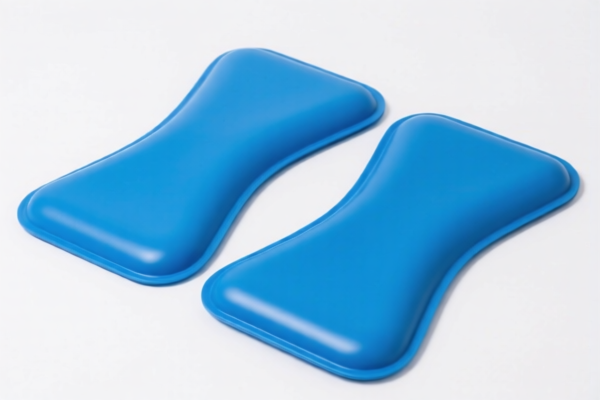
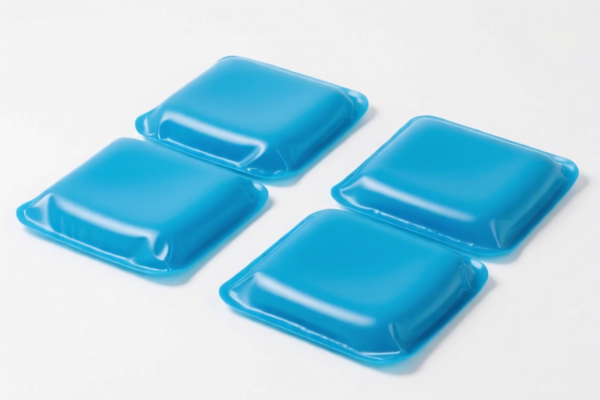
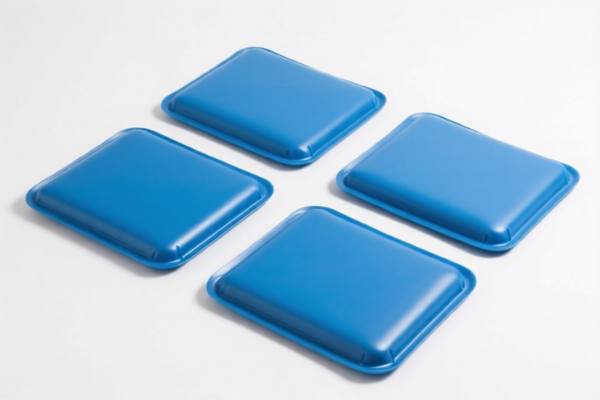
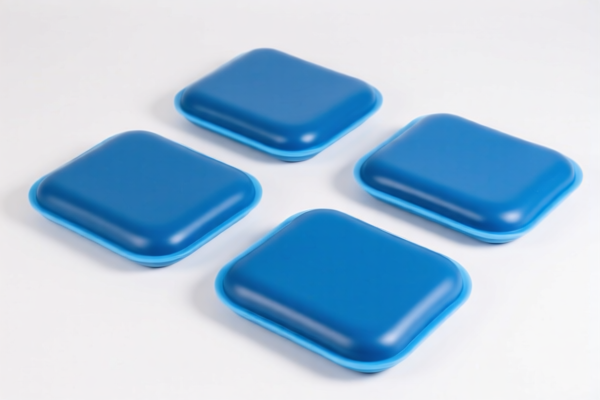
AI Analysis
🏥 Medical Plastic Positioning Pad (带固定带医用定位垫)
🌐 HS Code Reference & Customs Clearance Guide | 2026 Latest Tariff Analysis | Professional Strategy for US Import
📌 I. Product Definition & Classification: Decoding the "Positioning Pad"
The Medical Plastic Positioning Pad is a critical auxiliary device used in radiotherapy, surgery, and orthopedic immobilization. Its classification hinges on the distinction between "Plastic Products" and "Medical Apparatus".
Key Distinction Logic: 1. As a Plastic Product: If the pad is viewed primarily as a generic plastic mold/form with added straps (functional accessory), it falls under Chapter 39. 2. As Medical Apparatus: If the pad is specifically designed for fracture fixation, orthopedic support, or surgical positioning, it falls under Chapter 90 (Medical Instruments).
⚠️ Critical Classification Points:
- Straps & Function: The presence of "fixation straps" strongly suggests a medical device function (immobilization/support).
- Material: Plastic (Polyurethane, PVC, etc.) is the raw material, but the intent drives the HS Code.
- Usage: "Positioning" implies aiding diagnosis/treatment (Radiotherapy/Surgery) or fixing fractures.
📦 II. HS Code Classification Details (2026 Tariff Schedule)
Based on the provided data, there are four potential classifications. Here is the detailed breakdown of why it fits each code and the resulting tax implications.
| HS Code | Product Description | Why It Fits | Total Tax Rate |
|---|---|---|---|
| 9021.10.00.90 | Orthopedic/Surgical Articles | Best Fit for Medical Intent: Classified under "Surgical or orthopedic articles." A positioning pad used for surgery or precise alignment in medical procedures fits here. It is considered a specific medical tool rather than a generic plastic item. | 10.0% |
| 9021.90.81.00 | Plaster Casts & Fracture Accessories | Best Fit for Fixation: Specifically for "plaster casts and fracture accessories." If the pad is used to immobilize or fix a broken bone or joint (like a splint alternative), this is the most accurate medical classification. | 10.0% |
| 3926.90.99.50 | Plastic Articles, Other | Generic Plastic Fit: If the pad is deemed a "plastic article" that doesn't strictly meet the medical apparatus definition (e.g., generic hospital bedding or simple non-medical positioning), it falls here. The straps are considered minor attachments to the plastic base. | 22.8% |
| 3926.90.99.89 | Plastic Articles, Other | Generic Plastic Fit (Broad Category): Similar to above, this is a catch-all for plastic items not elsewhere specified. Often used if the medical claim is weak or if it's a general-purpose hospital supply. | 22.8% |
🔍 Key Insight:
- Codes 9021.xx.xx are preferred if you can prove medical utility (surgery, fracture care). They have a base duty of 0% (before additional tariffs).
- Codes 3926.xx.xx are "fallback" options for plastic goods. They carry a base duty of 5.3%, leading to a higher total cost.
💰 III. 2026 Tariff Rate Breakdown (US Import from China)
✅ Applicable Country: United States (US)
✅ Origin: China (CN)
✅ Effective Date: 2025/2026 (Includes Section 301 & IEEPA Tariffs)
🎯 1. High-Value Medical Codes: 9021.10.00.90 & 9021.90.81.00
Recommended for products with clear medical indications (fracture fixation, surgical positioning).
| Item | Detail |
|---|---|
| Base Duty Rate | 0.0% (Free from base duty) |
| Section 301 Add-on | 0.0% (Excluded for most medical apparatus) |
| Section 122 (IEEPA) Add-on | +10.0% (Additional 10% for Chinese medical products/origin) |
| Total Effective Rate | 10.0% |
| Calculation Basis | CIF Value × 10% |
| De Minimis Exemption | ❌ Not Eligible (Standard rule for Section 301/IEEPA goods) |
📌 Explanation:
- While the base duty is 0%, the 10% Section 122 tariff applies specifically to Chinese-origin goods in this category.
- Why is this better? Even with 10%, it is significantly cheaper than the plastic classification (22.8%) because it avoids the 5.3% base duty and 7.5% Section 301 tariff applied to plastics.
🎯 2. Plastic Classification Codes: 3926.90.99.50 & 3926.90.99.89
Use only if the product is considered a general plastic item without specific medical device status.
| Item | Detail |
|---|---|
| Base Duty Rate | 5.3% |
| Section 301 Add-on | +7.5% |
| Section 122 (IEEPA) Add-on | +10.0% |
| Total Effective Rate | 22.8% |
| Calculation Basis | CIF Value × 22.8% |
| De Minimis Exemption | ❌ Not Eligible |
📌 Explanation:
- Plastic items face a "Triple Tax" burden: Base Duty + Section 301 + Section 122.
- Cost Impact: A $1,000 shipment costs $228 in duties vs. $100 for medical classification.
- Risk: If customs audits and determines the item is indeed a medical device, you may face penalties for under-declaring.
🛠️ IV. Customs Clearance Practical Advice
✅ 1. Documentation Checklist (Must-Haves)
| Document | Required? | Purpose |
|---|---|---|
| ✅ Product Technical Description | Yes | Detail the material (e.g., "Medical Grade Polyurethane"), usage (e.g., "Used in radiation therapy to position patients"), and components (includes fixation straps). |
| ✅ Intended Use Statement | Yes | Explicitly state: "This product is a medical positioning pad used for surgical/radiotherapy alignment or orthopedic fixation. It is not a general-purpose plastic item." |
| ✅ Diagram/Photos | Yes | Show the pad with straps. Highlight any labels indicating medical use or sterile packaging. |
| ✅ Certificate of Free Sale (CFS) | Optional but Helpful | Proves the product is legally sold as a medical device in the country of origin. |
| ✅ 510(k) Clearance (if applicable) | If Class II | If the FDA classifies it as a Class II device, include 510(k) number to prove medical status. |
| ✅ Commercial Invoice | Yes | Description must match HS Code intent (e.g., "Medical Orthopedic Positioning Pad" vs. "Plastic Pad"). |
✅ 2. Declaration Strategy (Crucial Tips)
🔥 Golden Rule: "Define by Function, Not Just Material"
| Scenario | Recommended HS Code | Declaration Language |
|---|---|---|
| Used for Fracture/Immobilization | 9021.90.81.00 |
"Medical Fracture Fixation Pad with Straps, Plastic Material, for Orthopedic Support" |
| Used for Surgery/Radiotherapy Positioning | 9021.10.00.90 |
"Surgical/Radiotherapy Patient Positioning Pad, Plastic, with Fixation Straps" |
| General Hospital Bedding/Non-Specific | 3926.90.99.50 |
"Plastic Positioning Pad for Hospital Use, with Straps" (Higher Tax Risk) |
⚠️ Warning:
- Do NOT use vague terms like "Plastic Mattress" or "Cushion."
- Avoid3926if you can justify9021. The 12.8% tax difference is massive.
- Ensure the fixation straps are described as integral to the medical function (immobilization/positioning), not just "fasteners."
✅ 3. Special Case Handling
| Situation | Recommendation |
|---|---|
| Sterile vs. Non-Sterile | If sterile, mention "Sterile Packaged." This reinforces medical use. |
| Customs Audit | If audited, provide a Letter of Explanation from the manufacturer stating the clinical purpose. |
| Section 122 Coverage | Be aware that 10% IEEPA tariff applies to both 9021 and 3926 codes for Chinese origin. You cannot avoid this tariff, only the base duty and Section 301. |
🌍 V. Global Market Comparison (2026)
| Country | Recommended HS Code | Total Tax Rate (China Origin) | Notes |
|---|---|---|---|
| 🇺🇸 USA | 9021.10.00.90 / 9021.90.81.00 |
10.0% | Best option. 0% base + 10% IEEPA. |
| 🇺🇸 USA | 3926.90.99.50 / 89 |
22.8% | Worst option. 5.3% Base + 7.5% Sec 301 + 10% IEEPA. |
| 🇪🇺 EU | 9021.90 |
0% - 1.7% | Most EU countries have 0% duty for medical devices. |
| 🇨🇳 China | 9021.90 |
0% | Zero tariff for imported medical devices. |
📌 Conclusion:
- For US Import, classifying as 9021 saves you 12.8% in duties compared to plastic classification.
- The 10% Section 122 tariff is unavoidable for Chinese goods in both categories, but it’s a small price compared to the extra 12.8%.
📌 VI. Common Errors & Pitfalls
❌ Error 1: Declaring as "Plastic Cushion" (3926)
👉 Result: You pay 22.8% instead of 10%. Loss of Profit.
❌ Error 2: Ignoring the "Fixation Straps" in description
👉 Result: Customs may view it as a simple plastic sheet, not a medical device. Audit Risk.
❌ Error 3: Assuming all medical plastics are duty-free
👉 Result: Section 122 (10%) still applies to Chinese medical goods. Budget Correctly.
✅ Correct Approach:
"Medical Positioning Pad (Plastic), with Integrated Fixation Straps, for Surgical/Radiotherapy Use, Model XYZ, FDA Cleared (if applicable)."
🎯 VII. Conclusion: Professional Declaration for Cost Savings
🎯 Key Takeaway:
"Medical Function > Plastic Material."
By proving the medical purpose (positioning/fixation), you move from Chapter 39 (Plastics, 22.8%) to Chapter 90 (Medical Devices, 10.0%).
📌 Action Plan:
1. Review Product Documentation: Ensure manuals/state clearly state medical/surgical use.
2. Draft Precise Description: Use keywords like "Orthopedic," "Surgical Positioning," "Fixation."
3. Select HS Code 9021.xx.xx: File with this code to minimize duty burden.
4. Prepare for Audit: Keep evidence of medical utility ready for CBP officers.
✨ Smart Customs, Smarter Business!
💼 Save 12.8% Duty by Declaring Correctly!
Customer Reviews
About HS Code Classification
The Harmonized System (HS) is an internationally standardized nomenclature developed by the World Customs Organization (WCO) to classify traded products. Over 200 countries use the HS system as the basis for customs tariffs, trade statistics, and import/export regulations.
Each HS code follows a hierarchical structure:
- Chapter (2 digits) — Broad category of goods (e.g., Chapter 84: Machinery and Mechanical Appliances)
- Heading (4 digits) — More specific grouping within the chapter
- Subheading (6 digits) — Internationally standardized breakdown, used by all WCO member countries
- National subdivisions (8-10 digits) — Country-specific extensions for further classification, such as US HTSUS 10-digit codes
Correct HS code classification is essential for smooth customs clearance, accurate duty payment, and compliance with trade regulations. Misclassification can lead to customs delays, overpayment of duties, or penalties.
When importing from CN to US, the applicable tariff rates may include:
- Most-Favored-Nation (MFN) rate — The standard duty rate applied to WTO members
- General rate — Applied to countries without trade agreements
- Trade remedy duties — Additional tariffs such as Section 301 (anti-dumping), Section 232 (national security), or countervailing duties
The information provided on this page is for reference purposes only. For official classification, please consult with your local customs authority or a licensed customs broker.