Metal Wire Mesh
CN → US| HS Code | Tariff Rate | Origin | Destination | Doc |
|---|---|---|---|---|
| 7314496000 | 85.0% | CN | US | Official Doc |
| 8306290000 | 10.0% | CN | US | Official Doc |
| 6303990060 | 28.8% | CN | US | Official Doc |
| 7314493000 | 60.0% | CN | US | Official Doc |
Product Images
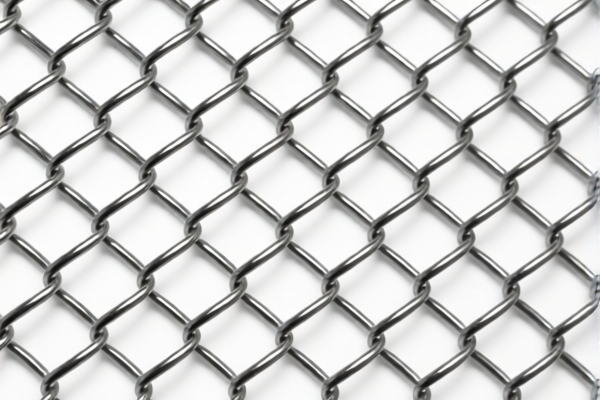

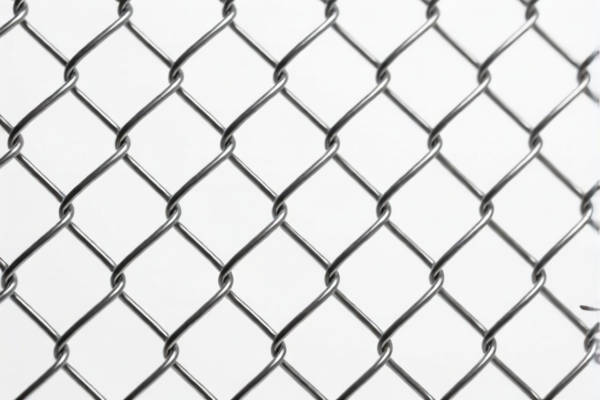
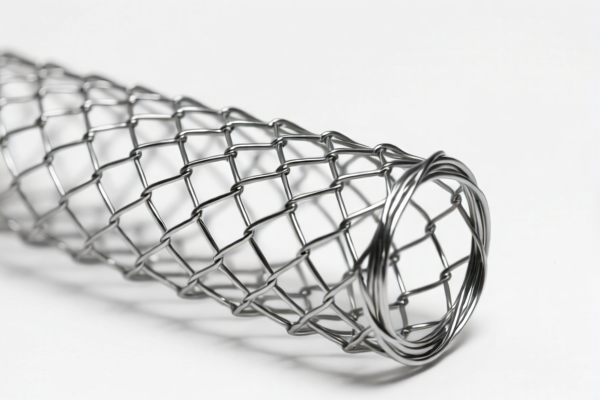
AI Analysis
🧵 Metal Wire Mesh Curtains: HS Code Classification & 2026 Customs Clearance Guide
🌐 HS Code Reference & Customs Clearance Guide | 2026 Latest Tariff Analysis | Professional Clearance Strategy
📌 I. Product Definition & Classification: What is "Metal Wire Mesh Curtain"?
Metal Wire Mesh Curtains are versatile decorative or functional barriers made from woven, welded, or knitted metal wires (typically iron, steel, or other base metals). They are used in interior design, industrial filtration, or as decorative partitions.
In international trade, classification depends on material, structure, and primary use:
- Iron/Steel Mesh Curtains: Classified under Chapter 73 (Articles of Iron or Steel).
- Other Base Metal Mesh Curtains: Classified under Chapter 83 (Base Metal Articles).
- Textile-Framework Mesh Curtains: If the metal wire is merely a frame for textile material, it may fall under Chapter 63 (Other Made-Up Textile Articles).
⚠️ Critical Distinction:
- If the product is 100% metal wire (iron/steel) → Chapter 73
- If the product is other base metals (e.g., aluminum, copper alloys not specified elsewhere) → Chapter 83
- If the product is textile-based with metal wire only as reinforcement/frame → Chapter 63
📦 II. HS Code Classification Details (2026 Latest Tariff Authoritative Comparison)
Based on your data, here are the applicable HS Codes for "Metal Wire Mesh Curtains":
| HS Code | Product Description | Material | Structure/Use | Total Tax Rate (China Origin) |
|---|---|---|---|---|
7314.49.60.00 |
Metal wire mesh, of iron or steel | Iron/Steel | Netting (Curtains) | 85.0% |
8306.29.00.00 |
Metal wire mesh, of base metals | Other Base Metals | Decorative Articles | 10.0% |
6303.99.00.60 |
Metal wire mesh, other textile materials | Textile (with metal frame) | Curtains | 28.8% |
7314.49.30.00 |
Metal wire mesh, of metal (Iron/Steel) | Iron/Steel | Netting/Fencing | 60.0% |
🔍 Key Insight:
-7314.49.60.00and7314.49.30.00both apply to iron/steel wire mesh but differ in sub-category (netting vs. fencing/net). The former has a higher tariff (85%) due to specific 122 Section duties. -8306.29.00.00is for non-iron/steel base metals (e.g., aluminum, brass) used decoratively, with a much lower total rate (10%). -6303.99.00.60applies if the product is primarily textile with metal wire support, resulting in a moderate rate (28.8%).
💰 III. 2026 Latest Tariff Rate Breakdown (Including Additional Duties & Policy Surcharges)
✅ Applicable Country: United States (US)
✅ Origin: China (CN)
✅ Effective Date: From November 10, 2025 (including subsequent imports)
🎯 1. 7314.49.60.00 – Metal Wire Netting, of Iron or Steel (Curtains)
| Item | Detail |
|---|---|
| Base Rate | 0.0% (ad valorem) |
| Section 301 Additional Duty | +25.0% (from USITC Footnote 9903.88.01) |
| Section 122 Duty (Steel/Aluminum/Copper) | +50.0% (Specific surcharge for steel products) |
| Total Rate | 85.0% |
| Calculation | CIF Value × 85% |
| De Minimis Exemption | ❌ Not Eligible (deny_de_minimis) |
| Legal Path | Section 301: 9903.01.25 → Section 122: Steel Surcharge → USITC: 7314.49.60.00 |
📌 Explanation:
- This is the highest tax bracket for metal wire mesh. The 50% Section 122 duty applies because it’s a steel product, plus 25% Section 301 duty.
- Total 85% makes this item extremely costly for US importers.
🎯 2. 7314.49.30.00 – Metal Wire Netting, of Iron or Steel (Fencing/Net)
| Item | Detail |
|---|---|
| Base Rate | 0.0% |
| Section 301 Additional Duty | +0.0% |
| Section 122 Duty (Steel/Aluminum/Copper) | +50.0% |
| Total Rate | 60.0% |
| Calculation | CIF Value × 60% |
| De Minimis Exemption | ❌ Not Eligible |
| Legal Path | Section 122: Steel Surcharge → USITC: 7314.49.30.00 |
📌 Note:
- Although Section 301 duty is 0% here, the 50% Section 122 steel surcharge still applies.
- Total rate is 60%, still very high.
🎯 3. 8306.29.00.00 – Ornamental Castings & Fittings, of Base Metals (Not Iron/Steel)
| Item | Detail |
|---|---|
| Base Rate | 0.0% |
| Section 301 Additional Duty | +0.0% |
| Section 122 Duty | N/A (Not steel/iron) |
| Total Rate | 10.0% |
| Calculation | CIF Value × 10% |
| De Minimis Exemption | ❌ Not Eligible |
| Legal Path | USITC: 8306.29.00.00 |
📌 Strategy:
- If the mesh is made of aluminum, copper, or other base metals (not iron/steel), use this HS Code.
- Only 10% total tax – significantly more cost-effective than iron/steel alternatives.
🎯 4. 6303.99.00.60 – Other Made-Up Textile Articles (Curtains)
| Item | Detail |
|---|---|
| Base Rate | 11.3% |
| Section 301 Additional Duty | +7.5% |
| Section 122 Duty | N/A (Textile) |
| Total Rate | 28.8% |
| Calculation | CIF Value × 28.8% |
| De Minimis Exemption | ❌ Not Eligible |
| Legal Path | Section 301: 9903.01.24 → USITC: 6303.99.00.60 |
📌 Note:
- If the product is primarily textile with metal wire only as a frame or reinforcement, it falls under textiles.
- 28.8% total tax is moderate compared to steel mesh.
🛠️ IV. Customs Clearance Practical Advice (Real-World Pitfall Avoidance)
✅ 1. Required Documentation Checklist (No Substitutions)
| Document | Mandatory | Notes |
|---|---|---|
| ✅ Product Specification Sheet | ✔️ | Must specify material (Iron/Steel vs. Other Base Metal), wire diameter, mesh size |
| ✅ Material Certificate | ✔️ | Proves whether the mesh is iron/steel (Chapter 73) or other base metal (Chapter 83) |
| ✅ Product Photos (Clear & Detailed) | ✔️ | Show structure: is it 100% metal, or textile with metal frame? |
| ✅ Commercial Invoice | ✔️ | Must clearly state: "Metal Wire Mesh Curtain, [Material], [Use]" |
| ✅ Packing List | ✔️ | Include dimensions, weight, and packaging type |
| ✅ Third-Party Test Report (if applicable) | ✔️ | For fire resistance, durability, etc. (if required by importer) |
✅ 2. Declaration Tips (Critical Formulas)
🔥 "Material Defines HS, Structure Defines Duty, Name Defines Accuracy!"
| Scenario | Correct Declaration | Wrong Practice |
|---|---|---|
| Iron/Steel Mesh Curtain | 7314.49.60.00 (85%) |
Misdeclare as aluminum → Risk of penalty |
| Aluminum/Copper Mesh Curtain | 8306.29.00.00 (10%) |
Misdeclare as iron → 85% tax shock |
| Textile Curtain with Metal Frame | 6303.99.00.60 (28.8%) |
Misdeclare as metal mesh → Higher tax |
| Steel Mesh for Fencing | 7314.49.30.00 (60%) |
Misdeclare as curtain → Wrong sub-category |
📌 Key Rule:
- Iron/Steel = High Tax (60–85%)
- Other Base Metals = Low Tax (10%)
- Textile-Based = Moderate Tax (28.8%)
✅ 3. Special Cases Handling
| Scenario | Advice |
|---|---|
| OEM Custom Mesh Curtains | Provide design drawings + material certs to avoid misclassification |
| Mixed Material (Steel + Textile) | Declare based on primary component; if steel >50%, use Chapter 73 |
| Small Shipments (<$800) | ❌ No De Minimis – even small packages face full tax |
| Pre-Clearance Advance Ruling | ✅ Strongly Recommended – Confirm HS Code with CBP before shipment |
🌍 V. Global Market Comparison (2026 Latest)
| Country/Region | Recommended HS Code | Total Tax (China Origin) | Certification Required | Notes |
|---|---|---|---|---|
| 🇺🇸 United States | 7314.49.60.00 |
85% (Steel) | None specific | Highest tax globally for steel mesh |
| 🇺🇸 United States | 8306.29.00.00 |
10% (Non-Steel) | None specific | Best option for non-iron/steel |
| 🇨🇳 China | 7314.49.60.00 |
~20% | CCC (if applicable) | Lower tax than US |
| 🇪🇺 EU | 7314.49.60.00 |
~15–20% | CE (if applicable) | Moderate tax |
| 🇦🇺 Australia | 7314.49.60.00 |
~5–10% | RCM (if applicable) | Low tax |
📌 Conclusion:
- US is the most expensive market for steel wire mesh due to Section 301 + Section 122 duties.
- Consider switching to aluminum or other base metals to reduce tax from 85% to 10%.
- Textile-based curtains offer a middle ground at 28.8%.
📌 VI. Common Mistakes & Pitfalls (Lessons Learned)
❌ Mistake 1: Declaring steel mesh as aluminum mesh
👉 Consequence: 85% vs 10% tax difference → Massive overpayment if corrected later, or penalty if caught.
❌ Mistake 2: Ignoring Section 122 Steel Surcharge
👉 Consequence: Unexpected 50% tax on steel products → Budget overrun.
❌ Mistake 3: Using vague product names like "Mesh Curtain"
👉 Consequence: CBP may classify under highest tax rate → Delays or penalties.
❌ Mistake 4: Assuming De Minimis ($800) applies
👉 Consequence: All steel/textile mesh shipments are subject to full tax, regardless of value.
✅ Correct Approach:
"Specify Material, Declare Accurately, Confirm HS Code via Advance Ruling!"
🎯 VII. Conclusion: Smart Classification Saves Millions!
🎯 Remember the Formula:
🔹 "Steel Mesh = 85% (Worst) | Non-Steel Mesh = 10% (Best) | Textile Mesh = 28.8% (Mid)"
🔹 "HS Code = Tax Determinant, Misclassification = Cost Disaster!"
📌 Pro Tip:
If your product is originally from Vietnam, Mexico, Thailand, or Malaysia, you may qualify for IEEPA Exemption, reducing taxes to 0–5%.
✅ Recommendation: Apply for CBP Advance Ruling before shipping to confirm HS Code and tax liability.
📣 Immediate Action:
📞 Contact Customs Broker + Provide Product Photos + Apply for HS Code Advance Ruling
🚀 Ensure Smooth Clearance, Minimized Tax, Maximized Profit!
✨ Professional Clearance Starts with Precise Classification!
💼 Every Dollar of Tax Saved is Pure Profit!
Customer Reviews
About HS Code Classification
The Harmonized System (HS) is an internationally standardized nomenclature developed by the World Customs Organization (WCO) to classify traded products. Over 200 countries use the HS system as the basis for customs tariffs, trade statistics, and import/export regulations.
Each HS code follows a hierarchical structure:
- Chapter (2 digits) — Broad category of goods (e.g., Chapter 84: Machinery and Mechanical Appliances)
- Heading (4 digits) — More specific grouping within the chapter
- Subheading (6 digits) — Internationally standardized breakdown, used by all WCO member countries
- National subdivisions (8-10 digits) — Country-specific extensions for further classification, such as US HTSUS 10-digit codes
Correct HS code classification is essential for smooth customs clearance, accurate duty payment, and compliance with trade regulations. Misclassification can lead to customs delays, overpayment of duties, or penalties.
When importing from CN to US, the applicable tariff rates may include:
- Most-Favored-Nation (MFN) rate — The standard duty rate applied to WTO members
- General rate — Applied to countries without trade agreements
- Trade remedy duties — Additional tariffs such as Section 301 (anti-dumping), Section 232 (national security), or countervailing duties
The information provided on this page is for reference purposes only. For official classification, please consult with your local customs authority or a licensed customs broker.