Mincer
CN → US| HS Code | Tariff Rate | Origin | Destination | Doc |
|---|---|---|---|---|
| 8509400040 | 14.2% | CN | US | Official Doc |
| 8438500090 | 37.8% | CN | US | Official Doc |
| 8509400025 | 14.2% | CN | US | Official Doc |
| 8438500010 | 37.8% | CN | US | Official Doc |
| 8210000000 | 38.7% | CN | US | Official Doc |
Product Images

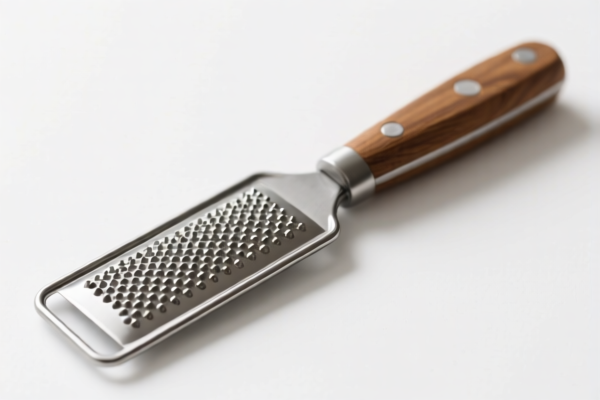
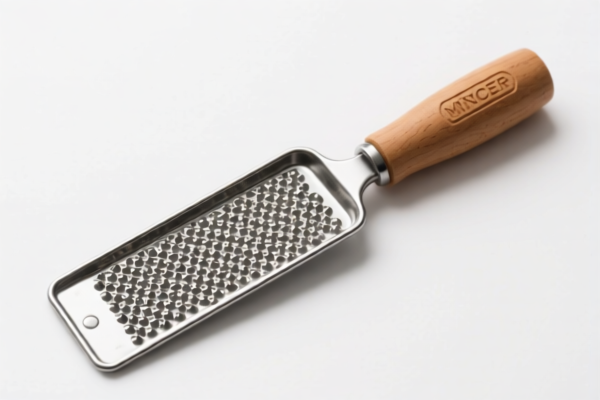

AI Analysis
🥩 Mincer / Meat Grinder (Food Processing Machinery)
🌐 HS Code Reference & Customs Clearance Guide | 2024 Latest Tariff Analysis | Professional Clearance Strategy
📌 I. Product Definition & Classification: What Exactly is a "Mincer"?
A Mincer (or Meat Grinder) is a mechanical device used to force food through a plate with small holes, typically to prepare minced meat. In international trade, classification depends heavily on the power source and intended use:
1. Household Electric Mincers: Portable, electric appliances designed for home use to grind meat or process vegetables. These fall under Chapter 85. 2. Industrial/Commercial Meat Preparers: Large-scale, often manual or heavy-duty electric machines used in slaughterhouses or food processing plants. These fall under Chapter 84. 3. Manual Mechanical Mincers: Hand-cranked or foot-pedal operated devices, classified as simple mechanical tools. These fall under Chapter 82.
⚠️ Key Distinction Point:
- If it is electric and meant for home/kitchen use (even if metal) → Chapter 85 (Electrical Appliances)
- If it is for industrial meat preparation (even if electric) → Chapter 84 (Machinery for preparing meat)
- If it is manual (no electricity) → Chapter 82 (Hand Tools)
📦 II. HS Code Classification Matrix (Based on Provided Data)
| HS Code | Product Description | Application Scenario | Power Source |
|---|---|---|---|
8509.40.00.40 |
Iron Mincer, for food grinding/handling | Home electric household appliance | ⚡ Electric |
8509.40.00.25 |
Iron Mincer, for meat grinding | Food grinding, handling & stirring equipment | ⚡ Electric |
8438.50.00.90 |
Iron Mincer, for meat preparation | Meat/ poultry preparation machinery | ⚡ Electric (Industrial) |
8438.50.00.10 |
Iron Mincer, for meat preparation | Meat or poultry preparation machinery | ⚡ Electric (Industrial) |
8210.00.00.00 |
Iron Mincer, for food preparation | Manual mechanical utensils | 🖐️ Manual |
🔍 Critical Alert:
- Electric Home Use vs. Electric Industrial Use is the biggest pitfall.
-8509items have low base tariffs but are subject to Section 122 duties.
-8438and8210items are subject to Section 301 (25%) + Section 122 (10%), leading to high total duties.
💰 III. 2024 Tariff Rate Breakdown (Detailed Tax Clauses)
✅ Applicable Country: United States (US)
✅ Origin: China (CN)
✅ Applicable Time: Current effective rates (Post-2024 Adjustments)
🎯 1. Household Electric Miners (8509.40.00.40 & 8509.40.00.25)
| Item | Details |
|---|---|
| Base Tariff | 4.2% |
| Section 301 Tariff | 0.0% (Excluded from high-tier 301 list) |
| Section 122 Tariff | 10% |
| Total Tax Rate | 14.2% |
| Tax Calculation | CIF Value × 14.2% |
| De Minimis Eligibility | ❌ No (Usually exceeds $800 threshold for personal use if commercial) |
| Legal Basis | Base Tariff (4.2%) + Section 122 (10%) |
📌 Explanation:
- These codes classify electric household appliances.
- While they avoid the heavy 25% Section 301 tariff, they are still subject to 10% Section 122 (additional duties on specific Chinese goods).
- Total Effective Rate: 14.2%. This is the most cost-effective classification for electric mincers.
🎯 2. Industrial/Commercial Meat Preparers (8438.50.00.90 & 8438.50.00.10)
| Item | Details |
|---|---|
| Base Tariff | 2.8% |
| Section 301 Tariff | 25.0% |
| Section 122 Tariff | 10% |
| Total Tax Rate | 37.8% |
| Tax Calculation | CIF Value × 37.8% |
| De Minimis Eligibility | ❌ No |
| Legal Basis | Base Tariff (2.8%) + Section 301 (25%) + Section 122 (10%) |
📌 Explanation:
- If your electric mincer is deemed industrial grade or used for commercial meat preparation, it falls here.
- It incurs the full 25% Section 301 tariff PLUS the 10% Section 122 tariff.
- Total Effective Rate: 37.8%. This is nearly 2.7x higher than the household version.
🎯 3. Manual Mechanical Miners (8210.00.00.00)
| Item | Details |
|---|---|
| Base Tariff | 3.7% |
| Section 301 Tariff | 25.0% |
| Section 122 Tariff | 10% |
| Total Tax Rate | 38.7% |
| Tax Calculation | CIF Value × 38.7% |
| De Minimis Eligibility | ❌ No |
| Legal Basis | Base Tariff (3.7%) + Section 301 (25%) + Section 122 (10%) |
📌 Explanation:
- Hand-cranked or pedal-powered mincers fall under Manual Mechanical Utensils.
- They are subject to all surcharges.
- Total Effective Rate: 38.7%. This is the highest cost option.
🛠️ IV. Customs Clearance Practical Advice (Battle-Tested Guide)
✅ 1. Document Checklist (Non-Negotiable)
| Document | Required? | Notes |
|---|---|---|
| ✅ Product Specification Sheet | ✔️ | Must specify: Voltage, Wattage, Material (Iron), Function (Grind/Minse). |
| ✅ User Manual / Photos | ✔️ | Crucial: Show controls, power cord, and brand. Distinguish from industrial models. |
| ✅ Commercial Invoice | ✔️ | Clearly state: "Electric Household Meat Mincer, Not for Industrial Use". |
| ✅ Packing List | ✔️ | List all accessories (grinding plates, pusher). Do not split shipments unnecessarily. |
| ✅ Country of Origin Cert. | ✔️ | Required for Section 122 & 301 duty calculations. |
✅ 2. Declaration Strategy (Key Mnemonic)
🔥 “Household Electric? Go 8509. Industrial? Pay 37%. Manual? Pay 38%!”
| Scenario | Recommended HS Code | Total Tax | Risk Level |
|---|---|---|---|
| Electric Home Mincer | 8509.40.00.40 or 8509.40.00.25 |
14.2% | ✅ Low (Best Option) |
| Electric Commercial Mincer | 8438.50.00.90 or 8438.50.00.10 |
37.8% | ⚠️ High (Verify use case) |
| Manual Crank Mincer | 8210.00.00.00 |
38.7% | ⚠️ High (Avoid if electric possible) |
📌 Important Tip:
- If you sell an electric mincer, always strive to classify it under 8509.
- Ensure your marketing materials describe it as a "Kitchen Appliance" or "Household Item", not "Food Processing Equipment".
- Industrial classifiers often look for continuous operation, large capacity, or specialized safety features. If yours is a standard home appliance, emphasize portability and home use.
✅ 3. Special Cases & Pitfalls
| Situation | Advice |
|---|---|
| "Industrial-Style" Home Mincer | Even if it looks heavy-duty, if it plugs into a standard 110V/220V outlet and is sold for home use, argue for 8509. Provide proof of retail packaging. |
| Missing Power Cord | If shipped without a cord, customs may still classify based on design intent. Provide wiring diagrams showing standard household voltage compatibility. |
| Mixed Orders | If shipping both electric and manual mincers, declare separately. Do not mix, as rates differ significantly (14.2% vs 38.7%). |
| Section 122 Applicability | Remember: Both 8509 and 8438/8210 are subject to the 10% Section 122 tariff. There is no way to avoid this 10% surcharge on Chinese-made mincers currently. |
🌍 V. Global Market Comparison (2024 Snapshot)
| Market | Recommended HS Code | Base Tariff | Additional Duties (China) | Total Est. Rate |
|---|---|---|---|---|
| 🇺🇸 USA | 8509.40.00.40 |
4.2% | Sec 301 (0%) + Sec 122 (10%) | 14.2% |
| 🇪🇺 EU | 8543.70.90 (Similar) |
~3-4% | No Section 301/122 | ~4% |
| 🇨🇳 China | 8509.40.00 |
0-10% | N/A | 0-10% |
| 🇬🇧 UK | 8543.70.90 |
~3-4% | No Section 301/122 | ~4% |
📌 Conclusion:
- The US is the most expensive market due to Section 122 (10%) and potential Section 301 (25%).
- European and UK markets are significantly cheaper, as they do not impose these specific punitive tariffs.
📌 VI. Common Errors & Pitfalls (Lessons Learned)
❌ Mistake 1: Classifying an Electric Home Mincer as 8438 (Industrial)
👉 Consequence: Tax jumps from 14.2% to 37.8%. Loss of Profit!
❌ Mistake 2: Classifying a Manual Mincer as 8509
👉 Consequence: Customs rejection. Manual tools cannot be electrical appliances. Fine + Delay.
❌ Mistake 3: Ignoring Section 122
👉 Consequence: Underestimating landed cost. All these codes include 10% Sec 122. Plan your pricing accordingly.
❌ Mistake 4: Vague Description ("Meat Chopper")
👉 Consequence: Customs ambiguity. Use precise terms: "Electric Household Meat Mincer, 200W, Iron Body".
✅ Correct Approach:
"Electric Household Meat Mincer, Model XYZ, 110V, 200W, For Home Kitchen Use Only, Iron Construction."
🎯 VII. Conclusion: Professional Declaration, Cost Optimization!
🎯 Remember the Rule of Thumb:
🔹 "Home Electric = 8509 (14.2%) | Industrial Electric = 8438 (37.8%) | Manual = 8210 (38.7%)"
🔹 "Every percentage point counts. Classify correctly, save thousands."
📌 Pro Tip:
If your product is exported to non-US markets, you can avoid the Section 122 (10%) and Section 301 (25%) tariffs entirely, reducing your duty burden significantly.
Consider market diversification to mitigate US tariff risks.
📣 Take Action Now:
📞 Consult a licensed customs broker to apply for an Advance Ruling on your specific model.
📸 Document your product’s home-use features (compact size, standard plug, retail box).
🚀 Clear goods faster, pay less tax, and maximize your margins!
✨ Precision Classification is the Key to Profit!
💼 Your Bottom Line Depends on the HS Code.
Customer Reviews
About HS Code Classification
The Harmonized System (HS) is an internationally standardized nomenclature developed by the World Customs Organization (WCO) to classify traded products. Over 200 countries use the HS system as the basis for customs tariffs, trade statistics, and import/export regulations.
Each HS code follows a hierarchical structure:
- Chapter (2 digits) — Broad category of goods (e.g., Chapter 84: Machinery and Mechanical Appliances)
- Heading (4 digits) — More specific grouping within the chapter
- Subheading (6 digits) — Internationally standardized breakdown, used by all WCO member countries
- National subdivisions (8-10 digits) — Country-specific extensions for further classification, such as US HTSUS 10-digit codes
Correct HS code classification is essential for smooth customs clearance, accurate duty payment, and compliance with trade regulations. Misclassification can lead to customs delays, overpayment of duties, or penalties.
When importing from CN to US, the applicable tariff rates may include:
- Most-Favored-Nation (MFN) rate — The standard duty rate applied to WTO members
- General rate — Applied to countries without trade agreements
- Trade remedy duties — Additional tariffs such as Section 301 (anti-dumping), Section 232 (national security), or countervailing duties
The information provided on this page is for reference purposes only. For official classification, please consult with your local customs authority or a licensed customs broker.