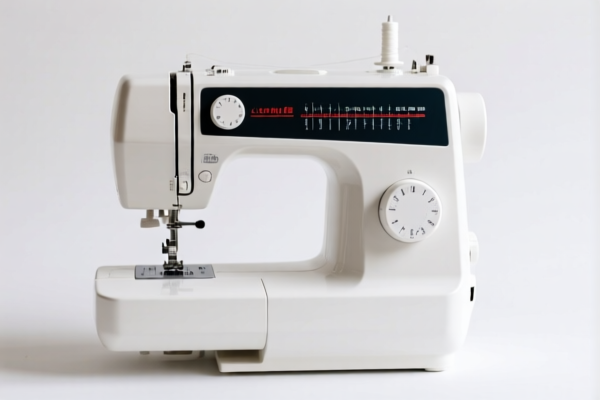
Mini Handheld Sewing Machine
CN → US| HS Code | Tariff Rate | Origin | Destination | Doc |
|---|---|---|---|---|
| 8509805095 | 14.2% | CN | US | Official Doc |
| 8452100090 | 10.0% | CN | US | Official Doc |
| 8452299000 | 10.0% | CN | US | Official Doc |
| 8467895090 | 17.5% | CN | US | Official Doc |
| 8509805080 | 14.2% | CN | US | Official Doc |
Product Images


AI Analysis
✂️ Mini Handheld Sewing Machine (Portable & Cordless Sewing Solutions)
🌐 HS Code Reference & Clearance Guide | 2026 Tariff Analysis | Strategic Import Strategy
📌 I. Product Definition & Classification: What is a "Mini Handheld Sewing Machine"?
The "Mini Handheld Sewing Machine" is a compact, portable device designed for quick repairs, tailoring, and crafting on the go. It is typically battery-powered (cordless) or plug-in, featuring a lightweight, ergonomic "pencil-like" or "gun-like" form factor.
In international trade, these devices face a critical classification dilemma due to their hybrid nature: * Is it a "Sewing Machine" (Category 8452)? → Focus on the function (stitching fabric). * Is it a "Handheld Power Tool" (Category 8467)? → Focus on the form factor (portable, manual operation). * Is it a "Household Appliance" (Category 8509)? → Focus on the electricity source (self-contained motor) and intended use (home use).
⚠️ Critical Distinction:
- If the machine is small, electric, and marketed for home use, it may fall under 8509 (High Tariff ~14.2%).
- If it is strictly classified as a mechanical sewing device (regardless of size), it falls under 8452 (Lower Tariff ~10.0%).
- If customs views it as a "Handheld Tool" (like a drill), it triggers 8467 (Highest Tariff ~17.5% + 7.5% additional).
The classification choice can shift your tax bill by up to 7.5% (2x difference)!
📦 II. HS Code Classification Details (2026 Tariff Authority)
Based on the specific attributes of your product, here are the four potential classifications provided in the reference data:
| HS Code | Product Description | Classification Logic | Applicable Tax Rate |
|---|---|---|---|
8509.80.50.95 |
Home Appliance (Sewing Machine Class) | Logic: Fits "Household Appliances" with self-contained electric motors. Classified under "Other" (8509). | 14.2% |
8452.10.00.90 |
Domestic Sewing Machine | Logic: "Sewing" function matches "Domestic Sewing Machine" (8452). Form fits "Other" catch-all. | 10.0% |
8452.29.90.00 |
Other Sewing Machines (Mini/Handheld) | Logic: "Sewing" function matches "Sewing Machine". "Mini/Handheld" falls under "Other Sewing Machines" (8452). | 10.0% |
8467.89.50.90 |
Handheld Power Tools | Logic: "Handheld" form factor matches "Handheld Tools" (8467). Treated as a general tool, not a dedicated sewing machine. | 17.5% |
8509.80.50.80 |
Household Appliance (Electric) | Logic: "Self-contained electric motor" + "Mini Sewing Machine" form. Fits "Other" household appliances. | 14.2% |
🔍 Key Insight:
-8452(10.0%) is generally the most favorable classification for sewing machines, as it is the specific chapter for sewing equipment.
-8509(14.2%) applies if the product is heavily marketed as a "Home Appliance" rather than a "Machine".
-8467(17.5%) is the riskiest classification, applying if customs agents view it primarily as a "power tool" rather than a "sewing machine".
💰 III. 2026 Tariff Rate Breakdown (Detailed Tax Clause Analysis)
✅ Applicable Country: United States (US)
✅ Origin: China (CN)
✅ Effective Time: 2025/2026 Import Regulations
🎯 Scenario A: The "Best Case" - Sewing Machine Classification (8452)
Codes: 8452.10.00.90 & 8452.29.90.00
Total Tax: 10.0%
| Tax Component | Rate | Details & Legal Basis |
|---|---|---|
| Base Tariff | 0.0% | Standard Most-Favored-Nation (MFN) rate for sewing machines is often duty-free. |
| Section 301 / "Add-on" | 0.0% | No additional Section 301 tariffs listed for these specific subheadings in the source data. |
| Section 122 Tariff | 10.0% | Special Addition: A 10% tariff applied specifically under the "122 Clause" (likely referring to Section 232 or specific China add-on measures). |
| Total Effective Rate | 10.0% | Formula: CIF Value × 10% |
📌 Interpretation:
- The "0%" base tariff suggests the US encourages the import of sewing equipment.
- The 10% comes entirely from the "122 Clause Tariff" (a specific punitive measure on Chinese goods).
- Strategy: Ensure your product is described as a "Domestic Sewing Machine" to leverage the 0% base.
🎯 Scenario B: The "Middle Case" - Household Appliance Classification (8509)
Codes: 8509.80.50.95 & 8509.80.50.80
Total Tax: 14.2%
| Tax Component | Rate | Details & Legal Basis |
|---|---|---|
| Base Tariff | 4.2% | Standard MFN duty for "Other Household Appliances" (8509). |
| Section 301 / "Add-on" | 0.0% | No additional tariff listed. |
| Section 122 Tariff | 10.0% | Same 10% "122 Clause" applied as above. |
| Total Effective Rate | 14.2% | Formula: CIF Value × 14.2% |
📌 Interpretation:
- The tax is 4.2% higher than the8452category solely due to the Base Tariff.
- This happens if customs classifies the item as a "Small Electric Appliance" rather than a "Machine".
- Strategy: Avoid marketing terms that emphasize "Appliance" or "Gadget" without mentioning "Sewing Machine".
🎯 Scenario C: The "Worst Case" - Handheld Tool Classification (8467)
Code: 8467.89.50.90
Total Tax: 17.5%
| Tax Component | Rate | Details & Legal Basis |
|---|---|---|
| Base Tariff | 0.0% | Base rate for "Other Handheld Tools" is 0%. |
| Section 301 / "Add-on" | 7.5% | Significant Penalty: An extra 7.5% tariff applied to handheld tools (likely Section 301 retaliation). |
| Section 122 Tariff | 10.0% | The standard 10% "122 Clause" applies. |
| Total Effective Rate | 17.5% | Formula: CIF Value × 17.5% |
📌 Interpretation:
- This is the most expensive classification.
- The 7.5% "Add-on" tariff is the main culprit. Customs may view the "Handheld" nature as "Tool" rather than "Sewing Machine".
- Strategy: Crucial! Prove the device's primary function is sewing, not general cutting/drilling.
🛠️ IV. Practical Clearance & Strategy Recommendations
✅ 1. Documentation Checklist (Mandatory)
| Document | Requirement | Why? |
|---|---|---|
| Product Brochure | Must explicitly state: "Domestic Sewing Machine" or "Portable Sewing Device". | Avoids classification as "Handheld Tool" (8467). |
| Instruction Manual | Show step-by-step sewing processes (threading, stitching). | Proves "Sewing Function" over "General Tool Function". |
| Circuit Diagram | Highlight the stitching motor and needle mechanism. | Distinguishes from generic power tools (8467). |
| Photographs | Show the machine in use on fabric. | Visual proof of the "Sewing" application. |
| Commercial Invoice | Use precise description: "Mini Handheld Sewing Machine". | Avoid vague terms like "Mini Tool" or "Stitcher". |
✅ 2. Declaration Strategy (The "Golden Rule")
🔥 Rule of Thumb: "Function Over Form!"
Do NOT declare as "Handheld Power Tool" (8467).
DO declare as "Domestic Sewing Machine" (8452).
| Scenario | Correct Declaration | Result |
|---|---|---|
| Product is Electric + Sewing | 8452.10.00.90 or 8452.29.90.00 |
10.0% Tax ✅ (Best Option) |
| Product is Appliance + Home Use | 8509.80.50.95 |
14.2% Tax ⚠️ (Acceptable) |
| Product is Handheld + General Use | 8467.89.50.90 |
17.5% Tax ❌ (Avoid!) |
✅ 3. Special Handling for "Mini/Handheld" Products
| Risk Factor | Mitigation Strategy |
|---|---|
| "Handheld" Trigger | Customs officers often default to 8467 for handheld items. Solution: Emphasize "Sewing" in the HS Code description and invoice. |
| "Home Appliance" Trigger | If the product looks like a "gadget", it might go to 8509. Solution: Ensure the manual highlights industrial/semi-industrial sewing capabilities. |
| "122 Clause" Risk | The 10% tariff is unavoidable if origin is China. Solution: Check if you can qualify for Exclusion List (if applicable for specific models). |
✅ 4. Pro Tip: The "Pre-Ruling" Advantage
🚀 Action: Apply for a Binding Tariff Ruling (BTR) from CBP before shipping.
- Why: Get a written confirmation that your "Mini Handheld" device is classified under 8452 (10%) and NOT 8467 (17.5%).
- Cost: Low administrative cost vs. potential 7.5% tax loss on large shipments.
🌍 V. Summary of Tax Impact
| HS Code Category | Classification Basis | Total Tax | Savings vs. Worst Case |
|---|---|---|---|
| 8452 (Sewing Machine) | Function: Sewing | 10.0% | Save 7.5% |
| 8509 (Appliance) | Function: Home Use | 14.2% | Save 3.3% |
| 8467 (Handheld Tool) | Form: Tool | 17.5% | Baseline (Worst) |
🎯 VI. Conclusion: Don't Let "Handheld" Cost You Profit!
📢 Final Advice:
The term "Handheld" is a double-edged sword. While it's a great marketing feature for consumers, it can trigger higher tariffs in customs.
Your Goal: Prove that SEWING is the primary function, not "holding a tool".
Target HS Code:8452(Total Tax: 10.0%).
Avoid:8467(Total Tax: 17.5%).✨ Expert Tip:
If you are a new exporter, consider applying for a Pre-classification Ruling. It is the only way to lock in the 10% rate and avoid the surprise 17.5% tax bill at the US border!
📌 Need Help?
👉 Contact a Licensed Customs Broker to review your product photos and manuals.
👉 Double-check your Invoice Description against the HS Code 8452.
🚀 Ship Smarter, Pay Less, Clear Faster!
Customer Reviews
About HS Code Classification
The Harmonized System (HS) is an internationally standardized nomenclature developed by the World Customs Organization (WCO) to classify traded products. Over 200 countries use the HS system as the basis for customs tariffs, trade statistics, and import/export regulations.
Each HS code follows a hierarchical structure:
- Chapter (2 digits) — Broad category of goods (e.g., Chapter 84: Machinery and Mechanical Appliances)
- Heading (4 digits) — More specific grouping within the chapter
- Subheading (6 digits) — Internationally standardized breakdown, used by all WCO member countries
- National subdivisions (8-10 digits) — Country-specific extensions for further classification, such as US HTSUS 10-digit codes
Correct HS code classification is essential for smooth customs clearance, accurate duty payment, and compliance with trade regulations. Misclassification can lead to customs delays, overpayment of duties, or penalties.
When importing from CN to US, the applicable tariff rates may include:
- Most-Favored-Nation (MFN) rate — The standard duty rate applied to WTO members
- General rate — Applied to countries without trade agreements
- Trade remedy duties — Additional tariffs such as Section 301 (anti-dumping), Section 232 (national security), or countervailing duties
The information provided on this page is for reference purposes only. For official classification, please consult with your local customs authority or a licensed customs broker.