Mink Fur Material (Unassembled)
CN → US| HS Code | Tariff Rate | Origin | Destination | Doc |
|---|---|---|---|---|
| 4301100020 | 17.5% | CN | US | Official Doc |
| 4103901190 | 17.5% | CN | US | Official Doc |
| 4302110010 | 37.1% | CN | US | Official Doc |
| 4302110020 | 37.1% | CN | US | Official Doc |
| 4301100010 | 17.5% | CN | US | Official Doc |
Product Images
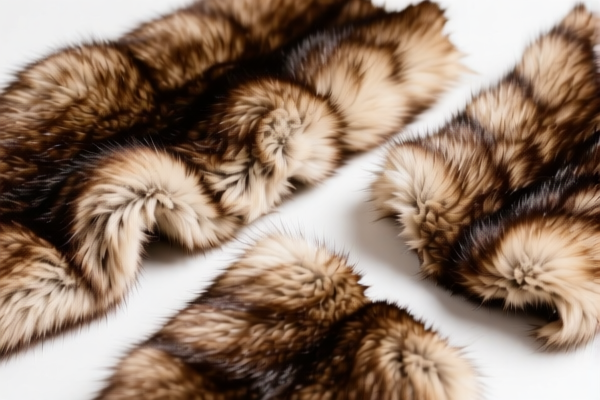
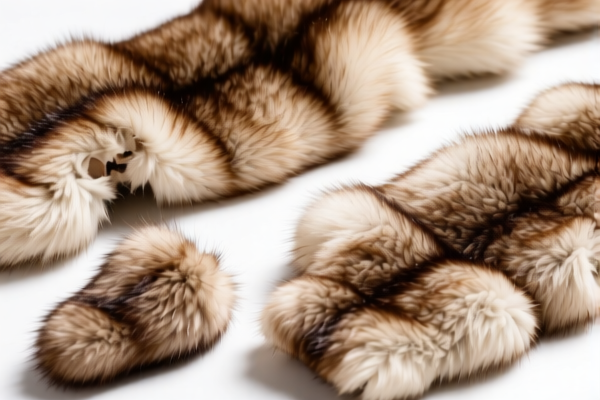
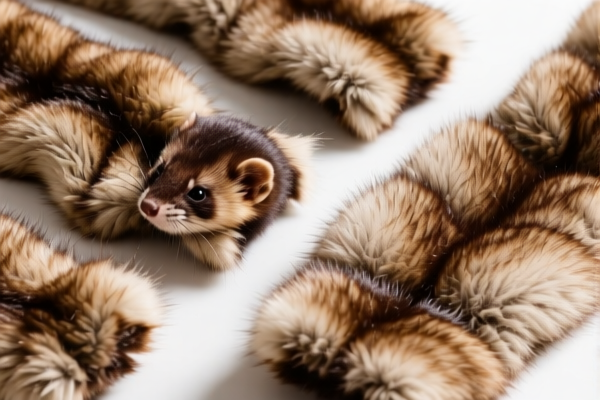
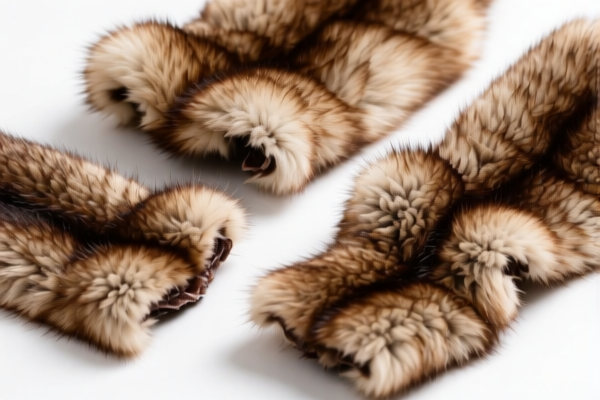
AI Analysis
🦊 Mink Fur Material (Unassembled) – HS Code & Taxation Guide | 2026 Customs Clearance Strategy
🌐 HS Code Reference & Customs Clearance Guide | 2026 Latest Tariff Analysis | Professional Clearance Strategy 📌 One, Product Definition & Classification: Do You Really Understand “Unassembled Mink Fur”?
Mink fur, a high-value luxury material, is strictly regulated in international trade. "Unassembled mink fur" refers to raw or semi-processed fur skins that have not been cut into specific shapes (like sleeves, collars, or panels) and are typically in a whole-skin or pieced-but-not-assembled state.
In international trade, the classification hinges on two critical factors: 1. Processing State: Is it raw skin (untanned), tanned but not assembled, or dyed/finished? 2. State of Assembly: Are the skins stitched together into a garment part, or are they loose?
⚠️ Key Distinction: - Raw/Untaxanned Skins (Raw/Scrap): If the mink skins are untanned and uncolored, they fall under Chapter 41 (Leather). Specifically, 4103.90. - Tanned/Assembled Skins: If the skins are tanned (even if not dyed or assembled into garments), they fall under Chapter 43 (Fur). Specifically, 4301.10 (Raw/Unworked) or 4302.11 (Tanned/Assembled/Unassembled).
📦 Two, HS Code Classification Details (Based on Provided Data)
Below is the precise mapping based on the provided dataset. Each code reflects a specific processing stage.
| HS Code | Product Description | Applicable Scenario | Tax Rate |
|---|---|---|---|
4103.90.11.90 |
Untanned Mink Skins (Raw State) | Skins in their natural state, not tanned, not dyed. Fits the "other raw skins" category. | 17.5% |
4301.10.00.20 |
Untaxanned, Unassembled Mink Fur | Skins that are untanned (or minimally processed to retain original characteristics) and not assembled. Belongs to "other sources." | 17.5% |
4301.10.00.10 |
Untaxanned, Unassembled Mink Fur (Preferred Match) | Skins in raw form, untanned, not assembled. Strongly matches raw fur description. | 17.5% |
4302.11.00.10 |
Tanned, Unassembled Mink Fur (Specific) | Skins that are tanned but not assembled into garments. Fits "material and unassembled whole skin" definition. | 37.1% |
4302.11.00.20 |
Tanned, Unassembled Mink Fur (Other) | Skins that are tanned, not assembled, and do not fit other specific品种的 (breed) categories. | 37.1% |
🔍 Critical Reminder: - Raw vs. Tanned is the Key: If the fur is raw/untanned, use 4103.90.11.90 or 4301.10.00.xx (Low Tax: 17.5%). - If the fur is tanned (even if not dyed or cut), use 4302.11.00.xx (High Tax: 37.1%). - Do Not Mix: Misdeclaring tanned fur as raw fur is a serious compliance risk.
💰 Three, 2026 Latest Tariff Rate Breakdown (Including Surtaxes & Policy Surcharges)
✅ Applicable Country: United States (US) ✅ Origin: China (CN) ✅ Effective Date: 2025 November 10 onwards (including subsequent imports)
🎯 1. 4103.90.11.90 & 4301.10.00.10 & 4301.10.00.20 —— Raw/Untaxanned Mink Fur Skins
| Item | Content |
|---|---|
| Base Tariff Rate | 0.0% (ad valorem) |
| Section 301 Surtax | +7.5% |
| Section 301 Tariff (122 Clause) | +10% |
| Total Tariff Rate | 17.5% |
| Tax Calculation | CIF Value × 17.5% |
| De Minimis Exemption? | ❌ NO (deny_de_minimis) |
| Legal Basis Path | Section 301 + Section 122 → HS Code |
📌 Explanation: - Base Tariff 0%: Raw hides/skins often have low base duties. - Section 301 (7.5%): US additional tariffs on Chinese goods. - Section 122 (10%): Specific tariff for certain animal-derived products or specific trade remedies. - Total 17.5%: Significantly lower than tanned fur, but still subject to high scrutiny.
🎯 2. 4302.11.00.10 & 4302.11.00.20 —— Tanned, Unassembled Mink Fur Skins
| Item | Content |
|---|---|
| Base Tariff Rate | 2.1% (ad valorem) |
| Section 301 Surtax | +25.0% |
| Section 301 Tariff (122 Clause) | +10% |
| Total Tariff Rate | 37.1% |
| Tax Calculation | CIF Value × 37.1% |
| De Minimis Exemption? | ❌ NO (deny_de_minimis) |
| Legal Basis Path | Section 301 + Section 122 → HS Code |
📌 Note: - Base Tariff 2.1%: Tanned fur carries a higher base duty. - Section 301 (25%): The standard high tariff rate for many Chinese manufactured goods, including processed textiles/leather. - Section 122 (10%): Additional levy. - Total 37.1%: This is a high-cost category. Any misclassification from raw (17.5%) to tanned (37.1%) will double your tax liability.
🛠️ Four, Customs Clearance Practical Advice (Real-World Pitfall Avoidance Guide)
✅ 1. Preparation Checklist (Essential Documents)
| Document | Required | Description |
|---|---|---|
| ✅ Product Specification Sheet | ✔️ | Must explicitly state: "Raw/Untaxanned" OR "Tanned." Include processing steps. |
| ✅ Photos of Skins | ✔️ | Show texture, backing, and any marks. Raw skins look different from tanned ones. |
| ✅ Commercial Invoice | ✔️ | Clearly describe goods as "Raw Mink Skins" or "Tanned Mink Skins." Avoid vague terms like "Fur Material." |
| ✅ Packing List | ✔️ | Detail number of skins, weight, and dimensions. |
| ✅ Certificate of Origin (CO) | ✔️ | If applicable, to verify Chinese origin for tariff application. |
| ✅ Third-Party Test Report | ✔️ | Optional but recommended: Confirm tanning process (if any). |
✅ 2. Declaration Tips (Key Mnemonics)
🔥 “Raw is 17.5%, Tanned is 37.1%! Know your process, save half your cost!”
| Scenario | Correct HS Code | Wrong Practice |
|---|---|---|
| Raw, Untanned Skins | 4103.90.11.90 / 4301.10.00.10 |
Declaring as "Tanned" → 37.1% (Overpay!) |
| Tanned, Unassembled Skins | 4302.11.00.10 / 4302.11.00.20 |
Declaring as "Raw" → 17.5% (Underpay! Risk of Penalty) |
| Dyed Skins | 4302.11.00.xx |
Same as tanned; dyeing doesn’t lower tax if already tanned. |
| Assembled Parts (e.g., Collars) | Not in this dataset | Different HS Code; higher complexity. |
✅ 3. Special Situation Handling
| Situation | Handling Advice |
|---|---|
| Mixed Raw & Tanned Shipments | Separate shipments or declare separately. Mixed declarations lead to audits. |
| "Semi-Tanned" Skins | If any tanning agent was used, classify as Tanned (37.1%). When in doubt, declare higher or seek pre-ruling. |
| Origin Misdeclaration | If mink is raised in US/Canada but tanned in China, origin may affect duty. Verify with customs broker. |
| Pre-Order Customs Ruling | For large volumes, apply for Advance Ruling to confirm HS Code and avoid post-entry audits. |
🌍 Five, Global Market Comparison (2026)
| Country/Region | Recommended HS Code | Tariff (China Origin) | Certification | Notes |
|---|---|---|---|---|
| 🇺🇸 USA | 4302.11.00.10 (Tanned) |
37.1% | None Specific | High tariff due to Section 301. |
| 🇺🇸 USA | 4103.90.11.90 (Raw) |
17.5% | None Specific | Lower tariff, but strict definition of "Raw." |
| 🇪🇺 EU | 4302.11 |
Varies (Often 0-5%) | REACH (Chemicals) | EU may have different tanning standards. |
| 🇨🇳 China | 4302.11 |
~2.1-13% | None | Lower tariffs for import into China. |
📌 Conclusion: - USA is the most expensive market for Chinese mink fur due to Section 301 and 122 tariffs. - Raw skins (17.5%) are significantly cheaper than tanned skins (37.1%). - Accuracy is Critical: Misclassification can lead to retroactive tax bills + penalties.
📌 Six, Common Mistakes & Pitfall Guide (Lessons Learned)
❌ Mistake 1: Declaring Tanned fur as Raw to save 19.6% tax 👉 Consequence: Customs audit → Retroactive tax of ~37.1% + Penalties + Potential seizure.
❌ Mistake 2: Using vague terms like "Fur Material" on Invoice 👉 Consequence: Customs cannot determine processing state → Delay in clearance → Storage fees.
❌ Mistake 3: Assuming all Chapter 43 codes are the same
👉 Consequence: Confusing 4301 (Raw/Unworked) with 4302 (Tanned/Assembled) → Wrong tax rate.
❌ Mistake 4: Ignoring Section 122 Tariffs 👉 Consequence: Underestimating total landed cost by 10%.
✅ Correct Approach:
"Mink Skins, Tanned, Unassembled, Not Dyed, Chinese Origin, For Further Processing" OR "Mink Skins, Raw, Untanned, Whole Skins, Chinese Origin"
🎯 Seven, Conclusion: Precision Declaration, Cost Savings, Compliance!
🎯 Remember the Mnemonic:
🔹 "Raw is 17.5%, Tanned is 37.1%! Know your process, save half your cost!" 🔹 "HS Code determines your fate, a 20% difference is huge! Declare once, declare right!"
📌 Pro Tip: If your mink fur is originally from US/Canada but processed in China, consult a customs broker about country of origin rules to potentially avoid US surtaxes. For large shipments, apply for a Pre-Ruling (Advance Ruling) from US Customs and Border Protection (CBP) to lock in the HS Code and tax rate.
📣 Immediate Action:
📞 Contact a licensed customs broker + Provide product photos + Request HS Code Pre-Ruling 🚀 Ensure your mink fur clears customs smoothly, efficiently, and cost-effectively!
✨ Professional Clearance Starts with Accurate Classification! 💼 Every cent of your cost deserves precise calculation!
Customer Reviews
About HS Code Classification
The Harmonized System (HS) is an internationally standardized nomenclature developed by the World Customs Organization (WCO) to classify traded products. Over 200 countries use the HS system as the basis for customs tariffs, trade statistics, and import/export regulations.
Each HS code follows a hierarchical structure:
- Chapter (2 digits) — Broad category of goods (e.g., Chapter 84: Machinery and Mechanical Appliances)
- Heading (4 digits) — More specific grouping within the chapter
- Subheading (6 digits) — Internationally standardized breakdown, used by all WCO member countries
- National subdivisions (8-10 digits) — Country-specific extensions for further classification, such as US HTSUS 10-digit codes
Correct HS code classification is essential for smooth customs clearance, accurate duty payment, and compliance with trade regulations. Misclassification can lead to customs delays, overpayment of duties, or penalties.
When importing from CN to US, the applicable tariff rates may include:
- Most-Favored-Nation (MFN) rate — The standard duty rate applied to WTO members
- General rate — Applied to countries without trade agreements
- Trade remedy duties — Additional tariffs such as Section 301 (anti-dumping), Section 232 (national security), or countervailing duties
The information provided on this page is for reference purposes only. For official classification, please consult with your local customs authority or a licensed customs broker.