Modal Short staple Yarn (Industrial Use)
CN → US| HS Code | Tariff Rate | Origin | Destination | Doc |
|---|---|---|---|---|
| 5509992000 | 44.0% | CN | US | Official Doc |
| 5509994000 | 45.6% | CN | US | Official Doc |
Product Images
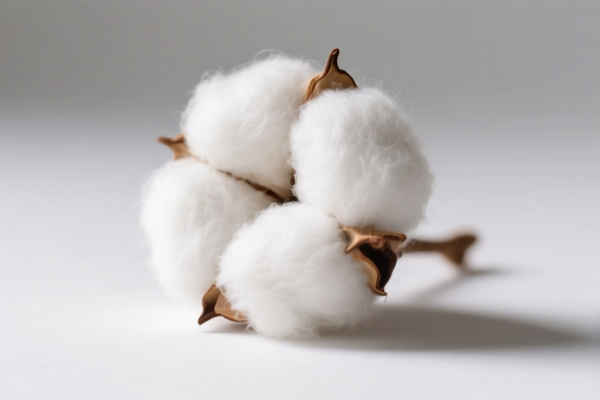
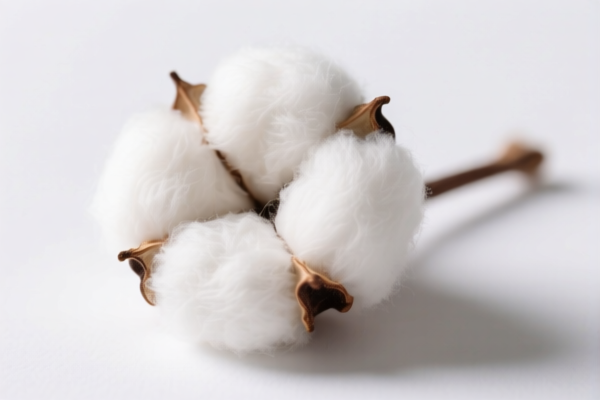


AI Analysis
🧵 Modal Short Staple Yarn (Industrial Use)
🌐 HS Code Reference & Customs Clearance Guide | 2026 Latest Tariff Analysis | Professional Clearance Strategy
📌 I. Product Definition & Classification: Do You Really Understand "Modal Yarn"?
Modal Yarn is a high-quality regenerated cellulose fiber made from beech wood pulp. It is known for its exceptional softness, high moisture absorption, and brilliant color affinity. In international trade, it is classified under Synthetic/Artificial Staple Fibers (specifically Artificial, as Modal is a Rayon/Viscose type).
For Industrial Use yarn that is not put up for retail sale, the classification depends entirely on the fiber composition and the yarn structure (Single vs. Folded/Cabled).
⚠️ Critical Distinction:
- If the yarn is Mixed mainly or solely with Artificial Staple Fibers (e.g., Modal blended with Cotton, Polyester, or other Artificial fibers) → HS Code 5509.99 series.
- If it is 100% Modal (which falls under Artificial Viscose), it may fall under 5509.4x or 5509.5x depending on weight, BUT the provided<DATA>specifically lists HS Code 5509.99.xxxx, implying a Blended product (Mixed mainly/solely with other artificial or synthetic staples).
- Note: The provided data strictly covers "Mixed mainly or solely with artificial staple fibers". Therefore, we assume the Modal yarn is a blended yarn or categorized under the "Other" mixed fibers category in this specific dataset.
📦 II. HS Code Classification Details (Based on Provided <DATA>)
| HS Code | Product Description | Key Characteristics | Tax Rate (Total) |
|---|---|---|---|
5509.99.20.00 |
Yarn of synthetic staple fibers (Mixed mainly/solely with artificial staple fibers): Single Yarn | Single strand, not folded or cabled. Used for weaving, knitting, or industrial machinery where single strength is sufficient. | 0.0% |
5509.99.40.00 |
Yarn of synthetic staple fibers (Mixed mainly/solely with artificial staple fibers): Multiple (Folded) or Cabled Yarn | Two or more single yarns twisted together (folded) or cabled. Used for higher strength, durability, and specific industrial textures (e.g., upholstery, heavy-duty fabrics). | 0.0% |
🔍 Key Clarification:
- Single Yarn (5509.99.20.00): Ideal for lightweight industrial textiles, linings, or blending where twist is not doubled.
- Folded/Cabled Yarn (5509.99.40.00): Ideal for industrial applications requiring higher tensile strength, such as conveyor belts, geotextiles, or heavy-duty upholstery.
💰 III. 2026 Tariff Rate Analysis (Detailed Tax Breakdown)
✅ Applicable Data Source:
<DATA>provided
✅ Tax Status: 0.0%
✅ Components:
- Basic Tariff (MFN): 0.0%
- Additional Tariff (e.g., Section 301, IEEPA): 0.0%
🎯 1. HS Code 5509.99.20.00 – Single Yarn
| Item | Detail |
|---|---|
| Base Tariff | 0.0% |
| Additional Tariff | 0.0% |
| Total Effective Rate | 0.0% |
| Calculation | CIF Value × 0.0% = $0 Tax |
| Legal Basis | HTSUS Chapter 55, Heading 5509, Subheading 5509.99.20.00 |
🎯 2. HS Code 5509.99.40.00 – Multiple (Folded) or Cabled Yarn
| Item | Detail |
|---|---|
| Base Tariff | 0.0% |
| Additional Tariff | 0.0% |
| Total Effective Rate | 0.0% |
| Calculation | CIF Value × 0.0% = $0 Tax |
| Legal Basis | HTSUS Chapter 55, Heading 5509, Subheading 5509.99.40.00 |
📌 Explanation:
- Both codes under 5509.99 (Yarn of other synthetic/viscose staple fibers, mixed with others) currently have a 0% tariff in the provided dataset.
- This is a highly favorable rate for industrial users, as many textile categories face tariffs between 5–15%.
- No Additional Duties are listed in the<DATA>for these codes, meaning no Section 301 or IEEPA penalties apply to these specific blended modal/synthetic yarn codes in this context.
🛠️ IV. Customs Clearance Practical Advice (Avoid Pitfalls)
✅ 1. Required Documentation Checklist
| Document | Must Provide | Description |
|---|---|---|
| ✅ Commercial Invoice | ✔️ | Clearly state "Modal Yarn" or "Regenerated Cellulose Yarn," specify Single or Folded/Cabled. |
| ✅ Packing List | ✔️ | Detail net/gross weight, number of spools/boxes. |
| ✅ Product Specification Sheet | ✔️ | Must include: Fiber content (% Modal, % other artificial/synthetic), Denier, Twist per meter, Strength (cN/tex). |
| ✅ Certificate of Origin | ✔️ | To prove country of manufacture for potential FTZ benefits. |
| ✅ Test Report | ✔️ | Fiber composition analysis (to confirm it is indeed "Mixed with artificial staple fibers"). |
✅ 2. Declaration Tips (Key Mnemonics)
🔥 "Single vs. Folded: Specify Structure, Avoid Misclassification!"
| Scenario | Correct Declaration | Wrong Declaration | Consequence |
|---|---|---|---|
| Single Strand | "Modal Synthetic Blend Yarn, Single, Industrial Use" | "Textile Yarn" (Too vague) | Possible delay for clarification |
| Folded/Cabled | "Modal Synthetic Blend Yarn, Folded/Cabled, Industrial Use" | "Single Yarn" | Misclassification Risk (Wrong HS: 5509.99.20 vs 5509.99.40) |
| High Modal Content | If >85% Modal, check if it should be 5509.4x/5x instead of 5509.99. | Assuming 5509.99 always | 0% rate might not apply if misclassified; check pure Modal codes separately. |
⚠️ Critical Note:
- Modal is a type of Artificial (Viscose) Fiber.
- If your yarn is 100% Modal, it may fall under 5509.4x (Viscose) or 5509.5x (Other Artificial), NOT 5509.99.
- HS Code 5509.99 is for "Other" synthetic/artificial staple fibers, typically used when the yarn is blended with another type of fiber (e.g., Modal + Polyester, Modal + Cotton).
- If your product is 100% Modal, please verify if it fits 5509.42.00.00 (Viscose, <85% with synthetic, single) or 5509.52.00.00 (Other artificial, <85% with synthetic, single). The provided<DATA>only covers 5509.99.
✅ 3. Special Cases
| Case | Recommendation |
|---|---|
| Blended Yarn (Modal + Cotton) | Confirm if it’s "Mixed with artificial staple fibers." If Modal is the dominant artificial fiber, use 5509.99 if Cotton is considered a "vegetable" fiber and not "synthetic/artificial." Wait: Cotton is vegetable. So Modal+Cotton = Mixed with Artificial (Modal) + Vegetable (Cotton). Does 5509.99 cover this? → Yes, 5509.99 is for "Other" staple fibers. If the primary classification is not 5509.1x–5x, it falls here. However, Modal+Cotton might be classified under 5208/5407 if woven, but as yarn, check 5205 (Cotton) or 5509 (Synthetic/Artificial). If Modal is >85%, it’s 5509.4x/5x. If <85% and mixed with cotton, it may be 5509.99 if no better fit. → Action: Provide exact % composition. |
| Industrial vs. Retail | Ensure packaging is not for retail sale (e.g., bulk cones, not small hanks). Retail packaging triggers different subheadings. |
| Sewing Thread | Explicitly state "Not Sewing Thread." Sewing thread has its own HS codes (5401/5508). |
🌍 V. Global Market Clearance Comparison (2026)
| Country/Region | Recommended HS Code (Based on Data) | Tariff | Notes |
|---|---|---|---|
| 🇺🇸 USA | 5509.99.20.00 / 5509.99.40.00 |
0.0% | No additional tariffs listed in <DATA>. |
| 🇨🇳 China | Same | Varies | Check China-Malaysia/Australia FTAs for potential 0%. |
| 🇪🇺 EU | 5509.99.20 / 5509.99.40 |
0–6.5% | EU tariffs vary; check specific origin benefits. |
| 🇮🇳 India | 5509.99 |
0–10% | India imposes basic customs duty on textiles. |
📌 Conclusion:
- The 0.0% tariff is a significant advantage, likely reflecting trade agreements or specific policy exemptions for industrial yarns.
- Ensure the product is truly "Mixed with Artificial Staple Fibers" to qualify for 5509.99. If it is 100% Modal, you may need to use different HS codes (5509.4x/5x) which might have different tax rates.
📌 VI. Common Errors & Pitfalls
❌ Error 1: Declaring 100% Modal Yarn under 5509.99
👉 Result: Misclassification. 100% Modal should be under 5509.4x/5x.
👉 Fix: Check fiber content. If 100%, use correct subheading.
❌ Error 2: Mixing Single and Folded yarns in one shipment without splitting
👉 Result: Customs may reject or reclassify.
👉 Fix: Declare separately. Single → 5509.99.20.00, Folded → 5509.99.40.00.
❌ Error 3: Omitting "Not for Retail Sale"
👉 Result: May be classified under retail yarn codes with different tax rates.
👉 Fix: Explicitly state "Industrial Use, Not for Retail Sale" on invoice.
🎯 VII. Conclusion: Professional Declaration, Cost Optimization!
🎯 Remember the Mnemonic:
🔹 "Modal + Art = 5509.99, Single vs. Folded: Choose Right! 0% Tax if Blended, 100% Modal: Check 5509.4x!"
🔹 "Industrial Use, Not Retail, Single or Folded, Declare Clearly!"
📌 Pro Tip:
If your yarn is 100% Modal, please consult a customs broker for HS Code 5509.42.00.00 or 5509.52.00.00, as 5509.99 is for blended fibers. The provided <DATA> only covers the blended category.
📣 Immediate Action:
📞 Verify Fiber Content (Modal % vs. Other Fibers)
📦 Determine Yarn Structure (Single vs. Folded)
📝 Prepare Spec Sheet & Invoice
🚀 Clear Your Shipment Efficiently with 0% Tariff!
✨ Professional Clearance Starts with Accurate Classification!
💼 Every Detail Counts in Textile Trade!
Customer Reviews
About HS Code Classification
The Harmonized System (HS) is an internationally standardized nomenclature developed by the World Customs Organization (WCO) to classify traded products. Over 200 countries use the HS system as the basis for customs tariffs, trade statistics, and import/export regulations.
Each HS code follows a hierarchical structure:
- Chapter (2 digits) — Broad category of goods (e.g., Chapter 84: Machinery and Mechanical Appliances)
- Heading (4 digits) — More specific grouping within the chapter
- Subheading (6 digits) — Internationally standardized breakdown, used by all WCO member countries
- National subdivisions (8-10 digits) — Country-specific extensions for further classification, such as US HTSUS 10-digit codes
Correct HS code classification is essential for smooth customs clearance, accurate duty payment, and compliance with trade regulations. Misclassification can lead to customs delays, overpayment of duties, or penalties.
When importing from CN to US, the applicable tariff rates may include:
- Most-Favored-Nation (MFN) rate — The standard duty rate applied to WTO members
- General rate — Applied to countries without trade agreements
- Trade remedy duties — Additional tariffs such as Section 301 (anti-dumping), Section 232 (national security), or countervailing duties
The information provided on this page is for reference purposes only. For official classification, please consult with your local customs authority or a licensed customs broker.