Modified Acrylic Short Fiber Woven Fabric
CN → US| HS Code | Tariff Rate | Origin | Destination | Doc |
|---|---|---|---|---|
| 5516930090 | 43.5% | CN | US | Official Doc |
| 5509620000 | 47.0% | CN | US | Official Doc |
| 5509610000 | 48.2% | CN | US | Official Doc |
| 5503300000 | 39.3% | CN | US | Official Doc |
| 5402499140 | 43.0% | CN | US | Official Doc |
Product Images
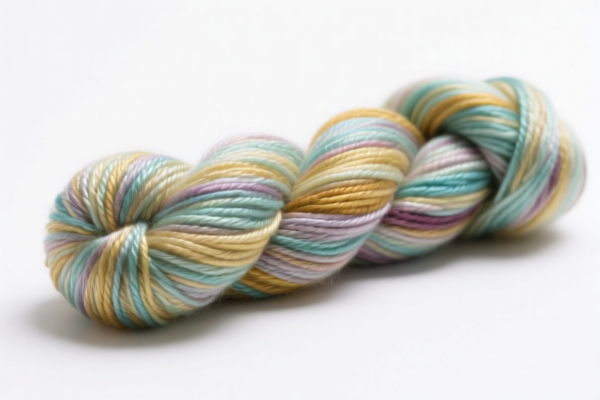
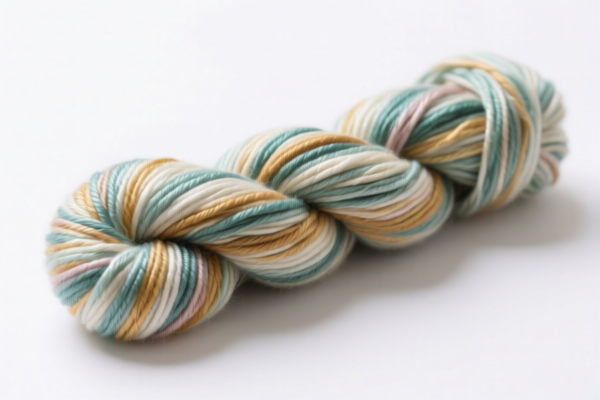
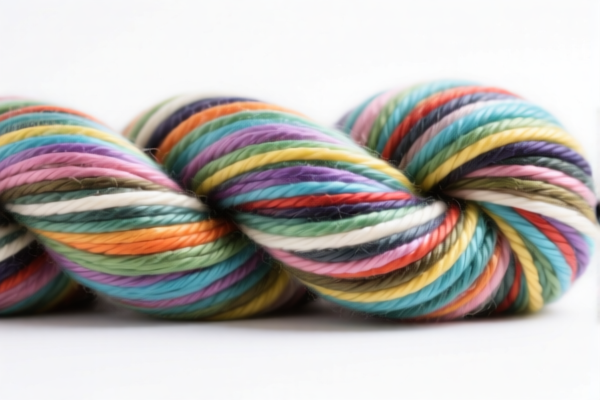
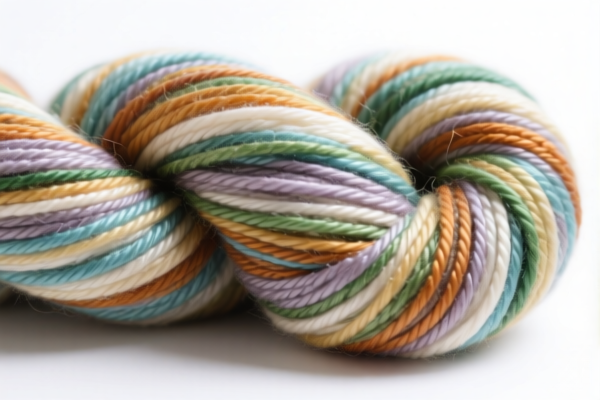
AI Analysis
🧵 Modified Acrylic Short Fiber Woven Fabric
🌐 HS Code Reference & Customs Clearance Guide | 2026 Latest Tariff Analysis | Professional Clearance Strategy
📌 I. Product Definition & Classification: Do You Really Understand "Modified Acrylic Short Fiber Fabric"?
Modified Acrylic Short Fiber Woven Fabric is a high-performance textile material made from man-made staple fibers (specifically modified acrylic/acrylonitrile) that have been spun, woven, and finished. In international trade, it is classified based on fiber content, form (staple vs. filament), and blending ratios.
⚠️ Key Classification Distinction:
- If the product is woven fabric made of modified acrylic short fibers →归入 5516.93.00.90
- If the product is yarn (not yet woven) →归入 5509 series
- If the product is raw fiber (not yet spun) →归入 5503.30.00.00
- If the product is filament yarn (not short fiber) →归入 5402.49.91.40
📦 II. HS Code Classification Details (2026 Latest Tariff Authority Reference)
| HS Code | Product Description | Application Scenario | Fiber Form | Blending? |
|---|---|---|---|---|
5516.93.00.90 |
Woven fabric of modified acrylic short fibers, not elsewhere specified | Apparel, upholstery, industrial fabrics | ✅ Short Fiber | Usually pure or minor blends |
5509.62.00.00 |
Yarn of modified acrylic short fibers, ≥85% by weight of acrylonitrile | Textile manufacturing, knitting, weaving prep | ✅ Short Fiber Yarn | ❌ Pure |
5509.61.00.00 |
Yarn of modified acrylic short fibers mixed with wool | Luxury textiles, wool-blend fabrics | ✅ Short Fiber Yarn | ✅ With Wool |
5503.30.00.00 |
Modified acrylic short fibers (staples) | Raw material for spinning mills | ✅ Raw Staple Fiber | ❌ Unspun |
5402.49.91.40 |
Modified acrylic filament yarn (monofilament <50 decitex) | High-strength industrial uses, specialty textiles | ❌ Filament (Not Short) | ❌ Pure |
🔍 Critical Reminder:
- "Short Fiber" (短纤) refers to fibers cut to staple lengths (typically 1–15 cm), spun into yarn before weaving.
- "Filament" (长丝) refers to continuous fibers, not spun from staples.
- Woven Fabric must be classified under Chapter 55 (if made from short fibers) or Chapter 54 (if made from filaments).
- Do not confuse yarn with fabric: Yarn (5509/5402) ≠ Fabric (5516).
💰 III. 2026 Latest Tariff Rate Breakdown (Including Additional Duties & Policy Surcharges)
✅ Applicable Country: United States (US)
✅ Origin: China (CN)
✅ Effective Date: From November 10, 2025 onwards (including subsequent imports)
🎯 1. 5516.93.00.90 —— Modified Acrylic Short Fiber Woven Fabric
| Item | Content |
|---|---|
| Base Tariff Rate | 8.5% (ad valorem) |
| Section 301 Additional Tariff | +25.0% |
| Section 122 Tariff | +10.0% |
| Total Tax Rate | 43.5% |
| Tax Calculation | CIF Value × 43.5% |
| De Minimis Exemption Eligible? | ❌ No (deny_de_minimis) |
| Legal Basis Path | USITC:5516.93.00.90 → FOOTNOTE:301 → FOOTNOTE:122 |
📌 Explanation:
- 8.5% base tariff is the standard MFN rate for modified acrylic woven fabric.
- 25% Section 301 tariff applies to all Chinese-origin textile products under specific headings.
- 10% Section 122 tariff is a recent national security-related surcharge on certain industrial materials.
- Total 43.5% is extremely high, requiring advance planning!
🎯 2. 5509.62.00.00 —— Modified Acrylic Short Fiber Yarn (Pure)
| Item | Content |
|---|---|
| Base Tariff Rate | 12.0% |
| Section 301 Additional Tariff | +25.0% |
| Section 122 Tariff | +10.0% |
| Total Tax Rate | 47.0% |
| Tax Calculation | CIF Value × 47.0% |
| De Minimis Exemption Eligible? | ❌ No |
| Legal Basis Path | USITC:5509.62.00.00 → FOOTNOTE:301 → FOOTNOTE:122 |
📌 Note:
- Higher base rate (12.0%) than woven fabric due to yarn being considered a semi-finished good.
- Same additional tariffs apply.
🎯 3. 5509.61.00.00 —— Modified Acrylic Short Fiber Yarn Mixed with Wool
| Item | Content |
|---|---|
| Base Tariff Rate | 13.2% |
| Section 301 Additional Tariff | +25.0% |
| Section 122 Tariff | +10.0% |
| Total Tax Rate | 48.2% |
| Tax Calculation | CIF Value × 48.2% |
| De Minimis Exemption Eligible? | ❌ No |
| Legal Basis Path | USITC:5509.61.00.00 → FOOTNOTE:301 → FOOTNOTE:122 |
📌 Note:
- Wool blends attract higher base tariffs due to protectionist policies for domestic wool industry.
- Highest total rate among the options.
🎯 4. 5503.30.00.00 —— Modified Acrylic Short Fibers (Raw Staples)
| Item | Content |
|---|---|
| Base Tariff Rate | 4.3% |
| Section 301 Additional Tariff | +25.0% |
| Section 122 Tariff | +10.0% |
| Total Tax Rate | 39.3% |
| Tax Calculation | CIF Value × 39.3% |
| De Minimis Exemption Eligible? | ❌ No |
| Legal Basis Path | USITC:5503.30.00.00 → FOOTNOTE:301 → FOOTNOTE:122 |
📌 Note:
- Lowest total rate because raw fibers have the lowest base tariff.
- Suitable if importing for further processing (spinning/weaving) domestically.
🎯 5. 5402.49.91.40 —— Modified Acrylic Filament Yarn (Monofilament)
| Item | Content |
|---|---|
| Base Tariff Rate | 8.0% |
| Section 301 Additional Tariff | +25.0% |
| Section 122 Tariff | +10.0% |
| Total Tax Rate | 43.0% |
| Tax Calculation | CIF Value × 43.0% |
| De Minimis Exemption Eligible? | ❌ No |
| Legal Basis Path | USITC:5402.49.91.40 → FOOTNOTE:301 → FOOTNOTE:122 |
📌 Note:
- Although classified under Chapter 54 (Filament), it is still subject to Section 301 and 122 surcharges.
- Not recommended for standard short fiber fabric production.
🛠️ IV. Customs Clearance Practical Advice (Battle-Tested Pitfall Avoidance Guide)
✅ 1. Required Documentation Checklist (None Can Be Omitted)
| Document | Mandatory? | Description |
|---|---|---|
| ✅ Product Specification Sheet | ✔️ | Includes fiber composition, weight, width, weave pattern, finish type |
| ✅ Fiber Test Report | ✔️ | Third-party lab report confirming "Modified Acrylic" composition |
| ✅ Product Photos (Including Label) | ✔️ | Clear shots of fabric roll, label, and any branding |
| ✅ Commercial Invoice | ✔️ | Must specify "Modified Acrylic Short Fiber Woven Fabric" |
| ✅ Packing List | ✔️ | Detail dimensions, weight, number of rolls/bales |
| ✅ Certificate of Origin (CO) | ✔️ | If not China-origin, may qualify for preferential treatment |
| ✅ Importer Security Filing (ISF) | ✔️ | Required for US imports 24 hours before loading |
✅ 2. Declaration Tips (Key Mantra)
🔥 "Fabric not yarn, fiber not filament, name precise, tax minimized!"
| Scenario | Correct Declaration | Wrong Practice |
|---|---|---|
| Woven fabric from short fibers | 5516.93.00.90 |
Misdeclare as yarn → 47%+ |
| Yarn from short fibers | 5509.62.00.00 |
Misdeclare as fabric → 43.5% |
| Raw short fibers | 5503.30.00.00 |
Misdeclare as yarn → 47% |
| Filament yarn | 5402.49.91.40 |
Misdeclare as short fiber → 43.5% |
✅ 3. Special Case Handling
| Scenario | Handling Advice |
|---|---|
| Custom-Dyed Fabric | Provide dye formula and color fastness test report to avoid misclassification as "plain" fabric |
| Blended Fabric (e.g., with Cotton) | If acrylic <85%, may fall under different subheading; provide blending ratio proof |
| OEM Orders | Provide customer PO and design specs to prevent "non-standard" classification issues |
| Industrial vs. Apparel Use | Use does not change HS Code, but may affect duty exemption applications (rare for textiles) |
🌍 V. Global Market Clearance Comparison (2026 Latest)
| Country/Region | Recommended HS Code | Tariff | Certification Requirements | Notes |
|---|---|---|---|---|
| 🇺🇸 United States | 5516.93.00.90 |
43.5% (China-origin) | N/A (Textiles generally no special certs) | Highest duty burden |
| 🇨🇳 China | 5516.93.00.90 |
8.5% | N/A | No additional surcharges |
| 🇪🇺 European Union | 5516.93.00.90 |
4.0–6.0% | REACH, OEKO-TEX | No Section 301/122 |
| 🇬🇧 United Kingdom | 5516.93.00.90 |
4.0–6.0% | UK REACH | Post-Brexit alignment with EU |
| 🇯🇵 Japan | 5516.93.00.90 |
3.5% | JIS Standards | Low base tariff |
| 🇦🇺 Australia | 5516.93.00.90 |
5.0% | ACCC Compliance | No surcharges |
📌 Conclusion:
- The US is the only major market imposing punitive surcharges (Section 301 + 122) on Chinese textiles.
- Chinese-origin modified acrylic fabric faces 43.5% total duty in the US, making supply chain diversification critical.
- Consider sourcing from Vietnam, Bangladesh, or India for US-bound shipments to avoid surcharges.
📌 VI. Common Errors & Pitfall Avoidance Guide (Lessons from Blood & Tears)
❌ Mistake 1: Declaring "Woven Fabric" when product is actually Yarn
👉 Consequence: Under-declaration → 47% vs 43.5% → Penalties + Back Taxes!
❌ Mistake 2: Declaring "Short Fiber" when product is Filament Yarn
👉 Consequence: Misclassification → 43.0% vs 43.5% → Possible audits + delays!
❌ Mistake 3: Failing to provide Fiber Composition Proof
👉 Consequence: Customs怀疑为棉或涤纶 → 误归类 → 补税+罚款!
❌ Mistake 4: Using vague terms like "Acrylic Fabric" without specifying "Modified" or "Short Fiber"
👉 Consequence: Customs may default to highest-duty category → Higher tax liability!
✅ Correct Declaration Example:
"Modified Acrylic Short Fiber Woven Fabric, 100% Modified Polyacrylonitrile, Weight: 200 GSM, Width: 150 cm, Plain Weave, For Apparel Use, Chinese Origin"
🎯 VII. Conclusion: Precise Classification Saves Costs!
🎯 Remember the Mantra:
🔹 "Fabric vs Yarn, Fiber vs Filament, Name Matters, Tax Changes!"
🔹 "HS Code Determines Destiny, 43.5% vs 8.5%, One Step Wrong, Bill Skyrockets!"
📌 Pro Tip:
If your product originates from Vietnam, Bangladesh, India, or Turkey, you may qualify for Section 301/122 Exemptions, reducing tariffs to 0–6%.
Recommendation: Apply for an Advance Ruling from US Customs and Border Protection (CBP) before shipment to mitigate classification risks.
📣 Take Action Now:
📞 Contact a Licensed Customs Broker + Provide Product Specs + Apply for HS Code Advance Ruling
🚀 Ensure Your Modified Acrylic Fabric Clears Customs Smoothly, Boosts Profits, and Stays Competitive!
✨ Professional Clearance Starts with Precise Classification!
💼 Every Penny of Cost Deserves Exact Calculation!
Customer Reviews
About HS Code Classification
The Harmonized System (HS) is an internationally standardized nomenclature developed by the World Customs Organization (WCO) to classify traded products. Over 200 countries use the HS system as the basis for customs tariffs, trade statistics, and import/export regulations.
Each HS code follows a hierarchical structure:
- Chapter (2 digits) — Broad category of goods (e.g., Chapter 84: Machinery and Mechanical Appliances)
- Heading (4 digits) — More specific grouping within the chapter
- Subheading (6 digits) — Internationally standardized breakdown, used by all WCO member countries
- National subdivisions (8-10 digits) — Country-specific extensions for further classification, such as US HTSUS 10-digit codes
Correct HS code classification is essential for smooth customs clearance, accurate duty payment, and compliance with trade regulations. Misclassification can lead to customs delays, overpayment of duties, or penalties.
When importing from CN to US, the applicable tariff rates may include:
- Most-Favored-Nation (MFN) rate — The standard duty rate applied to WTO members
- General rate — Applied to countries without trade agreements
- Trade remedy duties — Additional tariffs such as Section 301 (anti-dumping), Section 232 (national security), or countervailing duties
The information provided on this page is for reference purposes only. For official classification, please consult with your local customs authority or a licensed customs broker.