Multi function Folding Knife
CN → US| HS Code | Tariff Rate | Origin | Destination | Doc |
|---|---|---|---|---|
| 8211930035 | 0.0% | CN | US | Official Doc |
| 8205595510 | 40.3% | CN | US | Official Doc |
| 8205513030 | 38.7% | CN | US | Official Doc |
Product Images
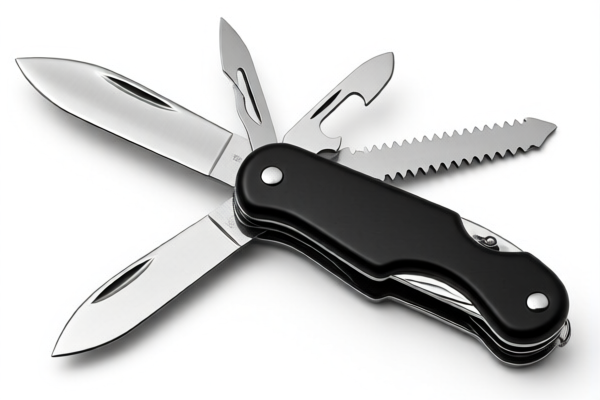
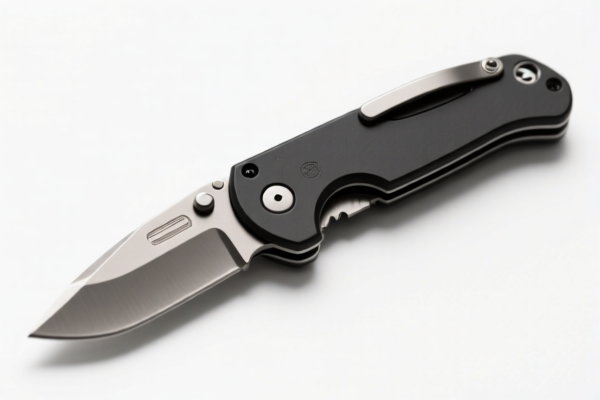
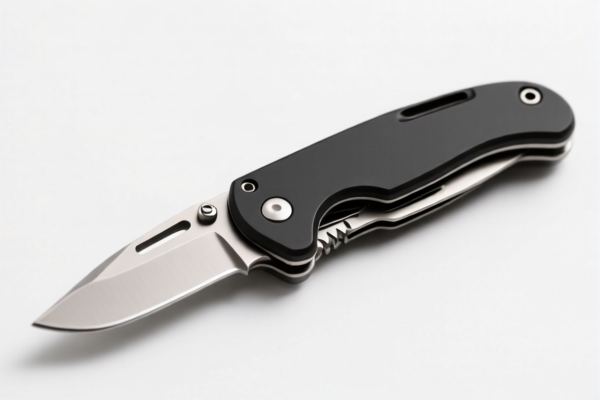
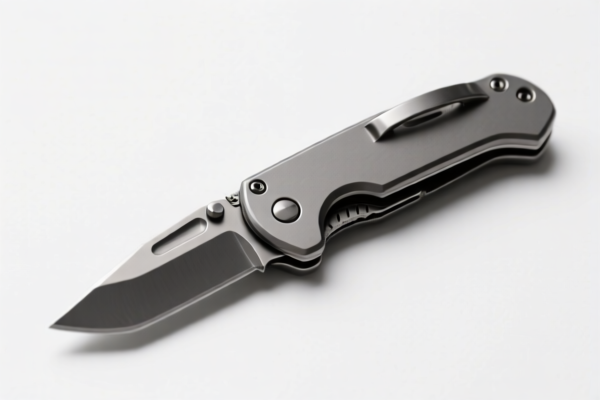
AI Analysis
🔪 Multi-Function Folding Knife: The Ultimate Import Guide
🌐 HS Code Reference & Customs Clearance Guide | 2026 Latest Tariff Analysis | Professional Compliance Strategy
📌 Part 1: Product Definition & Classification – What Exactly is a "Multi-Function Folding Knife"?
A Multi-Function Folding Knife is a compact, portable tool typically used for camping, utility tasks, or everyday carry (EDC). It is characterized by a folding blade mechanism and additional tools such as screwdrivers, can openers, or pliers integrated into the handle.
In international trade, these knives are generally classified based on two key factors: 1. Material: Predominantly Steel (Iron/Steel articles). 2. Function: Categorized as Hand Tools (if primarily for mechanical utility) or Cutlery/Knives (if primarily for cutting, specifically pocket knives).
⚠️ Critical Distinction:
- If the knife is primarily for cutting (pocket style), it may fall under Chapter 82 (Knives) or Chapter 83 (Tools).
- If it is a multi-tool with significant mechanical components (pliers, screwdrivers), customs often classify it under Hand Tools (Chapter 82) or Miscellaneous Articles of Base Metal (Chapter 83).
- Material Assumption: Unless specified otherwise (e.g., ceramic, wood, plastic), assume Steel/Metal composition.
📦 Part 2: HS Code Classification Details (2026 Latest Tariff Cross-Reference)
Based on the provided data, here are the three most likely HS Codes for this product, ranked by logical fit and cost implication.
| HS Code | Product Description | Matching Logic & Summary | Tax Rate |
|---|---|---|---|
| 8211.93.00.35 | Pocket Knives & Similar Blades | High Precision Match: • The summary explicitly states: "The term 'Pocket Knife' in the product name matches 'Pocket knives and other similar blades' in the classification..." • Assumes metal/composite material. • Best Fit for Cutlery-style multi-tools. |
3¢ each + 40.4% Total (3¢ base + 5.4% + 35% additional) |
| 8205.59.55.10 | Other Hand Tools, Steel | Broad Categorization: • Infers steel material; fits "hand tools with cutting edges." • Categorized under "Other" multi-function tools. • Suitable if the knife is viewed as a general utility tool rather than a pocket knife. |
40.3% Total (5.3% base + 35% additional) |
| 8205.51.30.30 | Iron/Steel Hand Tools | General Tool Category: • Matches "Hand tools/knives" scope. • Assumes metal (steel) construction. • No conflict with use/material characteristics. • Lowest Base Duty, but high additional. |
38.7% Total (3.7% base + 35% additional) |
🔍 Key Insight:
- 8211.93.00.35 is the most textually accurate for "Folding Knife" due to the explicit mention of "Pocket Knife."
- 8205 codes treat the item as a "Hand Tool," which is common for multi-tools with pliers/screwdrivers.
- All codes involve high additional tariffs due to current trade policies.
💰 Part 3: 2026 Latest Tariff Rate Breakdown (Including Add-Ons & Policy Surcharges)
✅ Applicable Country: United States (US)
✅ Origin: China (CN)
✅ Effective Time: Post-2025 Policy (Section 301 & IEEPA)
🎯 1. 8211.93.00.35 – Pocket Knives (Best Textual Match)
| Item | Content |
|---|---|
| Base Duty | 3¢ each + 5.4% (Ad valorem) |
| Section 301 Tariff | +25.0% (Trade Remedy Tariff) |
| IEEPA Section 122 | +10.0% (Specific China-related surcharge) |
| Total Effective Rate | ~35%–40.4% (Varies by unit price vs. ad valorem calculation) |
| Calculation Logic | (3¢ * Quantity) + (CIF Value × 5.4%) + (CIF Value × 25%) + (CIF Value × 10%) |
| De Minimis Eligibility | ❌ NO (Denied under current high-tariff categories) |
| Legal Path | Section 301: Footnote 9903.88 → IEEPA: 9903.01.25 → USITC: 8211.93.00.35 |
📌 Explanation:
- The 3¢ per item is a specific duty that can be significant for low-value items.
- The 35% combined additional tariff (25% + 10%) makes this a high-cost item.
- Warning: Customs may scrutinize "pocket knife" definitions to prevent duty evasion.
🎯 2. 8205.59.55.10 – Other Hand Tools (Steel)
| Item | Content |
|---|---|
| Base Duty | 5.3% |
| Section 301 Tariff | +25.0% |
| IEEPA Section 122 | +10.0% |
| Total Effective Rate | 40.3% |
| Calculation Logic | CIF Value × (5.3% + 25% + 10%) = CIF × 40.3% |
| De Minimis Eligibility | ❌ NO |
| Legal Path | Section 301 → IEEPA → USITC: 8205.59.55.10 |
📌 Explanation:
- Slightly higher base rate than 8211, but the percentage calculation is straightforward.
- Suitable if the product is marketed as a "Multi-Tool" rather than a "Knife."
🎯 3. 8205.51.30.30 – Iron/Steel Hand Tools
| Item | Content |
|---|---|
| Base Duty | 3.7% |
| Section 301 Tariff | +25.0% |
| IEEPA Section 122 | +10.0% |
| Total Effective Rate | 38.7% |
| Calculation Logic | CIF Value × (3.7% + 25% + 10%) = CIF × 38.7% |
| De Minimis Eligibility | ❌ NO |
| Legal Path | Section 301 → IEEPA → USITC: 8205.51.30.30 |
📌 Explanation:
- Lowest Total Percentage (38.7%) among the three options.
- Best if you can justify the item as a general "Hand Tool" rather than a specific "Pocket Knife."
- Requires strong justification that it is not a "cutlery item" but a "mechanical tool."
🛠️ Part 4: Customs Clearance Practical Advice (Real-World Pitfall Guide)
✅ 1. Documentation Checklist (Non-Negotiable)
| Document | Must Provide | Explanation |
|---|---|---|
| ✅ Product Photos | ✔️ | Clear shots of the knife in open and closed positions, showing all tools (pliers, screwdriver, blade). |
| ✅ Material Declaration | ✔️ | Confirm Steel (stainless/carbon) composition. If alloy, specify. |
| ✅ Commercial Invoice | ✔️ | Must clearly state: "Multi-Function Folding Knife, Steel, Model XYZ." Avoid vague terms like "Tool." |
| ✅ Function Description | ✔️ | List all functions: "Folding blade, can opener, Phillips screwdriver." |
| ✅ Safety Compliance | ✔️ | If applicable, include CE/US safety standards. |
✅ 2. Declaration Strategy (Key Tips)
🔥 "Be Specific, Be Honest, Be Consistent!"
| Scenario | Recommended Declaration | Risk if Wrong |
|---|---|---|
| Primary Use: Cutting | Use 8211.93.00.35 ("Pocket Knife") | Misclassification penalty if deemed "Tool" |
| Primary Use: Utility/Mechanic | Use 8205.51.30.30 ("Hand Tool") | Might be reclassified as Knife → Higher scrutiny |
| Material: Ceramic/Plastic | DO NOT use steel codes | Must reclassify to Chapter 39/85 |
| Blade Length > 3 inches | ⚠️ Check Local Laws | May be banned in certain states/countries |
📌 Pro Tip:
- If the knife includes non-cutting tools (pliers, wrenches), emphasize the "Multi-Tool" aspect in the description to support 8205 classification (potentially lower percentage if base duty is lower, but note: here 8205 is slightly higher or comparable).
- However, 8211.93.00.35 has a 3¢ per item fee, which can be expensive for cheap knives. Calculate total cost carefully!
✅ 3. Special Cases & Warnings
| Case | Handling Advice |
|---|---|
| OEM/Custom Knives | Provide design specs to prove "multi-function" nature. |
| Kit Set (Knife + Pouch) | Declare knife as primary article; pouch may be duty-free or low duty. |
| Blade Locking Mechanism | Specify if it is "locking" or "friction lock" – may affect safety classification. |
| State-Level Bans | ⚠️ CA, NY, TX: Check state laws on blade length and switchblades. Federal import is okay, but import into restricted states may face legal risks. |
🌍 Part 5: Global Market Comparison (2026)
| Country/Region | Recommended HS Code | Est. Tariff | Notes |
|---|---|---|---|
| 🇺🇸 USA | 8211.93.00.35 or 8205.51.30.30 |
38.7% – 40.4% | High Section 301 + IEEPA taxes. |
| 🇨🇳 China | 8211.93.00.00 |
~20-25% | Lower than US, but depends on origin. |
| 🇪🇺 EU | 8211.93.00 |
~4.5% | No Section 301. Standard WCO duty. |
| 🇬🇧 UK | 8211.93.00 |
~4.5% | Post-Brexit standard rates. |
| 🇨🇦 Canada | 8211.93.00 |
~0-5% | CUSMA advantage if originating in North America. |
📌 Conclusion:
- USA is the most expensive market for steel folding knives due to 35%+ in additional tariffs.
- EU/UK offer significantly lower duty rates (~4.5%), making them more attractive for price-sensitive markets.
📌 Part 6: Common Mistakes & Pitfalls (Lessons Learned)
❌ Mistake 1: Declaring as "Accessories" or "Parts" to avoid tariff.
👉 Result: Customs seizes goods. Penalty + 100% Fine.
❌ Mistake 2: Using "Knife" in the description but declaring under "Tools" (8205) without justification.
👉 Result: Re-classification audit. Delay + Interest.
❌ Mistake 3: Ignoring the 3¢ per item fee in 8211.93.00.35.
👉 Result: For low-cost knives, the per-unit fee can exceed the ad valorem duty, increasing effective cost by 10-20%.
❌ Mistake 4: Failing to disclose blade length.
👉 Result: Violation of state laws (e.g., California, New York) → Confiscation.
✅ Correct Approach:
"Multi-Function Folding Knife, Stainless Steel, 3.5-inch Blade, Includes Pliers/Screwdriver, Model XYZ, for Camping Utility"
🎯 Part 7: Conclusion: Smart Classification Saves Money!
🎯 Remember:
🔹 "Steel Knife? Expect 38-40% Duty in the US."
🔹 "Be Precise: 'Pocket Knife' vs. 'Hand Tool' Changes Everything."
🔹 "Check State Laws: Federal Clearance ≠ Legal Sale in All States."
📌 Actionable Tip:
If you are exporting to the US, consider:
1. Pre-Ruling: Apply for a US CBP Pre-Ruling to confirm HS Code.
2. Cost-Benefit Analysis: Compare 8211 (3¢ fee) vs. 8205 (higher % duty) based on your unit price.
3. Alternative Markets: Explore EU/UK for lower duties if the US market is too costly.
📣 Immediate Action:
📞 Consult a licensed customs broker.
📄 Submit full product photos + specifications.
🚀 Avoid surprises, ensure compliance, and protect your margins!
✨ Precision in Classification = Profit in Your Pocket!
💼 Don't let tariffs eat your margins!
Customer Reviews
About HS Code Classification
The Harmonized System (HS) is an internationally standardized nomenclature developed by the World Customs Organization (WCO) to classify traded products. Over 200 countries use the HS system as the basis for customs tariffs, trade statistics, and import/export regulations.
Each HS code follows a hierarchical structure:
- Chapter (2 digits) — Broad category of goods (e.g., Chapter 84: Machinery and Mechanical Appliances)
- Heading (4 digits) — More specific grouping within the chapter
- Subheading (6 digits) — Internationally standardized breakdown, used by all WCO member countries
- National subdivisions (8-10 digits) — Country-specific extensions for further classification, such as US HTSUS 10-digit codes
Correct HS code classification is essential for smooth customs clearance, accurate duty payment, and compliance with trade regulations. Misclassification can lead to customs delays, overpayment of duties, or penalties.
When importing from CN to US, the applicable tariff rates may include:
- Most-Favored-Nation (MFN) rate — The standard duty rate applied to WTO members
- General rate — Applied to countries without trade agreements
- Trade remedy duties — Additional tariffs such as Section 301 (anti-dumping), Section 232 (national security), or countervailing duties
The information provided on this page is for reference purposes only. For official classification, please consult with your local customs authority or a licensed customs broker.