NFC Tag
CN → US| HS Code | Tariff Rate | Origin | Destination | Doc |
|---|---|---|---|---|
| 3926100000 | 15.3% | CN | US | Official Doc |
| 8523510000 | 17.5% | CN | US | Official Doc |
| 8523520090 | 17.5% | CN | US | Official Doc |
| 3926904800 | 13.4% | CN | US | Official Doc |
| 3919905060 | 40.8% | CN | US | Official Doc |
Product Images
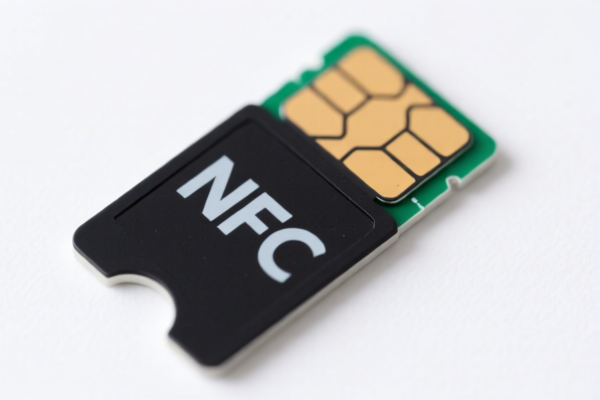
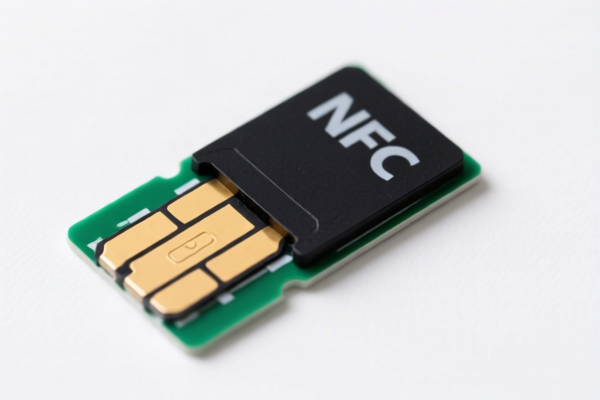
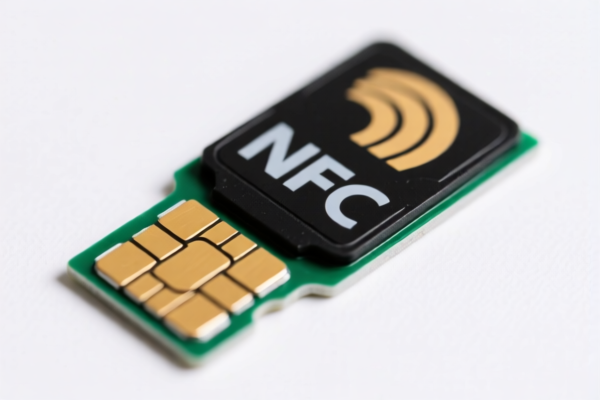
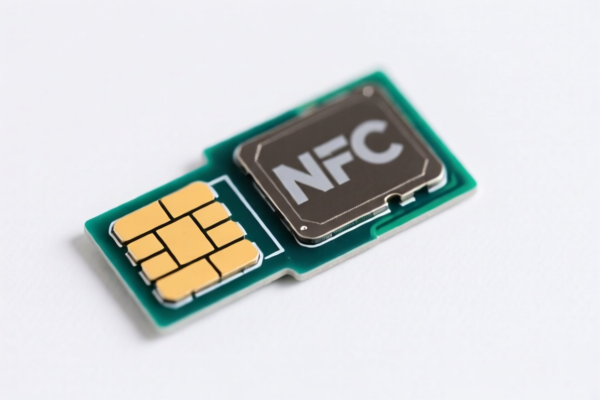
AI Analysis
🏷️ NFC Tag (Near Field Communication Tags)
🌐 HS Code Reference & Customs Clearance Guide | 2026 Latest Tariff Full Analysis | Professional Clearance Strategy
📌 I. Product Definition & Classification: What Exactly is an “NFC Tag”?
An NFC Tag is a tiny, passive radio-frequency identification (RFID) device that stores data and communicates with readers via near-field electromagnetic induction. In international trade, their classification often hinges on function vs. material:
Functional Classification (Electronic Media):
If the core value lies in the chip and antenna enabling data storage/transfer (smart card functionality), it falls under Chapter 85.
Material Classification (Plastic/Label):
If viewed primarily as a plastic label, sticker, or promotional item where the electronic component is incidental or negligible, it falls under Chapter 39.
⚠️ Key Distinction:
- If the product is marketed as a “Smart Card” or “Data Storage Medium” with active RF functionality → HS 8523
- If the product is marketed as a “Plastic Sticker” or “Label” for branding, with minimal technical specs → HS 3926 or 3919
📦 II. HS Code Classification Details (2026 Latest Tariff Authority Comparison)
| HS Code | Product Description | Applicable Scenario | Electronic Core? |
|---|---|---|---|
8523.51.00.00 |
Smart cards and other media for recording phenomena, containing a magnetic track or similar device | NFC stickers functioning as smart media; core function is wireless RF identification | ✅ Yes (Chip + Antenna) |
8523.52.00.90 |
Smart cards and other media (not specifically provided for); containing a semiconductor memory or similar device | NFC stickers categorized under broader electronic media; thin-film/medium structure | ✅ Yes (Chip + Antenna) |
3926.10.00.00 |
Office supplies and other articles of plastics | Plausible if viewed as plastic office/branding items; no material conflict with plastic/film | ❌ No (De-emphasized electronics) |
3926.90.48.00 |
Other articles of plastics; composite/plastic materials | Inferred as plastic/composite labels/stickers; fits "other plastic articles" | ❌ No (De-emphasized electronics) |
3919.90.50.60 |
Self-adhesive plates, sheets, film, etc. | Sticker form factor; flat shape, self-adhesive, plastic substrate | ❌ No (De-emphasized electronics) |
🔍 Critical Reminder:
- Functional Intent Matters: Customs officials will look at marketing materials, packaging, and declared purpose. If it says “Smart Label” or “Data Tag,” expect Chapter 85. If it says “Promotional Sticker,” expect Chapter 39.
- Misclassification Risk: Declaring an NFC tag as a simple plastic sticker (HS 3919) when it has a complex chip may trigger scrutiny for undervaluation of technical features.
💰 III. 2026 Latest Tariff Rate Breakdown (Including Surcharges, Policy Add-ons)
✅ Applicable Country: United States (US)
✅ Country of Origin: China (CN)
✅ Effective Date: From November 10, 2025 (including subsequent imports)
🎯 1. 8523.51.00.00 —— Smart Cards & Recording Media (NFC as Electronic Media)
| Item | Content |
|---|---|
| Basic Tariff | 0% (ad valorem) |
| Section 301 Surcharge | +7.5% |
| Section 122 Tariff | +10% (Specific policy surcharge) |
| Total Tariff Rate | 17.5% |
| Tax Calculation | CIF Value × 17.5% |
| De Minimis Eligibility | ❌ Not Eligible (Section 301 and 122 typically deny de minimis for China-origin goods) |
| Legal Basis Path | USITC:8523.51.00.00 → Section 301: 7.5% → Section 122: 10% |
📌 Explanation:
- The 7.5% comes from the USITC Section 301 list for specific electronic components/media.
- The 10% is a Section 122 tariff applied to certain imports from China.
- Total 17.5% is moderate but significant for low-cost items, impacting margins.
🎯 2. 8523.52.00.90 —— Other Smart Cards/Media (Broad Electronic Category)
| Item | Content |
|---|---|
| Basic Tariff | 0% |
| Section 301 Surcharge | +7.5% |
| Section 122 Tariff | +10% |
| Total Tariff Rate | 17.5% |
| Tax Calculation | CIF Value × 17.5% |
| De Minimis Eligibility | ❌ Not Eligible |
| Legal Basis Path | USITC:8523.52.00.90 → Section 301: 7.5% → Section 122: 10% |
📌 Note:
- Identical tariff structure to8523.51.00.00.
- Used when the specific recording medium description of 8523.51 doesn’t perfectly fit, but the electronic medium nature remains dominant.
🎯 3. 3926.10.00.00 —— Plastic Office Supplies/Other Plastic Articles
| Item | Content |
|---|---|
| Basic Tariff | 5.3% |
| Section 301 Surcharge | 0% |
| Section 122 Tariff | +10% |
| Total Tariff Rate | 15.3% |
| Tax Calculation | CIF Value × 15.3% |
| De Minimis Eligibility | ❌ Not Eligible (Section 122 applies) |
| Legal Basis Path | USITC:3926.10.00.00 → Section 122: 10% |
📌 Explanation:
- If cleared as a plastic item (office supply), the basic duty is higher (5.3%) but no Section 301 applies.
- Section 122 still adds 10%.
- Total 15.3% is lower than the electronic classification (17.5%).
- Risk: Customs may reclassify if they deem the electronic function primary.
🎯 4. 3926.90.48.00 —— Other Plastic Articles (Composite/Label)
| Item | Content |
|---|---|
| Basic Tariff | 3.4% |
| Section 301 Surcharge | 0% |
| Section 122 Tariff | +10% |
| Total Tariff Rate | 13.4% |
| Tax Calculation | CIF Value × 13.4% |
| De Minimis Eligibility | ❌ Not Eligible |
| Legal Basis Path | USITC:3926.90.48.00 → Section 122: 10% |
📌 Explanation:
- This is the lowest tariff among the options.
- Applicable if the NFC tag is treated as a composite plastic label without emphasizing its smart card function.
- High Risk: Requires strong justification that the item is primarily a plastic article.
🎯 5. 3919.90.50.60 —— Self-Adhesive Stickers (Plastic Substrate)
| Item | Content |
|---|---|
| Basic Tariff | 5.8% |
| Section 301 Surcharge | +25.0% |
| Section 122 Tariff | +10% |
| Total Tariff Rate | 40.8% |
| Tax Calculation | CIF Value × 40.8% |
| De Minimis Eligibility | ❌ Not Eligible |
| Legal Basis Path | USITC:3919.90.50.60 → Section 301: 25% → Section 122: 10% |
📌 Warning:
- This is the highest tariff.
- Self-adhesive products from China are heavily targeted by Section 301 (25%).
- Avoid this classification unless absolutely necessary; it is financially detrimental.
🛠️ IV. Customs Clearance Practical Advice (Real-World Pitfall Avoidance)
✅ 1. Documentation Checklist (Must-Haves)
| Document | Required | Description |
|---|---|---|
| ✅ Product Specification Sheet | ✔️ | Must detail dimensions, chip type (e.g., NTAG213), read/write range, and marketing purpose. |
| ✅ Product Photos (Labeled) | ✔️ | Clear images showing the sticker, any QR codes, branding, and backside adhesive layer. |
| ✅ Commercial Invoice | ✔️ | Crucial: Use consistent terminology. If using HS 3926, describe as “Plastic NFC Label” or “Promotional Sticker.” If using HS 8523, describe as “Smart NFC Tag” or “RFID Media.” |
| ✅ Certificate of Origin (CO) | ✔️ | For US imports, must clearly state “Made in China.” |
| ✅ Packing List | ✔️ | List quantity, weight, and dimensions. |
✅ 2. Declaration Strategy (Key Mantras)
🔥 “Function Dictates Code, Description Dictates Rate!”
| Scenario | Recommended HS Code | Declaration Language | Why? |
|---|---|---|---|
| Smart/Data Focus | 8523.51.00.00 |
“NFC Smart Tag, RF Media, Data Storage” | Justifies electronic function; avoids Section 301 if misclassified, but here 8523 has lower total rate than 3919. |
| Plastic/Brand Focus | 3926.90.48.00 |
“Plastic NFC Label, Self-Adhesive, Promotional” | Aims for lowest rate (13.4%); requires proving it’s primarily a plastic label. |
| Avoid | 3919.90.50.60 |
“Adhesive Sticker” | High Risk: 40.8% tariff. Only use if no other option and ready to pay premium. |
| Avoid | 3926.10.00.00 |
“Plastic Office Supply” | 15.3% rate; acceptable if office context, but less optimal than 3926.90.48.00. |
📌 Strategic Tip:
- Compare 8523 vs. 3926.90.48.00:
- 8523: 17.5% (Higher basic, no Section 301, but has Section 122).
- 3926.90.48.00: 13.4% (Lower basic, no Section 301, has Section 122).
- Winner: 3926.90.48.00 is cheaper IF customs accepts the “plastic label” interpretation.
- Risk: If customs reclassifies to 8523, you pay the difference + potential penalties.
✅ 3. Special Cases Handling
| Scenario | Handling Advice |
|---|---|
| NFC Tags with Custom Branding | Emphasize “Promotional Item” in invoice. Provide samples to customs if questioned. |
| Bulk Unbranded NFC Tags | Lean towards HS 8523 (Electronic Media) to avoid disputes over “plastic” vs. “electronic.” |
| NFC + QR Code Combo | Describe as “Hybrid Digital Marketing Tag.” Justify based on primary function (RF vs. Visual). |
| High-Volume Small Value | Consider Section 301 exemptions if eligible (e.g., specific ECCN codes), but generally denied for China origin. |
🌍 V. Global Market Comparison (2026 Latest)
| Country/Region | Recommended HS Code | Tariff (China Origin) | Certification Req. | Note |
|---|---|---|---|---|
| 🇺🇸 USA | 3926.90.48.00 (Aggressive) or 8523.51.00.00 (Conservative) |
13.4% - 17.5% | None specific | Highest scrutiny; Section 122 applies. |
| 🇨🇳 China | 8523.51.00.00 or 3926.90.48.00 |
0% - 5% | CCC (if applicable) | Domestic trade low tax. |
| 🇪🇺 EU | 8523.51.00.00 |
0% - 2.7% | CE (if radio equipment) | No Section 301/122. |
| 🇬🇧 UK | 8523.51.00.00 |
0% - 2.7% | UKCA | Post-Brexit rules apply. |
📌 Conclusion:
- USA is the most complex market due to Section 301 and Section 122.
- EU/UK offer much simpler, lower-tariff paths, usually around 0-2.7% for electronic media.
📌 VI. Common Errors & Pitfalls (Lessons Learned)
❌ Error 1: Declaring NFC tags as “Plastic Stickers” (HS 3919) to avoid electronic scrutiny
👉 Consequence: 40.8% Tariff due to Section 301. Avoid!
❌ Error 2: Using “NFC Tag” in description but classifying under “Office Supplies” (HS 3926.10)
👉 Consequence: Customs may reject the “office” justification and reclassify to 8523 (17.5%) or 3926.90 (13.4%), causing delays.
❌ Error 3: Ignoring Section 122
👉 Consequence: Underestimating duties. All listed US tariffs include a 10% Section 122 surcharge. Plan cash flow accordingly.
✅ Correct Practice:
“NFC Smart Label, Self-Adhesive, Plastic Substrate, for Promotional Use”
OR
“NFC Data Tag, RFID Medium, Chip Integrated”
Match description to HS Code intent!
🎯 VII. Conclusion: Professional Declaration, Cost Optimization!
🎯 Key Takeaway:
🔹 Lowest Risk/Lowest Cost:
3926.90.48.00(13.4%) — IF you can justify it as a plastic label.
🔹 Safest/Electronic:8523.51.00.00(17.5%) — IF the electronic function is primary.
🔹 Highest Cost:3919.90.50.60(40.8%) — AVOID.
📌 Pro Tip:
- Pre-Ruling: Apply for an Advance Ruling from US Customs (CBP) if importing large volumes.
- Documentation: Keep product datasheets and marketing brochures ready to prove the “primary purpose” (plastic vs. electronic).
- Supplier Communication: Ensure invoices do not contradict the declared HS Code (e.g., don’t declare “Plastic Sticker” while invoice says “Smart Chip”).
📣 Immediate Action:
📞 Consult a licensed customs broker to determine if your specific NFC tag design qualifies for HS 3926.90.48.00.
🚀 Optimize your tariff strategy, stay compliant, and maximize your profit margin!
✨ Precise Classification Starts Here!
💼 Every Percent Counts in International Trade!
Customer Reviews
About HS Code Classification
The Harmonized System (HS) is an internationally standardized nomenclature developed by the World Customs Organization (WCO) to classify traded products. Over 200 countries use the HS system as the basis for customs tariffs, trade statistics, and import/export regulations.
Each HS code follows a hierarchical structure:
- Chapter (2 digits) — Broad category of goods (e.g., Chapter 84: Machinery and Mechanical Appliances)
- Heading (4 digits) — More specific grouping within the chapter
- Subheading (6 digits) — Internationally standardized breakdown, used by all WCO member countries
- National subdivisions (8-10 digits) — Country-specific extensions for further classification, such as US HTSUS 10-digit codes
Correct HS code classification is essential for smooth customs clearance, accurate duty payment, and compliance with trade regulations. Misclassification can lead to customs delays, overpayment of duties, or penalties.
When importing from CN to US, the applicable tariff rates may include:
- Most-Favored-Nation (MFN) rate — The standard duty rate applied to WTO members
- General rate — Applied to countries without trade agreements
- Trade remedy duties — Additional tariffs such as Section 301 (anti-dumping), Section 232 (national security), or countervailing duties
The information provided on this page is for reference purposes only. For official classification, please consult with your local customs authority or a licensed customs broker.