Nanyang Cultured Pearls
CN → US| HS Code | Tariff Rate | Origin | Destination | Doc |
|---|---|---|---|---|
| 7101210000 | 17.5% | CN | US | Official Doc |
| 7101223000 | 17.5% | CN | US | Official Doc |
| 7116102500 | 23.0% | CN | US | Official Doc |
| 7116101000 | 13.3% | CN | US | Official Doc |
| 9705290000 | 10.0% | CN | US | Official Doc |
| 9705100090 | 10.0% | CN | US | Official Doc |
Product Images
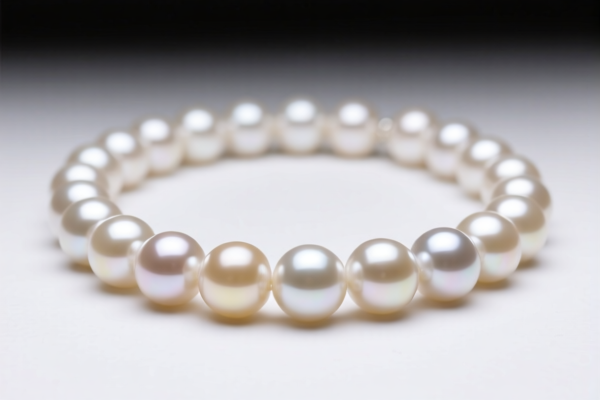
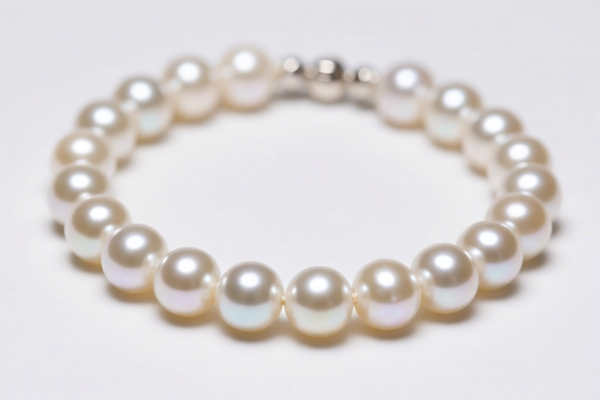
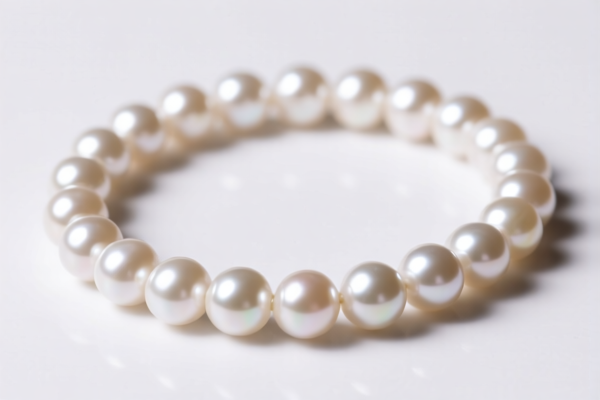
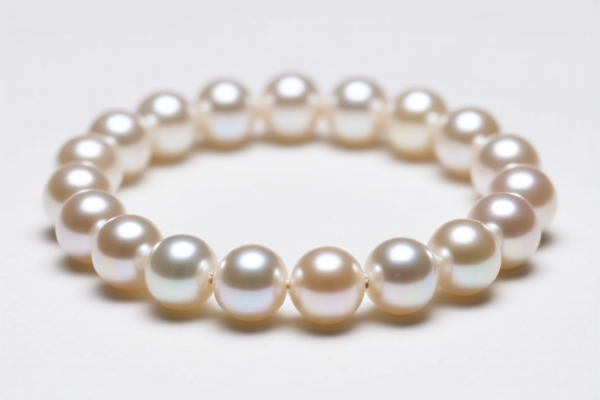
AI Analysis
🐚 Nanyang Cultured Pearls (South Sea Pearls)
🌐 HS Code Reference & Customs Clearance Guide | 2026 Latest Tariff Analysis | Professional Clearance Strategy
📌 I. Product Definition & Classification: Do You Really Understand "Nanyang Pearls"?
Nanyang Cultured Pearls, commonly known as South Sea Pearls, are among the most valuable gemstones in the world. In international trade, their classification depends entirely on their processing state and intended use. Misclassification leads to massive tariff penalties.
Raw/Naked Pearls (未加工/初加工): Loose pearls, strung but not set, not yet cut or shaped for final jewelry assembly.
Finished/Decorated Pearls (已加工/饰品): Pearls cut, drilled, or set into jewelry pieces, or classified as curiosities/collectibles.
⚠️ Key Distinction Point:
- If the pearls are loose, unprocessed, or merely strung for jewelry making → They are classified as Pearl Material (Chapter 71 primary).
- If the pearls are cut, shaped, or part of a decorative assembly → They may fall under Articles of Pearl (Chapter 71 secondary).
- If the pearls are rare specimens for collection → They may fall under Collectibles (Chapter 97).
📦 II. HS Code Classification Details (2026 Latest Tariff Authority Comparison)
| HS Code | Product Description | Application Scenario | Processing State |
|---|---|---|---|
7101.21.00.00 |
Cultured Nanyang Pearls, unprocessed form | Raw loose pearls, bulk trade | ✅ Unprocessed |
7101.22.30.00 |
Cultured Nanyang Pearls, standard attributes | Regular cultured pearls meeting category specs | ✅ Unprocessed/Standard |
7116.10.25.00 |
Cultured Nanyang Pearls, fully consistent with classification explanation | Processed pearls, possibly cut or shaped | ✅ Processed |
7116.10.10.00 |
Cultured Nanyang Pearls, natural/cultured material, meets variety requirements | High-end processed pearls, specific variety | ✅ Processed/Material Compliance |
9705.29.00.00 |
Nanyang Cultured Pearls, natural curiosities with zoological interest | Rare specimens, educational purposes | ✅ Collectible/Novelty |
9705.10.00.90 |
Nanyang Cultured Pearls, collectibles with historical/cultural significance | Antique pearl jewelry or rare historical specimens | ✅ Collectible/Historical |
🔍 Key Reminder:
- Loose, raw, or simply strung Nanyang pearls must be classified under 7101.xx.xx. Do NOT declare them as "jewelry" or "decorative articles" unless they are finished.
- Processed/Cut/Drilled pearls intended for jewelry manufacturing fall under 7116.xx.xx.
- Collectors/Rare Items: If the pearls are not for commercial jewelry but for zoological interest or historical collection, use 9705.xx.xx. This is rare and requires strong justification.
💰 III. 2026 Latest Tariff Rate Details (Including Surtaxes & Policy Add-ons)
✅ Applicable Country: USA (US)
✅ Origin: China (CN)
✅ Effective Date: From November 10, 2025 (including subsequent imports)
🎯 1. 7101.21.00.00 & 7101.22.30.00 —— Raw Nanyang Cultured Pearls (Unprocessed)
| Item | Content |
|---|---|
| Base Tariff | 0.0% (ad valorem) |
| Section 301 Surtax | +7.5% |
| Section 122 Tariff | +10.0% |
| Total Tariff | 17.5% |
| Tax Calculation | CIF Value × 17.5% |
| De Minimis Exemption | ❌ Not Applicable (deny_de_minimis) |
| Legal Basis Path | Section 301: 7101.xx.xx → Section 122: 7101.xx.xx |
📌 Explanation:
- "Base 0%": Raw pearls generally have a low or zero base duty.
- "Section 301 +7.5%": Standard US-China trade war surtax on many goods.
- "Section 122 +10%": Additional tariff specifically targeted at Chinese imports under Section 122 of the Trade Expansion Act.
- Total 17.5%: This is the standard commercial rate for raw pearls.
🎯 2. 7116.10.25.00 & 7116.10.10.00 —— Processed Nanyang Cultured Pearls (Articles/Decorative)
| Item | Content |
|---|---|
| Base Tariff | 5.5% (7116.10.25.00) / 3.3% (7116.10.10.00) |
| Section 301 Surtax | +7.5% |
| Section 122 Tariff | +10.0% |
| Total Tariff | 23.0% (7116.10.25.00) / 13.3% (7116.10.10.00) |
| Tax Calculation | CIF Value × Total Rate |
| De Minimis Exemption | ❌ Not Applicable (deny_de_minimis) |
| Legal Basis Path | Section 301: 7116.xx.xx → Section 122: 7116.xx.xx |
📌 Note:
-7116.10.25.00incurs a higher base duty (5.5%), resulting in a total of 23.0%. This is for pearls that are fully processed or fit specific decorative classifications.
-7116.10.10.00has a lower base duty (3.3%), resulting in a total of 13.3%. This applies to pearls that meet specific material/variety requirements but are still considered "articles" rather than raw materials.
- Critical: If you import cut or drilled pearls, you cannot use the 0% base rate of raw pearls. You must pay the higher base rate.
🎯 3. 9705.29.00.00 & 9705.10.00.90 —— Nanyang Pearls as Collectibles/Curiosities
| Item | Content |
|---|---|
| Base Tariff | 0.0% |
| Section 301 Surtax | 0.0% |
| Section 122 Tariff | +10.0% |
| Total Tariff | 10.0% |
| Tax Calculation | CIF Value × 10.0% |
| De Minimis Exemption | ❌ Not Applicable (deny_de_minimis) |
| Legal Basis Path | Section 122: 9705.xx.xx |
📌 Warning:
- This classification is high-risk. It requires proof that the pearls are not for commercial sale but for zoological interest or historical/cultural collection.
- Section 122 Tariff (+10%) still applies to Chinese goods.
- Section 301 Surtax is waived for collectibles in this specific subheading, offering a lower rate than processed pearls.
- Customs Scrutiny: Expect intense scrutiny. Provide museum-grade documentation, provenance, and a statement of non-commercial intent.
🛠️ IV. Customs Clearance Practical Advice (Battle-Tested Pitfall Guide)
✅ 1. Preparation Checklist (Non-negotiable)
| Document | Mandatory | Explanation |
|---|---|---|
| ✅ Product Specification Sheet | ✔️ | Must specify: Origin (Indonesia/Australia/etc.), Type (South Sea), Size, Shape, Luster, Treatment Status. |
| ✅ Commercial Invoice | ✔️ | Clearly state "Nanyang Cultured Pearls" and correct HS Code. Do NOT use vague terms like "Jewelry" for raw pearls. |
| ✅ Packing List | ✔️ | Detail weight, quantity, and packaging type. |
| ✅ Certificate of Origin (CO) | ✔️ | Essential for proving origin (China/Indonesia/Australia) to determine if Surtaxes apply. |
| ✅ Photos of Goods | ✔️ | Show raw state vs. processed state. If claiming Collectible status, show rarity/value proofs. |
| ✅ Value Declaration | ✔️ | Must be truthful. Undervaluation leads to seizures. |
✅ 2. Declaration Strategy (Key Mnemonics)
🔥 “Raw is 7101, Processed is 7116, Collectible is 9705, Never Guess!”
| Scenario | Correct Declaration | Wrong Action | Consequence |
|---|---|---|---|
| Loose Raw Pearls | 7101.21.00.00 |
Declare as 7116 |
Overpay tax (17.5% vs 23%) |
| Loose Raw Pearls | 7101.21.00.00 |
Declare as 9705 |
Risk of rejection (not a curiosity) |
| Cut/Drilled Pearls | 7116.10.10.00 or 7116.10.25.00 |
Declare as 7101 |
Customs Penalty + Back Taxes |
| Rare Collection Item | 9705.29.00.00 |
Declare as 7101 |
Missed optimization (10% vs 17.5%) but riskier audit |
✅ 3. Special Case Handling
| Scenario | Handling Advice |
|---|---|
| Mixed Shipments | Separate Raw (7101) and Processed (7116) on different invoices. Do not mix. |
| Pearls in Jewelry | If pearls are set in a necklace, the entire item may be classified as Jewelry (Chapter 71 or 97), not as loose pearls. |
| Claiming Collectible Status | Provide Expert Appraisal, Historical Provenance, and Non-Commercial Intent Statement. |
| Section 122 Tariff | Remember, all these HS codes under Chinese origin are subject to the 10% Section 122 tariff. No exemption. |
🌍 V. Global Major Market Clearance Comparison (2026 Latest)
| Country/Region | Recommended HS Code | Tariff (China Origin) | Certification | Notes |
|---|---|---|---|---|
| 🇺🇸 USA | 7101.21.00.00 |
17.5% (Raw) | N/A | High scrutiny on "Processing" status. |
| 🇨🇳 China | 7101.21.00.00 |
5.0% | N/A | Lower base duty, no Section 122. |
| 🇪🇺 EU | 7101.21.00.00 |
0.0% (If genuine) | N/A | No Section 122 equivalent. |
| 🇦🇺 Australia | 7101.21.00.00 |
5.0% | N/A | Major producer, preferential treaties. |
| 🇯🇵 Japan | 7101.21.00.00 |
0.0% | N/A | Low duty, high quality standards. |
📌 Conclusion:
- USA is the most expensive market due to Section 301 + Section 122.
- Raw vs. Processed is the biggest cost driver. A shift from 7101 to 7116 can increase taxes by 5.5%–15.5%.
- China Origin triggers all surtaxes. Non-China origin (e.g., Indonesian) may still face some tariffs but less than Chinese goods.
📌 VI. Common Errors & Pitfall Guide (Blood-Tested Lessons)
❌ Error 1: Declaring cut/drilled pearls as raw pearls (7101)
👉 Consequence: Customs detects processing → Back taxes + Penalty + Seizure.
❌ Error 2: Declaring loose raw pearls as collectibles (9705) without proof
👉 Consequence: Customs rejects collectible status → Retroactive application of 17.5% or 23% + audit.
❌ Error 3: Not separating Section 301 and Section 122 in cost analysis
👉 Consequence: Underestimating landed cost by 17.5% instead of just 7.5%.
❌ Error 4: Using vague descriptions like "Pearl Beads"
👉 Consequence: Customs classifies as worst-case scenario (often processed or high-duty item) → Higher tax.
✅ Correct Approach:
"100 Nanyang South Sea Cultured Pearls, Round, 10-12mm, White, UNPROCESSED, For Jewelry Manufacturing, Origin: Indonesia, HS Code: 7101.21.00.00"
🎯 VII. Conclusion: Professional Declaration, Save Money, Ensure Compliance!
🎯 Remember the Mnemonic:
🔹 "Raw is 7101 (17.5%), Processed is 7116 (13.3-23%), Collectible is 9705 (10%). Never Mix!"
🔹 "HS Code defines Tax. 7% difference changes profit margin. Declare Accurately!"
📌 Pro Tip:
If your pearls are genuinely for museum collection or zoological study, consider the 9705 route for a lower total tax (10%). However, this requires robust documentation. For 99% of commercial shipments, 7101 or 7116 is the correct path.
Always pre-classify with a US Customs broker if unsure about the "processing" status.
📣 Immediate Action:
📞 Contact a licensed Customs Broker + Provide High-Res Photos + Apply for HS Code Ruling if shipment value is high.
🚀 Let your Nanyang Pearls clear customs smoothly, efficiently, and profitably!
✨ Professional Clearance Starts with Accurate Classification!
💼 Your Cost, Every Penny, Deserves Precision!
Customer Reviews
About HS Code Classification
The Harmonized System (HS) is an internationally standardized nomenclature developed by the World Customs Organization (WCO) to classify traded products. Over 200 countries use the HS system as the basis for customs tariffs, trade statistics, and import/export regulations.
Each HS code follows a hierarchical structure:
- Chapter (2 digits) — Broad category of goods (e.g., Chapter 84: Machinery and Mechanical Appliances)
- Heading (4 digits) — More specific grouping within the chapter
- Subheading (6 digits) — Internationally standardized breakdown, used by all WCO member countries
- National subdivisions (8-10 digits) — Country-specific extensions for further classification, such as US HTSUS 10-digit codes
Correct HS code classification is essential for smooth customs clearance, accurate duty payment, and compliance with trade regulations. Misclassification can lead to customs delays, overpayment of duties, or penalties.
When importing from CN to US, the applicable tariff rates may include:
- Most-Favored-Nation (MFN) rate — The standard duty rate applied to WTO members
- General rate — Applied to countries without trade agreements
- Trade remedy duties — Additional tariffs such as Section 301 (anti-dumping), Section 232 (national security), or countervailing duties
The information provided on this page is for reference purposes only. For official classification, please consult with your local customs authority or a licensed customs broker.