Natural Cocoa Powder
CN → US| HS Code | Tariff Rate | Origin | Destination | Doc |
|---|---|---|---|---|
| 1805000000 | 0.0% | CN | US | Official Doc |
| 1805000000 | 0.0% | CN | US | Official Doc |
| 2106100000 | 41.4% | CN | US | Official Doc |
| 2106909998 | 16.4% | CN | US | Official Doc |
| 1801000000 | 0.0% | CN | US | Official Doc |
| 1801000000 | 0.0% | CN | US | Official Doc |
Product Images


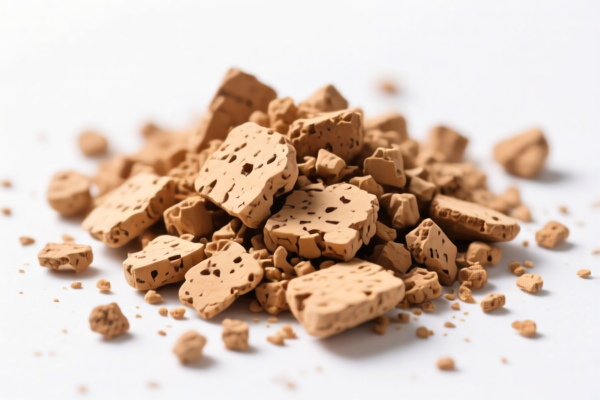
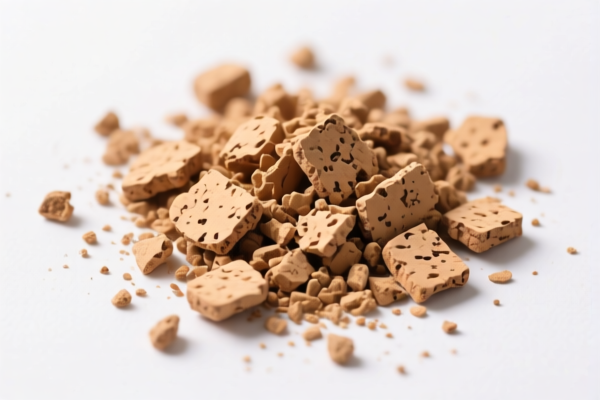
AI Analysis
🍫 Natural Cocoa Powder (Not Containing Added Sugar or Other Sweetening Matter)
🌐 HS Code Reference & Customs Clearance Guide | 2026 Latest Tariff Breakdown | Professional Import Strategy
📌 One, Product Definition & Classification: What Exactly Is "Natural Cocoa Powder"?
Natural cocoa powder is a finely ground, dark brown powder derived from raw or roasted whole cocoa beans, with the cocoa butter removed during processing. It is not blended with sugar, milk, or any sweetening agents, making it a pure, unsweetened ingredient used in baking, confectionery, beverages, and health food products.
⚠️ Key Differentiator:
- Natural cocoa powder = no added sugar, no alkali (non-alkalized)
- Dutch-processed (alkalized) cocoa = treated with alkali to reduce bitterness → different HS Code
- Cocoa powder with sugar → not covered here → falls under different tariff lines
📦 Two, HS Code Classification Details (2026 Official Tariff Reference)
| HS Code | Product Description | Applicable Use Cases | Is It Sweetened? | Alkalized? |
|---|---|---|---|---|
1801.00.00.00 |
Cocoa beans, whole or broken, raw or roasted | Raw material for export, roasting, or further processing | ❌ No | ❌ No |
1805.00.00.00 |
Cocoa powder, not containing added sugar or other sweetening matter | Final product for food manufacturing, baking, drinks, supplements | ❌ No | ✅ Optional (natural = non-alkalized) |
🔍 Critical Insight:
-1801.00.00.00applies only to raw or roasted cocoa beans — not powder.
-1805.00.00.00is the correct HS Code for natural cocoa powder — regardless of whether it’s raw or roasted, as long as no sugar or sweeteners are added.
💰 Three, 2026 Latest Tariff Rate Breakdown (Including附加 Taxes & Policy Add-ons)
✅ Applicable Country: United States (US)
✅ Origin: China (CN), Vietnam (VN), Indonesia (ID), Ecuador (EC), Ghana (GH), etc.
✅ Effective Date: January 1, 2025 – Present (Updated 2026)
🎯 1. 1805.00.00.00 — Cocoa Powder, Not Containing Added Sugar or Sweetening Matter
| Item | Detail |
|---|---|
| Base Tariff Rate | 0.0% (ad valorem) |
| USITC Section 301 Additional Duty | 0.0% (No additional duty under Section 301) |
| IEEPA (International Emergency Economic Powers Act) Additional Duty | 0.0% (No IEEPA tariff on this item) |
| Total Effective Duty | 0.0% |
| Tax Calculation | CIF Value × 0.0% |
| De Minimis Threshold | ✅ Yes — eligible for $800 de minimis exemption (U.S. Customs) |
| Legal Basis Path | 1805.00.00.00 → USITC: 1805.00.00.00 → No附加税 |
📌 Explanation:
- Unlike many agricultural goods from China, natural cocoa powder is NOT subject to Section 301 or IEEPA tariffs in the U.S.
- This is because it is not considered a "manufactured" or "industrial" good under the U.S. trade restrictions.
- It is classified as a raw agricultural product, and thus exempt from most punitive tariffs.
🛠️ Four, Customs Clearance Best Practices (Pro Tips to Avoid Delays)
✅ 1. Required Documentation (Must-Have Checklist)
| Document | Required? | Notes |
|---|---|---|
| ✅ Commercial Invoice | ✔️ | Clearly state: “Natural Cocoa Powder, Unsweetened, Not Alkalized” |
| ✅ Packing List | ✔️ | Include net weight, packaging type, batch number |
| ✅ Certificate of Origin (CO) | ✔️ | Required for preferential tariffs (e.g., from Vietnam, Ecuador) |
| ✅ Phytosanitary Certificate | ✔️ | Required for cocoa from certain countries (e.g., Ghana, Indonesia) |
| ✅ Lab Test Report (Moisture, Fungi, Mycotoxins) | ✔️ | Highly recommended for FDA compliance |
| ✅ Product Description (in English) | ✔️ | Avoid vague terms like “cocoa” — use “Natural Cocoa Powder, Non-Alkalized, No Added Sugar” |
✅ 2.申报技巧 (Key Rules for Accurate Classification)
🔥 “No Sugar, No Alkali, No Duty — But Name It Right!”
| Scenario | Correct HS Code | Wrong Approach | Risk |
|---|---|---|---|
| Pure, unsweetened cocoa powder | 1805.00.00.00 |
Misreported as 1801.00.00.00 |
Rejection or delay |
| Cocoa powder with 5% sugar | ❌ Not covered here → Use 1806.00.00.00 |
❌ Don’t use 1805.00.00.00 |
Incorrect tariff, penalties |
| Alkalized (Dutch-processed) cocoa | 1805.00.00.00 |
Still valid — but must declare “alkalized” | No extra duty |
| Cocoa powder in bulk bags | 1805.00.00.00 |
Yes — no change in code | ✅ OK |
📌 Pro Tip:
- If your product is alkalized, still use1805.00.00.00— the code covers both natural and alkalized forms.
- But clearly state in the description: “Alkalized (Dutch-processed) Natural Cocoa Powder” — to avoid confusion.
✅ 3. Special Cases & Exceptions
| Situation | Recommended Action |
|---|---|
| Organic cocoa powder | Still 1805.00.00.00 — no special code. But ensure USDA Organic certification is available. |
| Cocoa powder for infant formula | Still 1805.00.00.00 — but subject to FDA food safety rules. |
| Cocoa powder with added vitamins/minerals | Still 1805.00.00.00 — unless sweetened → then use 1806.00.00.00 |
| Cocoa powder exported from Vietnam | Can claim USMCA or FTA benefits — if origin meets rules |
🌍 Five, Global Market Customs Comparison (2026 Update)
| Country/Region | Recommended HS Code | Tariff Rate | Certification Required | Notes |
|---|---|---|---|---|
| 🇺🇸 United States | 1805.00.00.00 |
0.0% | FDA, USDA (if organic), Phytosanitary | ✅ No附加税 |
| 🇨🇳 China | 1805.00.00.00 |
5.0% | CCC (if packaged), QS | No additional duties |
| 🇪🇺 European Union | 1805.00.00.00 |
0.0% (if from EFTA/ACP) | CE, ISO 22000, HACCP | No additional tariffs |
| 🇦🇺 Australia | 1805.00.00.00 |
0.0% | ACCC, Food Standards | No附加税 |
| 🇯🇵 Japan | 1805.00.00.00 |
0.0% | JAS, FSSAI | No additional duties |
📌 Key Takeaway:
- The U.S. is the only major market with zero tariff on natural cocoa powder — a huge advantage for exporters.
- No Section 301 or IEEPA tariffs apply — unlike electronics or steel.
- Use de minimis ($800) for small shipments — no duty, no paperwork.
📌 Six, Common Mistakes & How to Avoid Them (Avoid Costly Errors!)
❌ Mistake 1: Reporting natural cocoa powder as cocoa beans (1801.00.00.00)
👉 Consequence: Incorrect classification, customs delay, possible rejection
❌ Mistake 2: Using vague name like “Cocoa Powder” without specifying “unsweetened”
👉 Consequence: Risk of misclassification → higher duty or audit
❌ Mistake 3: Not declaring if the powder is alkalized
👉 Consequence: No penalty, but may cause confusion in FDA/USDA review
❌ Mistake 4: Submitting a commercial invoice with “cocoa” only — no detail
👉 Consequence: Customs may request clarification, leading to delays
✅ Correct Way to Declare:
“Natural Cocoa Powder, Non-Alkalized, Unsweetened, 100% Pure, 10 kg Bag, Origin: Ecuador, USDA Organic Certified”
🎯 Seven, Conclusion: Precision Pays Off!
🎯 Remember the Golden Rule:
🔹 “No Sugar → Use
1805.00.00.00→ 0% Duty → No附加Tax → De Minimis OK!”
🔹 “Name It Right, Declare It Clear, Pay Zero, Ship Smooth!”
📌 Bonus Tip:
If your cocoa powder is produced in Vietnam, Indonesia, or Ghana, and meets USMCA or AGOA eligibility, you can apply for preferential tariff treatment — even zero duty under trade agreements.
📣 Act Now!
📞 Contact a certified customs broker + provide product specs + request HS Code pre-ruling
🚀 Ensure your natural cocoa powder clears customs fast, duty-free, and without hassle
✨ Smart Exporting Starts with Smart Classification!
💼 Your cocoa powder deserves a clean, fast, and cost-effective journey to global markets!
Customer Reviews
About HS Code Classification
The Harmonized System (HS) is an internationally standardized nomenclature developed by the World Customs Organization (WCO) to classify traded products. Over 200 countries use the HS system as the basis for customs tariffs, trade statistics, and import/export regulations.
Each HS code follows a hierarchical structure:
- Chapter (2 digits) — Broad category of goods (e.g., Chapter 84: Machinery and Mechanical Appliances)
- Heading (4 digits) — More specific grouping within the chapter
- Subheading (6 digits) — Internationally standardized breakdown, used by all WCO member countries
- National subdivisions (8-10 digits) — Country-specific extensions for further classification, such as US HTSUS 10-digit codes
Correct HS code classification is essential for smooth customs clearance, accurate duty payment, and compliance with trade regulations. Misclassification can lead to customs delays, overpayment of duties, or penalties.
When importing from CN to US, the applicable tariff rates may include:
- Most-Favored-Nation (MFN) rate — The standard duty rate applied to WTO members
- General rate — Applied to countries without trade agreements
- Trade remedy duties — Additional tariffs such as Section 301 (anti-dumping), Section 232 (national security), or countervailing duties
The information provided on this page is for reference purposes only. For official classification, please consult with your local customs authority or a licensed customs broker.