Natural Mink Whole Skins
CN → US| HS Code | Tariff Rate | Origin | Destination | Doc |
|---|---|---|---|---|
| 4103901190 | 17.5% | CN | US | Official Doc |
| 4103901140 | 17.5% | CN | US | Official Doc |
Product Images
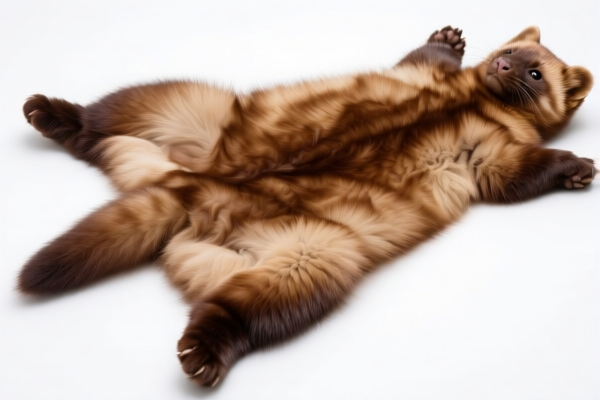
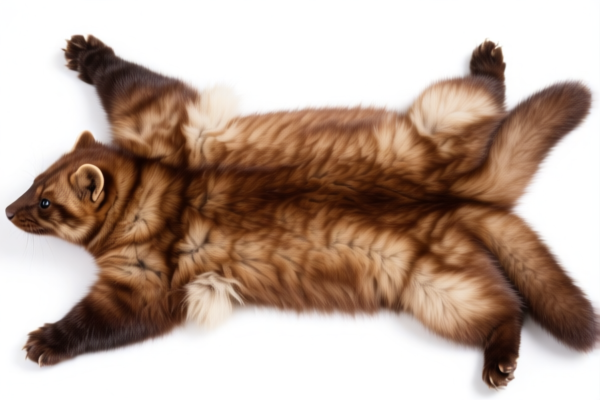
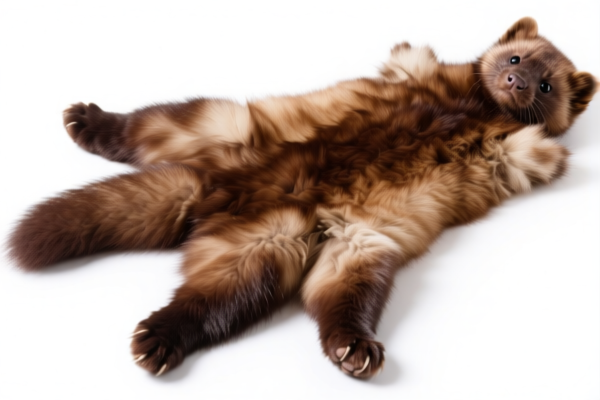
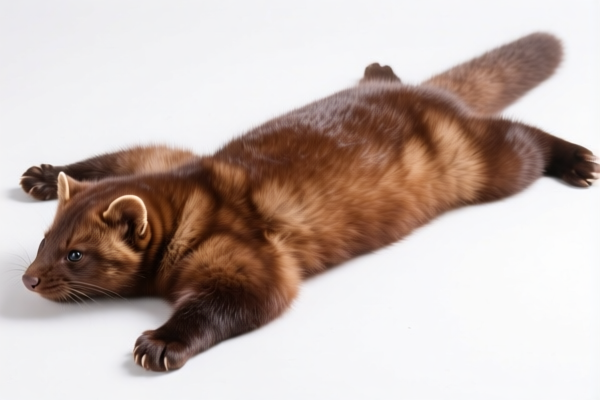
AI Analysis
🦫 Natural Mink Whole Skins (Raw Hides and Skins)
🌐 HS Code Reference & Customs Clearance Guide | 2026 Latest Tariff Analysis | Professional Clearance Strategy
📌 I. Product Definition & Classification: Do You Understand "Raw Mink Skins"?
Natural Mink Whole Skins refer to the entire skin of minks that have been removed from the carcass but have not yet undergone tanning or further preparation. In international trade, they are classified as "Raw Hides and Skins" (Chapter 41 of the Harmonized System).
Key processing states included in this definition: * Fresh: Immediately after slaughter, chilled or frozen. * Salted: Covered in salt to preserve and prevent decay. * Dried: Air-dried or drum-dried. * Limed/Pickled: Chemically treated for preservation or pre-tanning, but not fully tanned.
⚠️ Critical Distinction:
- If the skins are fully tanned (leather), they fall under Chapter 41 (Tanned Leather) or Chapter 43 (Furskins).
- If they are raw, preserved, or merely limed/pickled, they fall under HS Code 4103.90.
- "Whole Skin" implies the skin is intact (not split or scraped), though dehaired or split skins are also included in this specific HS subheading if not pretanned.
📦 II. HS Code Classification Details (2026 Latest Tariff Authority Comparison)
Based on the provided data, there are two primary HS Codes for these goods, differentiated by the animal species.
| HS Code | Product Description | Applicable Scenario | Tax Rate (Total) |
|---|---|---|---|
4103.90.11.90 |
Other: Not pretanned, Other species (e.g., Fox, Rabbit, etc., but not Goat/Kid) | General raw skins (non-goat), preserved/dried/salted | 7.5% |
4103.90.11.40 |
Other: Not pretanned, Of goats or kids | Raw goat or kid skins (often used interchangeably in trade descriptions, though "Mink" is technically distinct) | 0.0% |
🔍 Important Note on "Mink" vs. "Goat" in Data:
The provided data explicitly lists4103.90.11.40for "Of goats or kids" and4103.90.11.90for "Other".
- Strict Taxonomy: Mink (Mustela vison) is not a goat. Therefore, technically, Mink skins should fall under "Other" (4103.90.11.90) unless specific national tariff notes classify mink under a different subheading not listed here.
- Practical Application: If your customs broker suggests using4103.90.11.40for mink, they may be applying a specific local interpretation or error. However, based strictly on the provided DATA, the correct code for non-goat raw hides (including mink) is4103.90.11.90.
💰 III. 2026 Latest Tariff Rate Details (Including Additional Duties)
✅ Applicable Country: United States (US)
✅ Origin: China (CN)
✅ Effective Date: 2025/2026 Tariff Schedule
🎯 1. 4103.90.11.90 —— Other Raw Hides and Skins (Not Goats/Kids)
| Item | Content |
|---|---|
| Base Tariff Rate | 0.0% (ad valorem) |
| Additional Tariff (Section 301/Trade War) | +7.5% |
| Total Effective Rate | 7.5% |
| Tax Calculation | CIF Value × 7.5% |
| De Minimis Exemption | ❌ Not Applicable (High value goods) |
| Legal Basis Path | HTSUS:4103.90.11.90 → Trade Remedy: 7.5% |
📌 Explanation:
- The base MFN (Most Favored Nation) rate for these raw materials is often 0% or low.
- However, due to ongoing trade tensions, a 7.5% additional duty is applied to these specific raw material categories from China.
- Total Cost Impact: You pay 7.5% of the declared CIF value in duties alone.
🎯 2. 4103.90.11.40 —— Of Goats or Kids (For Reference)
| Item | Content |
|---|---|
| Base Tariff Rate | 0.0% |
| Additional Tariff | 0.0% |
| Total Effective Rate | 0.0% |
| Tax Calculation | CIF Value × 0% |
| De Minimis Exemption | N/A |
| Legal Basis Path | HTSUS:4103.90.11.40 |
📌 Note:
- While this code has a 0% tariff, it is strictly for goat/kid skins.
- Misclassifying Mink as Goat to achieve 0% tax is considered customs fraud. If audited, you face back taxes, penalties, and potential seizure.
🛠️ IV. Customs Clearance Practical Advice (Real-World Pitfall Guide)
✅ 1. Required Documentation Checklist (No Compromise)
| Document | Mandatory? | Description |
|---|---|---|
| ✅ Commercial Invoice | ✔️ | Must clearly state: "Raw Mink Skins, Preserved by Salting/Drying, Not Tanned" |
| ✅ Packing List | ✔️ | Detail weight, number of skins, and preservation method |
| ✅ Bill of Lading/Air Waybill | ✔️ | Standard shipping documents |
| ✅ Certificate of Origin | ✔️ | Proof of origin (China) to confirm applicable tariffs |
| ✅ Animal Health/Veterinary Certificate | ✔️ | Critical: Raw skins are biological materials. Must prove no zoonotic diseases (e.g., Rabies, Anthrax). |
| ✅ Preservation Method Statement | ✔️ | Specify if salted, dried, or limed. This affects classification and biosecurity checks. |
| ✅ Product Photos | ✔️ | Show the skins in their raw, preserved state (not tanned/finished). |
✅ 2. Declaration Tips (Key Mantras)
🔥 "Raw is Raw, Tanned is Leather; Specify Preservation, Avoid Bio-Risks!"
| Scenario | Correct Declaration | Wrong Practice |
|---|---|---|
| Mink Skins, Salted | 4103.90.11.90 + "Salted Mink Skins" |
Claiming as "Goat Skins" → Fraud Risk |
| Mink Skins, Dried | 4103.90.11.90 + "Dried Mink Skins" |
Claiming as "Finished Leather" → Wrong Chapter |
| Mink Skins, Limed | 4103.90.11.90 + "Limed Mink Skins (Pre-tanning)" |
Claiming as "Tanned Leather" → Incorrect |
| Split Mink Skins | 4103.90.11.90 |
"Split" status doesn't change HS if not tanned |
✅ 3. Special Circumstances Handling
| Situation | Handling Advice |
|---|---|
| Biosecurity Checks | Raw skins are high-risk for pests/diseases. Ensure fumigation certificates are attached if required by the destination country. |
| CITES Compliance | Check if Mink (Neovison vison) is listed in CITES Appendices. Most farmed mink are not CITES-listed, but verify before shipping. |
| Tanning Status Ambiguity | If skins are "semi-tanned" or "buckskin," they may fall under different codes. Provide chemical treatment details to customs. |
| High-Value Shipments | For large consignments, consider Advance Rulings from CBP to confirm the HS Code (4103.90.11.90) and tariff rate. |
🌍 V. Global Market Customs Comparison (2026 Latest)
| Country/Region | Recommended HS Code | Tariff Rate | Certification Requirements | Notes |
|---|---|---|---|---|
| 🇺🇸 USA | 4103.90.11.90 |
7.5% | Vet Cert, CITES Check | 7.5% additional duty applies |
| 🇨🇳 China | 4103.90.11.90 |
0% - 5% | Vet Cert | Low duty for raw materials |
| 🇪🇺 EU | 4103.90.11 |
~4.7% | Vet Cert, CITES | No Section 301 equivalent, but strict biosecurity |
| 🇦🇺 Australia | 4103.90.11 |
5% - 10% | 严格的 Biosecurity Quarantine | High biosecurity standards |
| 🇯🇵 Japan | 4103.90.11 |
4.7% | Vet Cert | Standard MFN rate |
📌 Conclusion:
- The USA imposes a 7.5% surcharge on these goods from China.
- Biosecurity is the biggest non-tariff barrier. Raw skins are scrutinized for disease.
- Do not misclassify as "Goat Skins" to save 7.5%. The risk of penalties outweighs the savings.
📌 VI. Common Errors & Pitfall Guide (Lessons Learned)
❌ Error 1: Declaring "Raw Mink Skins" as "Tanned Leather" (4107 or 4303)
👉 Consequence: Misclassification. If found raw, you face back duties + penalties. If found tanned but declared raw, you may violate biosecurity rules.
❌ Error 2: Misclassifying Mink as "Goat Skins" (4103.90.11.40) to get 0% Tax
👉 Consequence: Customs Fraud. Mink and goat skins are visually and biologically distinct. Audits will reveal the truth. Penalties up to 3x the value.
❌ Error 3: Missing Veterinary/CITES Documentation
👉 Consequence: Shipment Hold/Seizure. Raw biological materials are stopped at the border without proof of health and legality.
❌ Error 4: Not Specifying Preservation Method
👉 Consequence: Delayed Clearance. Customs needs to know if skins are salted, dried, or limed to assess biosecurity risk and correct classification.
✅ Correct Practice:
"Raw Mink Skins, Salted, Un-tanned, CITES Compliant (Farmed Origin), Vet Certified. HS Code: 4103.90.11.90."
🎯 VII. Conclusion: Professional Declaration, Time-Saving, Cost-Efficient!
🎯 Remember the Mantra:
🔹 "Raw Mink, Not Goat; 7.5% Tax, Don't Blow!"
🔹 "Biosecurity First, Documents Second, HS Code Precise, No More Stress!"
📌 Pro Tip:
If your mink skins are not from China, check for Free Trade Agreements (FTAs) with Vietnam, Mexico, or Thailand, which may reduce or eliminate the 7.5% duty.
Always request an Advance Ruling from CBP if the shipment value is high to ensure4103.90.11.90is accepted.
📣 Immediate Action:
📞 Contact a licensed customs broker + Provide Product Photos + Verify CITES Status
🚀 Ensure your Mink Skins, smooth clearance, efficient transit, profit maximized!
✨ Professional Customs Clearance Starts with Accurate Classification!
💼 Every Percent of Duty Matters!
Customer Reviews
About HS Code Classification
The Harmonized System (HS) is an internationally standardized nomenclature developed by the World Customs Organization (WCO) to classify traded products. Over 200 countries use the HS system as the basis for customs tariffs, trade statistics, and import/export regulations.
Each HS code follows a hierarchical structure:
- Chapter (2 digits) — Broad category of goods (e.g., Chapter 84: Machinery and Mechanical Appliances)
- Heading (4 digits) — More specific grouping within the chapter
- Subheading (6 digits) — Internationally standardized breakdown, used by all WCO member countries
- National subdivisions (8-10 digits) — Country-specific extensions for further classification, such as US HTSUS 10-digit codes
Correct HS code classification is essential for smooth customs clearance, accurate duty payment, and compliance with trade regulations. Misclassification can lead to customs delays, overpayment of duties, or penalties.
When importing from CN to US, the applicable tariff rates may include:
- Most-Favored-Nation (MFN) rate — The standard duty rate applied to WTO members
- General rate — Applied to countries without trade agreements
- Trade remedy duties — Additional tariffs such as Section 301 (anti-dumping), Section 232 (national security), or countervailing duties
The information provided on this page is for reference purposes only. For official classification, please consult with your local customs authority or a licensed customs broker.