Natural Rubber for O Rings (Other Forms)
CN → US| HS Code | Tariff Rate | Origin | Destination | Doc |
|---|---|---|---|---|
| 4016931010 | 37.5% | CN | US | Official Doc |
| 4016935010 | 37.5% | CN | US | Official Doc |
Product Images
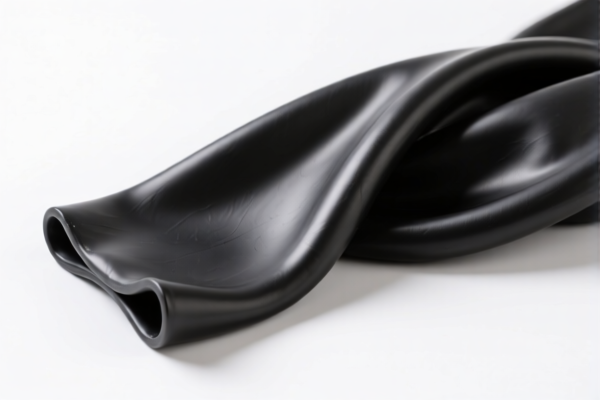
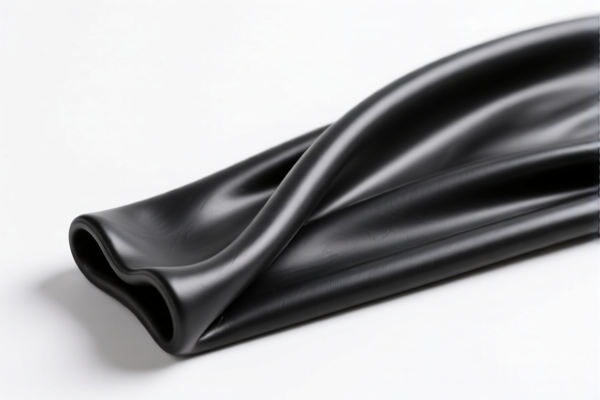
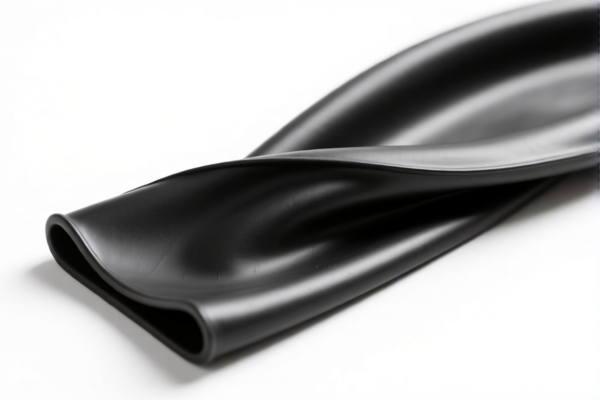
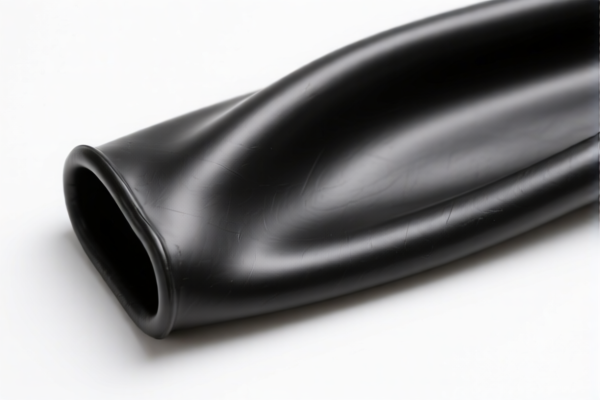
AI Analysis
🛢️ Natural Rubber O-Rings (Other Forms / Other Articles of Vulcanized Rubber)
🌐 HS Code Reference & Customs Clearance Guide | 2026 Latest Tariff Analysis | Professional Compliance Strategy
📌 I. Product Definition and Classification: Understanding "Other Forms" of Rubber O-Rings
Natural rubber O-rings are critical sealing components used across automotive, industrial, and consumer applications. In international trade, they fall under Chapter 40 (Rubber and Articles Thereof), specifically under Headings 4016 (Other articles of vulcanized rubber other than hard rubber).
Because the input specifies "Other Forms" and references the provided data which details vulcanized rubber seals, we are dealing with finished or semi-finished sealing goods, not raw rubber lumps or sheets. The classification hinges on whether they are specifically for automotive use (Chapter 87) or general industrial/commercial use.
⚠️ Key Distinction:
- Automotive Specific: O-rings designed specifically for vehicles listed in Chapter 87 (cars, trucks, motorcycles, etc.) → 4016.93.10.10
- General Industrial/Other: O-rings for machinery, plumbing, HVAC, or general purpose → 4016.93.50.10
📦 II. HS Code Classification Details (2026 Latest Tariff Authority Match)
Based strictly on the provided <DATA>, there are two specific HS Codes for these items. Both carry the same tax rate, but the classification differs based on end-use.
| HS Code | Product Description | Application Scenario | Specific Requirement |
|---|---|---|---|
4016.93.10.10 |
Gaskets, washers and other seals: Of a kind used in the automotive goods of chapter 87 O-Rings | Automotive engine seals, transmission seals, brake systems | Must be demonstrably used in vehicles under Chapter 87 |
4016.93.50.10 |
Gaskets, washers and other seals: Other O-Rings | Industrial machinery, plumbing, general manufacturing, consumer goods | Any O-ring NOT specifically for automotive goods |
🔍 Important Note:
- Both codes fall under "Other articles of vulcanized rubber other than hard rubber: Other: Gaskets, washers and other seals".
- The term "Other Forms" in the user input implies the O-rings are not raw rubber but processed/vulcanized articles.
- Do not misclassify as "Raw Rubber" (Chapter 40, Heading 4001) if they are already formed O-rings.
💰 III. 2026 Latest Tariff Rate Breakdown (Including Additional Taxes)
✅ Applicable Country: United States (US)
✅ Origin: China (CN) [Inferred from the 25% additional tax which is characteristic of Section 301 tariffs on Chinese goods]
✅ Effective Date: Current tariffs apply (Section 301)
🎯 1. 4016.93.10.10 – Automotive O-Rings
| Item | Detail |
|---|---|
| Base Duty Rate | 2.5% (Ad Valorem) |
| Section 301 Additional Duty | +25.0% (Specific to Chinese origin goods under HTS 4016.93.10) |
| Total Effective Duty | 27.5% |
| Tax Calculation | CIF Value × 27.5% |
| De Minimis Exemption | ❌ Not Eligible (Section 301 goods generally excluded from de minimis below $800 if duties apply, verify with latest CBP guidance) |
| Legal Basis | HTSUS 4016.93.10.10 + USITC Footnote 5 (Section 301) |
📌 Explanation:
- The 2.5% is the standard Most Favored Nation (MFN) duty for rubber articles.
- The 25.0% is the punitive tariff under Section 301 of the Trade Act of 1974 targeting Chinese goods.
- Total: 27.5%. This is a significant cost factor that must be built into pricing.
🎯 2. 4016.93.50.10 – Other (Non-Automotive) O-Rings
| Item | Detail |
|---|---|
| Base Duty Rate | 2.5% (Ad Valorem) |
| Section 301 Additional Duty | +25.0% (Specific to Chinese origin goods under HTS 4016.93.50) |
| Total Effective Duty | 27.5% |
| Tax Calculation | CIF Value × 27.5% |
| De Minimis Exemption | ❌ Not Eligible |
| Legal Basis | HTSUS 4016.93.50.10 + USITC Footnote 5 (Section 301) |
📌 Note:
- Despite being "Other," the tariff structure is identical to automotive O-rings.
- The 25% additional tax applies to all vulcanized rubber articles in this subheading originating from China.
🛠️ IV. Customs Clearance Practical Advice (Avoiding Pitfalls)
✅ 1. Required Documentation Checklist
| Document | Mandatory? | Explanation |
|---|---|---|
| ✅ Commercial Invoice | ✔️ | Must clearly state: "Natural Rubber O-Rings, Vulcanized" and specify "Automotive" or "General Use" |
| ✅ Packing List | ✔️ | Detail quantity, weight, and dimensions |
| ✅ Certificate of Origin (CO) | ✔️ | Crucial for proving origin. If not China, may reduce/add tax |
| ✅ Product Specification Sheet | ✔️ | Confirm material is Natural Rubber (not synthetic SBR/NBR unless specified, though tax is same for this HS) |
| ✅ Bill of Lading/Air Waybill | ✔️ | Standard transport document |
✅ 2. Classification Strategy (Key Mnemonic)
🔥 "Auto or Other, Tax is Same! 27.5% All the Way!"
| Scenario | Correct HS Code | Error to Avoid |
|---|---|---|
| O-rings for Cars/Trucks | 4016.93.10.10 |
Do not use 50.10 → Leads to confusion, though tax is same |
| O-rings for Pumps/Valves | 4016.93.50.10 |
Do not use 10.10 → Incorrect description, may trigger audit |
| Raw Natural Rubber Blocks | Wrong HS | Do not use 4016 → Should be 4001 |
| Hard Rubber O-Rings | Wrong HS | Hard rubber (ebonite) falls under 4017, not 4016 |
✅ 3. Special Considerations
- Material Declaration: Even though the tax is the same, clearly stating "Natural Rubber" vs. "Synthetic Rubber" is required for customs accuracy. However, for HS 4016, the duty rate is generally the same regardless of rubber type.
- Section 301 Exclusions: Check if your specific product was excluded from Section 301 tariffs. If excluded, the additional 25% may not apply. Note: Most standard O-rings are NOT excluded. Verify via the USTR Exclusion List.
- Value Accuracy: Ensure the CIF value (Cost, Insurance, Freight) is accurate. Duties are calculated on the total landed value, not just the product cost.
🌍 V. Global Market Comparison (2026)
| Country/Region | Recommended HS Code | Tariff (China Origin) | Key Certification | Notes |
|---|---|---|---|---|
| 🇺🇸 USA | 4016.93.10.10 or .50.10 |
27.5% | No specific certification | High tariff due to Section 301 |
| 🇨🇳 China | 4016.93.10 or .50 | 8-10% | CCC (if applicable) | Lower duty, no additional tariffs |
| 🇪🇺 EU | 4016.93.10 or .50 | 6.5% | REACH Compliance | No Section 301 equivalent |
| 🇬🇧 UK | 4016.93.10 or .50 | 6.5% | UKCA Mark | Post-Brexit rules apply |
| 🇲🇽 Mexico | 4016.93.10 or .50 | 0-10% | NOM Standards | Potential USMCA benefits if qualifying |
📌 Conclusion:
- The US market is the most expensive due to the 25% Section 301 tariff.
- Total cost of import into the US is 27.5%, which is significantly higher than other major markets.
- Consider supply chain diversification if margins are thin.
📌 VI. Common Mistakes & Pitfalls (Lessons Learned)
❌ Mistake 1: Classifying under 4001 (Natural Rubber in primary forms)
👉 Consequence: If goods are already formed O-rings, this is a classification error. Customs may reassess, leading to back taxes and penalties. O-rings are "articles," not raw material.
❌ Mistake 2: Assuming De Minimis ($800) exemption applies
👉 Consequence: Section 301 goods do not benefit from de minimis exemption in all cases, or may be subject to different processing. If duties are applied, the $800 rule may not shield you. Verify with CBP.
❌ Mistake 3: Incorrectly identifying "Automotive" use
👉 Consequence: Using .10.10 for non-auto goods is technically incorrect description. While the tax is the same, inaccurate descriptions can lead to customs holds or audits.
❌ Mistake 4: Ignoring the 25% Additional Duty
👉 Consequence: Pricing models that only account for 2.5% base duty will result in massive profit loss. Always budget for 27.5%.
✅ Correct Approach:
"Vulcanized Natural Rubber O-Rings, for Automotive Use, Origin: China" →
4016.93.10.10
"Vulcanized Natural Rubber O-Rings, for General Industrial Use, Origin: China" →4016.93.50.10
🎯 VII. Conclusion: Precision in Classification, Cost Control in Tariffs
🎯 Key Takeaway:
🔹 "Auto or Other, the Rate is 27.5%!"
🔹 "Section 301 hits Rubber Hard – Budget for the Extra 25%!"
🔹 "Don't Call an O-Ring 'Raw Rubber' – That's a 27.5% Penalty Wait!"
📌 Pro Tip:
If your O-rings are not made in China (e.g., sourced from Thailand, Vietnam, or Indonesia), the 25% Section 301 tariff may not apply.
- Check Country of Origin rules carefully.
- For ASEAN countries, duties may be 0-6.5% (MFN rate).
- This is a major cost-saving opportunity!
📣 Immediate Action Required:
📞 Confirm Country of Origin.
📞 Decide Automotive vs. Non-Automotive Use.
📞 Apply correct HS Code (10.10or.50.10).
📞 Calculate landed cost with 27.5% total duty.
✨ Accurate Classification Saves Money!
💼 Every percentage point counts in global trade!
Customer Reviews
About HS Code Classification
The Harmonized System (HS) is an internationally standardized nomenclature developed by the World Customs Organization (WCO) to classify traded products. Over 200 countries use the HS system as the basis for customs tariffs, trade statistics, and import/export regulations.
Each HS code follows a hierarchical structure:
- Chapter (2 digits) — Broad category of goods (e.g., Chapter 84: Machinery and Mechanical Appliances)
- Heading (4 digits) — More specific grouping within the chapter
- Subheading (6 digits) — Internationally standardized breakdown, used by all WCO member countries
- National subdivisions (8-10 digits) — Country-specific extensions for further classification, such as US HTSUS 10-digit codes
Correct HS code classification is essential for smooth customs clearance, accurate duty payment, and compliance with trade regulations. Misclassification can lead to customs delays, overpayment of duties, or penalties.
When importing from CN to US, the applicable tariff rates may include:
- Most-Favored-Nation (MFN) rate — The standard duty rate applied to WTO members
- General rate — Applied to countries without trade agreements
- Trade remedy duties — Additional tariffs such as Section 301 (anti-dumping), Section 232 (national security), or countervailing duties
The information provided on this page is for reference purposes only. For official classification, please consult with your local customs authority or a licensed customs broker.