Necklace Clasp
CN → US| HS Code | Tariff Rate | Origin | Destination | Doc |
|---|---|---|---|---|
| 7117909000 | 28.5% | CN | US | Official Doc |
| 9606212000 | 35.0% | CN | US | Official Doc |
| 9606216000 | 39.7% | CN | US | Official Doc |
| 7116201500 | 24.0% | CN | US | Official Doc |
| 7113192900 | 15.5% | CN | US | Official Doc |
Product Images
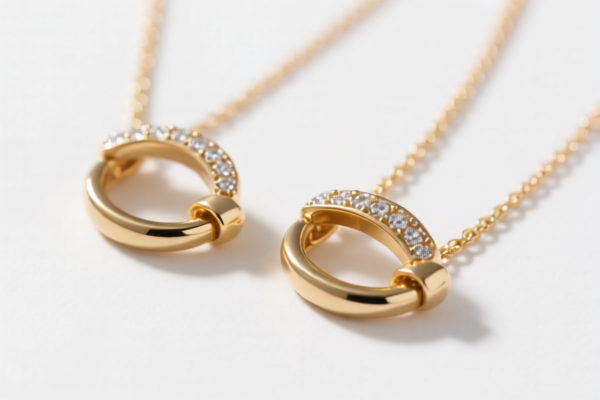
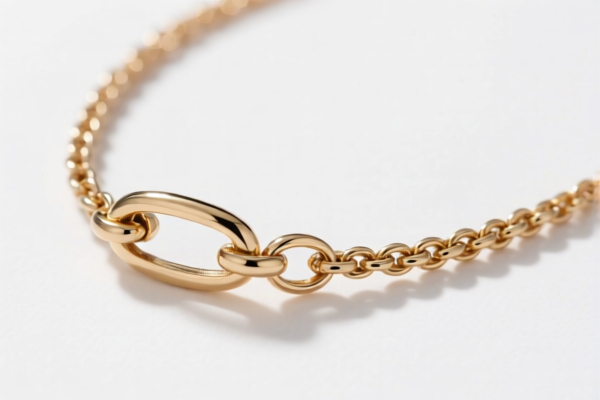
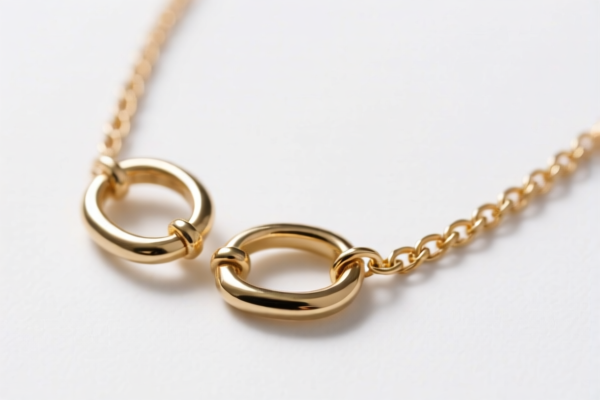
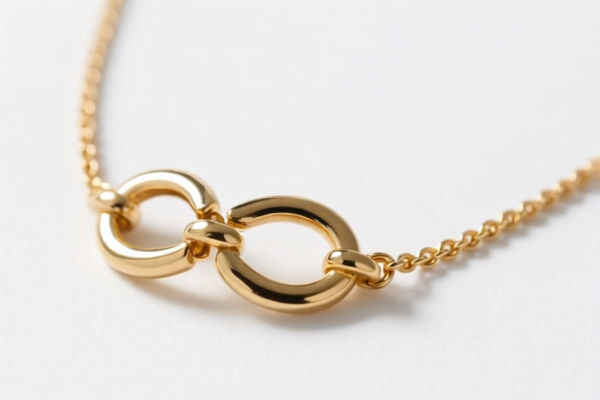
AI Analysis
📿 Necklace Clasp (Jewelry Hardware & Accessories)
🌐 HS Code Reference & Clearance Guide | 2026 Latest Tariff Analysis | Professional Entry Strategy
📌 1. Product Definition & Classification: What Exactly Is a "Necklace Clasp"?
A Necklace Clasp is a critical hardware component used to secure necklaces. In international trade, it is often classified ambiguously depending on two key factors: 1. Material Composition: Is it metal, plastic, or a specific precious material? 2. Functionality: Is it a standalone accessory (clasp/hook) or part of the jewelry itself?
⚠️ Critical Distinction:
- If the clasp is unspecified in material or deemed a generic accessory → It often falls under General Accessories (Heading 7117) or Specific Fasteners (Heading 9606).
- If the clasp is integral to a finished necklace (e.g., a gold lobster clasp on a gold chain) → It is classified as Jewelry (Heading 7113).
- Note: The data provided focuses on standalone clasps/hardware and assumed-material items, not necessarily the entire finished necklace assembly, unless specified as a "necklace" in the summary.
📦 2. HS Code Classification Details (2026 Latest Tariff Authority Match)
| HS Code | Product Description | Matching Logic & Summary | Total Tax Rate |
|---|---|---|---|
7117.90.90.00 |
Imitation Jewelry Accessories / Parts | Match Point: Clasps are considered "accessory parts." Since the material is not explicitly defined as precious metal, they fall under the "other" residual category for imitation jewelry accessories. No material conflict detected. | 28.5% |
9606.21.20.00 |
Buttons (Protein/Cellulose based) | Match Point: The term "Clasp/Button" is treated similarly in function. Based on common sense, if unspecified, it may be inferred as protein-based (e.g., casein) or plastic. No material conflict. | 35.0% |
9606.21.60.00 |
Buttons (Plastic/Other) | Match Point: Clasps are functionally similar to buttons/fasteners. Classified under "Other." Based on common sense, plastic is a reasonable inference for non-precious clasps. No material conflict. | 39.7% |
7116.20.15.00 |
Beads/Ornaments (Precious Stone/Shell) | Match Point: If the clasp is designed as a jewelry piece (e.g., a decorative bead-like clasp or a pendant-style clasp), it may be classified as jewelry. Inferred material: Precious/Semi-precious stone. | 24.0% |
7113.19.29.00 |
Necklaces (Precious Metal, Other) | Match Point: If the item is declared as a finished necklace with a clasp, and the material is inferred to be metal (common for metal clasps), it falls under "Other Precious Metal Necklaces." | 15.5% |
🔍 Key Insight:
-7117.90.90.00is the safest default for unspecified material clasps treated as accessories.
-7113.19.29.00applies only if the item is a complete necklace made of precious metal.
-9606codes are risky unless the clasp is strictly defined as a button/fastener (rare for jewelry clasps).
💰 3. 2026 Latest Tariff Rate Breakdown (Including Surtaxes & Policy Surcharges)
✅ Applicable Country: United States (US)
✅ Origin: China (CN)
✅ Effective Date: November 10, 2025 (and subsequent imports)
🎯 1. 7117.90.90.00 —— Imitation Jewelry Accessories (Default for Unspecified Clasps)
| Item | Content |
|---|---|
| Base Rate | 11.0% (Ad Valorem) |
| Section 301 Surcharge | +7.5% |
| 122-Clause Surcharge | +10% |
| Total Tax Rate | 28.5% |
| Tax Calculation | CIF Value × 28.5% |
| De Minimis Eligibility | ❌ Not Applicable (Deny De Minimis for Section 301/122 items) |
| Legal Basis Path | Section 301: 7117.90.90.00 → 122 Clause: 7117.90.90.00 |
📌 Explanation:
- This is the most common classification for generic necklace clasps where the material is not specified as precious metal.
- The 28.5% total rate is moderate compared to plastic buttons but higher than precious metal jewelry.
- Warning: If the clasp is actually made of precious metal but declared as "imitation," you risk fraud penalties. Ensure accurate material declaration.
🎯 2. 7113.19.29.00 —— Precious Metal Necklaces (If Classified as Complete Jewelry)
| Item | Content |
|---|---|
| Base Rate | 5.5% |
| Section 301 Surcharge | 0.0% |
| 122-Clause Surcharge | +10% |
| Total Tax Rate | 15.5% |
| Tax Calculation | CIF Value × 15.5% |
| De Minimis Eligibility | ❌ Not Applicable (Due to 122 Clause) |
| Legal Basis Path | 122 Clause: 7113.19.29.00 |
📌 Explanation:
- This code applies only if the item is a finished necklace made of precious metal (gold, silver, platinum).
- Note: Section 301 surcharge is 0% for precious metal jewelry, but the 122-Clause 10% still applies.
- Risk: If you declare a plastic clasp as a precious metal necklace, Customs will reject it. Only use this if the entire item (including clasp) is precious metal.
🎯 3. 9606.21.20.00 & 9606.21.60.00 —— Buttons/Fasteners (Plastic/Protein)
| Item | Content |
|---|---|
| Base Rate | 0.0% (21.20) / 4.7% (21.60) |
| Section 301 Surcharge | +25.0% |
| 122-Clause Surcharge | +10% |
| Total Tax Rate | 35.0% (21.20) / 39.7% (21.60) |
| Tax Calculation | CIF Value × Total Rate |
| De Minimis Eligibility | ❌ Not Applicable |
| Legal Basis Path | Section 301: 9606.21.xx → 122 Clause: 9606.21.xx |
📌 Explanation:
- These codes are high-risk for jewelry clasps unless explicitly defined as garment buttons.
- Customs View: Jewelry clasps are rarely classified as "buttons" unless they are generic plastic fasteners for clothing.
- Penalty Risk: Misclassifying jewelry hardware as "buttons" may lead to audits for tariff evasion.
🎯 4. 7116.20.15.00 —— Beads/Ornaments (Decorative Clasps)
| Item | Content |
|---|---|
| Base Rate | 6.5% |
| Section 301 Surcharge | +7.5% |
| 122-Clause Surcharge | +10% |
| Total Tax Rate | 24.0% |
| Tax Calculation | CIF Value × 24.0% |
| De Minimis Eligibility | ❌ Not Applicable |
| Legal Basis Path | Section 301: 7116.20.15.00 → 122 Clause: 7116.20.15.00 |
📌 Explanation:
- Applies if the clasp is decorative and made of precious/semi-precious stones or shell.
- Example: A pearl clasp or a gemstone-encrusted toggle clasp.
- Caution: Must provide material proof (e.g., lab report) to justify "precious stone" classification.
🛠️ 4. Clearance Practical Advice (Battle-Tested Pitfall Guide)
✅ 1. Required Documentation Checklist (Non-Negotiable)
| Document | Required? | Notes |
|---|---|---|
| ✅ Product Specification Sheet | ✔️ | Must specify material (e.g., "Stainless Steel," "Plastic," "Gold-Plated Brass"). |
| ✅ High-Resolution Photos | ✔️ | Clear view of the clasp mechanism and material finish. |
| ✅ Material Declaration Letter | ✔️ | Crucial for distinguishing between 7117 (Imitation) and 7113 (Precious Metal). |
| ✅ Commercial Invoice | ✔️ | Describe as "Necklace Clasp Hardware" or "Jewelry Finding," NOT "Button" or "Garment Accessory." |
| ✅ Customs Ruling (Optional) | ✔️ | Highly recommended for high-value shipments to pre-approve HS Code. |
✅ 2. Declaration Tips (Key Mnemonic)
🔥 "Material First, Function Second, Never Call It A Button!"
| Scenario | Correct Declaration | Wrong Declaration | Consequence |
|---|---|---|---|
| Unspecified Metal Clasp | "Jewelry Clasp, Alloy, No Precious Metal" → 7117.90.90.00 |
"Button, Metal" → 9606 |
Penalty for Misclassification |
| Plastic Clasp | "Plastic Jewelry Clasp, No Precious Material" → 7117.90.90.00 or 9606.21.60.00 |
"Garment Button" | Higher Tax (39.7% vs 28.5%) |
| Precious Metal Clasp (on Necklace) | "Gold Necklace with Clasp" → 7113.19.29.00 |
"Metal Clasp Only" | Tax Discrepancy |
| Decorative Stone Clasp | "Pearl Toggle Clasp" → 7116.20.15.00 |
"Jewelry Part" | Underpayment Risk |
✅ 3. Special Cases Handling
| Situation | Recommendation |
|---|---|
| OEM Custom Clasps | Provide design drawings to prove it is a "jewelry finding" and not a "button." |
| Mixed Material Clasps (e.g., Gold Plated Plastic) | Declare as Plastic (9606) or Imitation Jewelry (7117). Usually, 7117 is safer if it looks like jewelry. |
| Small Quantity Samples | Still subject to 122-Clause 10% if over $800 (De Minimis exemption may not apply for Section 301 items). |
| High-Value Precious Metal | Ensure Hallmark or Purity Stamp is visible in photos to support 7113 classification. |
🌍 5. Global Market Comparison (2026 Latest)
| Country/Region | Recommended HS Code | Tariff (China Origin) | Certification | Notes |
|---|---|---|---|---|
| 🇺🇸 USA | 7117.90.90.00 |
28.5% | None | Highest risk for misclassification. |
| 🇨🇳 China | 7117.90.90.00 |
5-11% | None | No Section 301 or 122 surcharges. |
| 🇪🇺 EU | 7117.19.00 |
0-4% | CE (if applicable) | Lower base rates, no US-style surcharges. |
| 🇬🇧 UK | 7117.19.00 |
0-4% | None | Post-Brexit tariffs generally favorable. |
| 🇯🇵 Japan | 7117.19.00 |
0-8% | None | Moderate rates, no 122/301 equivalents. |
📌 Conclusion:
- USA is the most challenging market for jewelry hardware due to Section 301 and 122-Clause surcharges.
-7117.90.90.00is the most balanced choice for unspecified clasps (28.5%).
- Avoid9606unless the item is genuinely a garment button.
📌 6. Common Errors & Pitfalls (Lessons Learned)
❌ Error 1: Calling a "Necklace Clasp" a "Button"
👉 Consequence: Tariff jumps from 28.5% to 39.7% + Risk of Customs Audit.
❌ Error 2: Declaring a "Gold-Plated Clasp" as "Stainless Steel"
👉 Consequence: Fraud penalty, seizure of goods, and blacklisting.
❌ Error 3: Ignoring the 122-Clause 10%
👉 Consequence: Underpayment of taxes, leading to demand letters and interest.
❌ Error 4: Using "Accessory" as the product name without material details
👉 Consequence: Customs may assign a default higher tariff or request detailed material proof.
✅ Correct Approach:
"Jewelry Clasp, Stainless Steel, Matte Finish, For Necklace Use, Model XYZ, No Precious Metal Content"
🎯 7. Conclusion: Precision in Classification Saves Money!
🎯 Remember the Mnemonic:
🔹 "Material Dictates Code, Function Confirms It, Never Call It A Button, Avoid 39.7%!"
🔹 "122-Clause Hits 10%, 301 Adds 7.5% or 25%, Total Can Be High!"
📌 Pro Tip:
If your clasps are made of stainless steel or alloy (most common), use 7117.90.90.00.
If they are precious metal, use 7113.19.29.00 (if part of a necklace) or 7113.99.00 (if standalone).
Always declare the exact material to avoid penalties.
📣 Immediate Action:
📞 Consult with a licensed customs broker for pre-classification.
📸 Provide clear material photos and spec sheets to your freight forwarder.
🚀 Accurate HS Code = Smooth Clearance + Maximized Profit!
✨ Professional Clearance Starts with Accurate Classification!
💼 Every Percentage Point Counts in the Age of Tariffs!
Customer Reviews
About HS Code Classification
The Harmonized System (HS) is an internationally standardized nomenclature developed by the World Customs Organization (WCO) to classify traded products. Over 200 countries use the HS system as the basis for customs tariffs, trade statistics, and import/export regulations.
Each HS code follows a hierarchical structure:
- Chapter (2 digits) — Broad category of goods (e.g., Chapter 84: Machinery and Mechanical Appliances)
- Heading (4 digits) — More specific grouping within the chapter
- Subheading (6 digits) — Internationally standardized breakdown, used by all WCO member countries
- National subdivisions (8-10 digits) — Country-specific extensions for further classification, such as US HTSUS 10-digit codes
Correct HS code classification is essential for smooth customs clearance, accurate duty payment, and compliance with trade regulations. Misclassification can lead to customs delays, overpayment of duties, or penalties.
When importing from CN to US, the applicable tariff rates may include:
- Most-Favored-Nation (MFN) rate — The standard duty rate applied to WTO members
- General rate — Applied to countries without trade agreements
- Trade remedy duties — Additional tariffs such as Section 301 (anti-dumping), Section 232 (national security), or countervailing duties
The information provided on this page is for reference purposes only. For official classification, please consult with your local customs authority or a licensed customs broker.