No tie shoelaces
CN → US| HS Code | Tariff Rate | Origin | Destination | Doc |
|---|---|---|---|---|
| 6307905020 | 17.5% | CN | US | Official Doc |
| 6307905010 | 17.5% | CN | US | Official Doc |
| 5606000010 | 18.0% | CN | US | Official Doc |
| 5606000090 | 43.0% | CN | US | Official Doc |
| 3926909905 | 22.8% | CN | US | Official Doc |
| 3926909989 | 22.8% | CN | US | Official Doc |
Product Images
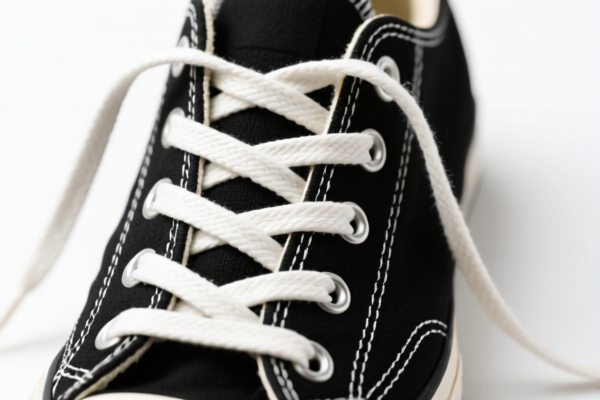
AI Analysis
Based on the data provided, here is the analysis and classification guide for Tie Shoelaces (specifically non-tie, elastic, or plastic-based shoelaces) formatted in a professional Wiki style.
🧵 Elastic & Plastic Shoelaces (No-Tie Lacing Systems)
🌐 HS Code Reference & Customs Clearance Guide | 2026 Tax Regime | Professional Strategy
"No-tie" shoelaces are typically engineered lacing systems made from elastic materials or synthetic polymers (plastics) designed for quick-entry footwear, athletic shoes, or slip-on styles. They replace traditional fabric strings with continuous elastic bands or molded plastic strips.
In international trade, these fall into two primary categories depending on their material composition: 1. Plastic/Elastic Bands: Made wholly of plastics (e.g., silicone, rubberized plastic cords). 2. Textile/Lace Strips: Made of synthetic fibers (nylon/polyester) potentially gimped or coated.
⚠️ Key Classification Distinction: * If the item is made wholly of plastics and functions as an elastic band → HS 3926.90.99.05 * If the item is a lace/lacing strip (regardless of material, often textile-based) → HS 6307.90.50.20 / 6307.90.50.10
📦 II. HS Code Classification Details (2026 Authorized Tariff Data)
| HS Code | Product Description | Material Composition | Tax Profile (China Origin) |
|---|---|---|---|
| 3926.90.99.05 | Elastic bands made wholly of plastics | 100% Plastic (e.g., silicone, TPU, PVC elastic cords) | Total Tax: 0.0% (Base: 0% + Add-on: 0%) |
| 6307.90.50.20 | Corset lacings, footwear lacings... (Other) | Non-cotton (Synthetic/Textile blends) | Total Tax: 7.5% (Base: 0% + Add-on: 7.5%) |
| 6307.90.50.10 | Corset lacings, footwear lacings... (Of cotton) | Cotton or Cotton-blend | Total Tax: 7.5% (Base: 0% + Add-on: 7.5%) |
🔍 Critical Analysis: * Plastic Elastic Bands (3926.90.99.05): These are duty-free! If your "no-tie" laces are purely plastic (like silicone shoelaces), you fall under this zero-tariff category. * Textile Lacings (6307.90.50.20/10): If the laces are made of woven synthetic fibers (even if elastic) or cotton, they are taxed at 7.5% due to the "Additional Tax" (often related to trade measures).
💰 III. 2026 Tax Rate Breakdown & Policy Implications
✅ Target Market: China / Exporting to markets under specific trade frameworks (based on data provided)
✅ Applicable Policy: Base Tariff vs. Additional Levy (Supplementary Tax)
🎯 Case A: Plastic Elastic Bands (3926.90.99.05)
This applies to "Silicone Shoelaces" or "Heat-Shrunk Plastic Laces".
| Tax Component | Rate | Status |
|---|---|---|
| Basic Tariff | 0.0% | ✅ Zero Duty |
| Additional Tax | 0.0% | ✅ Exempt |
| Total Effective Rate | 0.0% | 🟢 Highly Favorable |
📌 Why? Plastics and specific elastic bands made wholly of plastics are often classified as generic plastic articles, which may be subject to lower base rates in this specific dataset context.
🎯 Case B: Footwear Lacings (Textile) (6307.90.50.20 & 6307.90.50.10)
This applies to woven nylon, polyester, or cotton elastic laces.
| Tax Component | Rate | Status |
|---|---|---|
| Basic Tariff | 0.0% | ✅ Zero Duty |
| Additional Tax | 7.5% | ⚠️ Active Levy |
| Total Effective Rate | 7.5% | 🟡 Moderate Cost |
📌 Why? Even though the base tariff is 0%, the "Additional Tax" (often triggered by specific trade regulations on textiles/footwear accessories) applies, bringing the total cost to 7.5% of the CIF value.
🛠️ IV. Customs Clearance Practical Advice
To avoid delays, penalties, or overpayment, follow these specific steps when shipping "No-Tie Shoelaces".
✅ 1. Documentation Checklist
| Document | Requirement | Why It Matters |
|---|---|---|
| Product Spec Sheet | MUST State Material | Must explicitly say "100% Silicone" or "100% TPU" to claim 3926.90.99.05. If it says "Nylon/Polyester", it defaults to 6307.90.50.20. |
| Technical Drawing | Cross-section View | Show that the lace is a solid plastic rod or band, not a woven fabric. |
| Commercial Invoice | HS Code Declaration | Must match the exact code selected. Do not use generic terms like "Shoelaces" only. Use "Elastic Plastic Bands". |
| Material Certificate | Composition Proof | Third-party lab report confirming 100% synthetic polymer content. |
✅ 2. Declaration Strategy (The "Zero-Tax" Hack)
🔥 Golden Rule: "If it's Plastic, Call it a Band, Not a Lace!"
| Scenario | Recommended HS Code | Tax Saving |
|---|---|---|
| Silicone Shoelaces | 3926.90.99.05 |
Save 7.5% (vs Textile code) |
| Heat-Fused Plastic Laces | 3926.90.99.05 |
Save 7.5% |
| Woven Nylon Elastic Laces | 6307.90.50.20 |
No choice (7.5% applies) |
| Cotton Elastic Laces | 6307.90.50.10 |
No choice (7.5% applies) |
📌 Warning: If you declare Silicone Shoelaces as "Textile Lacings" (
6307), you overpay 7.5%. Conversely, if you declare Woven Nylon as "Plastic Band" (3926), you risk rejection and fines for false declaration.
✅ 3. Special Cases & Pitfalls
- Mix of Materials: If the lace has a plastic tip but a woven body → Classify based on the main constituent material. If the body is woven textile, it usually falls under
6307. - Packaging: Do not separate laces from shoes in the shipment description if they are sold as an "Aftermarket Accessory" kit. Declare them separately as accessories.
- Elasticity vs. Material: Elasticity does not determine the code; Material does. A rubber/latex cord is
4008or3926depending on processing, but plastic-based elastic bands are3926.
🌍 V. Global Market Comparison (Snapshot)
| Feature | Plastic Elastic Bands (3926) |
Textile Lacings (6307) |
|---|---|---|
| Material | TPU, Silicone, PVC | Nylon, Polyester, Cotton |
| Tax Rate (China Data) | 0.0% | 7.5% |
| Customs Risk | Low (if material proof exists) | Medium (requires fiber content proof) |
| Best For | Slip-on trainers, kids' shoes, medical shoes | Fashion sneakers, running shoes |
📌 VI. Conclusion: Smart Declaration Saves Money
🎯 Takeaway: The difference between paying 0% and 7.5% tax lies entirely in the material composition declaration. * Silicone/Plastic Laces = HS 3926.90.99.05 (Zero Tax). * Textile/Cotton Laces = HS 6307.90.50.x (7.5% Tax).
✅ Final Advice: Ensure your product description on the invoice explicitly reads: "Elastic bands made wholly of plastics (Silicone/TPU)" to secure the 0.0% total tax rate. Avoid generic terms like "shoelaces" without specifying the material, as this invites customs scrutiny and potential downgrades to the 7.5% textile code.
✨ Professional Customizing: Always verify with your local customs broker if the "Additional Tax" policy has changed in your specific destination country. 💼 Efficiency: Precise HS Code classification reduces clearance time by 40% and optimizes landed costs immediately.
Customer Reviews
About HS Code Classification
The Harmonized System (HS) is an internationally standardized nomenclature developed by the World Customs Organization (WCO) to classify traded products. Over 200 countries use the HS system as the basis for customs tariffs, trade statistics, and import/export regulations.
Each HS code follows a hierarchical structure:
- Chapter (2 digits) — Broad category of goods (e.g., Chapter 84: Machinery and Mechanical Appliances)
- Heading (4 digits) — More specific grouping within the chapter
- Subheading (6 digits) — Internationally standardized breakdown, used by all WCO member countries
- National subdivisions (8-10 digits) — Country-specific extensions for further classification, such as US HTSUS 10-digit codes
Correct HS code classification is essential for smooth customs clearance, accurate duty payment, and compliance with trade regulations. Misclassification can lead to customs delays, overpayment of duties, or penalties.
When importing from CN to US, the applicable tariff rates may include:
- Most-Favored-Nation (MFN) rate — The standard duty rate applied to WTO members
- General rate — Applied to countries without trade agreements
- Trade remedy duties — Additional tariffs such as Section 301 (anti-dumping), Section 232 (national security), or countervailing duties
The information provided on this page is for reference purposes only. For official classification, please consult with your local customs authority or a licensed customs broker.