Non plasticized Cellulose Acetate (Cigarette Filter Tow)
CN → US| HS Code | Tariff Rate | Origin | Destination | Doc |
|---|---|---|---|---|
| 3912110000 | 40.6% | CN | US | Official Doc |
| 5505100060 | 35.0% | CN | US | Official Doc |
| 5505200000 | 35.0% | CN | US | Official Doc |
Product Images
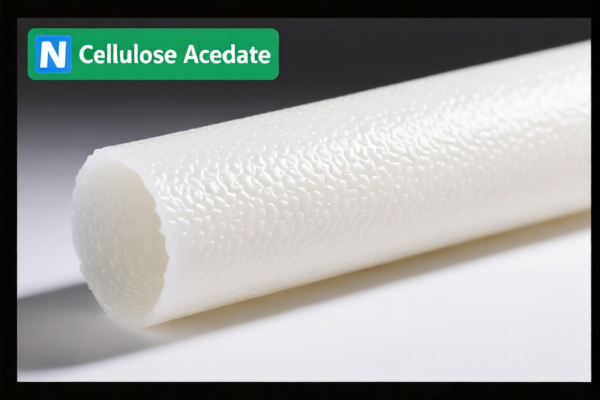
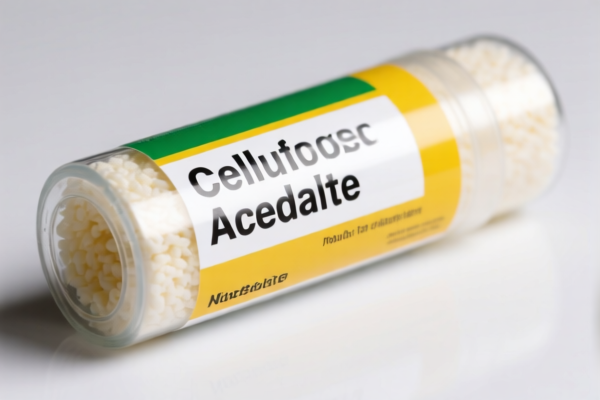
AI Analysis
🚬 Cellulose Acetate Tow (Cigarette Filter Material)
🌐 HS Code Reference & Customs Clearance Guide | 2026 Latest Tariff Analysis | Specialized Strategy for Tobacco Raw Materials
📌 I. Product Definition & Classification: Do You Really Understand "Tow"?
Cellulose Acetate (CA) Tow is the primary raw material for manufacturing cigarette filters. In international trade, it is strictly categorized based on its plasticization state and physical form. The key distinction lies between raw, non-plasticized fibers used in filter manufacturing versus waste materials or semi-finished intermediates.
⚠️ Critical Distinction Point:
- Non-plasticized, Primary Fiber Form: Directly used for filter production → Classified under 3912.11.00.00
- Waste or Intermediate Forms (e.g., off-cuts, recycled fibers, tow scraps): Classified under 5505.10.00.60 (Synthetic) or 5505.20.00.00 (Artificial)
- Plasticized CA: Not listed here; plasticized CA falls under different chemical product codes (usually Chapter 39 subheadings for sheets/planks, or specific chemical preparations).
📦 II. HS Code Classification Details (2026 Latest Tariff Authority Match)
| HS Code | Product Description | Application Scenario | Tax Rate (Total) | Legal Basis Summary |
|---|---|---|---|---|
3912.11.00.00 |
Non-plasticized Cellulose Acetate, in primary form (Tow) | Cigarette filter manufacturing, raw fiber input | 40.6% | Base 5.6% + Sec 301 25% + Section 122 10% |
5505.10.00.60 |
Waste of synthetic fibers / Intermediate forms | CA filter tow waste, off-cuts, recycled tow | 35.0% | Base 0.0% + Sec 301 25% + Section 122 10% |
5505.20.00.00 |
Waste of artificial fibers / Intermediate forms | CA filter tow waste (artificial fiber classification), intermediate scraps | 35.0% | Base 0.0% + Sec 301 25% + Section 122 10% |
🔍 Key Reminder:
- Raw Material vs. Waste: If the product is fresh, virgin, non-plasticized cellulose acetate in tow form for filter making, it MUST be classified under 3912.11.00.00.
- Waste/Intermediate: If the product consists of tow off-cuts, recycled material, or non-primary fiber forms used as filler or recycling input, it falls under 5505 series.
- Do Not Misclassify: Declaring raw tow as "waste" to avoid the 5.6% base tariff is a common compliance error that leads to severe penalties.
💰 III. 2026 Tariff Rate Breakdown (Including Additional Duties)
✅ Applicable Country: United States (US)
✅ Origin: China (CN)
✅ Effective Time: Current US Trade Policy (2026)
🎯 1. 3912.11.00.00 —— Non-plasticized Cellulose Acetate (Primary Tow)
| Item | Detail |
|---|---|
| Base MFN Tariff | 5.6% |
| Section 301 Additional Duty | +25.0% (Trade Act of 1974) |
| Section 122 Duty | +10.0% (Trade Act of 1974, Sec. 122) |
| Total Weighted Average Rate | 40.6% |
| Calculation Basis | CIF Value × 40.6% |
| De Minimis Exemption | ❌ Not Eligible |
| Legal Path | HTSUS:3912.11.00.00 → Section 301: Footnote 9903.88.01 → Section 122: 19 USC 1622 |
📌 Explanation:
- Base 5.6%: Standard Most Favored Nation (MFN) rate for non-plasticized cellulose acetate.
- 25% Section 301: Applies to specific chemical products from China.
- 10% Section 122: A lesser-known but applicable duty for certain industrial inputs, specifically listed for this HS code in recent trade adjustments.
- Total 40.6%: This is a high-cost input. Importers must budget accordingly.
🎯 2. 5505.10.00.60 & 5505.20.00.00 —— Waste/Intermediate Fibers
| Item | Detail |
|---|---|
| Base MFN Tariff | 0.0% |
| Section 301 Additional Duty | +25.0% |
| Section 122 Duty | +10.0% |
| Total Weighted Average Rate | 35.0% |
| Calculation Basis | CIF Value × 35.0% |
| De Minimis Exemption | ❌ Not Eligible |
| Legal Path | HTSUS:5505.10.00.60 / 5505.20.00.00 → Section 301 → Section 122 |
📌 Note:
- While the base tariff is 0%, the addition of Section 301 and Section 122 duties still results in a 35.0% total burden.
- These codes apply only to waste, scraps, or non-primary forms. Using these for virgin tow is illegal misdeclaration.
🛠️ IV. Customs Clearance Practical Advice (Risk Avoidance Guide)
✅ 1. Required Documentation Checklist
| Document | Mandatory? | Description |
|---|---|---|
| ✅ Product Specification Sheet | ✔️ | Must specify "Non-plasticized," "Cellulose Acetate," "Tow Form," and NOT for direct smoking use. |
| ✅ MSDS (Material Safety Data Sheet) | ✔️ | Critical for chemical identification and safety handling. |
| ✅ Certificate of Origin (CO) | ✔️ | Required to verify Chinese origin for Section 301/122 application. |
| ✅ Commercial Invoice | ✔️ | Must clearly state "Raw Material for Filter Manufacturing," not "Cigarettes." |
| ✅ Packing List | ✔️ | Detail weight, volume, and number of packages. |
| ✅ Import License | ⚠️ Check | Verify if tobacco-related raw materials require specific FDA or ATF notifications. |
✅ 2. Declaration Best Practices
🔥 "Be Precise: Raw Tow, Not Waste; Chemical, Not Product!"
| Scenario | Correct Declaration | Risk if Incorrect |
|---|---|---|
| Virgin CA Tow for Filters | 3912.11.00.00 |
Misdeclaring as waste (5505) → Penalty for undervaluation & misclassification |
| CA Tow Scraps/Off-cuts | 5505.10.00.60 or 5505.20.00.00 |
Misdeclaring as raw tow → Overpayment of 5.6% base (minor) or underpayment if fraud alleged |
| Plasticized CA | Other HS Codes (e.g., 3912.90) |
Misdeclaring as non-plasticized → Severe penalty, seizure |
| Cigarettes (Finished) | 2402.20 |
Misdeclaring raw material as finished goods → Major tobacco law violation |
✅ 3. Special Handling Tips
- Chemical Identification: Ensure the HS code declaration matches the chemical composition. Cellulose acetate is a derivative of cellulose. Provide lab test reports if requested by CBP to prove "non-plasticized" status.
- Tobacco Industry Compliance: While the material is not a tobacco product, it is an essential component. Ensure your supplier has proper export controls and that the import does not violate any FDA regulations on tobacco-related components.
- Duty Mitigation Strategy: Given the high total duty (40.6%), consider:
- Foreign Trade Zones (FTZ): If available, you can delay duty payment until the material is used in a qualified manufacturing process.
- Pre-Ruling Application: Apply for an Advance Ruling from CBP to confirm the HS code classification and duty rate before shipment. This reduces audit risk.
🌍 V. Global Market Comparison (2026)
| Country/Region | Recommended HS Code | Total Duty (China Origin) | Notes |
|---|---|---|---|
| 🇺🇸 USA | 3912.11.00.00 |
40.6% | High Section 301 + 122 duties. |
| 🇨🇳 China | 3912.11.00.00 |
~5-10% | Standard import duty for raw materials. |
| 🇪🇺 EU | 3912.11 |
~6.5% | No Section 301 equivalent. |
| 🇬🇧 UK | 3912.11 |
~6.5% | Post-Brexit tariff structure similar to EU. |
📌 Conclusion:
The USA imposes the highest burden on Chinese-origin cellulose acetate tow due to multiple layered tariffs. Importers must account for this 40.6% cost in their supply chain pricing.
📌 VI. Common Errors & Pitfalls (Lessons Learned)
❌ Error 1: Declaring non-plasticized tow as "waste" (5505) to avoid base tariff.
👉 Consequence: CBP detects physical characteristics (length, uniformity) contradicting "waste" classification. Result: Back taxes + fines.
❌ Error 2: Confusing "non-plasticized" with "plasticized."
👉 Consequence: Plasticized CA has different uses and tariff implications. Misdeclaration leads to regulatory non-compliance.
❌ Error 3: Ignoring Section 122 duties.
👉 Consequence: Many importers only account for Section 301 (25%). Missing the 10% Section 122 leads to underpayment audits.
✅ Correct Approach:
"Cellulose Acetate, Non-Plasticized, in Tow Form, for Filter Manufacturing. HS Code: 3912.11.00.00. Origin: China. Duty Rate: 40.6%."
🎯 VII. Conclusion: Precision in Classification Saves Costs
🎯 Key Takeaways:
🔹 Raw Tow = 3912.11.00.00 (40.6%)
🔹 Waste/Scraps = 5505 series (35.0%)
🔹 Always include Section 122 in your cost calculation!
🔹 Apply for Pre-Ruling to mitigate risk.
📌 Pro Tip:
If your supply chain is flexible, consider sourcing cellulose acetate tow from countries not subject to Section 122 or 301 duties (e.g., Vietnam, India, or Brazil), where applicable tariffs may be significantly lower. Always verify Rules of Origin.
📣 Action Item:
📞 Contact a licensed customs broker to validate your HS code.
📄 Request a Pre-Ruling from CBP before the first shipment.
🚀 Optimize your landed cost by understanding every percentage point of duty.
✨ Customs clearance success starts with accurate classification!
💼 Every duty percentage counts in the tobacco supply chain!
Customer Reviews
About HS Code Classification
The Harmonized System (HS) is an internationally standardized nomenclature developed by the World Customs Organization (WCO) to classify traded products. Over 200 countries use the HS system as the basis for customs tariffs, trade statistics, and import/export regulations.
Each HS code follows a hierarchical structure:
- Chapter (2 digits) — Broad category of goods (e.g., Chapter 84: Machinery and Mechanical Appliances)
- Heading (4 digits) — More specific grouping within the chapter
- Subheading (6 digits) — Internationally standardized breakdown, used by all WCO member countries
- National subdivisions (8-10 digits) — Country-specific extensions for further classification, such as US HTSUS 10-digit codes
Correct HS code classification is essential for smooth customs clearance, accurate duty payment, and compliance with trade regulations. Misclassification can lead to customs delays, overpayment of duties, or penalties.
When importing from CN to US, the applicable tariff rates may include:
- Most-Favored-Nation (MFN) rate — The standard duty rate applied to WTO members
- General rate — Applied to countries without trade agreements
- Trade remedy duties — Additional tariffs such as Section 301 (anti-dumping), Section 232 (national security), or countervailing duties
The information provided on this page is for reference purposes only. For official classification, please consult with your local customs authority or a licensed customs broker.