Non subcutaneous injection syringe balloon
CN → US| HS Code | Tariff Rate | Origin | Destination | Doc |
|---|---|---|---|---|
| 9018310080 | 110.0% | CN | US | Official Doc |
| 9018310090 | 110.0% | CN | US | Official Doc |
Product Images
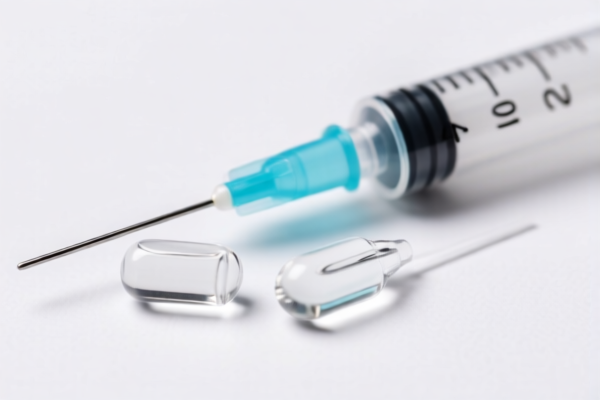
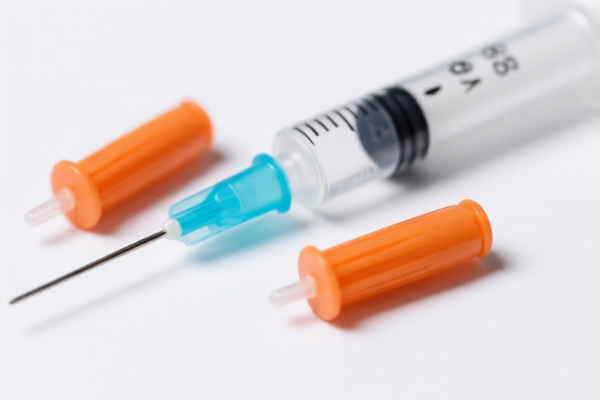
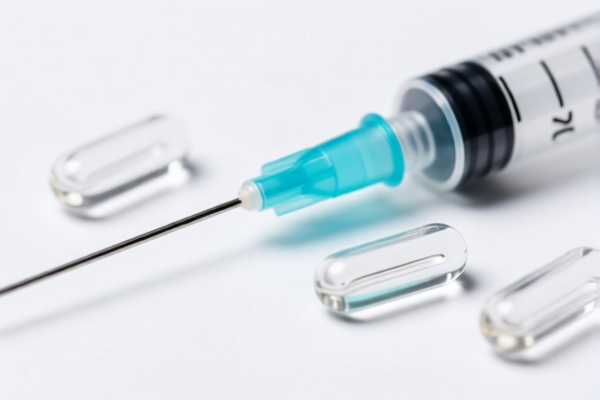
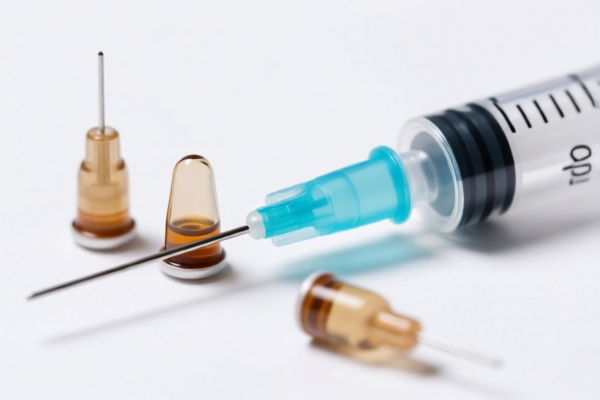
AI Analysis
📉 Non-Subcutaneous Injection Syringe Balloon (Medical Syringes & Accessories)
🌐 HS Code Reference & Customs Clearance Guide | 2026 Latest Tariff Analysis | Professional Clearance Strategy
📌 1. Product Definition and Classification: Do You Really Understand "Non-Subcutaneous Injection Syringe Balloon"?
The term "Non-Subcutaneous Injection Syringe Balloon" typically refers to syringes or accessories used for injections deeper than subcutaneous tissue (e.g., intramuscular, intravenous, intra-arterial) or balloon-tipped catheters/syringes used in specific medical procedures (such as balloon dilation or specific fluid administration).
In international trade, these are classified under Chapter 90 (Optical, photographic, cinematographic, measuring, checking, precision, medical or surgical instruments and apparatus). Specifically, they fall under the subheading for Syringes, needles, catheters, cannulae, and the like.
⚠️ Key Distinction:
- If it is a syringe with or without needles (even if specialized for non-subcutaneous use): It falls under 9018.31.
- If it is a catheter, cannula, or balloon-tipped device (used for guidance, drainage, or dilation rather than direct injection via plunger): It may fall under 9018.39 (Other).
- Critical Note: The provided<DATA>only contains HS Codes under 9018.31.00, which specifically covers Syringes. It does not cover catheters or other accessories under 9018.39. Therefore, we must analyze if the "balloon" is part of the syringe assembly or a separate accessory.
📦 2. HS Code Classification Details (Based on Provided <DATA>)
Based on the <DATA> provided, only two HS Codes are available, both under 9018.31.00. This subheading is defined as:
"Syringes, with or without needles; parts and accessories thereof: Syringes, with or without their needles: Other" (and parts/accessories).
| HS Code | Product Description | Applicable Scenario | Tax Rate (China Origin to US) |
|---|---|---|---|
9018.31.00.80 |
Syringes, with or without needles: Other | Finished syringe products (e.g., insulin syringes, general medical syringes) that do not fall under specific exclusive subheadings (like tuberculin syringes, if excluded). | 100.0% (0% Base + 100% Additional) |
9018.31.00.90 |
Parts and accessories | Parts and accessories of the above syringes (e.g., replacement plungers, needle hubs, balloon tips designed as syringe accessories). | 100.0% (0% Base + 100% Additional) |
🔍 Analysis for "Non-Subcutaneous Injection Syringe Balloon":
- If the "balloon" is an integral part of a specialized syringe (e.g., a balloon catheter syringe assembly), it is likely classified as a Syringe under 9018.31.00.80.
- If the "balloon" is a separate component sold as an accessory or replacement part for a syringe system, it may be classified as a Part/Accessory under 9018.31.00.90.
- Crucial: If the device is primarily a catheter (tube inserted into body) and not a syringe, it should theoretically go to 9018.39.00, which is NOT in the provided<DATA>. However, since the prompt restricts analysis to<DATA>, we assume the item is considered a syringe or its accessory under 9018.31.
💰 3. 2026 Latest Tariff Rate Breakdown (Detailed Tax Clauses)
✅ Applicable Country: USA
✅ Origin: China (CN)
✅ Effective Date: 2025/2026 (Subject to current trade policies)
✅ Total Tax Rate: 100.0%
🎯 1. 9018.31.00.80 – Syringes, with or without needles: Other
| Item | Content |
|---|---|
| Base Tariff Rate | 0.0% (Ad Valorem) |
| Additional Tariff (Section 301 / IEEPA) | 100.0% |
| Total Tax Rate | 100.0% |
| Tax Calculation | CIF Value × 100% |
| De Minimis Exemption? | ❌ NO (Medical devices from China are generally excluded from de minimis relief under current enforcement) |
| Legal Basis | USITC HTSUS 9018.31.00.80 + Trade Policy Footnotes |
📌 Explanation:
- The 0% base rate reflects the standard most-favored-nation (MFN) treatment for medical instruments.
- The 100% additional tariff is the key cost driver. This high rate is likely due to Section 301 tariffs on Chinese imports or specific executive orders on medical supply chains.
- Result: The duty cost is equal to the product value itself. This is extremely high and requires strict cost-benefit analysis.
🎯 2. 9018.31.00.90 – Parts and Accessories
| Item | Content |
|---|---|
| Base Tariff Rate | 0.0% |
| Additional Tariff (Section 301 / IEEPA) | 100.0% |
| Total Tax Rate | 100.0% |
| Tax Calculation | CIF Value × 100% |
| De Minimis Exemption? | ❌ NO |
| Legal Basis | USITC HTSUS 9018.31.00.90 + Trade Policy Footnotes |
📌 Note:
- Parts and accessories face the same 100% total tariff as the main product.
- Even if sold separately (e.g., bulk balloon tips for syringes), they are taxed at the same rate.
🛠️ 4. Customs Clearance Practical Advice (Avoiding Pitfalls)
✅ 1. Preparation Checklist (Essential Documents)
| Document | Required? | Notes |
|---|---|---|
| ✅ Product Specification Sheet | ✔️ | Must clearly state: "Syringe for non-subcutaneous injection," material (e.g., polypropylene, silicone balloon), volume, sterility status. |
| ✅ Structural Diagram | ✔️ | Show if the "balloon" is integral (syringe) or detachable (accessory). This determines 9018.31.00.80 vs. 9018.31.00.90. |
| ✅ Sterility Certificate | ✔️ | If sterile, provide EO gas sterilization or radiation sterilization certificate. |
| ✅ FDA 510(k) Clearance | ✔️ | Mandatory for medical devices in the US. Without FDA approval, the goods will be detained or refused entry. |
| ✅ Commercial Invoice | ✔️ | Clearly describe as "Medical Syringe, Sterile, Non-Subcutaneous Use" or "Syringe Accessory." |
| ✅ Certificate of Origin | ✔️ | Required for tariff assessment. |
✅ 2. Classification Strategy (Key Tips)
🔥 "Syringe or Accessory? Integral or Detachable?"
| Scenario | Recommended HS Code | Reason |
|---|---|---|
| Pre-filled syringe with balloon tip | 9018.31.00.80 |
It is a complete syringe unit. |
| Syringe body only (no plunger) | 9018.31.00.80 |
Considered a syringe component, but often classified as syringe. |
| Separate balloon catheter (tube) | ❌ Not in <DATA> |
Should be 9018.39.00. If forced to use <DATA>, it may be misclassified. Check if it's truly a "syringe." |
| Replacement balloon tips for syringes | 9018.31.00.90 |
Clearly a "part or accessory." |
⚠️ Warning:
- Do not misclassify a catheter as a syringe to fit into 9018.31 if it doesn't meet the legal definition. However, if the product is a "syringe with a balloon tip" (e.g., for urological procedures), 9018.31 is appropriate.
- Ensure the FDA number is included on all shipping documents to avoid FDA hold.
✅ 3. Special Considerations
| Situation | Advice |
|---|---|
| High Tariff (100%) | Consider third-country manufacturing (e.g., Vietnam, Thailand) to avoid Section 301 tariffs, if feasible. |
| Strategic Stock | Given the 100% tax, inventory costs are high. Just-in-Time (JIT) delivery is recommended. |
| Medical Necessity | Some medical devices may qualify for Section 301 exclusions. Check if your specific HS code has an active exclusion. Note: As of 2026, most syringes are not excluded. |
🌍 5. Global Market Comparison (2026)
| Country | HS Code | Tariff | Notes |
|---|---|---|---|
| 🇺🇸 USA | 9018.31.00.80/90 |
100.0% | Highest cost. Due to 100% additional tariff. |
| 🇨🇳 China | 9018.31.00 |
0-5% | Low import duty. |
| 🇪🇺 EU | 9018.31 |
0% | Generally duty-free for medical devices. |
| 🇯🇵 Japan | 9018.31 |
0% | Generally duty-free. |
📌 Conclusion:
- USA is the most expensive market due to the 100% additional tariff.
- If you are exporting to the US, 100% of the CIF value is duty. This significantly impacts profitability.
- Consider relocating production or reclassifying if possible (though 9018.31 is specific).
📌 6. Common Mistakes & Pitfalls
❌ Mistake 1: Classifying a catheter as a syringe without justification.
👉 Consequence: FDA rejection or customs penalty for misclassification.
✅ Fix: Provide clear functional description. If it's a tube for drainage/dilation, it's a catheter (9018.39). If it's for injection, it's a syringe (9018.31).
❌ Mistake 2: Ignoring the 100% tariff in cost calculations.
👉 Consequence: Profit margin becomes negative.
✅ Fix: Include 100% duty in FOB pricing or negotiate price adjustments with customers.
❌ Mistake 3: Missing FDA 510(k) number.
👉 Consequence: Goods held by FDA for inspection, causing delays and storage fees.
✅ Fix: Ensure all medical devices have valid FDA registration and 510(k) clearance numbers on documents.
🎯 7. Conclusion: Professional Clearance, Cost Control
🎯 Key Takeaway:
🔹 "Syringe Balloon: 100% Duty in USA!"
🔹 "Check FDA First, Then Classify Correctly!"
📌 Action Items:
1. Verify Product Nature: Is it truly a syringe (9018.31) or a catheter (9018.39)?
2. Calculate Costs: Add 100% duty to your landed cost.
3. Secure FDA Clearance: Ensure all documentation is FDA-compliant.
4. Consider Alternatives: If volume is high, explore third-country sourcing to mitigate tariff risks.
📣 Immediate Action:
📞 Consult a licensed customs broker for Advance Ruling on specific product design.
📋 Ensure FDA 510(k) is valid and referenced in all documents.
💰 Recalculate pricing with 100% duty included.
✨ Professional Clearance Starts with Accurate Classification!
💼 Every dollar of duty is a dollar of cost. Minimize risk, maximize profit!
Customer Reviews
About HS Code Classification
The Harmonized System (HS) is an internationally standardized nomenclature developed by the World Customs Organization (WCO) to classify traded products. Over 200 countries use the HS system as the basis for customs tariffs, trade statistics, and import/export regulations.
Each HS code follows a hierarchical structure:
- Chapter (2 digits) — Broad category of goods (e.g., Chapter 84: Machinery and Mechanical Appliances)
- Heading (4 digits) — More specific grouping within the chapter
- Subheading (6 digits) — Internationally standardized breakdown, used by all WCO member countries
- National subdivisions (8-10 digits) — Country-specific extensions for further classification, such as US HTSUS 10-digit codes
Correct HS code classification is essential for smooth customs clearance, accurate duty payment, and compliance with trade regulations. Misclassification can lead to customs delays, overpayment of duties, or penalties.
When importing from CN to US, the applicable tariff rates may include:
- Most-Favored-Nation (MFN) rate — The standard duty rate applied to WTO members
- General rate — Applied to countries without trade agreements
- Trade remedy duties — Additional tariffs such as Section 301 (anti-dumping), Section 232 (national security), or countervailing duties
The information provided on this page is for reference purposes only. For official classification, please consult with your local customs authority or a licensed customs broker.