Oil Stabilizer
CN → US| HS Code | Tariff Rate | Origin | Destination | Doc |
|---|---|---|---|---|
| 3826003000 | 41.5% | CN | US | Official Doc |
| 3825690000 | 35.0% | CN | US | Official Doc |
| 3824999397 | 40.0% | CN | US | Official Doc |
| 3824997510 | 38.7% | CN | US | Official Doc |
| 3826001000 | 39.6% | CN | US | Official Doc |
Product Images
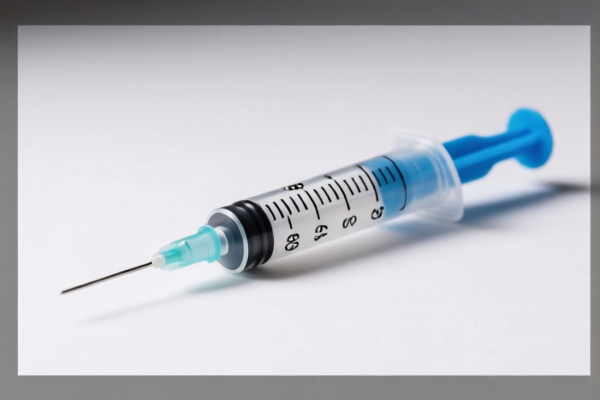

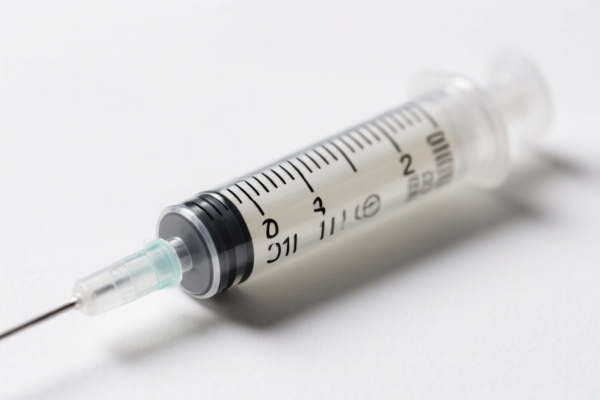
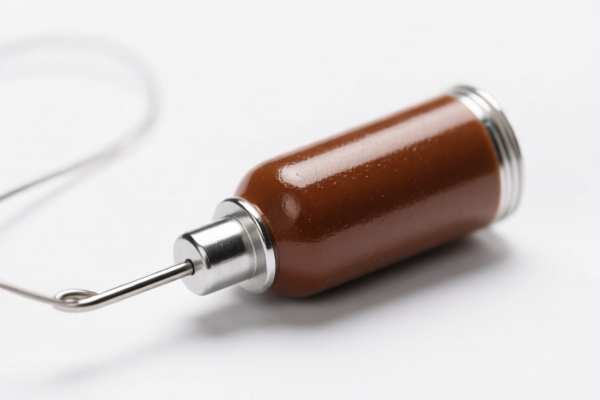
AI Analysis
🧪 Oil Stabilizer (Bio-diesel & Chemical Additives)
🌐 HS Code Reference & Customs Clearance Guide | 2026 Latest Tariff Analysis | Professional Clearance Strategy
📌 I. Product Definition & Classification: What exactly is "Oil Stabilizer"?
"Oil Stabilizer," specifically in the context of this data, refers to Bio-diesel Stabilizers and Chemical Industrial Additives. These are specialized substances used to prevent degradation, oxidation, or separation in bio-diesel and related chemical mixtures.
In international trade, the classification depends heavily on chemical composition, specific application, and whether it is classified as a waste/residual product or a formulated chemical preparation.
⚠️ Key Classification Distinction:
- If it is considered a part of the bio-diesel product itself or a direct bio-diesel additive → It may fall under Chapter 3826.
- If it is considered chemical waste/residue or a general chemical preparation → It falls under Chapter 3825 or Chapter 3824.
📦 II. HS Code Classification Details (2026 Latest Tariff Authority Match)
Based on the provided data, here are the 5 specific HS Codes for "Oil Stabilizer" and their corresponding tariff structures.
| HS Code | Product Description & Logic | Total Tax Rate | Tax Breakdown |
|---|---|---|---|
| 3826.00.30.00 | Bio-diesel Stabilizer: Considered an integral component of bio-diesel and its mixtures. Belongs to the bio-diesel supply chain. | 41.5% | Base: 6.5% Section 301: 25.0% Section 122: 10.0% |
| 3825.69.00.00 | Bio-diesel Stabilizer: Classified as a Chemical Industry Additive, specifically categorized as "Other waste/residues" (by-products or residues). | 35.0% | Base: 0.0% Section 301: 25.0% Section 122: 10.0% |
| 3824.99.93.97 | Bio-diesel Stabilizer: Classified as a Chemical Product/Preparation of the chemical industry or related industries. | 40.0% | Base: 5.0% Section 301: 25.0% Section 122: 10.0% |
| 3824.99.75.10 | Bio-diesel Stabilizer: Classified as a Chemical Additive, fitting the category of chemicals/mixtures. | 38.7% | Base: 3.7% Section 301: 25.0% Section 122: 10.0% |
| 3826.00.10.00 | Bio-diesel Stabilizer: Classified as an Additive related to the bio-diesel industrial chain. | 39.6% | Base: 4.6% Section 301: 25.0% Section 122: 10.0% |
🔍 Critical Insight:
- All classifications involve a mandatory 25% Section 301 Tariff and a 10% Section 122 Tariff (likely referring to specific punitive or trade remedy duties depending on the origin, typically China).
- The Base Tariff varies from 0% to 6.5%, which is the only variable factor in the total cost.
- 3825.69.00.00 offers the lowest base rate (0%), resulting in the lowest total tax (35.0%), but it requires justification that the product is a "waste/residue."
- 3826 codes are more aligned with the "Bio-diesel" identity but carry higher base tariffs.
💰 III. 2026 Latest Tariff Rate Detail (Including Surcharges & Policy Add-ons)
✅ Applicable Country: United States (US)
✅ Origin: China (CN) (Inferred from Section 301 & 122 clauses)
✅ Effective Date: Ongoing (2025-2026)
🎯 1. 3826.00.30.00 —— Bio-diesel Stabilizer (Integral Component)
| Item | Content |
|---|---|
| Base Tariff | 6.5% (Ad Valorem) |
| Section 301 Surcharge | +25.0% (Trade War Tariff) |
| Section 122 Surcharge | +10.0% (Additional Trade Remedy) |
| Total Tariff | 41.5% |
| Calculation | CIF Value × 41.5% |
| De Minimis Exemption | ❌ Not Eligible (High tariff codes usually block Section 321 exemptions) |
| Legal Basis Path | HTSUS:3826.00.30.00 → USITC:301 → USTR:122 |
📌 Explanation:
- This code treats the stabilizer as a product of bio-diesel. The base tariff is higher (6.5%) because it is seen as a finished industrial chemical related to fuel.
- Total Cost: High. Requires precise documentation proving it is a "component" of bio-diesel.
🎯 2. 3825.69.00.00 —— Bio-diesel Stabilizer (Waste/Residue Category)
| Item | Content |
|---|---|
| Base Tariff | 0.0% |
| Section 301 Surcharge | +25.0% |
| Section 122 Surcharge | +10.0% |
| Total Tariff | 35.0% |
| Calculation | CIF Value × 35.0% |
| De Minimis Exemption | ❌ Not Eligible |
| Legal Basis Path | HTSUS:3825.69.00.00 → USITC:301 → USTR:122 |
📌 Strategy Note:
- Lowest Total Tax (35.0%).
- Risk: You must prove the product is classified as "Waste/Residual" or "By-product" under Chapter 3825. If customs determines it is a pure formulated additive (not a waste), this classification may be rejected.
- Best for: By-products, recycled stabilizers, or residue-based formulations.
🎯 3. 3824.99.93.97 —— Bio-diesel Stabilizer (General Chemical Preparation)
| Item | Content |
|---|---|
| Base Tariff | 5.0% |
| Section 301 Surcharge | +25.0% |
| Section 122 Surcharge | +10.0% |
| Total Tariff | 40.0% |
| Calculation | CIF Value × 40.0% |
| De Minimis Exemption | ❌ Not Eligible |
| Legal Basis Path | HTSUS:3824.99.93.97 → USITC:301 → USTR:122 |
📌 Explanation:
- Falls under Chapter 3824 (Chemical Preparations). This is a "safe" generic classification for chemical mixtures that don't fit specific fuel categories.
- Balance: Moderate base rate (5.0%). Good for general chemical additives.
🎯 4. 3824.99.75.10 —— Bio-diesel Stabilizer (Chemical Additive)
| Item | Content |
|---|---|
| Base Tariff | 3.7% |
| Section 301 Surcharge | +25.0% |
| Section 122 Surcharge | +10.0% |
| Total Tariff | 38.7% |
| Calculation | CIF Value × 38.7% |
| De Minimis Exemption | ❌ Not Eligible |
| Legal Basis Path | HTSUS:3824.99.75.10 → USITC:301 → USTR:122 |
📌 Strategy Note:
- Second Lowest Total Tax (38.7%).
- Requires precise description as a "Chemical Additive" or "Mixture" under Chapter 3824.
- Advantage: Lower base rate than 3824.99.93.97.
🎯 5. 3826.00.10.00 —— Bio-diesel Stabilizer (Bio-diesel Chain Additive)
| Item | Content |
|---|---|
| Base Tariff | 4.6% |
| Section 301 Surcharge | +25.0% |
| Section 122 Surcharge | +10.0% |
| Total Tariff | 39.6% |
| Calculation | CIF Value × 39.6% |
| De Minimis Exemption | ❌ Not Eligible |
| Legal Basis Path | HTSUS:3826.00.10.00 → USITC:301 → USTR:122 |
📌 Explanation:
- Another Chapter 3826 option.
- Mid-range total tax (39.6%).
- Suitable if the product is explicitly marketed as a "Bio-diesel Chain Additive" but not necessarily a "component" of the final fuel blend (which would use .30.00).
🛠️ IV. Customs Clearance Practical Advice (Battle-Tested Pitfall Guide)
✅ 1. Document Checklist (Non-negotiable)
| Document | Required | Purpose |
|---|---|---|
| ✅ Product Specification Sheet | ✔️ | Must detail chemical composition, CAS numbers, and function. |
| ✅ Safety Data Sheet (SDS) | ✔️ | Critical for chemical classification. Shows hazard class and composition. |
| ✅ Certificate of Analysis (COA) | ✔️ | Proves purity and specific chemical properties. |
| ✅ Commercial Invoice | ✔️ | Must accurately describe the product as "Bio-diesel Stabilizer" or "Chemical Additive," not just "Oil." |
| ✅ Bill of Lading | ✔️ | Consistent with invoice description. |
| ✅ Letter of Explanation | ✔️ | Explain why it is classified as Waste (3825) vs. Chemical Prep (3824) vs. Bio-diesel Part (3826). |
✅ 2. Classification Strategy (Key Mantras)
🔥 "Identity Determines Tax: Waste is Cheapest, Fuel is Most Precise, Chemical is Safe."
| Scenario | Recommended HS Code | Reasoning |
|---|---|---|
| Product is a recycled by-product/residue | 3825.69.00.00 |
Lowest base tax (0%). Total 35%. |
| Product is a generic chemical mixture | 3824.99.75.10 |
Good balance. Total 38.7%. |
| Product is strictly a Bio-diesel Component | 3826.00.30.00 |
Most accurate for fuel industry, but highest base tax (6.5%). Total 41.5%. |
| Product is a General Chemical Additive | 3824.99.93.97 |
Generic fallback. Total 40.0%. |
⚠️ Warning:
- Do NOT simply declare as "Oil" or "Fuel Additive" without specific HS codes.
- Do NOT misclassify a pure chemical additive as "Waste" unless it truly is a residue. Customs audits SDS closely.
✅ 3. Special Situation Handling
| Situation | Handling Advice |
|---|---|
| Mixed Shipments (Bio-diesel + Stabilizer) | Declare Separately. Do not bundle. Stabilizer gets its own HS Code. |
| Uncertain Chemical Composition | Provide full CAS Number and MSDS. Avoid vague terms like "Stabilizer." |
| Section 301 Exclusions? | Check if your specific HS Code has a Section 301 Exclusion currently active. (Note: Data implies 25% is mandatory, so likely no exclusion). |
| Section 122 Tariff | This is often a punitive tariff for certain Chinese goods. Verify if any Country of Origin Exemptions apply (e.g., if manufactured in a third country and substantially transformed). |
🌍 V. Global Market Comparison (2026 Latest)
| Country/Region | Recommended HS Code | Estimated Tariff | Certification Requirements | Notes |
|---|---|---|---|---|
| 🇺🇸 USA | 3825.69.00.00 |
35.0% | SDS, TSCA Compliance | Highest complexity due to 301+122 surcharges. |
| 🇨🇳 China | 3825.69.00.00 |
~0-6% | HS Code Confirmation | Lower base tariffs, no 301/122 surcharges. |
| 🇪🇺 EU | 3824.99.99 |
~3-5% | REACH Registration | REACH registration is critical for chemical imports. |
| 🇬🇧 UK | 3824.99.99 |
~3-5% | UK REACH | Post-Brexit rules apply. |
📌 Conclusion:
- USA is the most expensive market for Oil Stabilizers due to 35%-41.5% effective tariffs.
- Cost Optimization: Aim for3825.69.00.00(35%) if product qualifies as waste/residue.
- Compliance Focus: SDS and TSCA (USA) / REACH (EU) are non-negotiable.
📌 VI. Common Errors & Pitfalls (Blood-Tested Lessons)
❌ Mistake 1: Declaring as "General Chemical" without SDS
👉 Consequence: Customs seizure, delay, or forced reclassification to a higher tariff.
❌ Mistake 2: Using "Bio-diesel" as the product name without specifying "Stabilizer"
👉 Consequence: May be classified as raw fuel (different HS), leading to excise tax penalties.
❌ Mistake 3: Ignoring Section 122 Tariff
👉 Consequence: Underpayment. The 10% surcharge is often overlooked by amateur brokers.
❌ Mistake 4: Misclassifying "Waste" as "Product"
👉 Consequence: If customs audits and finds it's a pure formulated chemical, you owe the higher base tariff difference.
✅ Correct Approach:
"Bio-diesel Stabilizer, Chemical Additive, Formulation [XYZ], CAS No. [123-45-6], SDS Available, Non-Hazardous for Transport."
🎯 VII. Conclusion: Precise Classification Saves Money
🎯 Remember the Mantra:
🔹 "Waste is 35%, Chemical is 38.7%, Fuel is 41.5%. Base rate drives the cost!"
🔹 "SDS is King, CAS is Queen. No documents, no clearance!"
📌 Pro Tip:
- Apply for Advance Ruling: If the shipment volume is large, consider filing an Advance Ruling with US Customs to lock in the HS Code and tariff.
- Supply Chain Diversification: If tariffs are prohibitive, consider substantial transformation in a third country (e.g., mixing/repurposing) to change the Country of Origin, potentially avoiding Section 301/122 tariffs.
📣 Immediate Action:
📞 Contact your Customs Broker with the SDS and COA.
📊 Calculate Cost-in-Place: CIF + 35% (Min) to 41.5% (Max) + Duties + Handling.
🚀 Optimize Your Declaration: Choose the lowest compliant HS Code based on your chemical reality.
✨ Professional Clearance Starts with Accurate Classification!
💼 Every Percentage Point Saved is Profit Gained!
Customer Reviews
About HS Code Classification
The Harmonized System (HS) is an internationally standardized nomenclature developed by the World Customs Organization (WCO) to classify traded products. Over 200 countries use the HS system as the basis for customs tariffs, trade statistics, and import/export regulations.
Each HS code follows a hierarchical structure:
- Chapter (2 digits) — Broad category of goods (e.g., Chapter 84: Machinery and Mechanical Appliances)
- Heading (4 digits) — More specific grouping within the chapter
- Subheading (6 digits) — Internationally standardized breakdown, used by all WCO member countries
- National subdivisions (8-10 digits) — Country-specific extensions for further classification, such as US HTSUS 10-digit codes
Correct HS code classification is essential for smooth customs clearance, accurate duty payment, and compliance with trade regulations. Misclassification can lead to customs delays, overpayment of duties, or penalties.
When importing from CN to US, the applicable tariff rates may include:
- Most-Favored-Nation (MFN) rate — The standard duty rate applied to WTO members
- General rate — Applied to countries without trade agreements
- Trade remedy duties — Additional tariffs such as Section 301 (anti-dumping), Section 232 (national security), or countervailing duties
The information provided on this page is for reference purposes only. For official classification, please consult with your local customs authority or a licensed customs broker.