Organizer Bag
CN → US| HS Code | Tariff Rate | Origin | Destination | Doc |
|---|---|---|---|---|
| 4202929336 | 52.6% | CN | US | Official Doc |
| 3923900080 | 38.0% | CN | US | Official Doc |
| 3923290000 | 38.0% | CN | US | Official Doc |
| 6307909891 | 24.5% | CN | US | Official Doc |
| 4202929100 | 52.6% | CN | US | Official Doc |
Product Images
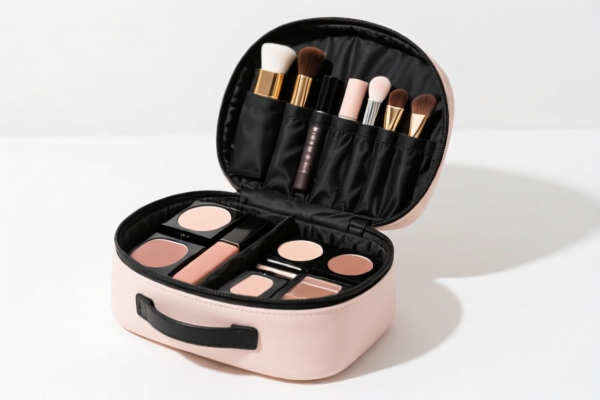
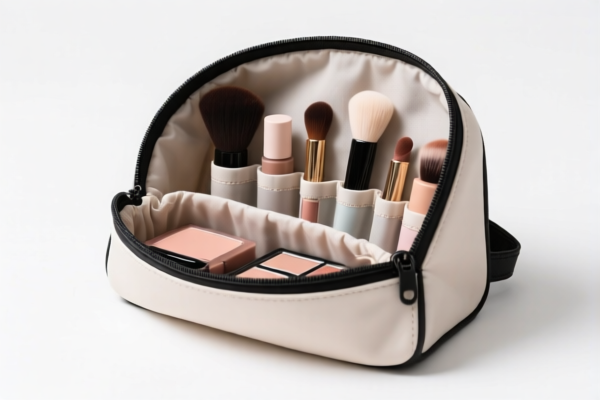
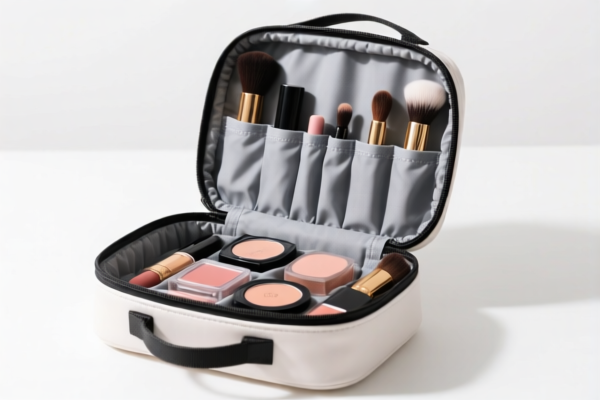

AI Analysis
👜 Organizer Bags (Storage Cases & Pouches)
🌐 HS Code Reference & Customs Clearance Guide | 2026 Latest Tariff Analysis | Professional Clearance Strategy
📌 1. Product Definition & Classification: What Exactly is an "Organizer Bag"?
In international trade, "Organizer Bags" are categorized based on their material composition and structural form. They are generally divided into two main logic groups:
Textile/Leather-based Containers: Bags made of fabric, artificial fiber, or leather, typically used for carrying personal items, cosmetics, or electronics. These fall under Chapter 42 (Articles of leather; saddlery and harness).
Plastic Packaging/Sheets: Bags or pouches made entirely of plastic sheets (e.g., PVC, PE), often used for bulk storage, waterproofing, or as disposable/semi-disposable packaging. These fall under Chapter 39 (Plastics and articles thereof) or Chapter 63 (Other made-up textile articles) if they don't fit specific container definitions.
⚠️ Key Distinction Point:
- If the bag has a textile surface (fabric lining, canvas exterior) → It is likely classified under Chapter 42 (Higher Tariff).
- If the bag is purely plastic (sheath, pouch, non-textile) → It is likely classified under Chapter 39 (Lower Base Tariff, but still subject to penalties).
- If it is a generic textile finished good (e.g., canvas tote without specific container structure) → It may fall under Chapter 63 (Lowest Base Tariff).
📦 2. HS Code Classification Details (2026 Latest Tariff Authority Comparison)
| HS Code | Product Description | Application Scenario | Material Logic |
|---|---|---|---|
4202.92.93.36 |
Articles of travel, sports, or office use, with outer surface of textile materials, other than those of subheading 4202.91 or 4202.92... | Cosmetic organizers, pencil cases, tech pouches with fabric exterior | ✅ Textile Outer Surface |
3923.90.00.80 |
Articles for the conveyance or packing of goods, of plastics, other than those of subheading 3923.10 to 3923.21 | Plastic storage pouches, non-woven plastic organizers, generic plastic sacks | ✅ Plastic Packaging Logic |
3923.29.00.00 |
Sacs and bags (including cones), of plastics, other than those of subheading 3923.10 to 3923.21 | Plastic sleeve bags, ziplock-style plastic organizers, flexible plastic containers | ✅ Plastic Sheet/Pouch Logic |
6307.90.98.91 |
Other made-up articles, other than those specified or included elsewhere | Generic fabric organizers, canvas storage bags (if not strictly "travel/sports/office" containers) | ✅ Textile Finished Good (General) |
4202.92.91.00 |
Articles of travel, sports, or office use, with outer surface of artificial textile materials | Synthetic leather organizers, PU-coated fabric cases, artificial fiber pouches | ✅ Artificial Fiber/Textile |
🔍 Critical Reminder:
- Chapter 42 codes (4202...) carry the HIGHEST tariffs due to the "Textile/Container" classification.
- Chapter 39 codes (3923...) are for Plastic Packaging. Even though the base duty is low (3%), the Section 301/122 tariffs make them expensive.
- Chapter 63 (6307...) is the "兜底" (Catch-all) for textile goods. It has the lowest base duty (7%), making it potentially the most cost-effective IF the product does not strictly fit "travel/sports/office" container definitions.
💰 3. 2026 Latest Tariff Rate Details (Including Additional Taxes, Policy Add-ons)
✅ Applicable Country: United States (US)
✅ Origin: China (CN)
✅ Effective Date: From November 10, 2025 onwards (for subsequent imports)
🎯 1. 4202.92.93.36 & 4202.92.91.00 —— Textile/Artificial Fiber Organizer Bags
| Item | Content |
|---|---|
| Base Tariff | 17.6% (Ad Valorem) |
| Section 301 Additional Tariff | +25.0% |
| Section 122 Tariff | +10.0% |
| Total Tax Rate | 52.6% |
| Tax Calculation | CIF Value × 52.6% |
| De Minimis Exemption | ❌ Not Eligible (deny_de_minimis) |
| Legal Basis Path | USITC:4202.92.93.36 → Section 301: Footnote 9903.88.01 → Section 122: IEPEA:9903.01.25 |
📌 Explanation:
- These HS codes classify the item as a "Travel/Sports/Office Container" with a textile surface.
- Base duty 17.6% is already high for textiles.
- Plus 25% (Section 301) and 10% (Section 122) are applied cumulatively.
- Total 52.6% is extremely high. This is the worst-case scenario for fabric organizers.
🎯 2. 3923.90.00.80 & 3923.29.00.00 —— Plastic Packaging/Storage Bags
| Item | Content |
|---|---|
| Base Tariff | 3.0% (Ad Valorem) |
| Section 301 Additional Tariff | +25.0% |
| Section 122 Tariff | +10.0% |
| Total Tax Rate | 38.0% |
| Tax Calculation | CIF Value × 38.0% |
| De Minimis Exemption | ❌ Not Eligible (deny_de_minimis) |
| Legal Basis Path | USITC:3923.90.00.80 → Section 301: Footnote 9903.88.01 → Section 122: IEPEA:9903.01.25 |
📌 Note:
- Base duty is only 3%, which is much lower than Chapter 42.
- However, the same 25% + 10% penalties apply.
- Total 38.0% is significantly lower than 52.6%, but still a heavy burden.
- This classification works if the bag is purely plastic and intended as a packaging/conveyance article.
🎯 3. 6307.90.98.91 —— Other Made-up Textile Articles (Generic Organizer)
| Item | Content |
|---|---|
| Base Tariff | 7.0% (Ad Valorem) |
| Section 301 Additional Tariff | +7.5% |
| Section 122 Tariff | +10.0% |
| Total Tax Rate | 24.5% |
| Tax Calculation | CIF Value × 24.5% |
| De Minimis Exemption | ❌ Not Eligible (deny_de_minimis) |
| Legal Basis Path | USITC:6307.90.98.91 → Section 301: Footnote 9903.88.01 → Section 122: IEPEA:9903.01.25 |
📌 Crucial Insight:
- This is the LOWEST TOTAL TAX RATE (24.5%) among all options.
- Base duty 7% is low.
- Section 301 penalty is only 7.5% (lower than the 25% for plastics/textiles containers).
- Strategy: If your organizer bag does not strictly fit "Travel/Sports/Office" definitions, or if it can be argued as a "General Made-up Textile Article" (e.g., a simple canvas storage bin), this code saves ~28% compared to the Chapter 42 codes.
🛠️ 4. Customs Clearance Practical Advice (实战避坑指南)
✅ 1. Document Checklist (Missing any will cause delays)
| Document | Required? | Explanation |
|---|---|---|
| ✅ Product Specification Sheet | ✔️ | Must detail material composition (e.g., "100% Polyester," "PVC Plastic"). |
| ✅ Product Photos (Labeled) | ✔️ | Clear shots of the bag, zippers, lining, and any brand tags. |
| ✅ Commercial Invoice | ✔️ | Must describe item accurately. Avoid vague terms like "Bag." Use "Fabric Storage Organizer." |
| ✅ Packing List | ✔️ | Include quantity, weight, and dimensions. |
| ✅ Material Declaration | ✔️ | Explicitly state: "Outer Surface: [Textile/Plastic/Artificial Fiber]." |
✅ 2. Declaration Tips (Key Mantra)
🔥 “Material Defines Code, Structure Defines Chapter, Description Defines Rate!”
| Scenario | Correct Declaration Strategy | Wrong Practice |
|---|---|---|
| Bag has fabric exterior | Use Chapter 42 (4202.92.93.36) if it's a "container" for office/travel. |
Misdeclare as plastic to save tax → High Risk of Audit/Fine. |
| Bag is pure plastic | Use Chapter 39 (3923.29.00.00). |
Misdeclare as textile → Base duty error. |
| Bag is generic canvas/storage | Argue for Chapter 63 (6307.90.98.91). |
Over-specifying as "Travel Bag" → Higher 52.6% tax. |
| OEM/Private Label | Provide design drawings showing material layers. | Claiming "Plastic" when it has fabric lining → Customs Rejection. |
✅ 3. Special Case Handling
| Situation | Handling Advice |
|---|---|
| Hybrid Materials (e.g., Plastic exterior, Fabric interior) | Classify based on the outer surface material. If plastic outer → Ch39. If fabric outer → Ch42. |
| Gift Sets (Bag + Items) | The bag may be classified based on the principal item. If the bag is accessory to electronics, it might follow the electronics' HS code (lower tax). |
| Promotional Bags (Free with purchase) | Value may be negligible, but HS Code still applies. Use lowest reasonable code (6307) if possible. |
| Custom Molded Plastic Bags | Must be 3923. Cannot be argued as textile. |
🌍 5. Global Market Comparison (2026 Latest)
| Country/Region | Recommended HS Code | Base Tariff | Additional Tariffs (China) | Total Est. Tax | Notes |
|---|---|---|---|---|---|
| 🇺🇸 USA | 6307.90.98.91 (Optimized) |
7.0% | 7.5% (301) + 10% (122) | 24.5% | Best Option if structure allows. |
| 🇺🇸 USA | 4202.92.93.36 (Standard) |
17.6% | 25.0% (301) + 10% (122) | 52.6% | Standard for fabric organizers. |
| 🇪🇺 EU | 6307.90.98.91 |
6.0% | 0% (No Section 301) | 6.0% | Significant Savings in EU. |
| 🇨🇳 China | 6307.90.98.91 |
7.0% | 0% | 7.0% | Low import duty for domestic sales. |
📌 Conclusion:
- USA: The choice between6307(24.5%) and4202(52.6%) is critical. Every effort should be made to justify6307if the bag is not a strict "travel/office container."
- EU/China: Tariffs are much lower, so the risk is minimized. Focus on accurate material declaration.
📌 6. Common Errors & Pitfalls (Lessons Learned)
❌ Error 1: Declaring a Fabric Bag as Plastic (3923) to avoid high textile duties.
👉 Consequence: Customs inspection reveals fabric lining → Seizure + Fine + Back Taxes.
❌ Error 2: Declaring a Plastic Bag as Textile (6307).
👉 Consequence: Base duty mismatch → Audit Delay + Possible Rejection.
❌ Error 3: Using vague terms like "Storage Bag" without material specification.
👉 Consequence: Customs assigns the highest possible tariff (usually Ch42) → Cost Increase.
✅ Correct Practice:
"Fabric Storage Organizer, Outer: 100% Polyester, Inner: Polyester Mesh, Non-Woven Base, Model XYZ"
🎯 7. Conclusion: Precise Classification Saves Money!
🎯 Remember the Mantra:
🔹 "Plastic Outer = Ch39 (38%); Fabric Outer = Ch42 (52.6%); Generic Textile = Ch63 (24.5%)."
🔹 "One Code Difference, $10,000 Savings on a $100k Shipment!"
📌 Pro Tip:
If your organizer bag is simple, non-rigid, and not specifically for travel/office, argue for 6307.90.98.91. This reduces your total tax from 52.6% to 24.5%, saving you 28.1% in duties.
Consult a customs broker to review your product photos and material specs before shipping.
📣 Immediate Action:
📞 Send product samples + material breakdown to your customs broker.
📝 Request Pre-Ruling if the shipment value is high.
🚀 Clearance Speed + Cost Efficiency = Profit Margin!
✨ Professional Clearance Starts with Accurate Classification!
💼 Your Every Dollar Should Be Calculated Precisely!
Customer Reviews
About HS Code Classification
The Harmonized System (HS) is an internationally standardized nomenclature developed by the World Customs Organization (WCO) to classify traded products. Over 200 countries use the HS system as the basis for customs tariffs, trade statistics, and import/export regulations.
Each HS code follows a hierarchical structure:
- Chapter (2 digits) — Broad category of goods (e.g., Chapter 84: Machinery and Mechanical Appliances)
- Heading (4 digits) — More specific grouping within the chapter
- Subheading (6 digits) — Internationally standardized breakdown, used by all WCO member countries
- National subdivisions (8-10 digits) — Country-specific extensions for further classification, such as US HTSUS 10-digit codes
Correct HS code classification is essential for smooth customs clearance, accurate duty payment, and compliance with trade regulations. Misclassification can lead to customs delays, overpayment of duties, or penalties.
When importing from CN to US, the applicable tariff rates may include:
- Most-Favored-Nation (MFN) rate — The standard duty rate applied to WTO members
- General rate — Applied to countries without trade agreements
- Trade remedy duties — Additional tariffs such as Section 301 (anti-dumping), Section 232 (national security), or countervailing duties
The information provided on this page is for reference purposes only. For official classification, please consult with your local customs authority or a licensed customs broker.