Other Medical Instruments and Equipment
CN → US| HS Code | Tariff Rate | Origin | Destination | Doc |
|---|---|---|---|---|
| 9022140000 | 35.0% | CN | US | Official Doc |
| 9022130000 | 35.0% | CN | US | Official Doc |
| 9018908000 | 10.0% | CN | US | Official Doc |
| 9021908100 | 10.0% | CN | US | Official Doc |
| 9018195500 | 35.0% | CN | US | Official Doc |
Product Images
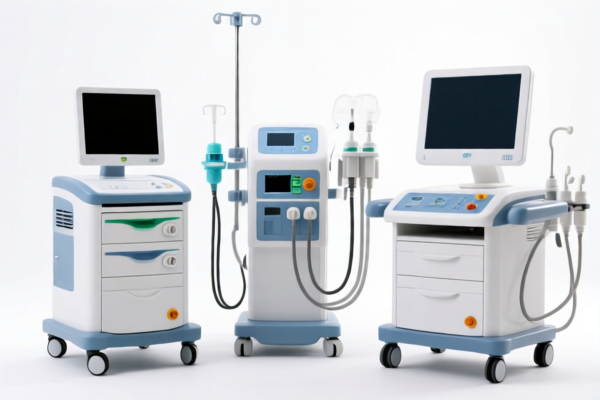
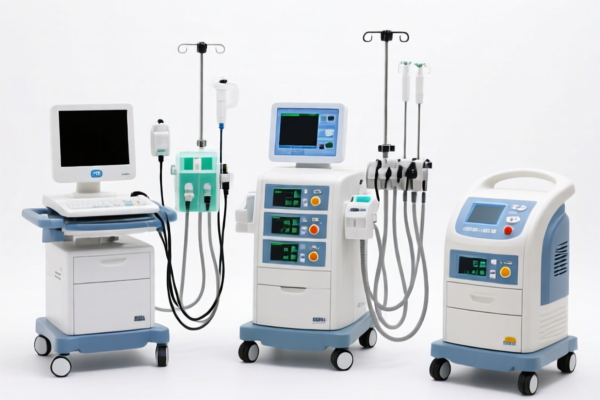
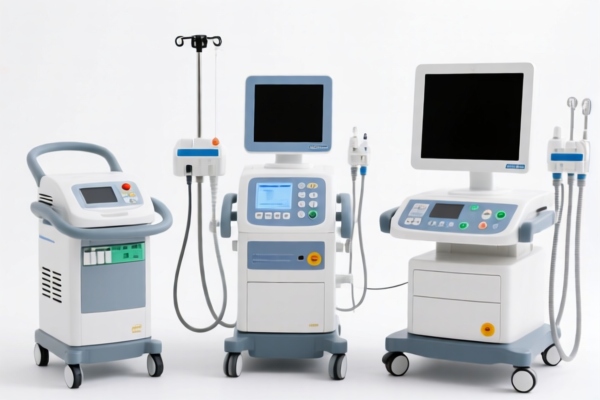
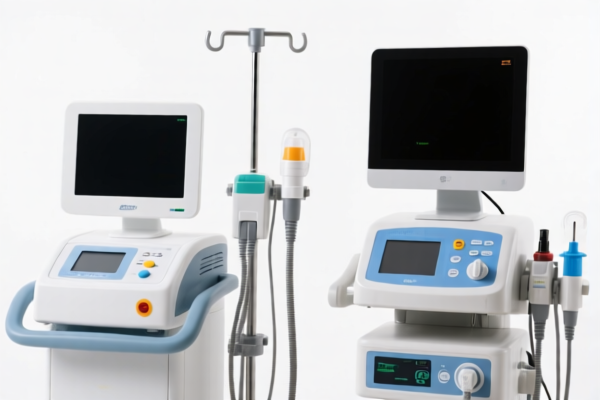
AI Analysis
🏥 Other Medical Instruments and Equipment (通用医疗仪器及设备)
🌐 HS Code Reference & Customs Clearance Guide | 2024 Tax Regime Analysis | Strategic Import Strategy
📌 Part 1: Product Definition & Classification: Do You Know Where Your "Medical Device" Fits?
"Other Medical Instruments and Equipment" is a broad category in international trade, covering everything from diagnostic imaging devices to dental X-rays and orthopedic supports. The key to accurate classification lies in specific function and technical configuration. Misclassification can lead to drastic tariff differences (from 10% to 35%).
⚠️ Critical Distinction Points: - X-ray Specificity: Is it a general-purpose X-ray machine or specifically for dentistry? This determines between
9022.14and9022.13. - General vs. Specialized: If it doesn't fit specific chapters (like surgical saws or imaging), it falls under the "Other" residual codes (9018.90). - Compensatory Devices: Orthopedic braces or artificial parts are often classified under9021(Orthopedic Appliances), not general medical instruments.
📦 Part 2: HS Code Classification Details (2024 Official Tariff Schedule)
Based on the provided data, here are the five potential classifications for "Other Medical Instruments and Equipment," ranked by tax efficiency.
| HS Code | Product Description | Application Scenario | Key Differentiator | Total Tax |
|---|---|---|---|---|
9018.90.80.00 |
Other Medical Instruments & Devices (Residual Category) | General surgical tools, diagnostic aids, non-imaging medical devices | Lowest Tax: Fits "Other" residual category; no specific high-tech exemption conflicts. | 10.0% |
9021.90.81.00 |
Orthopedic/Compensatory Appliances | Artificial joints, braces, corsets, orthopedic supports | Low Tax: Classified as compensatory medical devices; purpose aligns with 9021. |
10.0% |
9022.14.00.00 |
X-ray Equipment (General/Medical) | General purpose X-ray machines, CT scanners, radiographic units | High Tax: Specific X-ray classification; subject to Section 301 & 122 tariffs. | 35.0% |
9022.13.00.00 |
Dental X-ray Equipment | Intraoral/extraoral dental X-ray machines | High Tax: Specific to dental use; falls under residual X-ray category. | 35.0% |
9018.19.55.00 |
Other Medical Instruments (Surgical/Chemical) | Analytical instruments for medical labs, surgical tools | High Tax: Specific residual code for 9018 other instruments. |
35.0% |
🔍 Key Insight: -
9018.90.80.00and9021.90.81.00are the most cost-effective options with a total tax of 10%. -9022.14.00.00and9022.13.00.00are the most expensive at 35% due to being explicitly categorized as X-ray equipment, which faces additional retaliatory tariffs.
💰 Part 3: 2024 Latest Tariff Rate Breakdown (Detailed Tax Clauses)
✅ Applicable Country: United States (US)
✅ Origin: China (CN)
✅ Effective Time: Current Regime (Post-2024 Updates)
🎯 1. 9018.90.80.00 & 9021.90.81.00 —— Low-Tax Options (Recommended)
| Item | Content |
|---|---|
| Base Duty | 0.0% |
| Section 301 Additional Duty | 0.0% |
| Section 122 Duty | 10.0% |
| Total Tax Rate | 10.0% |
| Calculation Method | CIF Value × 10% |
| De Minimis Eligibility | ❌ No (Medical devices typically excluded from de minimis exemption) |
| Legal Basis Path | USITC:9018.90.80.00 → FOOTNOTE:122 |
| USITC Footnote | Subject to Section 122 duties (if applicable under current enforcement) |
📌 Explanation:
- These codes fall under "Other" or "Orthopedic" categories, which are exempt from the aggressive Section 301 (25%) tariffs that target high-tech manufacturing and heavy industry. - The 10% comes primarily from Section 122 tariffs (often related to specific trade remedies or national security provisions depending on the exact year's enforcement). - Savings: Compared to X-ray codes, you save 25% on Section 301 duties alone.
🎯 2. 9022.14.00.00 & 9022.13.00.00 —— High-Tax X-ray Options
| Item | Content |
|---|---|
| Base Duty | 0.0% |
| Section 301 Additional Duty | 25.0% |
| Section 122 Duty | 10.0% |
| Total Tax Rate | 35.0% |
| Calculation Method | CIF Value × 35% |
| De Minimis Eligibility | ❌ No |
| Legal Basis Path | USITC:9022.14.00.00 → FOOTNOTE:301 + FOOTNOTE:122 |
| USITC Footnote | Subject to both Section 301 (25%) and Section 122 (10%) |
📌 Explanation:
- X-ray equipment is explicitly listed in the Section 301 tariff schedule (25%) due to "Made in China 2025" retaliation policies. - In addition, Section 122 tariffs (10%) apply, leading to a cumulative 35%. - Dental vs. General: Both9022.13(Dental) and9022.14(General) face the same tax burden because both are classified under Chapter 90 specific imaging headings.
🎯 3. 9018.19.55.00 —— Specialized Instrument Option
| Item | Content |
|---|---|
| Base Duty | 0.0% |
| Section 301 Additional Duty | 25.0% |
| Section 122 Duty | 10.0% |
| Total Tax Rate | 35.0% |
| Calculation Method | CIF Value × 35% |
| De Minimis Eligibility | ❌ No |
📌 Explanation:
- This code is a residual category for medical instruments not elsewhere specified. Unlike9018.90, this specific subheading (9018.19.55) appears to be subject to Section 301 tariffs, making it as expensive as X-ray equipment.
🛠️ Part 4: Customs Clearance Practical Advice (Avoiding Pitfalls)
✅ 1. Documentation Checklist (Must-Have)
| Document | Required? | Notes |
|---|---|---|
| Product Specifications | ✅ Yes | Detail the exact function (e.g., "Diagnostic Imaging" vs. "Orthopedic Support"). |
| FDA Registration | ✅ Yes | If imported into the US, FDA registration number is often required for medical devices. |
| Intended Use Statement | ✅ Yes | Clearly state if it is for dental, surgical, or compensatory use to justify HS Code. |
| Commercial Invoice | ✅ Yes | Must match the HS Code description exactly (e.g., "X-ray Generator" vs. "Medical Monitor"). |
| Packing List | ✅ Yes | Include all accessories; ensure no "naked" panels are mixed with complete units. |
✅ 2. Strategic Classification Tips
🔥 Golden Rule:
"If it doesn't have X-ray tubes or radiation sources, do NOT use 9022. Use 9018 or 9021 to save 25%!"
| Scenario | Recommended HS Code | Tax Rate | Why? |
|---|---|---|---|
| General Medical Device (e.g., blood analyzer, surgical scalpel) | 9018.90.80.00 |
10% | Residual category; no Section 301. |
| Orthopedic Brace/Prosthetic | 9021.90.81.00 |
10% | Compensatory appliance; lower tax. |
| Dental X-ray Machine | 9022.13.00.00 |
35% | Specific imaging device; high tax unavoidable. |
| General X-ray Machine | 9022.14.00.00 |
35% | Specific imaging device; high tax unavoidable. |
| Lab Instrument (e.g., microscopes, analyzers) | 9018.19.55.00 |
35% | Specific residual; subject to Section 301. |
✅ 3. Common Mistakes & Warnings
❌ Mistake 1: Classifying a complete X-ray unit as a "General Medical Instrument" (9018).
👉 Consequence: Customs will reclassify it to 9022 and charge 35% + penalties + back taxes.
❌ Mistake 2: Classifying an orthopedic brace as a "Textile Product" or "Plastic Part."
👉 Consequence: Misdeclaration. Should be 9021.90.81.00 (10%) or potentially duty-free if eligible, but misclassification leads to audits.
❌ Mistake 3: Ignoring Section 122 Tariffs.
👉 Consequence: Even if Section 301 (25%) is avoided, Section 122 (10%) may still apply. Always verify current trade remedy status.
🌍 Part 5: Global Market Comparison (2024 Context)
| Country/Region | Recommended HS Code | Est. Duty (China Origin) | Key Certification | Notes |
|---|---|---|---|---|
| 🇺🇸 USA | 9018.90.80.00 |
10% | FDA + Section 122 Compliance | Avoid 9022 codes unless necessary. |
| 🇨🇳 China | 9018.90.80.00 |
0-5% | NMPA Registration | Lower base duties; no US-style retaliation. |
| 🇪🇺 EU | 9018.90.80.00 |
0% | CE Mark + MDR Compliance | Free trade under many agreements. |
| 🇦🇺 Australia | 9018.90.80.00 |
5% | TGA Registration | No Section 301 equivalent. |
📌 Conclusion:
- USA is the most costly market due to Section 301 and Section 122 tariffs. - Strategy: If possible, avoid X-ray classification (9022) unless the product is definitively an imaging device. Use9018.90or9021for other medical instruments to reduce tax burden by 25 percentage points.
📌 Part 6: Actionable Steps for Importers
- Product Audit: Determine if your device uses X-rays/radiation. If yes, expect 35% tax. If no, aim for
9018.90.80.00(10%). - Pre-Ruling: Apply for an Advance Ruling from US Customs (CBP) if the classification is ambiguous. This provides legal certainty.
- Documentation: Ensure FDA registration numbers are on the invoice.
- Supplier Communication: Ask suppliers for the original HS Code used in China, but validate it against US tariffs.
🎯 Final Tip:
"Classify by Function, Not by Name. A 'Scanner' might be9022(35%), but a 'Data Reader' might be9018(10%). Choose wisely!"
✨ Professional Clearance Starts with Accurate Classification!
💼 Every 1% saved in duty is 1% more profit in your pocket!
Customer Reviews
About HS Code Classification
The Harmonized System (HS) is an internationally standardized nomenclature developed by the World Customs Organization (WCO) to classify traded products. Over 200 countries use the HS system as the basis for customs tariffs, trade statistics, and import/export regulations.
Each HS code follows a hierarchical structure:
- Chapter (2 digits) — Broad category of goods (e.g., Chapter 84: Machinery and Mechanical Appliances)
- Heading (4 digits) — More specific grouping within the chapter
- Subheading (6 digits) — Internationally standardized breakdown, used by all WCO member countries
- National subdivisions (8-10 digits) — Country-specific extensions for further classification, such as US HTSUS 10-digit codes
Correct HS code classification is essential for smooth customs clearance, accurate duty payment, and compliance with trade regulations. Misclassification can lead to customs delays, overpayment of duties, or penalties.
When importing from CN to US, the applicable tariff rates may include:
- Most-Favored-Nation (MFN) rate — The standard duty rate applied to WTO members
- General rate — Applied to countries without trade agreements
- Trade remedy duties — Additional tariffs such as Section 301 (anti-dumping), Section 232 (national security), or countervailing duties
The information provided on this page is for reference purposes only. For official classification, please consult with your local customs authority or a licensed customs broker.