Other Pine Wood (Unplaned or Roughly Squared)
CN → US| HS Code | Tariff Rate | Origin | Destination | Doc |
|---|---|---|---|---|
| 4403220165 | 35.0% | CN | US | Official Doc |
| 4404100080 | 35.0% | CN | US | Official Doc |
| 4404100090 | 35.0% | CN | US | Official Doc |
| 4407110052 | 35.0% | CN | US | Official Doc |
| 4403210165 | 35.0% | CN | US | Official Doc |
Product Images
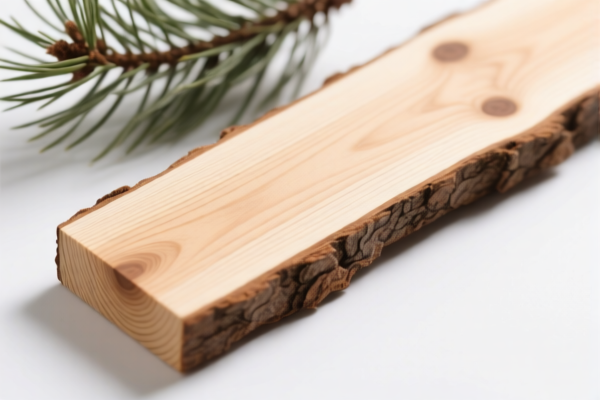
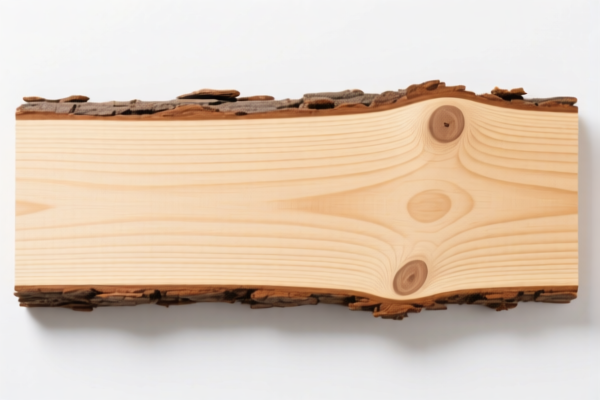
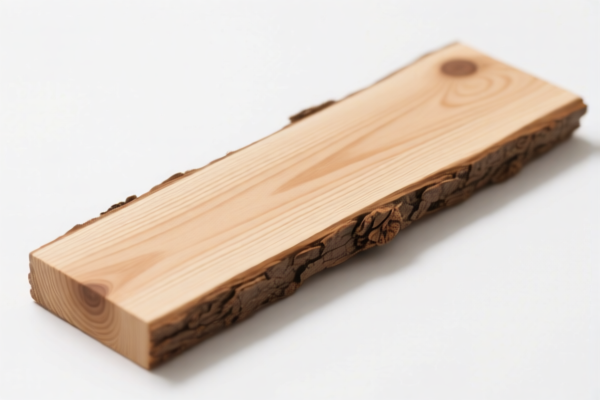
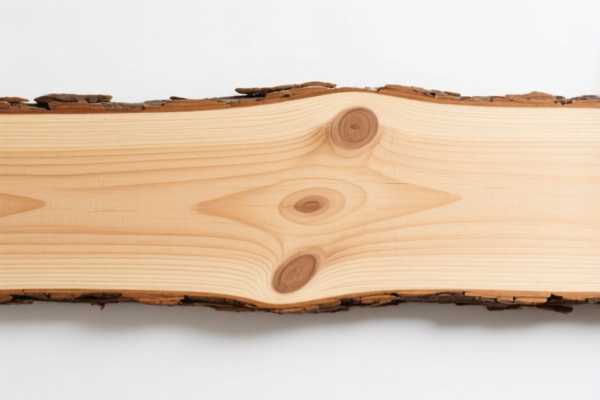
AI Analysis
🌲 Other Pine Wood (Unplaned or Roughly Squared)
🌐 HS Code Reference & Customs Clearance Guide | 2026 Latest Tariff Analysis | Professional Clearance Strategy for Wood Products
📌 I. Product Definition & Classification: Do You Really Understand "Pine Wood"?
"Pine Wood" in international trade refers to timber from pine species (Pinus), typically categorized by the degree of mechanical processing. For Other Pine Wood (Unplaned or Roughly Squared), the key characteristic is that it has not been finely planed, sanded, or shaped into finished lumber. It retains a rough, natural surface, possibly stripped of bark (delivered) or with bark intact, and may have been roughly squared off into logs or rough timber.
In US customs classification, this product falls under Chapter 44 (Wood and articles of wood; wood charcoal). Specifically, it is distinguished from processed lumber (Chapter 4407) and simple charcoal by its form: * Rough Squared/Unplaned: Not finished to smooth dimensions; edges may be uneven or sawn but not planed. * Delivered: Bark may be removed or left on.
⚠️ Key Distinction Point:
- If the wood is finely planed, sanded, or cut to precise dimensions → It likely falls under 4407 (Wood sawn or chipped lengthwise).
- If the wood is rough, unplaned, or roughly squared → It falls under 4403 (Wood in the rough, whether or not stripped of bark or sapwood, or roughly squared).
📦 II. HS Code Classification Details (2026 Latest Tariff Authority Alignment)
Based on the provided data, here are the relevant HS Codes for Pine Wood in various forms, all of which currently carry a 35.0% total tax rate due to US-China trade tensions.
| HS Code | Product Description | Processing State | Key Features |
|---|---|---|---|
4403.22.01.65 |
Other Pine Wood, Unplaned or Roughly Squared | Rough/Semi-processed | Corresponds to pine wood, whether delived (bark removed) or not, or roughly squared. This is the most direct match for the query. |
4403.21.01.65 |
Other Pine Wood, Roughly Squared | Rough/Semi-processed | Corresponds to pine wood in the form of rough squared timber, fitting the description of coniferous wood and rough squared material. |
4407.11.00.52 |
Pine Wood, Roughly Processed | Sawed/Planed | Corresponds to rough pine, fitting the characteristic of coniferous wood that has been sawed or peeled. Note: If planed/sawn to specific thickness, this may apply, but 4403 is preferred for "roughly squared/unplaned". |
4404.10.00.80 |
Coniferous Wood, Roughly Processed | Rough/Primary | Corresponds to coniferous wood in the form of rough processing, fitting primary processing characteristics like poles, piles, or posts. |
4404.10.00.90 |
Coniferous Wood, Other | General | Corresponds to coniferous wood, non-specific use, inferred from material category. |
🔍 Focus Recommendation:
- For "Unplaned or Roughly Squared" Pine Wood,4403.22.01.65is the most accurate classification as it explicitly mentions "Unplaned or Roughly Squared" for Pine.
-4403.21.01.65is also highly relevant if the wood is strictly "Roughly Squared".
- Avoid4407codes unless the wood is finely planed or sawn to specific commercial dimensions, as 4403 is for "wood in the rough".
💰 III. 2026 Latest Tariff Rate Breakdown (Including Additional Taxes & Policy Surcharges)
✅ Applicable Country: United States (US)
✅ Origin: China (CN)
✅ Effective Date: 2025 onwards (including subsequent imports)
✅ Total Tax Rate: 35.0% for all listed codes
🎯 1. 4403.22.01.65 —— Other Pine Wood, Unplaned or Roughly Squared
| Item | Details |
|---|---|
| Base Tariff Rate | 0.0% (ad valorem) |
| Section 301 Additional Tariff | +25.0% (USITC Footnote 9903.88.01 related to China) |
| Section 122 Tariff | +10.0% (Specific to certain Chinese wood products) |
| Total Tax Rate | 35.0% |
| Tax Calculation | CIF Value × 35% |
| De Minimis Exemption | ❌ Not Applicable (Deny de minimis for wood products from China under these tariffs) |
| Legal Basis Path | USITC:4403.22.01.65 → Section 301: +25% → Section 122: +10% |
📌 Explanation:
- "Base Tariff 0%": Standard MFN (Most Favored Nation) rate for pine wood is 0%.
- "Section 301 Tariff 25%": The US has imposed a 25% additional tariff on many Chinese wood products under Section 301 of the Trade Act.
- "Section 122 Tariff 10%": An additional 10% tariff applies under Section 122 (often related to national security or trade remedy actions).
- Total 35%: This is a significant cost factor. Importers must budget for this high duty.
🎯 2. 4403.21.01.65 —— Other Pine Wood, Roughly Squared
| Item | Details |
|---|---|
| Base Tariff Rate | 0.0% |
| Section 301 Additional Tariff | +25.0% |
| Section 122 Tariff | +10.0% |
| Total Tax Rate | 35.0% |
| Tax Calculation | CIF Value × 35% |
| De Minimis Exemption | ❌ Not Applicable |
| Legal Basis Path | USITC:4403.21.01.65 → Section 301: +25% → Section 122: +10% |
📌 Note:
- Same tariff structure as above. The distinction lies in the degree of "squared" processing.
🎯 3. 4407.11.00.52 —— Pine Wood, Roughly Processed
| Item | Details |
|---|---|
| Base Tariff Rate | 0.0% |
| Section 301 Additional Tariff | +25.0% |
| Section 122 Tariff | +10.0% |
| Total Tax Rate | 35.0% |
| Tax Calculation | CIF Value × 35% |
| De Minimis Exemption | ❌ Not Applicable |
| Legal Basis Path | USITC:4407.11.00.52 → Section 301: +25% → Section 122: +10% |
📌 Caution:
- Ensure the wood is not "finely planed" if using this code. If it is, customs may still accept 4403, but if it is clearly sawn/planned to commercial dimensions, 4407 is more appropriate. However, the tariff rate remains 35% in both cases.
🎯 4. 4404.10.00.80 & 4404.10.00.90 —— Coniferous Wood (Other Forms)
| Item | Details |
|---|---|
| Base Tariff Rate | 0.0% |
| Section 301 Additional Tariff | +25.0% |
| Section 122 Tariff | +10.0% |
| Total Tax Rate | 35.0% |
| Tax Calculation | CIF Value × 35% |
| De Minimis Exemption | ❌ Not Applicable |
📌 Note:
- These codes cover coniferous wood in other forms (e.g., poles, piles, or general coniferous wood). Use only if the pine wood does not fit the specific "Pine" subheadings in 4403 or 4407.
🛠️ IV. Customs Clearance Practical Advice (Avoiding Pitfalls)
✅ 1. Preparation Checklist (Mandatory)
| Document | Required | Notes |
|---|---|---|
| ✅ Product Specification Sheet | ✔️ | Must detail wood species (Pinus spp.), moisture content, dimensions, and processing state (unplaned/roughly squared). |
| ✅ Product Photos | ✔️ | Clear images showing the rough surface, lack of planing, and any bark. |
| ✅ Commercial Invoice | ✔️ | Must clearly state "Other Pine Wood, Unplaned or Roughly Squared" and HS Code. |
| ✅ Packing List | ✔️ | Include gross/net weight, number of packages. |
| ✅ Phytosanitary Certificate | ✔️ | Critical for wood products. Must confirm treatment (e.g., heat treatment) to prevent pests. |
| ✅ Fumigation Certificate | ✔️ | If applicable, must comply with ISPM 15 standards. |
| ✅ Bill of Lading/Air Waybill | ✔️ | Standard shipping documents. |
✅ 2. Declaration Tips (Key Mantras)
🔥 "Rough is Rough, Planed is Planed; Don't Mix Codes, Tariff Changes!"
| Scenario | Correct Declaration | Wrong Action |
|---|---|---|
| Rough Pine Logs/Timber | 4403.22.01.65 or 4403.21.01.65 |
Misdeclare as 4407 → Potential penalty if not planed. |
| Planed Pine Lumber | 4407.11.00.52 |
Misdeclare as 4403 → Under-declaration of processing. |
| Wood Poles/Posts | 4404.10.00.80 |
Misdeclare as general pine wood → Incorrect classification. |
| Unknown Coniferous Wood | 4404.10.00.90 |
Guessing specific pine code → Customs audit risk. |
✅ 3. Special Case Handling
| Scenario | Handling Advice |
|---|---|
| High Moisture Content | Ensure phytosanitary certificate states treatment. Wet wood may be rejected. |
| Bark Intact vs. Removed | Clearly state in invoice. "Unplaned" includes both bark-on and bark-off. |
| Mixed Consignments | If pine wood is mixed with other timber, declare separately or use the highest-risk code. |
| Customs Inspection | Be prepared for physical inspection. Provide samples if requested. |
🌍 V. Global Market Comparison (2026 Latest)
| Country/Region | Recommended HS Code | Tariff (China Origin) | Certifications | Notes |
|---|---|---|---|---|
| 🇺🇸 USA | 4403.22.01.65 |
35.0% (25% + 10%) | Phytosanitary, ISPM 15 | Highest tariff due to Section 301 & 122. |
| 🇨🇳 China | 4403.22.01.65 |
0-5% | ISPM 15 (Export) | Low tariff, easy clearance. |
| 🇪🇺 EU | 4403.22.01.65 |
0% | FLEGT/EUTR Compliance | No additional tariffs, but strict wood legality rules. |
| 🇦🇺 Australia | 4403.22.01.65 |
5% | Phytosanitary | Standard tariff, no major surcharges. |
| 🇯🇵 Japan | 4403.22.01.65 |
0-5% | Phytosanitary | No major surcharges. |
📌 Conclusion:
- The US is the most challenging market for pine wood from China due to the 35% total tariff.
- EU and Japan offer better tariff conditions but have strict phytosanitary and legality requirements.
- Cost-Saving Tip: Consider sourcing pine wood from non-China origins (e.g., Vietnam, Russia, or Europe) to avoid US surcharges, if possible.
📌 VI. Common Errors & Pitfalls (Lessons Learned)
❌ Error 1: Declaring "Rough Wood" as "Planed Lumber" (4407)
👉 Consequence: Customs may reclassify to 4403 and assess penalties if processing level is disputed.
❌ Error 2: Ignoring Phytosanitary Requirements
👉 Consequence: Shipment held or returned. No wood enters the US/EU without proper treatment certification.
❌ Error 3: Misidentifying Pine Species
👉 Consequence: If wood is not Pine, it may fall under different HS codes with different tariffs. Provide scientific name if possible.
❌ Error 4: Not Accounting for Section 122 Tariff
👉 Consequence: Budget shortfalls. The 10% Section 122 tariff is often overlooked in addition to the 25% Section 301 tariff.
✅ Correct Practice:
"Pinus spp., Other Pine Wood, Unplaned or Roughly Squared, Heat Treated, ISPM 15 Compliant, HS Code: 4403.22.01.65"
🎯 VII. Conclusion: Professional Declaration Saves Money!
🎯 Remember the Mantra:
🔹 "Rough is 4403, Planed is 4407; 35% Tax in US, Don't Let It Slip!"
🔹 "Phytosanitary is Key, Without It, No Entry!"
📌 Pro Tip:
If your pine wood is originating from Vietnam, Thailand, or Canada, you may qualify for lower or zero additional tariffs in the US.
Recommendation: Apply for a Pre-Ruling from US Customs if the processing state is ambiguous.
📣 Immediate Action:
📞 Contact a licensed customs broker + Provide Wood Samples + Verify Phytosanitary Certificate
🚀 Ensure your pine wood clears smoothly, avoids delays, and maximizes profit margins!
✨ Professional Clearance Starts with Accurate Classification!
💼 Every Percentage Point of Tariff Matters!
Customer Reviews
About HS Code Classification
The Harmonized System (HS) is an internationally standardized nomenclature developed by the World Customs Organization (WCO) to classify traded products. Over 200 countries use the HS system as the basis for customs tariffs, trade statistics, and import/export regulations.
Each HS code follows a hierarchical structure:
- Chapter (2 digits) — Broad category of goods (e.g., Chapter 84: Machinery and Mechanical Appliances)
- Heading (4 digits) — More specific grouping within the chapter
- Subheading (6 digits) — Internationally standardized breakdown, used by all WCO member countries
- National subdivisions (8-10 digits) — Country-specific extensions for further classification, such as US HTSUS 10-digit codes
Correct HS code classification is essential for smooth customs clearance, accurate duty payment, and compliance with trade regulations. Misclassification can lead to customs delays, overpayment of duties, or penalties.
When importing from CN to US, the applicable tariff rates may include:
- Most-Favored-Nation (MFN) rate — The standard duty rate applied to WTO members
- General rate — Applied to countries without trade agreements
- Trade remedy duties — Additional tariffs such as Section 301 (anti-dumping), Section 232 (national security), or countervailing duties
The information provided on this page is for reference purposes only. For official classification, please consult with your local customs authority or a licensed customs broker.