Other Synthetic Fiber Woven Fabric
CN → US| HS Code | Tariff Rate | Origin | Destination | Doc |
|---|---|---|---|---|
| 5407200000 | 35.0% | CN | US | Official Doc |
| 5407912090 | 49.9% | CN | US | Official Doc |
| 5512110090 | 24.0% | CN | US | Official Doc |
| 5513130090 | 49.9% | CN | US | Official Doc |
| 5311004010 | 35.0% | CN | US | Official Doc |
Product Images
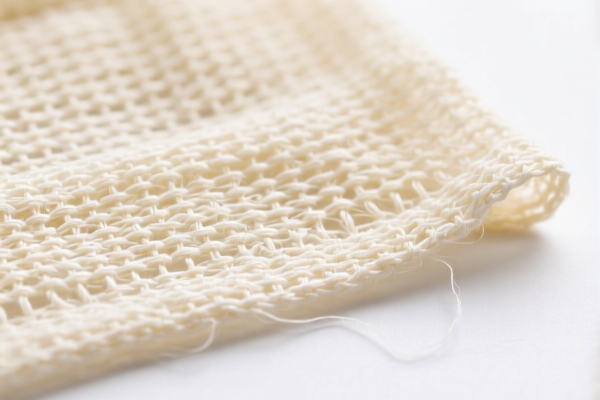
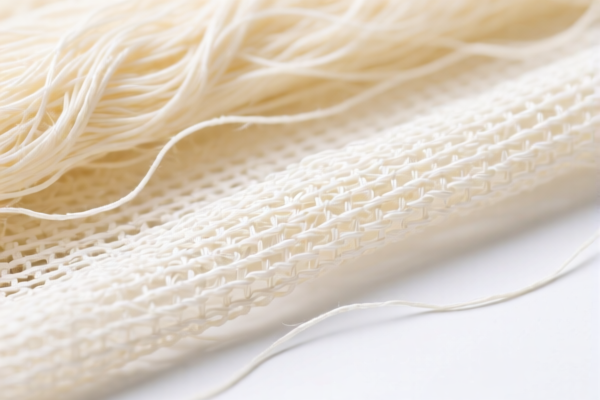
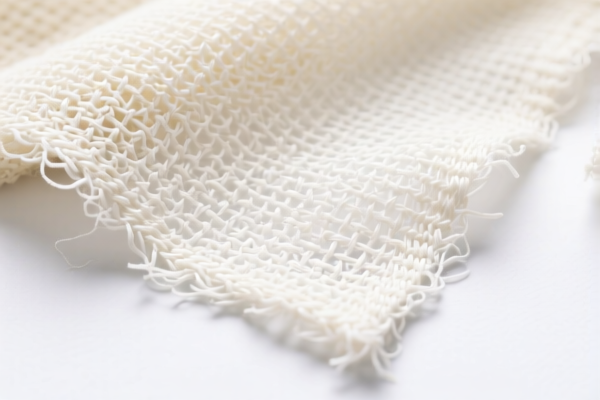
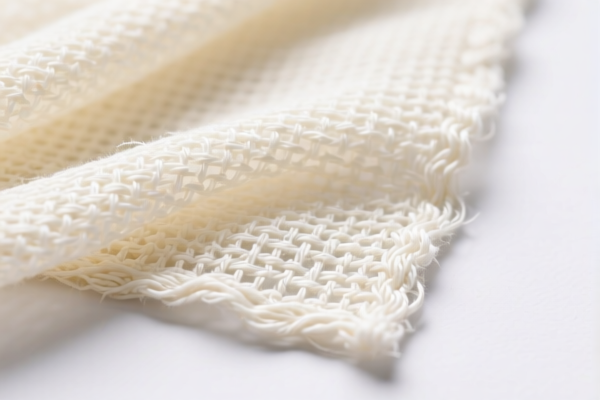
AI Analysis
🧵 Other Synthetic Fiber Woven Fabric (Synthetic Fabrics)
🌐 HS Code Reference & Customs Clearance Guide | 2026 Latest Tariff Analysis | Professional Compliance Strategy
📌 1. Product Definition & Classification: Do You Really Know "Other Synthetic Woven Fabric"?
"Other Synthetic Fiber Woven Fabric" is a broad category in international trade, covering various textiles made from man-made fibers (excluding silk). In customs classification, these fabrics are primarily distinguished by fiber type (long filament vs. short staple), weave structure (plain, twill, satin), and weight/density.
Key Distinctions: * Filament Fabrics (5407/5513 series): Made from continuous filaments (like polyester or nylon threads). Often smoother, stronger, and used for shirts, linings, or technical textiles. * Staple Fiber Fabrics (5512 series): Made from cut fibers spun into yarn (like cotton-like polyester). Often softer, used for suiting, upholstery, or heavy-duty workwear. * Vegetable Fiber Confusion (5311): Sometimes "natural" fabrics like Ramie or Hemp are grouped nearby but are not synthetic. Misclassification here leads to severe penalties.
⚠️ Critical Identification Point:
- If the fabric is made from continuous synthetic filaments (e.g., Polyester, Nylon) → Look at Chapter 54 (5407,5513).
- If the fabric is made from synthetic staple fibers (spun into yarn) → Look at Chapter 55 (5512).
- If the fabric is made from plant fibers (e.g., Ramie, Jute) → It is NOT synthetic. It belongs to Chapter 53 (5311).
📦 2. HS Code Classification Details (2026 Authoritative Reference)
| HS Code | Product Description | Application Scenario | Material Type | Total Tax Rate |
|---|---|---|---|---|
5407.20.00.00 |
Synthetic filament woven fabric, matched material & form | Lightweight shirts, linings, technical textiles | ✅ Synthetic Filament | 35.0% |
5407.91.20.90 |
Other synthetic filament woven fabric (no conflict) | Specialty industrial fabrics, heavy-duty synthetics | ✅ Synthetic Filament | 49.9% |
5512.11.00.90 |
Synthetic staple fiber woven fabric (other subtype) | Suiting, upholstery, heavy workwear fabrics | ✅ Synthetic Staple | 24.0% |
5513.13.00.90 |
Synthetic filament woven fabric, other categories | General apparel fabrics, casual wear materials | ✅ Synthetic Filament | 49.9% |
5311.00.40.10 |
Other vegetable fiber woven fabric (Ramie/Hemp etc.) | Non-Synthetic! Summer wear, eco-friendly textiles | ❌ Vegetable Fiber | 35.0% |
🔍 Key Warning:
-5311.00.40.10is often mistaken for synthetic due to its "woven" nature. However, it is a vegetable fiber (e.g., Ramie). While the tariff rate matches5407.20.00.00, the material declaration must be accurate. Declaring Ramie as "Synthetic" is fraud; declaring Synthetic as "Ramie" may trigger origin or quality inspections. -5407.91.20.90and5513.13.00.90carry the highest tax burden (49.9%) due to broader "other" classifications with higher base tariffs.
💰 3. 2026 Latest Tariff Rate Breakdown (Including Surcharges & Policy Add-ons)
✅ Applicable Country: USA (US)
✅ Origin: China (CN)
✅ Effective Date: November 10, 2025 onwards
🎯 1. 5407.20.00.00 – Synthetic Filament Woven Fabric (Matched Form)
| Item | Content |
|---|---|
| Base Tariff | 0.0% |
| USITC Surcharge (Section 301) | +25.0% |
| IEEPA Surcharge (Section 122) | +10.0% |
| Total Rate | 35.0% |
| Tax Calculation | CIF Value × 35% |
| De Minimis Exemption | ❌ Denied (deny_de_minimis) |
| Legal Basis | IEEPA:9903.01.25 → USITC:5407.20.00.00 → FOOTNOTE:9903.88.01 |
📌 Explanation:
- The 25% Section 301 tariff applies to almost all Chinese synthetic textiles.
- The 10% IEEPA tariff is a specific add-on for certain Chinese-origin goods under emergency powers.
- Total 35% is significant for low-margin textile businesses.
🎯 2. 5407.91.20.90 & 5513.13.00.90 – Other Synthetic Woven Fabrics
| Item | Content |
|---|---|
| Base Tariff | 14.9% |
| USITC Surcharge (Section 301) | +25.0% |
| IEEPA Surcharge (Section 122) | +10.0% |
| Total Rate | 49.9% |
| Tax Calculation | CIF Value × 49.9% |
| De Minimis Exemption | ❌ Denied |
| Legal Basis | IEEPA:9903.01.24 → USITC:5407.91.20.90 / 5513.13.00.90 |
📌 Warning:
- These "other" categories have a 14.9% base tariff, which is much higher than the 0% base for5407.20.
- Combined with surcharges, the total hits 49.9%. This is a critical cost driver.
🎯 3. 5512.11.00.90 – Synthetic Staple Fiber Woven Fabric
| Item | Content |
|---|---|
| Base Tariff | 12.0% |
| USITC Surcharge (Section 301) | +2.0% |
| IEEPA Surcharge (Section 122) | +10.0% |
| Total Rate | 24.0% |
| Tax Calculation | CIF Value × 24.0% |
| De Minimis Exemption | ❌ Denied |
| Legal Basis | IEEPA:9901.25 → USITC:5512.11.00.90 |
📌 Opportunity:
- This category has the lowest total tax rate (24.0%).
- Note the USITC surcharge is only 2.0% (not 25%!). This makes synthetic staple fiber fabrics significantly more competitive than filament fabrics in some subcategories.
🎯 4. 5311.00.40.10 – Other Vegetable Fiber Woven Fabric
| Item | Content |
|---|---|
| Base Tariff | 0.0% |
| USITC Surcharge (Section 301) | +25.0% |
| IEEPA Surcharge (Section 122) | +10.0% |
| Total Rate | 35.0% |
| Tax Calculation | CIF Value × 35.0% |
| De Minimis Exemption | ❌ Denied |
| Legal Basis | IEEPA:9903.01.25 → USITC:5311.00.40.10 |
📌 Clarification:
- Although labeled "vegetable fiber," the tariff structure mimics5407.20(35% total).
- Do not misdeclare Ramie as Synthetic to avoid 25% Section 301 if it were exempt (it is not). Accuracy is key to avoid customs audits.
🛠️ 4. Customs Clearance Practical Advice (Real-World Pitfall Guide)
✅ 1. Required Documentation Checklist
| Document | Mandatory? | Notes |
|---|---|---|
| ✅ Fabric Specification Sheet | ✔️ | Must state: Fiber content (e.g., 100% Polyester), Weight (gsm), Weave (Plain/Twill), Finish. |
| ✅ Material Test Report | ✔️ | Third-party lab report confirming "Synthetic" vs. "Vegetable" fiber. |
| ✅ Commercial Invoice | ✔️ | Must clearly state "Woven Fabric of Synthetic Fiber" or "Vegetable Fiber" – never vague terms like "Textile". |
| ✅ Bill of Lading | ✔️ | Ensure container weight matches declared weight. |
| ✅ Origin Certificate | ✔️ | For China-origin goods, prove origin to apply correct surcharges. |
✅ 2. Classification Strategy (Key Mantra)
🔥 "Staple vs. Filament, Vegetables vs. Synthetics – Get It Right or Pay Double!"
| Scenario | Correct HS Code | Common Mistake | Consequence |
|---|---|---|---|
| Polyester Shirt Fabric (Filament) | 5407.20.00.00 |
Misclassify as 5512 (Staple) |
Tax drops to 24% → Underpayment Penalty! |
| Polyester Suit Fabric (Staple) | 5512.11.00.90 |
Misclassify as 5407 (Filament) |
Tax rises to 35-50% → Overpayment Loss! |
| Ramie Fabric (Vegetable) | 5311.00.40.10 |
Declare as "Synthetic" | Fraud Alert! + Potential Seizure. |
| Heavy Industrial Synthetic Fabric | 5407.91.20.90 |
Miss the "Other" category | 49.9% tax applies automatically. |
✅ 3. Special Cases Handling
| Situation | Advice |
|---|---|
| Mixed Fibers | If blend > 50% synthetic, classify under Synthetic. If < 50%, may fall under Chapter 52 (Cotton) or 50/51 (Wool/Silk). Strict threshold! |
| Finished Garments vs. Fabric | If cut into shapes or sewn, it may be a garment (Chapter 61/62), not fabric. Different HS codes, different taxes. |
| Technical Textiles | Some high-tech synthetics may have special exemptions. Check for HTSUS subheadings for "geotextiles" or "medical fabrics". |
| Ramie vs. Synthetic | Ramie (5311) looks like linen but is plant-based. If you declare it as "Polyester," customs will test and penalize. |
🌍 5. Global Market Comparison (2026)
| Country/Region | Recommended HS Code | Total Tax (China Origin) | Certification | Notes |
|---|---|---|---|---|
| 🇺🇸 USA | 5512.11.00.90 |
24.0% (Lowest) | N/A | Best Tariff Option |
| 🇺🇸 USA | 5407.20.00.00 |
35.0% | N/A | Common for lightweight synthetics |
| 🇺🇸 USA | 5407.91.20.90 |
49.9% (Highest) | N/A | Avoid if possible; use "Other" codes sparingly |
| 🇪🇺 EU | 5407.20.00.00 |
~12-16% (MFN) | REACH, OEKO-TEX | No Section 301/IEEPA surcharges |
| 🇨🇳 China | 5407.20.00.00 |
0-5% | CCC (if applicable) | Low domestic import tariffs |
📌 Conclusion:
- USA is the most punitive market due to 301/122 surcharges.
-5512.11.00.90(Staple Fiber) offers the lowest US duty (24%) among the listed codes.
- EU/China have no such surcharges, making global supply chains more cost-effective outside the US.
📌 6. Common Errors & Pitfall Guide (Lessons Learned)
❌ Error 1: Declaring Ramie (5311) as Synthetic (5407)
👉 Result: Customs lab test reveals plant fibers → Seizure + Fine for false declaration.
❌ Error 2: Confusing Filament (5407) with Staple (5512)
👉 Result: Misclassification leads to over/underpayment. Staple fabrics (5512) have a lower USITC surcharge (2%) vs. Filament (25%).
❌ Error 3: Using vague descriptions like "Woven Fabric"
👉 Result: Customs cannot determine fiber type → Delayed Release + Inspection Costs.
❌ Error 4: Ignoring Section 122 (IEEPA) 10% Surcharge
👉 Result: Budgeting only for Section 301 (25%) but forgetting IEEPA (10%) → Margin Erosion.
✅ Correct Practice:
"100% Polyester Woven Fabric, 150 GSM, Plain Weave, Dyed, For Shirt Manufacturing"
HS Code:5407.20.00.00
Tax: 35.0%
🎯 7. Conclusion: Precision in Classification Saves Money!
🎯 Remember the Mantra:
🔹 "Staple is Cheaper (24%), Filament is Middle (35%), Other is Expensive (50%)!"
🔹 "Vegetable is NOT Synthetic! Don’t lie!"
🔹 "IEEPA 10% + 301 25% = 35%+ Tax in USA!"
📌 Pro Tip:
If your product is synthetic staple fiber (5512), you save 11-26% in US duties compared to synthetic filament (5407). Consider adjusting fabric choices if supply chain allows.
📣 Immediate Action:
📞 Consult a Customs Broker for Advance Ruling on fiber content.
📄 Provide Lab Test Reports for all fiber declarations.
🚀 Optimize HS Code selection to minimize total landed cost in the US market.
✨ Professional Customs Compliance Starts with Accurate Classification!
💼 Every percentage point in tax is your profit margin. Protect it!
Customer Reviews
About HS Code Classification
The Harmonized System (HS) is an internationally standardized nomenclature developed by the World Customs Organization (WCO) to classify traded products. Over 200 countries use the HS system as the basis for customs tariffs, trade statistics, and import/export regulations.
Each HS code follows a hierarchical structure:
- Chapter (2 digits) — Broad category of goods (e.g., Chapter 84: Machinery and Mechanical Appliances)
- Heading (4 digits) — More specific grouping within the chapter
- Subheading (6 digits) — Internationally standardized breakdown, used by all WCO member countries
- National subdivisions (8-10 digits) — Country-specific extensions for further classification, such as US HTSUS 10-digit codes
Correct HS code classification is essential for smooth customs clearance, accurate duty payment, and compliance with trade regulations. Misclassification can lead to customs delays, overpayment of duties, or penalties.
When importing from CN to US, the applicable tariff rates may include:
- Most-Favored-Nation (MFN) rate — The standard duty rate applied to WTO members
- General rate — Applied to countries without trade agreements
- Trade remedy duties — Additional tariffs such as Section 301 (anti-dumping), Section 232 (national security), or countervailing duties
The information provided on this page is for reference purposes only. For official classification, please consult with your local customs authority or a licensed customs broker.