PP Plastic Hot Stamping Ribbon
CN → US| HS Code | Tariff Rate | Origin | Destination | Doc |
|---|---|---|---|---|
| 3926909989 | 22.8% | CN | US | Official Doc |
| 5407922010 | 49.9% | CN | US | Official Doc |
| 3926903500 | 24.0% | CN | US | Official Doc |
Product Images
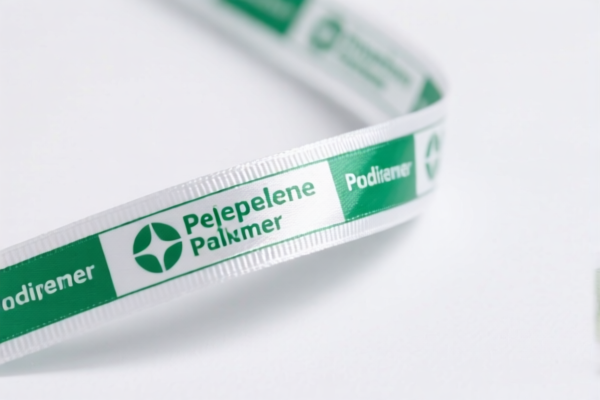
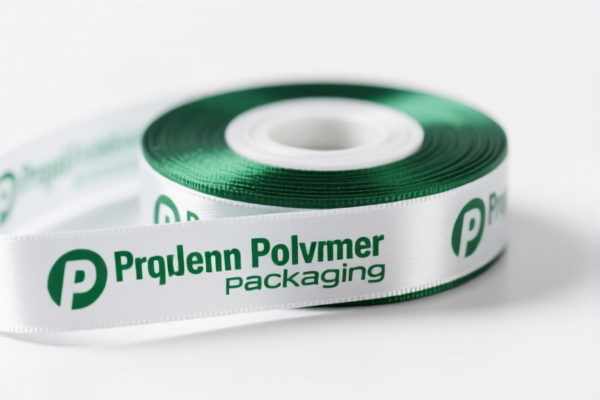
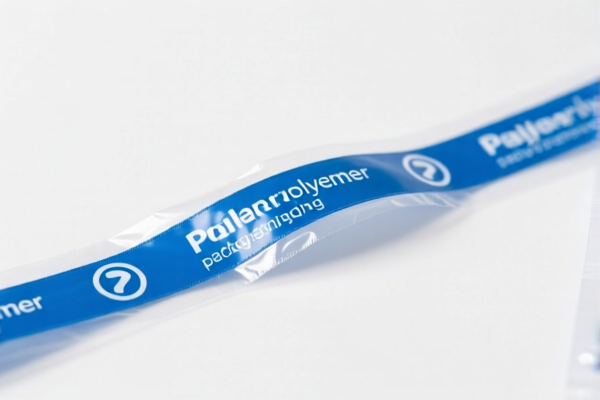
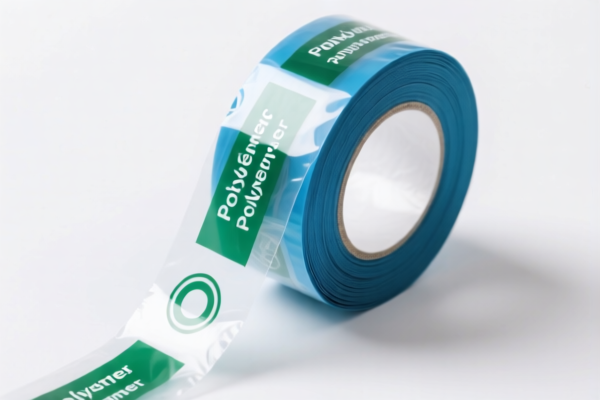
AI Analysis
🎀 PP Plastic Hot Stamping Ribbon (Heat Transfer Ribbon)
🌐 HS Code Reference & Customs Clearance Guide | 2026 Latest Tariff Analysis | Professional Clearance Strategy
📌 1. Product Definition & Classification: What is "PP Plastic Hot Stamping Ribbon"?
PP Plastic Hot Stamping Ribbon (also known as Heat Transfer Ribbon or Foil) is a thin plastic film, typically made of Polypropylene (PP), coated with color pigments, release layers, and adhesive/resin layers. It is used in conjunction with heat and pressure to transfer color or patterns onto various substrates like paper, plastic, or fabric.
Key Distinctions for Classification: * Material Nature: It is a plastic article, not a textile fabric, despite looking like a ribbon. * Form: It is supplied in rolls. * Function: It is an accessory for printing/decoration equipment, but classified by its material composition if it doesn't fit specific printing machinery parts codes.
⚠️ Critical Classification Point:
- If declared as PP Plastic → Likely falls under Chapter 39 (Plastics and Articles Thereof).
- If declared as Synthetic Fiber/Textile → Likely falls under Chapter 54 (Man-made Filaments).
- Note: HS codes are highly specific to the manufacturer's declared material composition and form. Below are the most likely classifications based on the provided data.
📦 2. HS Code Classification Details (2026 Latest Tariff Authority对照)
| HS Code | Product Description | Material/Form | Total Tax Rate (CN→US) | Key Tax Components |
|---|---|---|---|---|
3926.90.99.89 |
Other articles of plastics, n.e.s. | PP Plastic, Ribbon Form | 22.8% | Base: 5.3%, Sec 301: 7.5%, IEEPA: 10% |
5407.92.20.10 |
Woven fabrics of synthetic filaments, other | Synthetic Fiber, Woven/Long Fiber Form | 49.9% | Base: 14.9%, Sec 301: 25.0%, IEEPA: 10% |
3926.90.35.00 |
Other articles of plastics, not strung | PP Plastic, Unstrung/Unset Articles | 24.0% | Base: 6.5%, Sec 301: 7.5%, IEEPA: 10% |
🔍 重点提醒 (Key Insights):
- Why such a big difference? The difference between 22.8% and 49.9% is due to whether the ribbon is classified as a Plastic Article (Ch 39) or a Synthetic Fabric (Ch 54).
- Most Common: PP Hot Stamping Ribbons are typically classified under 3926 (Plastics) because the base is a plastic film.
- High Risk Code:5407.92.20.10has a significantly higher rate due to higher base tariffs (14.9%) and higher Section 301 duties (25%). Avoid this unless your product is explicitly defined as a woven textile.
- 122 Clause Tariff: All codes include a 10% IEEPA tariff for products originating from China.
💰 3. 2026 Latest Tariff Rate Breakdown (Including Surcharges & Policy Add-ons)
✅ Applicable Country: United States (US)
✅ Country of Origin: China (CN)
✅ Effective Date: From November 10, 2025 (and subsequent imports)
🎯 1. 3926.90.99.89 —— PP Plastic Ribbon (Plastic Article)
| Item | Content |
|---|---|
| Base Tariff | 5.3% (ad valorem) |
| USITC Surtax (Sec 301) | +7.5% |
| IEEPA Surtax (122 Clause) | +10% |
| Total Rate | 22.8% |
| Tax Calculation | CIF Value × 22.8% |
| De Minimis Exemption | ❌ Not Eligible (deny_de_minimis) |
| Legal Path | IEEPA:9903.01.25 → USITC:3926.90.99.89 → FOOTNOTE:301.01.07 |
📌 Explanation:
- This is the most cost-effective classification for PP plastic ribbons.
- The "7.5%" Sec 301 surtax is lower than the standard 25% because it may fall under a specific exclusion or category with reduced rates.
- Total 22.8% is high but significantly lower than the textile classification.
🎯 2. 5407.92.20.10 —— Synthetic Fiber Ribbon (Textile Classification)
| Item | Content |
|---|---|
| Base Tariff | 14.9% |
| USITC Surtax (Sec 301) | +25.0% |
| IEEPA Surtax (122 Clause) | +10% |
| Total Rate | 49.9% |
| Tax Calculation | CIF Value × 49.9% |
| De Minimis Exemption | ❌ Not Eligible (deny_de_minimis) |
| Legal Path | IEEPA:9903.01.25 → USITC:5407.92.20.10 → FOOTNOTE:301.01.07 |
📌 Warning:
- This classification treats the ribbon as a woven fabric or synthetic textile.
- Total 49.9% is extremely high.
- Only use this if your product is explicitly a woven synthetic ribbon, not a plastic film. Misclassification here leads to massive overpayment or underpayment penalties if customs reclassifies it.
🎯 3. 3926.90.35.00 —— Other Plastic Articles (Unstrung)
| Item | Content |
|---|---|
| Base Tariff | 6.5% |
| USITC Surtax (Sec 301) | +7.5% |
| IEEPA Surtax (122 Clause) | +10% |
| Total Rate | 24.0% |
| Tax Calculation | CIF Value × 24.0% |
| De Minimis Exemption | ❌ Not Eligible (deny_de_minimis) |
| Legal Path | IEEPA:9903.01.25 → USITC:3926.90.35.00 → FOOTNOTE:301.01.07 |
📌 Note:
- Slightly higher than3926.90.99.89(24.0% vs 22.8%).
- Use this if the ribbon is sold as "unstrung" or "unset" plastic articles, not specifically as a ribbon for decoration.
- Generally,3926.90.99.89is more appropriate for decorative ribbons.
🛠️ 4. Customs Clearance Practical Advice (Best Practices)
✅ 1. Required Documents Checklist
| Document | Must Provide | Notes |
|---|---|---|
| ✅ Product Specification Sheet | ✔️ | Clearly state: Material: PP (Polypropylene), Form: Roll, Use: Hot Stamping |
| ✅ Material Composition Proof | ✔️ | Lab test report confirming PP content >80% |
| ✅ Product Photos | ✔️ | Show the roll, the coating, and the product in use |
| ✅ Commercial Invoice | ✔️ | Describe as "PP Plastic Hot Stamping Ribbon, for Decoration" |
| ✅ Packing List | ✔️ | Net/Gross weight, dimensions |
| ✅ Certificate of Origin (CO) | ✔️ | Required for Section 301 and IEEPA assessment |
✅ 2. Declaration Tips (Key Phrases)
🔥 “Declare as Plastic, Not Textile! Specify PP, Avoid 50% Tax!”
| Scenario | Correct Declaration | Incorrect Declaration | Consequence |
|---|---|---|---|
| PP Plastic Ribbon | 3926.90.99.89 - "PP Plastic Hot Stamping Ribbon" |
"Synthetic Ribbon" or "Fabric Ribbon" | Risk of reclassification to 49.9% |
| Plastic Film Roll | 3926.90.35.00 |
"Printing Ribbon" | May be questioned if not clearly plastic |
| Textile Ribbon | 5407.92.20.10 |
"Plastic Ribbon" | Customs will demand proof of textile nature |
✅ 3. Special Cases
| Scenario | Handling Advice |
|---|---|
| OEM Custom Ribbon | Provide design file + material spec. Ensure "PP" is highlighted. |
| Composite Ribbon | If it has a fabric backing, it may be classified as textile (49.9%). Avoid unless necessary. |
| Sample Shipments | Still subject to tariffs. No de minimis exemption for China-origin goods. |
| Duty Drawback | If re-exported, check eligibility for duty drawback under Section 301. |
🌍 5. Global Market Comparison (2026 Latest)
| Country/Region | Recommended HS Code | Tariff (CN Origin) | Certification | Notes |
|---|---|---|---|---|
| 🇺🇸 USA | 3926.90.99.89 |
22.8% | None | High tariff due to Sec 301 + IEEPA |
| 🇨🇳 China | 3926.90.99.89 |
5% | None | No additional surtaxes |
| 🇪🇺 EU | 3926.90.99.89 |
6.5% | REACH, RoHS | No Section 301 |
| 🇬🇧 UK | 3926.90.99.89 |
6.5% | UKCA, RoHS | Post-Brexit tariffs |
| 🇦🇺 Australia | 3926.90.99.89 |
5% | ESR, RCM | No major surtaxes |
📌 Conclusion:
- USA is the most expensive market due to 22.8% total tariff (vs. 5-6.5% elsewhere).
- EU, UK, Australia have no Section 301 or IEEPA surtaxes.
- Consider third-country manufacturing (e.g., Vietnam, India) if shipping to the US to avoid high tariffs.
📌 6. Common Mistakes & Pitfalls
❌ Mistake 1: Declaring as "Fabric Ribbon"
👉 Result: Tax jumps from 22.8% to 49.9%!
👉 Fix: Always emphasize PP Plastic and Non-Woven.
❌ Mistake 2: Ignoring the IEEPA 10% Surcharge
👉 Result: Underpayment of 10% on CIF value → Penalties + Back Taxes.
👉 Fix: Include 10% IEEPA in all cost calculations.
❌ Mistake 3: Not Providing Material Proof
👉 Result: Customs doubts PP classification → Delays + Reassessment.
👉 Fix: Attach a Material Safety Data Sheet (MSDS) or Lab Report.
❌ Mistake 4: Using Vague Descriptions like "Ribbon"
👉 Result: Ambiguity leads to wrong HS code assignment.
👉 Fix: Use "PP Plastic Hot Stamping Ribbon, 12mm, Roll"
✅ Correct Description Example:
"Hot Stamping Ribbon, Material: Polypropylene (PP), Form: Roll, Width: 12mm, Color: Gold, Use: Decorative Printing, Country of Origin: China"
🎯 7. Conclusion: Smart Classification, Cost Control!
🎯 Remember the Golden Rule:
🔹 “Plastic Ribbon = 22.8% | Textile Ribbon = 49.9%”
🔹 “Always specify PP, Avoid Fabric Classification!”
🔹 “Add 10% IEEPA to your budget!”
📌 Pro Tip:
If your PP ribbon is not made in China (e.g., made in Vietnam, India, or Thailand), you may qualify for lower or zero IEEPA tariffs.
👉 Action:
1. Verify Origin: Ensure Certificate of Origin reflects non-CN origin.
2. Request Ruling: Apply for an Advance Ruling from CBP if unsure.
3. Consult Customs Broker: Confirm HS code with a US-based customs broker.
📣 Immediate Action:
📞 Contact your freight forwarder + Provide PP Material Proof + Apply for HS Code Ruling
🚀 Save up to 27% in tariffs by correct classification!
✨ Professional Clearance Starts with Accurate Classification!
💼 Every Dollar Saved is Profit Earned!
Customer Reviews
About HS Code Classification
The Harmonized System (HS) is an internationally standardized nomenclature developed by the World Customs Organization (WCO) to classify traded products. Over 200 countries use the HS system as the basis for customs tariffs, trade statistics, and import/export regulations.
Each HS code follows a hierarchical structure:
- Chapter (2 digits) — Broad category of goods (e.g., Chapter 84: Machinery and Mechanical Appliances)
- Heading (4 digits) — More specific grouping within the chapter
- Subheading (6 digits) — Internationally standardized breakdown, used by all WCO member countries
- National subdivisions (8-10 digits) — Country-specific extensions for further classification, such as US HTSUS 10-digit codes
Correct HS code classification is essential for smooth customs clearance, accurate duty payment, and compliance with trade regulations. Misclassification can lead to customs delays, overpayment of duties, or penalties.
When importing from CN to US, the applicable tariff rates may include:
- Most-Favored-Nation (MFN) rate — The standard duty rate applied to WTO members
- General rate — Applied to countries without trade agreements
- Trade remedy duties — Additional tariffs such as Section 301 (anti-dumping), Section 232 (national security), or countervailing duties
The information provided on this page is for reference purposes only. For official classification, please consult with your local customs authority or a licensed customs broker.