PVC Wall Stickers (Synthetic Fiber Backing)
CN → US| HS Code | Tariff Rate | Origin | Destination | Doc |
|---|---|---|---|---|
| 3918103250 | 41.5% | CN | US | Official Doc |
| 3921121500 | 41.5% | CN | US | Official Doc |
| 3918103150 | 39.2% | CN | US | Official Doc |
| 3921121100 | 39.2% | CN | US | Official Doc |
| 5903102090 | 35.0% | CN | US | Official Doc |
Product Images
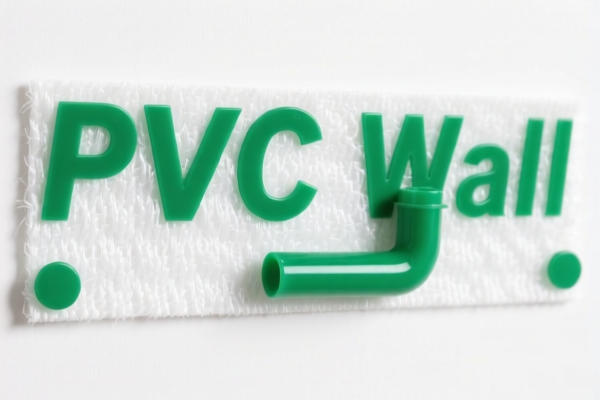

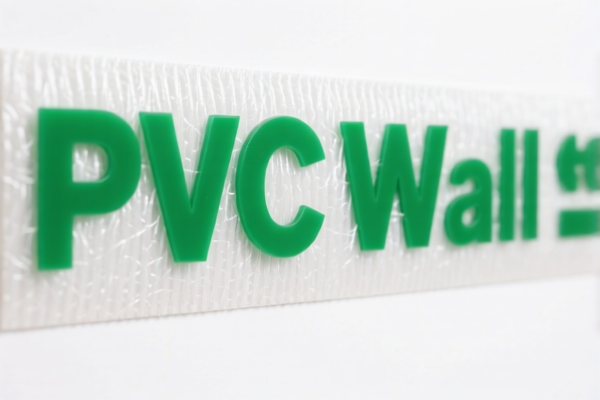
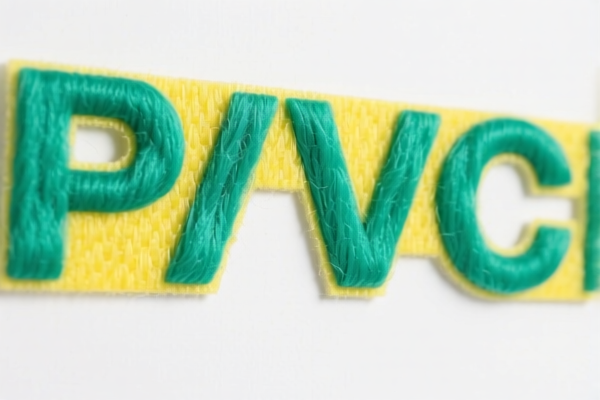
AI Analysis
🎨 PVC Wall Stickers (Synthetic Fiber Backing) – The Ultimate Import Guide
🌐 HS Code Reference & Customs Clearance Guide | 2026 Latest Tariff Analysis | Professional Entry Strategy
📌 One, Product Definition and Classification: Do You Really Understand "PVC Wall Stickers"?
PVC Wall Stickers with Synthetic Fiber Backing are decorative building materials primarily used for interior wall covering, insulation, or aesthetic enhancement. In international trade, they are not simply "stickers" but complex composite products consisting of a PVC film surface and a man-made fiber backing.
Key Distinction in Classification:
The crucial factor determining the HS Code is the structural relationship between the PVC film and the backing material:
* Layered/Composite Sheets (Chapter 39): If the PVC film is laminated with or adhered to the fiber backing to form a single unified sheet/film used for wall covering, it is classified under Chapter 39 (Plastics and Articles Thereof).
* Impregnated Fabrics (Chapter 59): If the synthetic fabric is impregnated, coated, or covered with PVC to a significant degree, forming a technical textile, it might fall under Chapter 59, but for thin wall-covering films, Chapter 39 is often more accurate for finished decorative sheets.
⚠️ Critical Classification Point:
- If the product is a finished decorative sheet (PVC layer + Fiber backing) ready for wall application → Chapter 39 (HS Codes: 3918.10.xx or 3921.12.xx).
- If the product is a PVC-coated fabric roll primarily valued as a textile → Chapter 59 (HS Code: 5903.10.xx).
- Note: The data provided below reflects the most common classifications for decorative wall coverings.
📦 Two, HS Code Classification Details (2026 Latest Tariff Authority Comparison)
Based on the provided data, the product falls into four specific HS Codes depending on the precise manufacturing structure and backing composition.
| HS Code | Product Description (Summary) | Application Scenario | Key Structural Feature |
|---|---|---|---|
3918.10.32.50 |
PVC material, film form, for wall covering, with man-made fiber backing | Decorative wall panels, heavy-duty wall covers | PVC Film + Man-made Fiber Backing (Specific subheading) |
3921.12.15.00 |
PVC combined with textile material, with man-made fiber backing, for wall covering | Composite wall coverings, textile-backed PVC sheets | PVC + Textile Composite (Specific subheading) |
3918.10.31.50 |
PVC material, decorative film, for wall covering, with fiber backing | General decorative films, lighter wall coverings | PVC Film + Fiber Backing (Broader fiber category) |
3921.12.11.00 |
PVC film/sheet, combined with textile material or man-made fiber backing | Generic composite PVC sheets for construction/decoration | PVC + Textile/Fiber Composite (General subheading) |
5903.10.20.90 |
Man-made fiber fabric impregnated, coated, or covered with PVC, in film form | PVC-coated synthetic fabrics used as wall coverings | Fabric Base + PVC Coating (Textile-focused) |
🔍 Key Reminder:
- Chapters 3918 and 3921 are for Plastic products (walls/floors made of plastic).
- Chapter 5903 is for Plastic-impregnated Textiles.
- The presence of "Man-made Fiber Backing" strongly pushes classification toward 3918 or 3921 if the plastic aspect is dominant.
- 3918.10 specifically covers "Floor/wall coverings of plastics," making it the most precise category for wall stickers.
💰 Three, 2026 Latest Tariff Rate Breakdown (Including Additional Taxes, Policy Add-ons)
✅ Applicable Country: United States (US)
✅ Country of Origin: China (CN)
✅ Effective Date: 2025 November 10 onwards (for subsequent imports)
🎯 1. 3918.10.32.50 & 3921.12.15.00 —— PVC Wall Coverings with Man-made Fiber Backing
| Item | Content |
|---|---|
| Base Tariff | 6.5% (Ad valorem) |
| Section 301 Additional Tariff | +25.0% (Trade Act of 1974, Section 301) |
| Section 122 Tariff | +10.0% (Specific policy addition mentioned in data) |
| Total Tariff Rate | 41.5% |
| Tax Calculation | CIF Value × 41.5% |
| De Minimis Eligibility | ❌ No (High value/category usually excludes from 803.210) |
| Legal Path | Section 301 → Section 122 → USITC:3918.10.32.50 / 3921.12.15.00 |
📌 Explanation:
- Base 6.5%: Standard MFN rate for plastic wall/floor coverings.
- 25% Section 301: The major punitive tariff on Chinese plastic goods.
- 10% Section 122: Additional duty under Section 122 of the Trade Expansion Act (national security/economic adjustment).
- Total 41.5%: A very high effective duty rate. This significantly impacts profit margins.
🎯 2. 3918.10.31.50 & 3921.12.11.00 —— PVC Wall Coverings with General Fiber/Textile Backing
| Item | Content |
|---|---|
| Base Tariff | 4.2% (Ad valorem) |
| Section 301 Additional Tariff | +25.0% |
| Section 122 Tariff | +10.0% |
| Total Tariff Rate | 39.2% |
| Tax Calculation | CIF Value × 39.2% |
| De Minimis Eligibility | ❌ No |
| Legal Path | Section 301 → Section 122 → USITC:3918.10.31.50 / 3921.12.11.00 |
📌 Note:
- Slightly lower base rate (4.2% vs 6.5%) leads to a total rate of 39.2%, saving 2.3% compared to the previous codes.
- Even small base rate differences are critical when multiplied by high additional tariffs.
🎯 3. 5903.10.20.90 —— PVC-Impregnated Synthetic Fiber Fabric
| Item | Content |
|---|---|
| Base Tariff | 0.0% (Ad valorem) |
| Section 301 Additional Tariff | +25.0% |
| Section 122 Tariff | +10.0% |
| Total Tariff Rate | 35.0% |
| Tax Calculation | CIF Value × 35.0% |
| De Minimis Eligibility | ❌ No |
| Legal Path | Section 301 → Section 122 → USITC:5903.10.20.90 |
📌 Strategic Insight:
- This code has a 0% base tariff, making it the most cost-effective option at 35% total.
- Crucial: You can only use this if the product is clearly defined as "Impregnated/Coated Fabric" (Chapter 59) rather than "Plastic Film/Sheet" (Chapter 39).
- Risk: If customs determines it is a "plastic sheet" rather than "fabric," you will be reclassified to Chapter 39 (39.2% or 41.5%), resulting in back taxes and penalties.
🛠️ Four, Customs Clearance Practical Advice (Combat Pitfall Guide)
✅ 1. Preparation Checklist (All Mandatory)
| Document | Required | Description |
|---|---|---|
| ✅ Product Specification Sheet | ✔️ | Must detail: PVC thickness, backing material type (man-made fiber), total weight, dimensions. |
| ✅ Material Composition Breakdown | ✔️ | Explicitly state % of PVC vs. % of Fiber. Critical for 39 vs. 59 classification. |
| ✅ Product Photos (Clear) | ✔️ | Show the cross-section (layering) to prove it is a composite sheet. |
| ✅ Commercial Invoice | ✔️ | Use precise description: "PVC Composite Wall Covering, Synthetic Fiber Backing" – Avoid vague terms like "Stickers". |
| ✅ Binding Ruling (Pre-Ruling) | ✔️ | Highly Recommended: Apply for an CBP Binding Ruling to lock in the HS Code (e.g., 5903.10.20.90) before shipment. |
| ✅ Packing List | ✔️ | Detail weight and dimensions per carton. |
✅ 2. Declaration Tips (Key Mnemonics)
🔥 "Structure Determines Code, Backing Determines Rate!"
| Scenario | Correct Declaration | Error Consequence |
|---|---|---|
| Laminated Sheet (PVC on Fiber) | 3918.10.32.50 |
If declared as fabric, risk 41.5% |
| Coated Fabric (PVC on Weave) | 5903.10.20.90 |
If declared as sheet, risk 35%→41.5% |
| Generic "Wall Sticker" | Avoid! | Customs will assign highest duty or reject |
| Mislabeling Base Rate | Ensure 0% vs 4.2% vs 6.5% is accurate | Incorrect base = Incorrect Total Tax |
✅ 3. Special Situation Handling
| Situation | Handling Advice |
|---|---|
| OEM Private Label | Provide license agreement. Ensure product description matches the physical composition, not the brand. |
| Mixed Shipments | If shipping both PVC sheets and PVC-coated fabrics, separate line items are mandatory to avoid confusion. |
| High Value Shipment | Given the 35-41.5% tariff, consider Section 301 Exclusions if applicable (check USTR list). |
| Origin Marking | Ensure products are marked "Made in China" to avoid origin fraud penalties. |
🌍 Five, Global Market Clearance Comparison (2026 Latest)
| Country/Region | Recommended HS Code | Tariff (China Origin) | Certification | Remarks |
|---|---|---|---|---|
| 🇺🇸 USA | 5903.10.20.90 |
35.0% | No special | Lowest rate in data (if compliant) |
| 🇺🇸 USA | 3918.10.32.50 |
41.5% | No special | Higher due to higher base rate |
| 🇨🇳 China | 3918.10.32.50 |
~5-6% | CCC (if applicable) | No Section 301/122 |
| 🇪🇺 EU | 3918.10.32.50 |
~6.5% | REACH, CE | No Section 301/122 |
| 🇦🇺 Australia | 3918.10.32.50 |
~5% | A-Tick | No Section 301/122 |
📌 Conclusion:
- USA is the most challenging market due to Section 301 (25%) + Section 122 (10%) add-ons.
- Total tariffs range from 35% to 41.5%.
- Europe/China/Australia are significantly cheaper (base rates only).
- Strategy for US: Aim for5903.10.20.90(35%) by proving the product is a textile composite, not just a plastic sheet.
📌 Six, Common Mistakes & Pitfall Guide (Lessons from Tears)
❌ Mistake 1: Using the term "Wall Sticker" in the commercial invoice
👉 Consequence: CBP may reject or reclassify to the highest duty category (3918.10.32.50 at 41.5%).
👉 Fix: Use "PVC Composite Wall Covering with Synthetic Fiber Backing".
❌ Mistake 2: Ignoring the "Man-made Fiber" detail
👉 Consequence: If the backing is natural fiber, the HS code might change entirely, leading to duty discrepancies.
👉 Fix: Verify the exact fiber type (polyester, nylon, etc.) and include in specs.
❌ Mistake 3: Assuming all PVC products are the same
👉 Consequence: Missing the 0.0% base rate of 5903.10.20.90 leads to paying 41.5% instead of 35%.
👉 Fix: Analyze if the product can be legally classified as impregnated fabric.
❌ Mistake 4: Not applying for Pre-Ruling
👉 Consequence: High risk of detention, audits, and unexpected back taxes upon entry.
👉 Fix: Submit Application for Binding Ruling to CBP 90 days before shipment.
✅ Correct Practice:
"PVC Composite Wall Covering, 0.5mm Thickness, Polyman-made Fiber Backing, Decorative Finish, Model XYZ, Compliant with US Import Regulations"
🎯 Seven, Conclusion: Precise Classification Saves Profit!
🎯 Remember the Key Takeaways:
🔹 "Base Rate Matters: 0% vs 6.5% makes a 6.5% difference on top of 35% taxes!"
🔹 "Textile vs Plastic: If it's coated fabric, use Ch. 59 (35%). If it's plastic sheet, use Ch. 39 (39-41.5%)."
🔹 "Section 122 + 301 are here to stay: Budget for 35-41.5% total duty for US imports."
📌 Pro Tip:
Given the high tariffs, consult a licensed US Customs Broker to file a Pre-Import Ruling. The cost of the ruling ($500-$1000) is negligible compared to the potential $5,000+ in back taxes on a container load.
📣 Immediate Action:
📞 Contact a Customs Broker + Provide Product Samples/Cross-section Photos + Request HS Code Binding Ruling
🚀 Optimize your supply chain to absorb or pass on the 35-41.5% tariff burden efficiently!
✨ Professional Clearance, Precise Classification, Maximized Margin!
💼 Every Percentage Point Counts in International Trade!
Customer Reviews
About HS Code Classification
The Harmonized System (HS) is an internationally standardized nomenclature developed by the World Customs Organization (WCO) to classify traded products. Over 200 countries use the HS system as the basis for customs tariffs, trade statistics, and import/export regulations.
Each HS code follows a hierarchical structure:
- Chapter (2 digits) — Broad category of goods (e.g., Chapter 84: Machinery and Mechanical Appliances)
- Heading (4 digits) — More specific grouping within the chapter
- Subheading (6 digits) — Internationally standardized breakdown, used by all WCO member countries
- National subdivisions (8-10 digits) — Country-specific extensions for further classification, such as US HTSUS 10-digit codes
Correct HS code classification is essential for smooth customs clearance, accurate duty payment, and compliance with trade regulations. Misclassification can lead to customs delays, overpayment of duties, or penalties.
When importing from CN to US, the applicable tariff rates may include:
- Most-Favored-Nation (MFN) rate — The standard duty rate applied to WTO members
- General rate — Applied to countries without trade agreements
- Trade remedy duties — Additional tariffs such as Section 301 (anti-dumping), Section 232 (national security), or countervailing duties
The information provided on this page is for reference purposes only. For official classification, please consult with your local customs authority or a licensed customs broker.