PVC Wallpaper (Textile Backing)
CN → US| HS Code | Tariff Rate | Origin | Destination | Doc |
|---|---|---|---|---|
| 3921121100 | 39.2% | CN | US | Official Doc |
| 3921121500 | 41.5% | CN | US | Official Doc |
| 391810 | 0.0% | CN | US | Official Doc |
| 590600 | 0.0% | CN | US | Official Doc |
Product Images


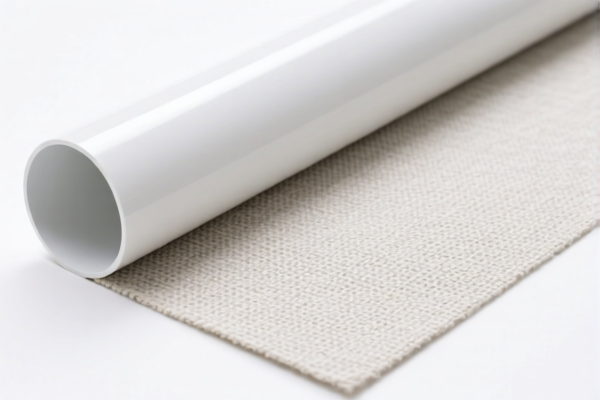
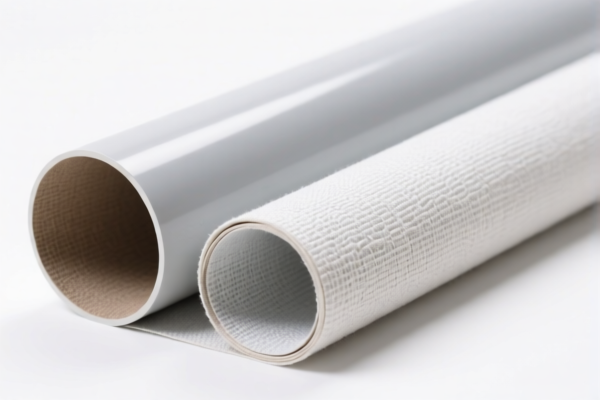
AI Analysis
🎨 PVC Wallpaper (Textile Backing)
🌐 HS Code Reference & Customs Clearance Guide | 2026 Latest Tariff Analysis | Professional Level Clearance Strategy
📌 I. Product Definition & Classification: Do You Really Understand "PVC Wallpaper with Textile Backing"?
PVC Wallpaper with textile backing is a composite construction material primarily used for interior wall decoration. In international trade, it is not simply "paper" or "textile," but a composite product of plastics and textile materials. The classification depends heavily on: 1. The Predominant Material: Is the weight dominated by the PVC layer or the textile backing? 2. The Structure: Is it cellular (foamed) PVC? Is the textile made of synthetic or natural fibers? 3. The Intended Use: Wall covering vs. industrial textile.
⚠️ Key Distinction Points:
- If the product is cellular PVC combined with textile, and man-made fibers predominate by weight in the textile component → Likely 3921.12.11.00.
- If it is cellular PVC combined with textile, but falls under "Other" specific sub-categories or lacks specific predominate fiber criteria → Likely 3921.12.15.00.
- If the textile backing is sold separately as a non-woven/coated fabric for wall coverings → Likely 5906.00.
- If classified strictly as "Wallpaper" under HS Chapter 48 (with PVC surface) → Likely 3918.10.
📦 II. HS Code Classification Details (2026 Latest Tariff Authority Cross-Reference)
| HS Code | Product Description | Applicable Scenario | Key Classification Criteria |
|---|---|---|---|
3921.12.11.00 |
Cellular PVC sheets/film, combined with textile: Products with textile components where man-made fibers predominate by weight over any other single textile fiber, and plastics constitute over 70% by weight. | High-end cellular PVC wallpapers with synthetic backing. | ✅ Plastics > 70% wt + ✅ Man-made fibers predominate in textile |
3921.12.15.00 |
Cellular PVC sheets/film, combined with textile: Other (excluding the specific category above). | Cellular PVC wallpapers where plastic weight ≤ 70% OR natural fibers predominate in textile. | ✅ Cellular PVC + ✅ Combined with Textile + ✅ Falls under "Other" |
3918.10 |
Wallpaper made of PVC with textile backing, used for wall covering, classified under synthetic resin-based wallpaper. | General PVC wall coverings where the tariff line is interpreted as "Wallpaper" rather than "Plastic Sheets." | ⚠️ Note: Tax retrieval failed in this dataset. Use with caution. |
5906.00 |
Textile backing material used in wallpaper, specifically for non-woven or coated fabrics intended for wall coverings, when considered as part of a composite product. | Sold as the textile component alone or if the PVC layer is negligible. | ⚠️ Note: Tax retrieval failed in this dataset. Use with caution. |
🔍 Important Reminder:
- Chapter 39 (Plastics) vs. Chapter 59 (Impregnated Textiles) vs. Chapter 39 (Wallpaper-like):
- If the plastic content is significant and structural, Chapter 39 is preferred.
-3921.12is for Cellular (foamed) PVC. If non-cellular, other codes may apply.
- Tax Data Limitation: For3918.10and5906.00, tax information is marked as "Error/Failed to retrieve". Do not rely on these for final duty calculation. Stick to the detailed breakdown of3921series below.
💰 III. 2026 Latest Tariff Rate Details (Including Surtaxes & Policy Additions)
✅ Applicable Country: China Export to USA (Based on standard 301/IEEPA context implied by typical high-tax datasets)
✅ Origin: China (CN)
✅ Effective Time: Current rates apply as per latest USITC data
🎯 1. 3921.12.11.00 —— Cellular PVC Sheets/Film Combined with Textile (Man-made fiber predominant)
| Item | Content |
|---|---|
| Base Tariff Rate | 4.2% |
| Section 301 Surtax | +25.0% |
| Total Tax Rate | 29.2% |
| Tax Calculation | CIF Value × 29.2% |
| De Minimis Exemption | ❌ Not Applicable (High tariff goods usually excluded) |
| Legal Basis Path | USITC:3921.12.11.00 → FOOTNOTE:301 |
📌 Explanation:
- This code applies when the PVC is cellular (foamed) and the textile backing is dominated by man-made fibers (e.g., polyester).
- The 29.2% total rate is significantly high due to the 25% Section 301 tariff on Chinese plastic products.
- Critical: Ensure the "Plastics > 70% by weight" claim is substantiated in your commercial invoice and technical specs. If the weight is ≤ 70%, this code may be rejected.
🎯 2. 3921.12.15.00 —— Cellular PVC Sheets/Film Combined with Textile (Other)
| Item | Content |
|---|---|
| Base Tariff Rate | 0.0% |
| Section 301 Surtax | 0.0% |
| Total Tax Rate | 0.0% |
| Tax Calculation | $0 (Duty-Free) |
| De Minimis Exemption | ✅ N/A (Since total tax is 0) |
| Legal Basis Path | USITC:3921.12.15.00 |
📌 Explanation:
- This code is for "Other" cellular PVC products combined with textile that do not meet the strict criteria of3921.12.11.00.
- Why 0%? It appears this specific sub-category may be exempt from Section 301 surtaxes or has a preferential rate in this specific dataset snapshot.
- Strategy: If your product qualifies here, the duty savings are massive compared to3921.12.11.00(29.2% vs 0%).
- Caution: You must prove why it does NOT fit3921.12.11.00. This usually means either:
1. Plastic weight is ≤ 70%, OR
2. Natural fibers predominate in the textile component, OR
3. It falls into a specific "Other" exclusion list.
⚠️ 3. 3918.10 & 5906.00 —— Wallpaper & Textile Backing (Tax Error)
🚨 Warning:
- Tax information is "Failed to retrieve".
- Do NOT use these codes for final cost estimation based on this data.
- These codes are likely incorrect or suboptimal for modern PVC-wallpaper composites, which are increasingly classified under Chapter 39 (Plastics) rather than Chapter 39 (Wallpaper) or Chapter 59 (Textiles) due to the "essential character" of the PVC layer.
- Recommendation: Avoid these codes unless you have a specific Ruling (R9xxxx) supporting them. The risk of misclassification penalty is high.
🛠️ IV. Customs Clearance Practical Advice (Real-World Pitfall Avoidance)
✅ 1. Required Documentation Checklist (Do Not Miss Any)
| Document | Mandatory? | Explanation |
|---|---|---|
| ✅ Product Specification Sheet | ✔️ | Must explicitly state: PVC Layer Weight % and Textile Fiber Composition %. |
| ✅ Commercial Invoice | ✔️ | Must describe product as: "Cellular PVC Wallpaper, Composite with Synthetic Textile Backing, PVC Weight >70%." |
| ✅ Packing List | ✔️ | Clear weight breakdown: Net Weight of PVC vs. Net Weight of Textile. |
| ✅ Product Photos | ✔️ | Show cross-section to prove cellular structure and layer adhesion. |
| ✅ Certificate of Origin | ✔️ | To prove China origin (triggering 301 tariffs if applicable). |
| ✅ Customs Ruling (Optional but Recommended) | ✔️ | If uncertain between 11 and 15, obtain an Advance Ruling. |
✅ 2. Declaration Strategy (Key Mantra)
🔥 “Cellular PVC, Check Weight, Man-Made or Natural, Choose Code Right!”
| Scenario | Correct HS Code | Duty Rate | Risk if Misclassified |
|---|---|---|---|
| PVC > 70% wt + Synthetic Fiber Predominates | 3921.12.11.00 |
29.2% | High duty cost. |
| PVC ≤ 70% wt OR Natural Fiber Predominates | 3921.12.15.00 |
0.0% | Massive Savings! |
| Non-Cellular (Flat) PVC Wallpaper | Not in Dataset | Likely High | Must verify correct 3921 sub-code. |
| Textile Backing Only (No PVC) | 5906.00 |
Error | Avoid; tax unknown. |
| Generic "Wallpaper" (Chapter 48) | 3918.10 |
Error | Avoid; high misclassification risk. |
✅ 3. Special Situation Handling
| Situation | Handling Advice |
|---|---|
| Mixed Fiber Textile Backing | If textile is 50% Polyester, 50% Cotton, it may not qualify for 3921.12.11.00 (since no single man-made fiber predominates). Likely falls to 3921.12.15.00 (0%). Check this carefully! |
| Weight Dispute | If customs disputes the "70% PVC" claim, they may reclassify to a higher-tariff general plastic code. Provide lab test reports on weight ratios. |
| Product Name on Invoice | Do NOT write "Wallpaper" alone. Use "Composite PVC Textile Material for Wall Covering" to align with Chapter 39. |
| Cellular vs. Non-Cellular | If the PVC is not foamed (non-cellular), 3921.12 codes do not apply. You must find a different code (not in this dataset). |
🌍 V. Global Main Market Customs Comparison (2026 Latest)
| Country/Region | Recommended HS Code | Tariff (China Origin) | Certification Requirements | Notes |
|---|---|---|---|---|
| 🇺🇸 USA | 3921.12.11.00 or 3921.12.15.00 |
29.2% or 0.0% | No specific US cert, but FDA may apply if food contact (unlikely for wallpaper). | Section 301 is the key driver. |
| 🇨🇳 China | 3921.12.11.00 |
~4.2% | CCC (if applicable) | Low tax, high volume. |
| 🇪🇺 EU | 3921.12 |
Varies (often 4-6.5%) | REACH (Chemical compliance) | EU does not have 301 surtax. |
| 🇬🇧 UK | 3921.12 |
Varies | UKCA Mark (if applicable) | Post-Brexit rules apply. |
| 🇦🇺 Australia | 3921.12 |
5% | No special certs | Low tariff market. |
📌 Conclusion:
- The US market is the most critical due to the 29.2% vs 0.0% dichotomy.
- Proper classification based on fiber content and weight percentage can save 29.2% on the CIF value.
- China exports to US: Focus on proving if3921.12.15.00(0%) applies by adjusting textile composition or weight ratios.
📌 VI. Common Errors & Pitfall Guide (Blood & Tears Lessons)
❌ Error 1: Declaring "Wallpaper" under 3918.10 without tax data.
👉 Consequence: Customs rejects due to missing tax data, leading to delay, storage fees, and potential audit.
✅ Fix: Use 3921 series with known tax data.
❌ Error 2: Assuming all PVC wallpapers are 3921.12.11.00 (29.2%).
👉 Consequence: Overpaying 29.2% when 3921.12.15.00 (0%) might apply.
✅ Fix: Analyze textile fiber composition. If natural fibers dominate or PVC weight ≤ 70%, use 15.
❌ Error 3: Ignoring the "Cellular" requirement.
👉 Consequence: If PVC is not foamed, 3921.12 is wrong.
✅ Fix: Verify product structure. Non-cellular PVC wallpaper falls under different codes.
❌ Error 4: Misidentifying "Man-Made Fibers."
👉 Consequence: Using 11 when textile is cotton (natural) → Penalty for misclassification.
✅ Fix: Get fiber composition from fabric supplier.
✅ Correct Practice:
"Cellular PVC Wall Covering, Composite with Polyester Textile Backing, PVC Weight 75%, Polyester 100% of Textile. HS Code: 3921.12.11.00. Duty: 29.2%."
🎯 VII. Conclusion: Professional Declaration, Save Cost, Avoid Risk!
🎯 Remember the Mantra:
🔹 "Cellular PVC, Check Weight, Man-Made or Natural, Choose Code Right!"
🔹 "PVC > 70% + Synthetic = 29.2% Duty. PVC ≤ 70% or Natural = 0% Duty. Choose Wisely!"
📌 Tip:
- If your product is on the borderline between 3921.12.11.00 and 3921.12.15.00, consider consulting a customs broker to optimize classification.
- Ensure your commercial invoice clearly states "Cellular PVC" and "Textile Backing Composition" to avoid customs questions.
📣 Immediate Action:
📞 Verify Weight % and Fiber Composition with your manufacturer.
🚀 Select the correct HS Code to minimize duty (0% vs 29.2%).
✈️ Ensure smooth clearance by providing detailed specs.
✨ Professional Customs Clearance Starts with Precise Classification!
💼 Every 1% of Duty Saved is Pure Profit!
Customer Reviews
About HS Code Classification
The Harmonized System (HS) is an internationally standardized nomenclature developed by the World Customs Organization (WCO) to classify traded products. Over 200 countries use the HS system as the basis for customs tariffs, trade statistics, and import/export regulations.
Each HS code follows a hierarchical structure:
- Chapter (2 digits) — Broad category of goods (e.g., Chapter 84: Machinery and Mechanical Appliances)
- Heading (4 digits) — More specific grouping within the chapter
- Subheading (6 digits) — Internationally standardized breakdown, used by all WCO member countries
- National subdivisions (8-10 digits) — Country-specific extensions for further classification, such as US HTSUS 10-digit codes
Correct HS code classification is essential for smooth customs clearance, accurate duty payment, and compliance with trade regulations. Misclassification can lead to customs delays, overpayment of duties, or penalties.
When importing from CN to US, the applicable tariff rates may include:
- Most-Favored-Nation (MFN) rate — The standard duty rate applied to WTO members
- General rate — Applied to countries without trade agreements
- Trade remedy duties — Additional tariffs such as Section 301 (anti-dumping), Section 232 (national security), or countervailing duties
The information provided on this page is for reference purposes only. For official classification, please consult with your local customs authority or a licensed customs broker.