Painted Non Coniferous Logs
CN → US| HS Code | Tariff Rate | Origin | Destination | Doc |
|---|---|---|---|---|
| 4407990295 | 35.0% | CN | US | Official Doc |
| 4407990263 | 35.0% | CN | US | Official Doc |
Product Images
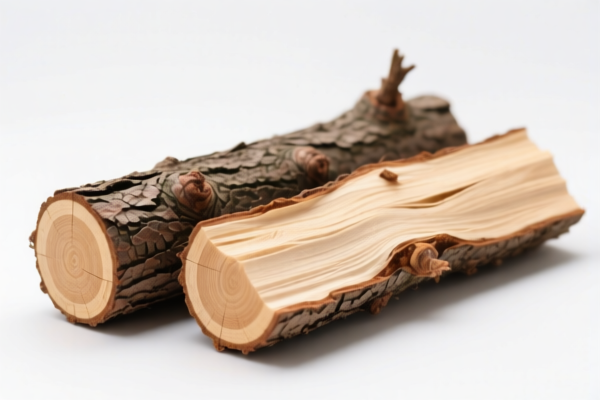
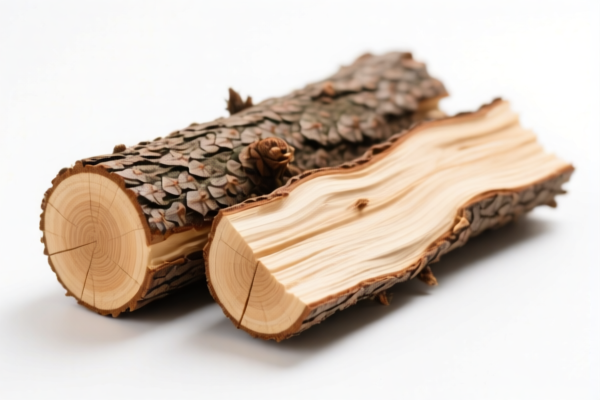
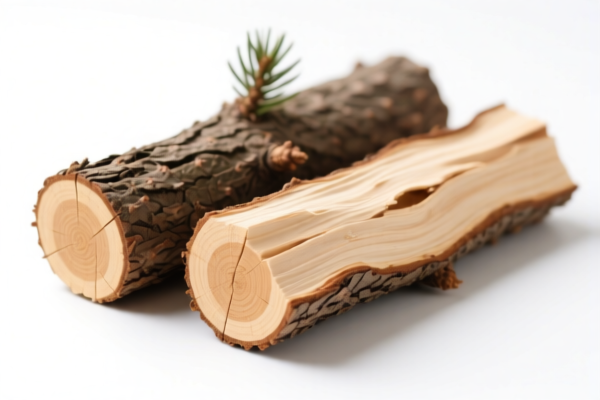
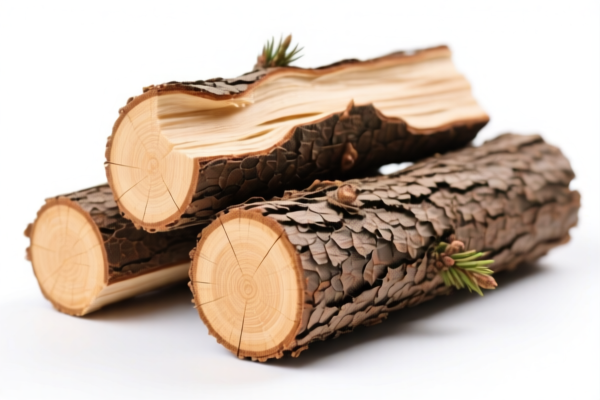
AI Analysis
🌲 Painted Non-Coniferous Logs (Wood Sawn/Chipped Lengthwise)
🌐 HS Code Reference & Customs Clearance Guide | 2026 Latest Tariff Analysis | Professional Clearance Strategy
📌 1. Product Definition & Classification: What Exactly Are "Painted Non-Coniferous Logs"?
In international trade, the term "Painted Non-Coniferous Logs" is a misnomer that requires precise technical interpretation. According to the provided data, these products fall under Chapter 44, specifically classified as "Wood sawn or chipped lengthwise, sliced or peeled... of a thickness exceeding 6 mm."
Key Clarification:
These are not raw, unprocessed tree trunks. They are processed wood products (sawn, chipped, sliced, or peeled lumber/planks) made from non-coniferous (hardwood) species. The term "Painted" indicates a surface treatment, but the primary classification is based on the geometric processing (lengthwise sawing/chipping) and species type (non-coniferous).
⚠️ Critical Distinction:
- If the wood is raw, unprocessed logs (not sawn lengthwise), it might fall under Chapter 44.01 (Wood in the Rough).
- However, the provided HS codes 4407.99 specifically refer to processed wood (sawn/chipped/sliced/peeled) with a thickness >6mm.
- "Painted" is considered a secondary surface treatment and does not change the fundamental classification of the wood product itself, provided the base material is processed wood.
📦 2. HS Code Classification Details (2026 Latest Tariff Authority Cross-Reference)
Based on the provided <DATA>, there are two specific HS Codes for non-coniferous processed wood. The selection depends on the exact species of the non-coniferous wood.
| HS Code | Product Description | Applicable Scenario | Species Specificity |
|---|---|---|---|
| 4407.99.02.95 | Other: Other Non-coniferous Wood | General hardwood lumber (e.g., Oak, Maple, Birch, etc., not listed separately) | 🌳 Generic (Any non-coniferous species not explicitly listed) |
| 4407.99.02.63 | Other: Western Red Alder (Alnus rubra) | Specifically Western Red Alder lumber | 🌿 Specific (Only for Alnus rubra) |
🔍 Key Decision Point:
- If the wood is Western Red Alder (Alnus rubra), you MUST use 4407.99.02.63.
- If the wood is any other non-coniferous species (e.g., Oak, Walnut, Cherry, etc.), you MUST use 4407.99.02.95.
- Do not use 4407.99.02.95 for Alder, and do not use 4407.99.02.63 for Oak. Misclassification leads to severe penalties.
💰 3. 2026 Latest Tariff Rate Details (Including Additional Taxes & Policy Surcharges)
✅ Applicable Country: United States (US)
✅ Origin: China (CN) (Assumed based on typical 301 tariff context; if origin is different, rates may vary)
✅ Effective Date: Current 301 Tariff Regulations
🎯 1. 4407.99.02.95 — Other Non-Coniferous Wood (General)
| Item | Content |
|---|---|
| Base Tariff Rate | 0.0% (Ad Valorem) |
| Additional Tariff (Section 301) | +25.0% |
| Total Tax Rate | 25.0% |
| Tax Calculation | CIF Value × 25% |
| De Minimis Exemption | ❌ Not Applicable (Section 301 duties apply regardless of value) |
| Legal Basis Path | USITC:4407.99.02.95 → FOOTNOTE:301 Tariff List |
📌 Explanation:
- Base Tariff: 0% for most wood products under Chapter 44.
- Section 301 Tariff: +25% is applied to Chinese-origin wood products due to trade tensions.
- Total Cost: You must pay 25% of the CIF value as duty. This is a high tariff for wood products.
🎯 2. 4407.99.02.63 — Western Red Alder (Alnus rubra)
| Item | Content |
|---|---|
| Base Tariff Rate | 0.0% (Ad Valorem) |
| Additional Tariff (Section 301) | +25.0% |
| Total Tax Rate | 25.0% |
| Tax Calculation | CIF Value × 25% |
| De Minimis Exemption | ❌ Not Applicable |
| Legal Basis Path | USITC:4407.99.02.63 → FOOTNOTE:301 Tariff List |
📌 Note:
- Despite being a specific species, the tax rate is identical to the general non-coniferous category.
- There is no preferential tariff for Alder in this context.
- Ensure the scientific name Alnus rubra is correctly stated on commercial invoices to avoid misclassification.
🛠️ 4. Customs Clearance Practical Advice (Battle-Tested Pitfall Avoidance Guide)
✅ 1. Required Documentation Checklist (Non-Negotiable)
| Document | Mandatory | Explanation |
|---|---|---|
| ✅ Commercial Invoice | ✔️ | Must clearly state: "Wood Sawnt/Chipped Lengthwise," "Non-Coniferous," and Exact Species (e.g., "Western Red Alder" or "Other Hardwood"). |
| ✅ Packing List | ✔️ | Detail dimensions, quantity, and total CIF value. |
| ✅ Species Declaration | ✔️ | Provide a Certificate of Species or a letter from the manufacturer confirming the wood type. |
| ✅ Fumigation Certificate | ✔️ | Required for all wood products to prevent pest introduction (ISPM 15 compliant). |
| ✅ Product Photos | ✔️ | Show the wood grain, paint finish, and dimensions to prove it is sawn/chipped lengthwise (>6mm thickness). |
✅ 2. Declaration Tips (Key Mantra)
🔥 "Specify Species, Prove Thickness, Declare Paint as Finish!"
| Scenario | Correct Declaration Method | Incorrect Action |
|---|---|---|
| Western Red Alder | 4407.99.02.63 + "Western Red Alder (Alnus rubra)" |
Misclassify as "Oak" → Higher scrutiny |
| Other Hardwood (e.g., Oak) | 4407.99.02.95 + "Oak Lumber, Sawn Lengthwise" |
Generic "Wood" → Customs delay |
| Raw Logs (Not Sawn) | Do NOT use 4407.99 | Use 4401.22/4401.30 instead |
| Painted Surface | Describe as "Surface-Treated," not changing HS code | Claiming paint changes classification |
✅ 3. Special Case Handling
| Situation | Handling Advice |
|---|---|
| Mixed Species Shipments | Do not mix in one line item. Separate Alder and Other Hardwood into different lines with respective HS codes. |
| "Painted" Clarification | Paint is a secondary finish. Do not claim it changes the HS code. Ensure the base wood is correctly classified. |
| Thickness Verification | Must be >6mm. If thickness is ≤6mm, it falls under 4408.90 (Veneer sheets), which has different tariffs. Provide measurements! |
| Origin Declaration | If not from China, provide a Certificate of Origin to verify if Section 301 tariffs apply. |
🌍 5. Global Market Clearance Comparison (2026 Latest)
| Country/Region | Recommended HS Code | Tariff (China Origin) | Certification Required | Notes |
|---|---|---|---|---|
| 🇺🇸 USA | 4407.99.02.95 / 4407.99.02.63 |
25% (Section 301) | ISPM 15 (Fumigation) | High tariff burden; strict species verification |
| 🇨🇳 China | 4407.99.02.95 / 4407.99.02.63 |
5% (General) | None | Lower tariff for import into China |
| 🇪🇺 EU | 4407.99 |
0% (if FSC certified) | FSC/PEFC, ISPM 15 | No additional tariffs if legal timber proven |
| 🇬🇧 UK | 4407.99 |
0% | FSC/PEFC, ISPM 15 | Similar to EU post-Brexit |
📌 Conclusion:
- USA imposes a 25% additional tariff on Chinese-origin non-coniferous wood. This is a significant cost driver.
- No duty drawback is available for this category.
- Species accuracy is critical to avoid customs holds.
📌 6. Common Mistakes & Pitfalls (Blood-Lesson Guide)
❌ Mistake 1: Misclassifying Raw Logs as Sawn Wood
👉 Consequence: If wood is ≤6mm thick or not sawn lengthwise, HS Code 4407 is invalid. → Seizure or Heavy Penalty!
❌ Mistake 2: Failing to specify Species (e.g., writing "Non-Coniferous Wood" without specifying Alder vs. Other)
👉 Consequence: Customs may select the higher-risk or generic code, leading to delays or audits.
❌ Mistake 3: Ignoring Thickness
👉 Consequence: If thickness is ≤6mm, it is Veneer (HS 4408), not Sawn Wood (HS 4407). → Wrong Tariff Classification!
❌ Mistake 4: Assuming Paint changes the HS Code
👉 Consequence: Paint is a surface treatment. It does not change the fundamental wood classification. → No Benefit, Just Confusion.
✅ Correct Approach:
"Western Red Alder Lumber, Sawn Lengthwise, Thickness 12mm, Painted Finish, Fumigated, CIF $10,000"
🎯 7. Conclusion: Precision in Classification Saves Money!
🎯 Remember the Mantra:
🔹 "Species Matters: Alder vs. Other.
🔹 Thickness Matters: >6mm is Key.
🔹 Paint is Just a Finish, Not a Code Changer.
🔹 25% Tax is Inevitable for China-Origin!"
📌 Pro Tip:
- If your wood is not from China, you may avoid the 25% Section 301 tariff. Provide a valid Certificate of Origin from Vietnam, Malaysia, or other non-China origins to reduce costs.
- Always request a Pre-Ruling from CBP if unsure about species or thickness.
📣 Immediate Action:
📞 Contact a Licensed Customs Broker + Provide Species Certificate + Verify Thickness
🚀 Ensure Accurate HS Code Classification to avoid 25% Unexpected Costs and Customs Delays!
✨ Professional Clearance Starts with Precise Classification!
💼 Every Dollar Saved is a Dollar Earned!
Customer Reviews
About HS Code Classification
The Harmonized System (HS) is an internationally standardized nomenclature developed by the World Customs Organization (WCO) to classify traded products. Over 200 countries use the HS system as the basis for customs tariffs, trade statistics, and import/export regulations.
Each HS code follows a hierarchical structure:
- Chapter (2 digits) — Broad category of goods (e.g., Chapter 84: Machinery and Mechanical Appliances)
- Heading (4 digits) — More specific grouping within the chapter
- Subheading (6 digits) — Internationally standardized breakdown, used by all WCO member countries
- National subdivisions (8-10 digits) — Country-specific extensions for further classification, such as US HTSUS 10-digit codes
Correct HS code classification is essential for smooth customs clearance, accurate duty payment, and compliance with trade regulations. Misclassification can lead to customs delays, overpayment of duties, or penalties.
When importing from CN to US, the applicable tariff rates may include:
- Most-Favored-Nation (MFN) rate — The standard duty rate applied to WTO members
- General rate — Applied to countries without trade agreements
- Trade remedy duties — Additional tariffs such as Section 301 (anti-dumping), Section 232 (national security), or countervailing duties
The information provided on this page is for reference purposes only. For official classification, please consult with your local customs authority or a licensed customs broker.