Palm Leaf Handbag
CN → US| HS Code | Tariff Rate | Origin | Destination | Doc |
|---|---|---|---|---|
| 4202922000 | 40.7% | CN | US | Official Doc |
| 4202921500 | 41.3% | CN | US | Official Doc |
| 4602192500 | 53.0% | CN | US | Official Doc |
| 4602192300 | 44.0% | CN | US | Official Doc |
Product Images
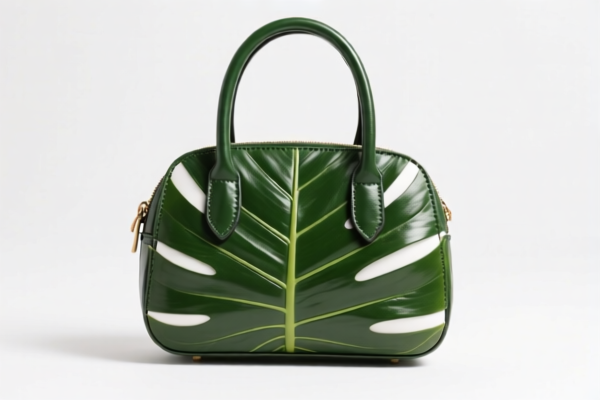



AI Analysis
👜 Palm Leaf Handbags (Natural Fiber Accessories)
🌐 HS Code Reference & Customs Clearance Guide | 2026 Latest Tariff Analysis | Professional Strategy for High-Tax Items 📌 I. Product Definition & Classification: Are You Sure It’s Just a "Bag"?
Palm leaf handbags are woven accessories made from natural plant fibers (specifically palm leaves). In international trade, they sit at the intersection of Chapter 42 (Articles of Leather; Saddle harness) and Chapter 46 (Woven Materials; Basketware). The key to correct classification lies in whether they are treated as "general articles of textile/plant material" (Chapter 46) or "specific types of bags/luggage" (Chapter 42).
Crucial Distinction: * Chapter 42 (Bags): Treats the item as a functional bag/conduit for carrying items. Subject to specific HS codes for other articles of leather or other materials. * Chapter 46 (Woven Goods): Treats the item primarily as a woven structure. Subject to HS codes for other worked vegetable weaving materials.
⚠️ Critical Warning for US Imports (China Origin): Regardless of the HS Code chosen, ALL palm leaf handbags imported from China are subject to significant additional tariffs under Section 301 and Section 122/IEEPA provisions. There is NO de minimis exemption for these items. Misclassification is risky because the duty rates vary wildly (from ~41% to 53%).
📦 II. HS Code Classification Matrix (2026 Latest Tariff Data)
| HS Code | Product Description & Rationale | Total Tax Rate | Tax Composition Breakdown |
|---|---|---|---|
| 4202.92.20.00 | Palm Leaf Handbag (Plant Fiber Basis): Classified as "Other articles of leather, of plastic sheeting, or of textile materials." Specifically targets bags made of plant fibers treated as textile-like materials. | 40.7% | Base: 5.7% Sec 301: 25.0% Section 122: 10.0% |
| 4202.92.15.00 | Palm Leaf Handbag (Cotton/Plant Fiber): Classified under "Other bags, whether or not with pockets, without closures, of cotton or other vegetable textile fibers." Emphasizes the "bag" form factor. | 41.3% | Base: 6.3% Sec 301: 25.0% Section 122: 10.0% |
| 4602.19.25.00 | Palm Leaf Handbag (Strict Fit): Classified under "Other articles of vegetable plaiting materials... completely conforming to classification requirements." This is the strictest "woven goods" interpretation. | 53.0% | Base: 18.0% Sec 301: 25.0% Section 122: 10.0% |
| 4602.19.23.00 | Palm Leaf Handbag (Material Focus): Classified under "Other articles of palm leaf or other vegetable plaiting materials." Focuses on the raw material (palm leaf) rather than the bag utility. | 44.0% | Base: 9.0% Sec 301: 25.0% Section 122: 10.0% |
🔍 Key Insight: * Cheapest Option:
4202.92.20.00(40.7% total) is the most favorable if the bag is constructed with a fabric/plastic lining or handles that justify "textile/leather-like" classification. * Most Expensive Option:4602.19.25.00(53.0% total) has a high base rate (18%), making it the least preferred unless the item is strictly a woven basket structure without bag features. * Commonality: All codes incur 25% Section 301 and 10% Section 122/IEEPA surcharges. The difference lies entirely in the Base Duty (5.7% to 18%).
💰 III. 2026 Detailed Tariff Structure Analysis
✅ Applicable Country: United States (US) ✅ Origin: China (CN) ✅ Effective Date: 2025/2026 Current Regulations
🎯 1. The "Base Duty" Variance (The Negotiable Part)
| HS Code | Base Duty | Reason for Variance |
|---|---|---|
4202.92.20.00 |
5.7% | Treated as a "bag of other materials" (often interpreted as textile-like when woven tightly). |
4202.92.15.00 |
6.3% | Treated as a bag of vegetable fiber (closer to raw material but still Chapter 42). |
4602.19.23.00 |
9.0% | Treated as an article of vegetable plaiting material (Chapter 46 baseline). |
4602.19.25.00 |
18.0% | Treated as a specific high-duty woven article, often applied to items that don't fit standard "basket" exemptions. |
🎯 2. The Fixed Surcharges (Non-Negotiable)
| Surcharge | Rate | Legal Basis |
|---|---|---|
| Section 301 Tariff | +25.0% | Trade Action Against China (301 Act). Applies to ALL Chinese-made handbags/baskets. |
| Section 122 / IEEPA | +10.0% | International Emergency Economic Powers Act. Specific provisions for certain goods from China. |
| Total Fixed Load | +35.0% | This is added to whichever Base Duty you select. |
📌 Calculation Example for
4202.92.20.00: * CIF Value: $100 * Base Duty (5.7%): $5.70 * Sec 301 (25%): $25.00 * Sec 122 (10%): $10.00 * Total Tax: $40.70 (40.7%)
🛠️ IV. Customs Clearance Practical Advice (Battle-Tested Strategies)
✅ 1. Documentation Checklist (Non-Negotiable)
| Document | Requirement | Why It Matters |
|---|---|---|
| ✅ Detailed Composition Sheet | ✔️ Must specify: "100% Palm Leaf Outer, Polyester Lining, Metal Handles." | Helps justify Chapter 42 (Bag) over Chapter 46 (Woven) if lining is present. |
| ✅ Product Photos (360°) | ✔️ Clear view of handles, lining, closures, and weaving tightness. | Proves it is a "handbag" (Carrying function) vs. just a "woven panel." |
| ✅ Commercial Invoice | ✔️ Must state: "Palm Leaf Handbag, Woven, for Fashion Use." | Avoids vague terms like "Woven Accessory." |
| ✅ Packing List | ✔️ Show quantity per box and gross/net weight. | Standard requirement. |
| ✅ Country of Origin Certificate | ✔️ Issued by authorized body. | Critical for proving Chinese origin to apply (or challenge) surcharges. |
✅ 2. Classification Strategy (How to Save Money)
🔥 "Lining is Key, Handles Prove Function!"
| Scenario | Recommended HS Code | Strategy |
|---|---|---|
| Bag has Fabric/Plastic Lining | 4202.92.20.00 |
Best Option. The lining pushes classification to Chapter 42, reducing base duty to 5.7%. |
| Bag has Metal/Leather Handles | 4202.92.15.00 |
Good Option. Functional hardware reinforces "Bag" status. Base duty 6.3%. |
| Pure Woven, No Lining, No Hardware | 4602.19.23.00 |
Average Option. Pure palm leaf weave. Base duty 9.0%. |
| Strictly "Basket" Shape, No Strap | 4602.19.25.00 |
Worst Option. High base duty (18%). Only use if it resembles a basket more than a bag. |
💡 Pro Tip: If your palm leaf bag has any lining (even a small fabric insert) or non-palm leaf handles (leather, metal, chain), explicitly highlight this in the description to aim for
4202.92.20.00. This saves 2.3% to 12.3% on the base rate compared to pure Chapter 46 classifications.
✅ 3. Common Pitfalls to Avoid
| ❌ Mistake | 🚫 Consequence | ✅ Correct Action |
|---|---|---|
| Declaring as "Woven Basket" | Gets classified as 4602.19.25.00 (53% tax). |
Declare as "Handbag" with function description. |
| Omitting Lining Info | Customs assumes raw material, leading to higher base duty. | Always disclose lining material and thickness. |
| Ignoring Section 122 | Assuming 25% is the only tax. | Budget for the additional 10% surcharge. |
| Vague Description "Accessory" | Leads to random classification by CBP officers. | Use specific terms: "Palm Leaf Handbag, Fashion Accessory." |
🌍 V. Global Market Comparison (Quick View)
| Market | Typical HS Code | Est. Duty (Base) | Surcharge | Total Est. | Notes |
|---|---|---|---|---|---|
| 🇺🇸 USA | 4202.92.20.00 |
5.7% | +35% | 40.7% | High taxes. Section 122 applies. |
| 🇨🇳 China | 4202.92.20.00 |
10-12% | 0% | ~12% | Domestic consumption. Lower base. |
| 🇪🇺 EU | 4202.92.20.00 |
5.6% | 0% | 5.6% | No Section 301/122. Favorable. |
| 🇬🇧 UK | 4202.92.20.00 |
5.6% | 0% | 5.6% | Post-Brexit tariff structure similar to EU. |
| 🇨🇦 Canada | 4202.92.20.00 |
5.6% | 0% | 5.6% | CUSMA/FATFA benefits may apply for non-US sources. |
📌 Conclusion: The US is the most expensive market due to the combination of Section 301 (25%) and Section 122 (10%) on top of base duties. Exporters must price in ~40.7% minimum for US-bound goods. EU/UK markets are significantly more competitive.
📌 VI. Final Checklist & Action Plan
- Audit Your Product: Does your palm leaf bag have a lining or non-leaf handles?
- Yes: Aim for
4202.92.20.00(40.7% Total). - No (Pure Leaf): Aim for
4602.19.23.00(44.0% Total). - Avoid:
4602.19.25.00(53.0% Total) unless necessary.
- Yes: Aim for
- Prepare Documents: Ensure the commercial invoice and packing list explicitly mention "Handbag" and describe materials in detail.
- Budget Correctly: Include 35% for fixed surcharges + Base Duty in your cost model.
- Consult a Broker: Due to the complexity of Section 122 vs Section 301 interactions, a pre-arrival consultation with a US customs broker is highly recommended to avoid audits or penalties.
🎯 VII. Conclusion: Precision Saves Profits
🎯 Key Takeaway:
"Lining matters, handles define function, and US taxes are heavy."
- Target
4202.92.20.00for the lowest tax burden (40.7%).- Never forget the 35% fixed surcharge (25% Sec 301 + 10% Sec 122).
- Misclassifying a lined bag as a pure woven item costs you ~12% extra.
📌 Disclaimer: This guide is for informational purposes only. Customs regulations change frequently. Always verify HS Codes and tariff rates with a licensed customs broker and the latest US CBP rulings before shipment.
✨ Smart Classification. Lower Taxes. Smooth Clearance. 💼 Your Supply Chain Partner for Global Trade Excellence.
Customer Reviews
About HS Code Classification
The Harmonized System (HS) is an internationally standardized nomenclature developed by the World Customs Organization (WCO) to classify traded products. Over 200 countries use the HS system as the basis for customs tariffs, trade statistics, and import/export regulations.
Each HS code follows a hierarchical structure:
- Chapter (2 digits) — Broad category of goods (e.g., Chapter 84: Machinery and Mechanical Appliances)
- Heading (4 digits) — More specific grouping within the chapter
- Subheading (6 digits) — Internationally standardized breakdown, used by all WCO member countries
- National subdivisions (8-10 digits) — Country-specific extensions for further classification, such as US HTSUS 10-digit codes
Correct HS code classification is essential for smooth customs clearance, accurate duty payment, and compliance with trade regulations. Misclassification can lead to customs delays, overpayment of duties, or penalties.
When importing from CN to US, the applicable tariff rates may include:
- Most-Favored-Nation (MFN) rate — The standard duty rate applied to WTO members
- General rate — Applied to countries without trade agreements
- Trade remedy duties — Additional tariffs such as Section 301 (anti-dumping), Section 232 (national security), or countervailing duties
The information provided on this page is for reference purposes only. For official classification, please consult with your local customs authority or a licensed customs broker.