Paper (HS Code 4802546100)
CN → US| HS Code | Tariff Rate | Origin | Destination | Doc |
|---|---|---|---|---|
| 4802552000 | 35.0% | CN | US | Official Doc |
| 4801000120 | 35.0% | CN | US | Official Doc |
| 4810225080 | 35.0% | CN | US | Official Doc |
| 4823908680 | 35.0% | CN | US | Official Doc |
| 4823906700 | 35.0% | CN | US | Official Doc |
Product Images
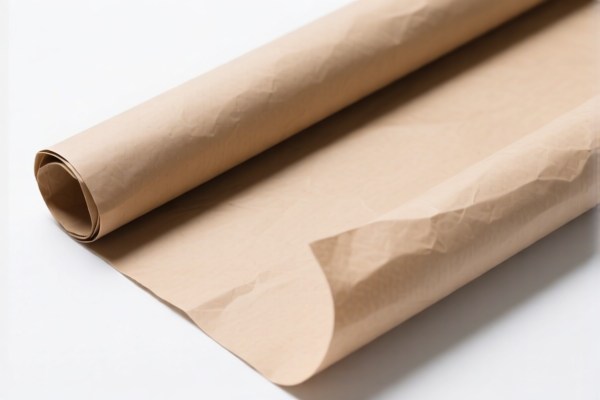

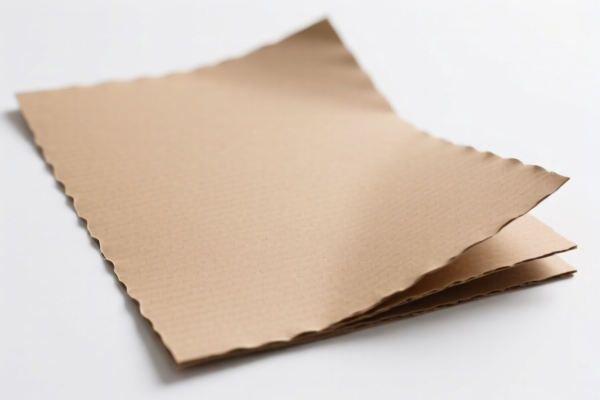
AI Analysis
📄 Paper (HS Code 4802.54.61.00 & 2026 Tax Strategy)
🌐 HS Code Reference & Customs Clearance Guide | 2026 Latest Tariff Breakdown | Professional Clearance Strategy
📌 I. Product Definition & Classification: Do You Really Understand "Paper"?
Paper, in international trade, is a versatile material ranging from simple writing sheets to specialized industrial substrates. The HS Code 4802.54.61.00 specifically refers to Paper and paperboard, containing 100% recovered fibers (paper waste and paperboard), weighing ≤ 150 g/m², in rolls.
However, importing "Paper" from China to the US often triggers complex tariff structures due to US-China trade tensions. The data provided indicates multiple potential classifications depending on the exact nature of the paper (e.g., copy paper, newsprint, coated paper, or generic fallback).
⚠️ Key Distinction:
- Uncoated Paper (e.g., Copy/Printer Paper): Typically falls under 4802.55 or 4802.54. - Newsprint: Falls under 4801. - Coated Paper: Falls under 4810. - Generic/Other Paper: Falls under 4823. - Critical Note: Regardless of the specific sub-category, the total tariff rate remains consistent at 35% for Chinese origin due to Section 301 and IEEPA measures.
📦 II. HS Code Classification Details (2026 Latest Tariff Authority Cross-Reference)
| HS Code | Product Description | Application Scenario | Key Feature |
|---|---|---|---|
4802.55.20.00 |
Paper, uncoated, <150g/m², non-recovered fibers (e.g., Copy Paper, Draft Paper) | Office copy paper, drawing paper, high-quality writing paper | Standard office use; Material Match |
4801.00.01.20 |
Newsprint, in rolls | Newspaper printing, packaging liner | Standard newsprint; Material Match |
4810.22.50.80 |
Paper, coated on one or both sides (e.g., Glossy Photo Paper, Cardstock) | Magazine printing, packaging, premium brochures | Coated surface; Paper/Cardboard Category |
4823.90.86.80 |
Other paper, paperboard, cut to size or shape (Fallback Category) | Specialty cut shapes, industrial filters, generic paper products | Fallback Category, No Conflict |
4823.90.67.00 |
Other paper, paperboard, cut to size or shape (Other Fallback) | Miscellaneous paper goods not fitting other specific headings | Other Fallback Item |
🔍 Important Reminder:
- All listed HS Codes result in a Total Tax Rate of 35%. - The classification depends on the physical properties of the paper:
- Is it newsprint? → 4801
- Is it coated? → 4810
- Is it uncoated copy/drawing paper? → 4802.55
- Is it a generic cut shape with no specific use? → 4823
💰 III. 2026 Latest Tariff Rate Details (Including Surcharges & Policy Add-ons)
✅ Applicable Country: United States (US)
✅ Origin: China (CN)
✅ Effective Time: November 10, 2025 (and subsequent imports)
🎯 1. All Listed HS Codes (4802.55.20.00, 4801.00.01.20, 4810.22.50.80, 4823.90.86.80, 4823.90.67.00)
| Item | Content |
|---|---|
| Base Duty Rate | 0.0% (ad valorem) |
| Section 301 Additional Duty | +25.0% |
| Section 122 (IEEPA) Additional Duty | +10.0% |
| Total Tax Rate | 35.0% |
| Tax Calculation | CIF Value × 35% |
| De Minimis Exemption Eligible | ❌ NO (deny_de_minimis) |
| Legal Basis Path | Section 301: USITC Footnote → IEEPA 122: 9903.01.25 → USITC: [Specific HS Code] → FOOTNOTE: 9903.88.01 |
📌 Explanation:
- "Base Duty 0%": Most paper products have a very low or zero base duty rate under normal MFN treatment. - "Section 301 25%": This is the standard punitive tariff imposed on Chinese goods under the Trade Act of 1974, Section 301. - "Section 122 10%": This refers to the additional tariff imposed under the International Emergency Economic Powers Act (IEEPA), specifically targeting Chinese imports to address national security or economic interests. - Total 35%: This is a very high cost burden. It must be factored into your pricing strategy immediately.
🛠️ IV. Customs Clearance Practical Advice (Combat Pitfalls Guide)
✅ 1. Preparation Material Checklist (Indispensable)
| Material | Mandatory | Description |
|---|---|---|
| ✅ Product Specification Sheet | ✔️ | Must specify: Basis weight (g/m²), fiber content (e.g., 100% recovered vs. virgin), coating type, roll size, and end-use. |
| ✅ Material Composition Declaration | ✔️ | Crucial for distinguishing between 4802 (Virgin/Reclaimed) and 4810 (Coated). |
| ✅ Product Photos (Clear Label) | ✔️ | Show packaging, roll edges, and any printed text indicating use (e.g., "Copy Paper," "Newsprint"). |
| ✅ Commercial Invoice | ✔️ | Clearly state: "Paper for [Specific Use], Origin: China, HS Code: [Correct Code]." |
| ✅ Packing List | ✔️ | Detail gross/net weight, dimensions, and number of rolls/cartons. |
| ✅ Freight Forwarder Declaration | ✔️ | Ensure forwarder is aware of the 35% total tariff to avoid surprise holds. |
✅ 2. Declaration Tips (Key Mantras)
🔥 "Accurate Description, Correct HS, No Splitting, Avoid 35% Shock!"
| Situation | Correct Declaration Method | Wrong Practice |
|---|---|---|
| Copy/Printer Paper (Uncoated, ~80gsm) | 4802.55.20.00 |
Misdeclare as "Paper Products" → Risk of audit |
| Newsprint | 4801.00.01.20 |
Misdeclare as "Cardboard" → Different HS, Same Tax |
| Glossy Coated Paper | 4810.22.50.80 |
Misdeclare as "Uncoated Paper" → Classification Error |
| Generic Cut Paper Shapes | 4823.90.86.80 |
Misdeclare as "Printing Paper" → Wrong HS |
| Any Paper from China | Pay 35% Total Duty | Expecting De Minimis Exemption → FAILED |
✅ 3. Special Handling Scenarios
| Situation | Handling Advice |
|---|---|
| Mixed HS Codes in One Shipment | Do NOT consolidate different paper types under one HS Code if they have different physical properties. Declare each type accurately. However, all will incur 35%. |
| Paper with High Value-Added (e.g., Pre-printed) | Still classified as Paper, but ensure the description reflects the primary material (Paper) not the printing (which might trigger different chapters if dominant). |
| OEM Custom Paper | Provide the client's specification sheet. Customization does not change the HS Code, but accurate description prevents delays. |
| De Minimis (Section 321) Attempt | ❌ Do Not Try: The data explicitly states deny_de_minimis. Packages under $800 will still be subject to the 35% tariff and detailed entry filing. |
🌍 V. Global Major Market Customs Comparison (2026 Latest)
| Country/Region | Recommended HS Code | Tariff (China Origin) | Certification Requirements | Notes |
|---|---|---|---|---|
| 🇺🇸 USA | 4802.55.20.00 (or relevant) |
35% (Base 0% + Sec301 25% + IEEPA 10%) | None specific to paper | Highest Cost Market due to dual surcharges |
| 🇨🇳 China | 4802.55.20.00 |
5-10% (Import Duty) | None | N/A (Domestic) |
| 🇪🇺 EU | 4802.55.20.00 |
6.5% | REACH Compliance | No Section 301/IEEPA equivalent |
| 🇬🇧 UK | 4802.55.20.00 |
6.5% | None | Post-Brexit tariff aligns with EU |
| 🇦🇺 Australia | 4802.55.20.00 |
5% | None | No punitive tariffs on Chinese paper |
📌 Conclusion:
- The US is the only major market with punitive tariffs on Chinese paper.
- Cost Impact: The 35% total duty significantly reduces margins.
- Strategy: Consider sourcing paper from non-tariff countries (e.g., Vietnam, Thailand, Malaysia) if shipping to the US, as these may enjoy lower or zero tariffs under existing FTAs.
📌 VI. Common Errors & Pitfalls Guide (Lessons Learned)
❌ Error 1: Using "Paper" as the product name without specifying type (e.g., "Copy Paper," "Newsprint")
👉 Consequence: Customs will request additional info, causing delays. They may assign a generic HS code with potential audit flags.
❌ Error 2: Assuming small shipments (under $800) are exempt from duties
👉 Consequence: The data clearly states deny_de_minimis. Small shipments will still be subject to the 35% tariff and will be held for formal entry.
❌ Error 3: Misclassifying Coated Paper as Uncoated
👉 Consequence: Classification error. While the tax rate is the same (35%), it can lead to penalties or retrospective audits if the product description doesn't match the HS code criteria.
✅ Correct Practice:
"Uncoated Paper, Copy Grade, 80gsm, 100% Virgin Fiber, Roll, Model ABC, Origin: China, HS Code: 4802.55.20.00"
🎯 VII. Conclusion: Professional Declaration, Save Time, Reduce Costs!
🎯 Remember the Mantra:
🔹 "Paper from China, 35% Tax is Key, No De Minimis, Plan Ahead!"
🔹 "HS Code Matters, 35% is Fixed, Describe Precisely, Avoid Disputes!"
📌 Pro Tip:
If you are importing large volumes of paper to the US, consider supply chain diversification. Sourcing from Vietnam, Indonesia, or Thailand may result in 0-6% tariffs, saving you 29-35% in duties.
Request a Section 301 Exclusion if your specific paper type qualifies, though approvals are rare and competitive.
📣 Immediate Action:
📞 Consult with a US Customs Broker + Provide Product Specs + Calculate 35% Landed Cost
🚀 Ensure your Commercial Invoice and Packing List are 100% accurate to avoid customs holds.
✨ Professional Clearance, Starting with Accurate Classification!
💼 Every Percent of Duty Counts in Your Bottom Line!
Customer Reviews
About HS Code Classification
The Harmonized System (HS) is an internationally standardized nomenclature developed by the World Customs Organization (WCO) to classify traded products. Over 200 countries use the HS system as the basis for customs tariffs, trade statistics, and import/export regulations.
Each HS code follows a hierarchical structure:
- Chapter (2 digits) — Broad category of goods (e.g., Chapter 84: Machinery and Mechanical Appliances)
- Heading (4 digits) — More specific grouping within the chapter
- Subheading (6 digits) — Internationally standardized breakdown, used by all WCO member countries
- National subdivisions (8-10 digits) — Country-specific extensions for further classification, such as US HTSUS 10-digit codes
Correct HS code classification is essential for smooth customs clearance, accurate duty payment, and compliance with trade regulations. Misclassification can lead to customs delays, overpayment of duties, or penalties.
When importing from CN to US, the applicable tariff rates may include:
- Most-Favored-Nation (MFN) rate — The standard duty rate applied to WTO members
- General rate — Applied to countries without trade agreements
- Trade remedy duties — Additional tariffs such as Section 301 (anti-dumping), Section 232 (national security), or countervailing duties
The information provided on this page is for reference purposes only. For official classification, please consult with your local customs authority or a licensed customs broker.