Paper Handbag (Food)
CN → US| HS Code | Tariff Rate | Origin | Destination | Doc |
|---|---|---|---|---|
| 6305900000 | 23.7% | CN | US | Official Doc |
| 4819300040 | 35.0% | CN | US | Official Doc |
| 4819400040 | 35.0% | CN | US | Official Doc |
| 4202291000 | 40.3% | CN | US | Official Doc |
| 4819300040 | 35.0% | CN | US | Official Doc |
Product Images
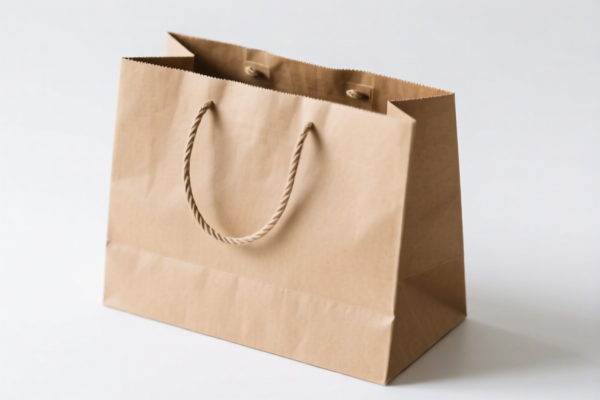
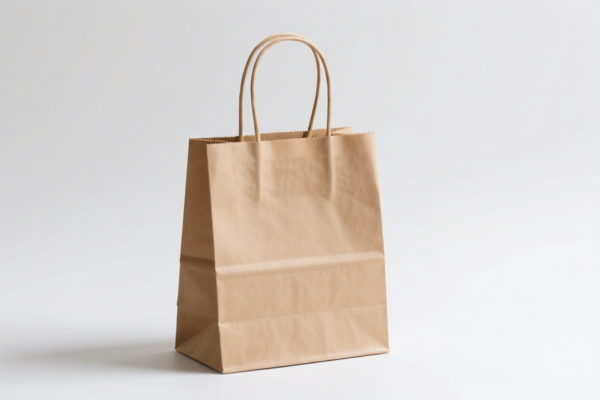
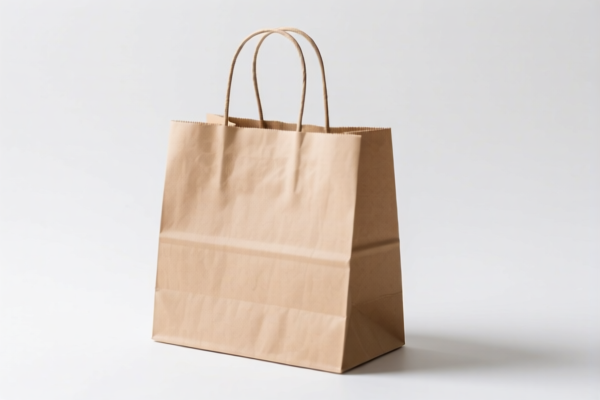
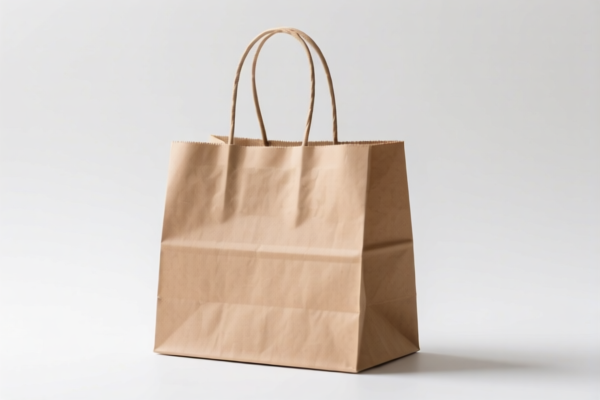
AI Analysis
🛍️ Paper Handbag (Food Packaging)
🌐 HS Code Reference & Customs Clearance Guide | 2026 Latest Tariff Analysis | Professional Clearance Strategy
📌 I. Product Definition and Classification: What is a "Paper Handbag" in Trade?
Paper handbags intended for food packaging or general retail use are primarily classified based on material composition, physical form, and primary function. In international trade, the distinction between a "textile bag" and a "paper container" is critical, as it determines the HS Code and, consequently, the total landed cost due to US trade policies (Section 301 and IEEPA).
⚠️ Key Classification Logic:
- If the bag is strictly paper (even if treated for moisture/oil resistance), it falls under Chapter 48 (Paper/Paperboard).
- If the bag is fabric-based (even if coated with paper for printing), it may fall under Chapter 63 (Other made-up textile articles).
- If the bag mimics a fashion accessory (structured, handled like a purse) with paper surface, it may fall under Chapter 42 (Articles of leather/Travel Goods).
📦 II. HS Code Classification Details (2026 Latest Tariff Authority Comparison)
| HS Code | Product Description | Applicable Scenario | Tax Rate |
|---|---|---|---|
6305.90.00.00 |
Sack and bag, for the packing of goods, of textile materials other than paper (Note: Often used for "Other Materials" if paper is secondary or misclassified) | Bags where paper is not the primary structural material, or general "other" packing bags | 23.7% |
4819.30.00.40 |
Sacks and bags (including cones), of paper, with a bottom width of ≥40cm (Other) | Large paper bags, supermarket carriers, bulk packaging | 35.0% |
4819.40.00.40 |
Sacks and bags (including cones), of paper, other | Smaller paper bags, food packaging bags, grocery sacks | 35.0% |
4202.29.10.00 |
Trunks, suitcases, vanity cases, etc., of leather/plastic sheeting or textile materials, with outer surface mainly covered by paper | Fashion-style paper handbags, structured bags used for retail/gifts | 40.3% |
🔍 Critical Distinction:
-4819.30/40: Used for functional packaging (e.g., grocery bags, food sacks). The primary feature is containment.
-4202.29.10.00: Used for retail/gift handbags. The primary feature is aesthetics and portability as a bag, often with handles and structure.
-6305.90.00.00: A residual category. If the bag is truly "textile" (e.g., cotton canvas) but used for packing, it might fit here, but the summary notes it for "Other Materials" outside textile. Caution: Misclassifying paper as textile here can lead to disputes.
💰 III. 2026 Latest Tariff Rate Breakdown (Including Surcharges, Policy Add-ons)
✅ Applicable Country: United States (US)
✅ Country of Origin: China (CN)
✅ Effective Date: Post-November 10, 2025 (Including subsequent imports)
🎯 1. 6305.90.00.00 – Other Sacks and Bags (Non-Textile/Other Materials)
| Item | Content |
|---|---|
| Base Tariff | 6.2% |
| Section 301 Surcharges | +17.5% (7.5% + 10% from Section 122/301 consolidation) |
| IEEPA Surcharges | +10% (For Chinese/HK products, effective Nov 10, 2025) |
| Total Tariff Rate | 23.7% |
| Tax Calculation | CIF Value × 23.7% |
| De Minimis Exemption | ❌ Not Available (Denied for goods from China) |
| Legal Basis Path | IEEPA:9903.01.25 → USITC:6305.90.00.00 → FOOTNOTE:9903.88.01 |
📌 Explanation:
- The 6.2% base tariff applies to "Other" sacks/bags.
- The 17.5% includes the standard Section 301 rate and specific additional levies.
- The 10% IEEPA is a direct penalty on Chinese-origin goods.
- Total 23.7% is significantly lower than paper packaging codes, but classification risk is high if the bag is actually paper.
🎯 2. 4819.30.00.40 & 4819.40.00.40 – Paper Sacks and Bags
| Item | Content |
|---|---|
| Base Tariff | 0.0% |
| Section 301 Surcharges | +25.0% |
| IEEPA Surcharges | +10.0% |
| Total Tariff Rate | 35.0% |
| Tax Calculation | CIF Value × 35.0% |
| De Minimis Exemption | ❌ Not Available (Denied for goods from China) |
| Legal Basis Path | IEEPA:9903.01.24 → USITC:4819.30.00.40 / 4819.40.00.40 → FOOTNOTE:9903.88.01 |
📌 Explanation:
- Paper products have 0% base tariff, but are hit hard by trade policies.
- Section 301 (25%) + IEEPA (10%) = 35% total.
- This is the most common code for food-grade paper bags or supermarket carriers.
- Note: Both4819.30(wide bottom ≥40cm) and4819.40(other) carry the same high effective rate.
🎯 3. 4202.29.10.00 – Fashion/Structured Paper Handbags
| Item | Content |
|---|---|
| Base Tariff | 5.3% |
| Section 301 Surcharges | +25.0% |
| IEEPA Surcharges | +10.0% |
| Total Tariff Rate | 40.3% |
| Tax Calculation | CIF Value × 40.3% |
| De Minimis Exemption | ❌ Not Available (Denied for goods from China) |
| Legal Basis Path | IEEPA:9903.01.24 → USITC:4202.29.10.00 → FOOTNOTE:9903.88.01 |
📌 Explanation:
- If the bag is designed as a retail gift bag or fashion accessory (with sturdy handles, structured body) and its outer surface is mainly paper, it falls under Chapter 42.
- Despite a higher base rate (5.3%), the total tariff is still driven by the 35% add-ons.
- 40.3% is the highest among the options, making this the least cost-effective if the bag is purely functional packaging.
🛠️ IV. Customs Clearance Practical Advice (Battle-Tested Pitfall Guide)
✅ 1. Required Documentation Checklist (No Exceptions)
| Document | Must Provide | Explanation |
|---|---|---|
| ✅ Product Specification Sheet | ✔️ | Detail material (e.g., "100% Kraft Paper," "Coated Paper"), dimensions, handle type. |
| ✅ Material Composition Certificate | ✔️ | Prove it is not textile (if claiming 4819) or not leather (if claiming 4202). |
| ✅ Product Photos | ✔️ | Clear images showing handles, base width, and interior (for food safety liner). |
| ✅ Food Contact Declaration | ✔️ | If labeled for "Food," provide proof of FDA compliance or equivalent food-safe coating. |
| ✅ Commercial Invoice | ✔️ | Accurately describe as "Paper Shopping Bag" or "Paper Food Packaging Bag," NOT "Handbag" (which implies fashion). |
| ✅ Packing List | ✔️ | Show unit quantity and packaging method to confirm "bag" nature. |
✅ 2. Declaration Strategy (Key Mantra)
🔥 "Function First, Material Second, Name Accurate, Tax Predictable!"
| Scenario | Correct Declaration | Wrong Practice | Consequence |
|---|---|---|---|
| Large Supermarket Bag | 4819.30.00.40 |
Use "Handbag" | Misclassification risk, potential 40.3% rate |
| Small Food Packaging Bag | 4819.40.00.40 |
Use "Textile Bag" | 23.7% vs 35% dispute, delays |
| Luxury Gift Paper Bag | 4202.29.10.00 |
Use "Paper Bag" | Underpayment of duty, penalties |
| Non-Woven Polypropylene Bag | 6305.90.00.00 |
Use "Paper Bag" | Severe – Material mismatch, seizure risk |
📌 Critical Tip:
- Do NOT use the term "Handbag" in the commercial invoice if the item is a simple paper carrier. "Handbag" triggers Chapter 42 scrutiny. Use "Paper Carrier Bag" or "Paper Packaging Sack."
- If the bag has a non-woven fabric body with paper printing, it may be classified as textile (6305), but you must prove the primary material is non-woven, not paper.
✅ 3. Special Case Handling
| Situation | Handling Advice |
|---|---|
| Bag with Plastic Handle | Still 4819 if the bag body is >90% paper. Handles are considered accessories. |
| Bag with Paperboard Bottom | If the bottom is stiff paperboard, it reinforces 4819 classification. |
| Food-Grade Coating | Must declare "Coated for Food Contact" to avoid rejection by FDA, but does not change HS Code. |
| OEM Retail Bags | If printed with a brand logo, it is still 4819 if functional. 4202 is only for fashion-style bags. |
🌍 V. Global Market Comparison (2026 Latest)
| Country/Region | Recommended HS Code | Tariff | Certification | Remarks |
|---|---|---|---|---|
| 🇺🇸 USA | 4819.30.00.40 |
35% | FDA (if food) | High tariffs due to China origin |
| 🇨🇳 China | 4819.30.00.40 |
~10-14% | QS/SC | No Section 301/IEEPA |
| 🇪🇺 EU | 4819.30.00.40 |
0-3% | CE/FDA | Low tariffs, strict food safety |
| 🇦🇺 Australia | 4819.30.00.40 |
5% | AS/NZS | Moderate tariffs |
📌 Conclusion:
- The US market is the most expensive for paper bags due to the 35% combined surcharge.
- EU and Australia offer much better margins for paper packaging exports.
📌 VI. Common Errors & Pitfall Guide (Lessons Learned)
❌ Error 1: Using "Handbag" for a simple paper grocery bag
👉 Result: Customs may classify as 4202 (40.3%) instead of 4819 (35%). Overpay 5.3% unnecessarily.
❌ Error 2: Classifying non-woven polypropylene bags as "Paper Bags" (4819)
👉 Result: Customs rejects the declaration, reclassifies as textile (6305), and issues fines. Material mismatch is fatal.
❌ Error 3: Ignoring Food Safety Compliance
👉 Result: Even if HS code is correct, the shipment is held by FDA for lack of food-contact certification. Delivery delay + storage fees.
❌ Error 4: Assuming De Minimis ($800) applies
👉 Result: IEEPA explicitly denies de minimis for Chinese goods. Even small shipments face 23.7%–40.3% duty.
✅ Correct Practice:
"Paper Carrier Bag, Kraft Paper, Food-Safe Coating, Handle Type: Twisted Paper, for Retail Use, Model PAB-001, FDA Compliant"
🎯 VII. Conclusion: Precision Saves Money
🎯 Remember the Mantra:
🔹 "Paper Packaging is 4819, Fashion Bag is 4202, Textile is 6305. Don't mix them up!"
🔹 "35% is the baseline for paper from China, 40% for fashion bags, 24% for textiles. Choose wisely!"
📌 Pro Tip:
- If your paper bags are very small and used as wrapping (not carrying), consider 4819.10.00.00 (Cartons/Boxes) or other packaging codes, which may have different surcharge structures.
- Always apply for an Advance Ruling from US CBP if the product structure is complex (e.g., paper bag with heavy plastic lining).
📣 Immediate Action:
📞 Consult your customs broker with photos and material specs.
🚀 Calculate Landed Cost including 35-40% duty before shipping to the US.
💼 Accurate classification is the first step to profit preservation!
Customer Reviews
About HS Code Classification
The Harmonized System (HS) is an internationally standardized nomenclature developed by the World Customs Organization (WCO) to classify traded products. Over 200 countries use the HS system as the basis for customs tariffs, trade statistics, and import/export regulations.
Each HS code follows a hierarchical structure:
- Chapter (2 digits) — Broad category of goods (e.g., Chapter 84: Machinery and Mechanical Appliances)
- Heading (4 digits) — More specific grouping within the chapter
- Subheading (6 digits) — Internationally standardized breakdown, used by all WCO member countries
- National subdivisions (8-10 digits) — Country-specific extensions for further classification, such as US HTSUS 10-digit codes
Correct HS code classification is essential for smooth customs clearance, accurate duty payment, and compliance with trade regulations. Misclassification can lead to customs delays, overpayment of duties, or penalties.
When importing from CN to US, the applicable tariff rates may include:
- Most-Favored-Nation (MFN) rate — The standard duty rate applied to WTO members
- General rate — Applied to countries without trade agreements
- Trade remedy duties — Additional tariffs such as Section 301 (anti-dumping), Section 232 (national security), or countervailing duties
The information provided on this page is for reference purposes only. For official classification, please consult with your local customs authority or a licensed customs broker.