Paper Seasoning Dish
CN → US| HS Code | Tariff Rate | Origin | Destination | Doc |
|---|---|---|---|---|
| 4823690040 | 35.0% | CN | US | Official Doc |
| 4823610040 | 35.0% | CN | US | Official Doc |
| 3924102000 | 24.0% | CN | US | Official Doc |
| 3924104000 | 13.4% | CN | US | Official Doc |
Product Images
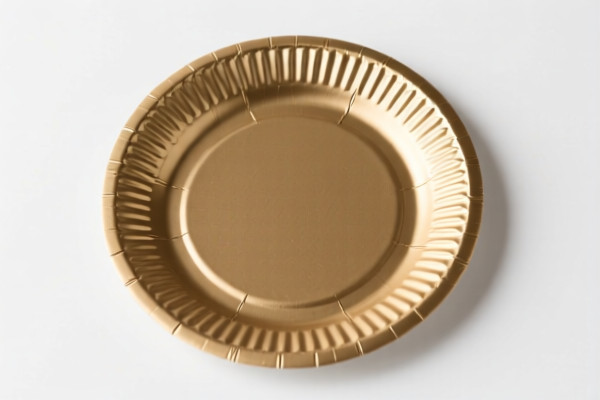
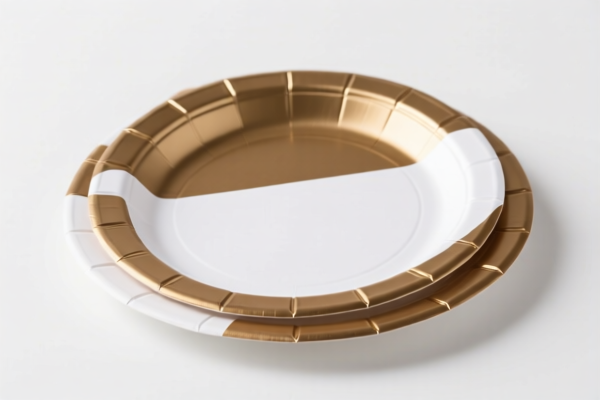
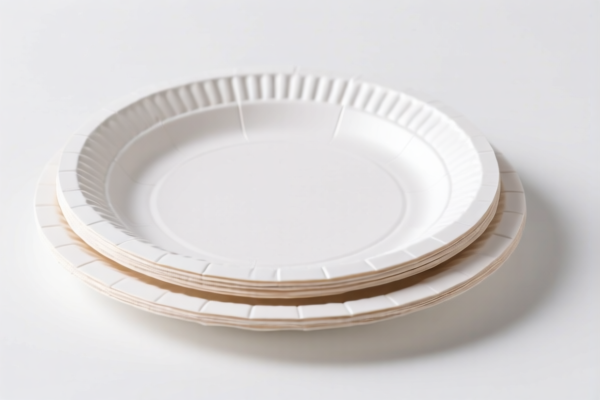
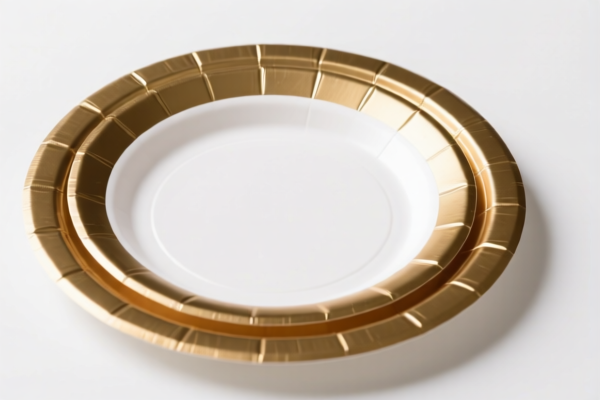
AI Analysis
🥄 Paper Seasoning Dish (纸制调味碟)
🌐 HS Code Reference & Customs Clearance Guide | 2026 Latest Tariff Analysis | Professional Clearance Strategy
📌 I. Product Definition & Classification: What Exactly is a "Paper Seasoning Dish"?
In international trade, the classification of a "Seasoning Dish" depends entirely on its material composition. Even if the function is identical (holding sauce/condiments), the HS Code and resulting tax liability change drastically based on whether the item is made of Paper or Plastic.
⚠️ Critical Distinction:
- If made of Paper/Cardboard → Classified under Chapter 48 (Paper Products).
- If made of Plastic → Classified under Chapter 39 (Plastics and Articles Thereof).Misclassification between these two is the most common error, leading to severe penalty risks or unexpected tax bills.
📦 II. HS Code Classification Details (2026 Latest Tariff Authority)
| HS Code | Product Description | Applicable Scenario | Material Inference |
|---|---|---|---|
4823.69.00.40 |
Paper seasoning dishes, made of paper, disc shape, used for seasoning | Disposable paper trays for sauces | ✅ Paper |
4823.61.00.40 |
Paper seasoning dishes, paper material, disc shape, fits classification for other paper/cardboard trays/dishes | Generic paper saucers | ✅ Paper |
3924.10.20.00 |
Seasoning dish, disc shape, inferred material Plastic, used for seasoning | Plastic sauce boats, deli containers | ✅ Plastic |
3924.10.40.00 |
Seasoning dish, use as cutlery/seasoning, disc shape, inferred material Plastic | Reusable or disposable plastic condiment holders | ✅ Plastic |
🔍 Key Reminder:
- Paper items (4823.69.00.40/4823.61.00.40) are generally categorized under "Other paper articles."
- Plastic items (3924.10.20.00/3924.10.40.00) fall under "Tableware, kitchenware, other household articles and hygienic or toilet articles, of plastics."
- Do not mix materials: A box containing both paper and plastic dishes must be declared separately or assigned the HS code based on the dominant value/quantity, but mixing them in one line item causes confusion.
💰 III. 2026 Latest Tariff Rate Detail (Including Surcharges & Policy Add-ons)
✅ Applicable Country: United States (US)
✅ Origin: China (CN)
✅ Effective Time: 2025/2026 (Current Trade War Policies)
🎯 1. Paper Seasoning Dishes (Chapter 48)
Both paper variants face identical and high tariffs due to Section 301 and IEEPA penalties.
| Item | Content |
|---|---|
| HS Codes | 4823.69.00.40 & 4823.61.00.40 |
| Base Tariff | 0.0% (Ad Valorem) |
| Section 301 Surcharge | +25.0% |
| Section 122 Tariff | +10.0% |
| Total Effective Rate | 35.0% |
| Tax Calculation | CIF Value × 35% |
| De Minimis Exemption | ❌ Not Applicable (High tariffs negate small package exemptions for China origin) |
| Legal Basis Path | USITC:4823.69.00.40 → FOOTNOTE:301 (25%) + IEEPA (10%) |
📌 Explanation:
- The 0% base rate is misleading. The 25% Section 301 tariff applies to most Chinese paper products.
- The additional 10% Section 122 tariff (if active under current executive orders) pushes the total to 35%.
- Cost Impact: For a $10,000 shipment, you pay $3,500 in duties alone.
🎯 2. Plastic Seasoning Dishes (Chapter 39)
Plastic dishes have divergent outcomes based on the specific sub-heading.
A. 3924.10.20.00 – Plastic Seasoning Dishes (Standard)
| Item | Content |
|---|---|
| Base Tariff | 6.5% |
| Section 301 Surcharge | +7.5% |
| Section 122 Tariff | +10.0% |
| Total Effective Rate | 24.0% |
| Tax Calculation | CIF Value × 24% |
| Legal Basis Path | USITC:3924.10.20.00 → 301 (7.5%) + IEEPA (10%) |
📌 Note: This rate is high but 11% lower than the paper equivalent.
B. 3924.10.40.00 – Plastic Seasoning Dishes (Optimized)
| Item | Content |
|---|---|
| Base Tariff | 3.4% |
| Section 301 Surcharge | 0.0% |
| Section 122 Tariff | +10.0% |
| Total Effective Rate | 13.4% |
| Tax Calculation | CIF Value × 13.4% |
| Legal Basis Path | USITC:3924.10.40.00 → IEEPA (10%) |
📌 Strategic Advantage:
- Total Rate: 13.4% (vs. 35% for paper).
- Section 301 Exemption: This specific sub-code (...40) often benefits from a 0% Section 301 surcharge, making it significantly cheaper than plastic dish...20and drastically cheaper than paper dishes.
🛠️ IV. Customs Clearance Practical Advice (Battle-Tested Pitfall Guide)
✅ 1. Material Verification is Mandatory
| Material | Risk | Mitigation |
|---|---|---|
| Paper | High Tax (35%) | Ensure no plastic lining is thick enough to change classification to plastic. If it has a thin PE coating, customs may still classify as Paper (4823) if the paper character is predominant. |
| Plastic | Misclassification Risk | Clearly declare "Plastic" in the commercial invoice. Do not use ambiguous terms like "Eco-friendly" or "Biodegradable" without specifying the polymer type (e.g., PLA vs. PET). |
✅ 2. Declaration Tips (Key Mantra)
🔥 “Material First, Function Second! Plastic 13.4%, Paper 35%!”
| Scenario | Correct Declaration | Wrong Practice |
|---|---|---|
| Paper Dish | "Paper Seasoning Dish, 100% Kraft Paper" | "Disposable Container" (Too vague) |
| Plastic Dish (Low Tax) | "Plastic Seasoning Dish, PP Material, HS 3924.10.40.00" | "Plastic Tableware" (May trigger ...20 @ 24%) |
| Mixed Order | Split into two line items | Combine into one "Assorted Containers" line |
✅ 3. Special Considerations
| Situation | Handling Advice |
|---|---|
| Coated Paper | If the paper is coated with wax or plastic film, ensure the coating does not exceed 50% of the surface area/value, or it may be reclassified as plastic (3924). |
| Bamboo/Wood | Not in our data, but typically classified under Chapter 44 or 46. Do not mix with Paper/Plastic in the same HS line. |
| Pre-filled with Sauce | If the dish contains sauce, it is no longer a "dish" but a "food product." Classification changes to Chapter 21. This drastically alters duties. Ensure goods are empty! |
🌍 V. Global Market Comparison (2026 Latest)
| Country/Region | Recommended HS Code (Plastic) | Tariff (China Origin) | Note |
|---|---|---|---|
| 🇺🇸 USA | 3924.10.40.00 |
13.4% | Best rate via Section 301 exemption. Avoid Paper (35%). |
| 🇺🇸 USA | 4823.69.00.40 |
35.0% | High penalty. |
| 🇨🇳 China | 3924.10.00.00 |
~6.5% | Lower entry tariff, but focus is on export. |
| 🇪🇺 EU | 3924.10 |
3.5% | No Section 301/122 style tariffs. |
📌 Conclusion:
- For US Importers, Plastic Dishes (HS 3924.10.40.00) are the most cost-effective option at 13.4%.
- Paper Dishes suffer from a 35% effective rate, making them uncompetitive unless the product value margin is very high.
📌 VI. Common Errors & Pitfalls Guide (Lessons from Blood & Tears)
❌ Error 1: Declaring "Plastic" dish as "Paper" to check if it passes, or vice versa.
👉 Consequence: Customs inspection reveals material difference → Seizure & Fine.
❌ Error 2: Using HS 3924.10.20.00 when 3924.10.40.00 is applicable.
👉 Consequence: You pay 24% instead of 13.4%. Overpayment of 10.6% on every shipment!
❌ Error 3: Ignoring Section 122 Tariff.
👉 Consequence: Even if Section 301 is 0%, the 10% Section 122 still applies to almost all Chinese goods. Do not assume "0% Surcharge" means "0% Tax."
✅ Correct Action:
"Plastic Seasoning Dish, Polypropylene, Empty, For Table Use, HS 3924.10.40.00"
🎯 VII. Conclusion: Professional Declaration, Save Money Instantly!
🎯 Remember the Mantra:
🔹 "Plastic 40 beats Paper 69!"
🔹 "13.4% vs 35%: A 21.6% difference is pure profit."
📌 Pro Tip:
If you are importing from China, prioritize HS 3924.10.40.00 for plastic items. It offers the lowest total duty (13.4%) among the options provided. For paper items, budget for the heavy 35% tax or consider sourcing from non-China origins if possible to avoid Section 301/122 tariffs.
📣 Immediate Action:
📞 Verify the exact material composition with your supplier.
🚀 Select HS 3924.10.40.00 for plastic to save 21.6% compared to paper.
💼 Precision classification is the key to maximizing your export margin!
✨ Professional Clearance Starts with Accurate Classification!
💼 Every percentage point saved is pure profit!
Customer Reviews
About HS Code Classification
The Harmonized System (HS) is an internationally standardized nomenclature developed by the World Customs Organization (WCO) to classify traded products. Over 200 countries use the HS system as the basis for customs tariffs, trade statistics, and import/export regulations.
Each HS code follows a hierarchical structure:
- Chapter (2 digits) — Broad category of goods (e.g., Chapter 84: Machinery and Mechanical Appliances)
- Heading (4 digits) — More specific grouping within the chapter
- Subheading (6 digits) — Internationally standardized breakdown, used by all WCO member countries
- National subdivisions (8-10 digits) — Country-specific extensions for further classification, such as US HTSUS 10-digit codes
Correct HS code classification is essential for smooth customs clearance, accurate duty payment, and compliance with trade regulations. Misclassification can lead to customs delays, overpayment of duties, or penalties.
When importing from CN to US, the applicable tariff rates may include:
- Most-Favored-Nation (MFN) rate — The standard duty rate applied to WTO members
- General rate — Applied to countries without trade agreements
- Trade remedy duties — Additional tariffs such as Section 301 (anti-dumping), Section 232 (national security), or countervailing duties
The information provided on this page is for reference purposes only. For official classification, please consult with your local customs authority or a licensed customs broker.