Paper Square Plate
CN → US| HS Code | Tariff Rate | Origin | Destination | Doc |
|---|---|---|---|---|
| 4819502000 | 35.0% | CN | US | Official Doc |
| 4819600000 | 35.0% | CN | US | Official Doc |
| 4823690040 | 35.0% | CN | US | Official Doc |
| 4823908000 | 35.0% | CN | US | Official Doc |
Product Images
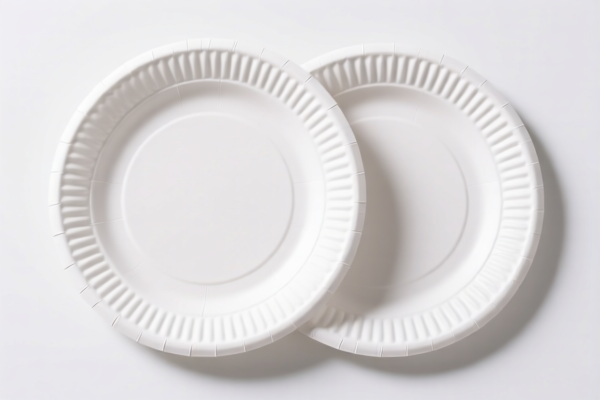
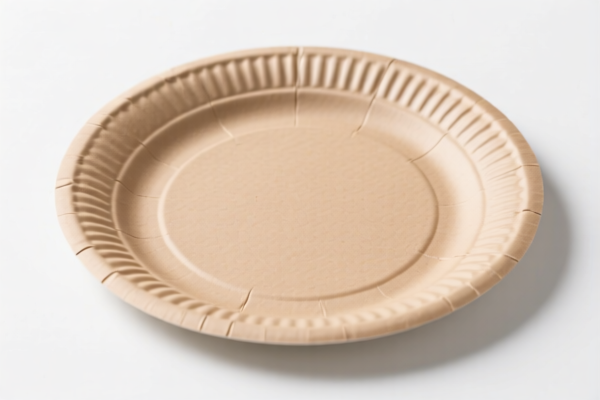
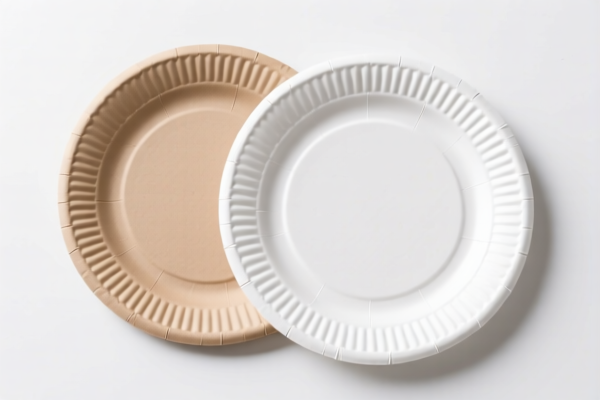
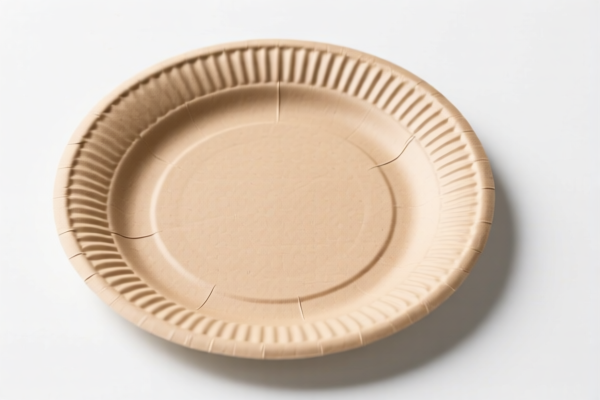
AI Analysis
🍽️ Paper Square Plate (Paper Tray/Plate)
HS Code Classification & US Import Duty Guide | 2026 Tax Analysis
🌐 HS Code Reference & Customs Clearance Guide | 2026 Latest Tariff Full Analysis | Professional Clearance Strategy
📌 1. Product Definition & Classification: What exactly is a "Paper Square Plate"?
"Paper Square Plate" generally refers to rigid or semi-rigid paper-based containers used for holding food or general storage. In international trade, these are not classified as a single HS code but depend heavily on the specific shape, intended use, and structural integrity.
The data provided indicates that these items are classified under Chapter 48 (Paper and Paperboard), specifically within subheadings for Trays, Containers, and Articles of Paper Pulp or Board.
⚠️ Key Distinction Point: - If used primarily for Food & Beverage service → Likely classified under 4819.50. - If used for Office/Store Storage or general utility → Likely classified under 4819.60 or 4823.69. - If it is a generic rectangular/tray shape not specifically for food service → Likely classified under 4823.90.
📦 2. HS Code Classification Details (2026 Latest Tariff Authoritative对照)
Based on the provided <DATA>, here are the four possible classifications for "Paper Square Plate" (often described as "Paper Rectangular Trays" in customs descriptions):
| HS Code | Product Description (from Data) | Applicable Scenario | Tax Rate Summary |
|---|---|---|---|
4819.50.20.00 |
Paper rectangular tray, material: paper, form: tray, use: holding food or beverages. | Food service, catering, disposable dinnerware. | 35.0% Total |
4819.60.00.00 |
Paper rectangular tray, form: rectangular tray, use: office or store storage, material: paper. | Office supplies, retail packaging, storage containers. | 35.0% Total |
4823.69.00.40 |
Paper rectangular tray, material: paper, form: rectangular tray, belongs to tray category. | General trays, generic paperboard containers. | 35.0% Total |
4823.90.80.00 |
Paper rectangular tray, material: paper, form: rectangular tray, belongs to other sizes/shapes. | Non-standard shapes, other paper articles. | 35.0% Total |
🔍 Critical Note: - Despite the user input "Square Plate," the data describes them as "Rectangular Trays." Customs often interprets "square" or "plate" based on the primary function and shape. - All listed HS Codes have the same total tax rate of 35.0%. - The classification difference lies in the specific intent (Food vs. Storage vs. Generic).
💰 3. 2026 Latest Tariff Rate Breakdown (Including Surcharge & Policy Surcharge)
✅ Applicable Country: United States (US)
✅ Origin: China (CN) (Implied by the specific tax details: "122 Clause" and "Additional Tariff 25%" which align with US-China trade tensions)
✅ Effective Time: 2025/2026 Period
🎯 1. General Tax Structure for All Listed HS Codes
| Item | Content |
|---|---|
| Base Tariff Rate | 0.0% (Ad Valorem) |
| Section 301 Surcharge | +25.0% (Additional Tariff) |
| Section 122 Surcharge | +10.0% (Section 122 Tariff) |
| Total Tariff Rate | 35.0% |
| Tax Calculation | CIF Value × 35% |
| De Minimis Exemption | ❌ Not Applicable (Usually Section 301 goods are excluded from Section 321/De Minimis relief if shipped as individual items, but strictly speaking, 301 goods are taxable regardless. For shipments under $800, 301 duties may still apply depending on current CBP enforcement, but the rate is what matters here.) |
| Legal Basis Path | USITC:4819/4823 → Section 301: Footnote 9903.88.01 → Section 122 |
📌 Explanation: - "Base Tariff 0.0%": Paper products often have low base duties. - "Additional Tariff 25%": This is the classic Section 301 tariff on Chinese goods. - "Section 122 Tariff 10%": This refers to Section 122 of the Trade Act of 1974, which allows the President to raise tariffs for national security reasons (often applied to specific goods during trade disputes). - Total 35% is a high barrier for paper imports from China.
🛠️ 4. Customs Clearance Practical Advice (Real-World Pitfall Avoidance Guide)
✅ 1. Preparation Checklist (Must-Have Documents)
| Document | Mandatory? | Notes |
|---|---|---|
| ✅ Product Specification Sheet | ✔️ | Must clearly state: Material (Paper), Shape (Square/Rectangular), Use (Food/Storage). |
| ✅ Commercial Invoice | ✔️ | Must clearly state "Paper Tray/Plate" and match the HS Code description. |
| ✅ Packing List | ✔️ | Detail quantity and weight. |
| ✅ Certification (if Food Contact) | ✔️ | If classified under 4819.50.20.00 (Food Use), FDA compliance or equivalent food-safe certification may be required by the FDA, not just Customs. |
| ✅ Country of Origin Certificate | ✔️ | To confirm China origin and trigger/avoid surcharges. |
✅ 2. Declaration Tips (Key Mantra)
🔥 "Clarify Use, Match Shape, Declare Correctly, Avoid Misclassification Penalties!"
| Scenario | Correct HS Code | Incorrect Practice | Consequence |
|---|---|---|---|
| Disposable Food Plates/Trays | 4819.50.20.00 |
Declaring as "Storage Containers" (4819.60) |
Risk of audit, though tax rate is same. Better to be accurate for FDA. |
| Office/Store Paper Trays | 4819.60.00.00 |
Declaring as "Food Trays" | Unlikely to trigger FDA, but incorrect description. |
| Generic Paper Rectangles | 4823.69.00.40 or 4823.90.80.00 |
Declaring as "Food Trays" | May face stricter scrutiny if no food certification. |
📌 Note on "Square" vs. "Rectangular": - Customs descriptions often use "Rectangular" broadly. If the item is perfectly square, it still falls under these codes if it's a tray/container. - Ensure the description in the invoice matches the HS Code's intent.
✅ 3. Special Case Handling
| Situation | Advice |
|---|---|
| Food Contact Material | If using 4819.50.20.00, ensure the paper is food-safe (no harmful inks/chemicals). CBP may collaborate with FDA for testing. |
| Composite Materials | If the plate has a plastic lining or coating, it might move to Chapter 39 (Plastics). However, data provided is for Paper. Ensure it's primarily paper. |
| De Minimis ($800) Loophole? | ⚠️ Caution: Section 301 goods (China origin) are generally subject to duties even under Section 321 (De Minimis). Do not rely on $800 exemption to avoid the 35% tax. |
🌍 5. Global Market Comparison (2026 Latest)
| Country/Region | Recommended HS Code | Tariff Rate | Certification | Notes |
|---|---|---|---|---|
| 🇺🇸 USA | 4819.50.20.00 (Food) |
35.0% | FDA (if food) | High due to 301 + 122. |
| 🇨🇳 China | 4819.50.20.00 |
Low (Export) | N/A | Export duty usually 0%. |
| 🇪🇺 EU | 4819.20 (Boxes) / 4823 |
0-6.5% | CE (if general) | No Section 301/122. Lower cost. |
| 🇬🇧 UK | 4819.20 |
0-6.5% | UKCA | Post-Brexit rules apply. |
| 🇦🇺 Australia | 4819.20 |
5% | GOST (if applicable) | Moderate duty. |
📌 Conclusion: - US Market is the most expensive for Chinese paper products due to the 35% combined tariff. - EU/UK/AU offer significantly lower tariff barriers. - If targeting the US, consider supply chain diversification (e.g., sourcing from Vietnam or Mexico) to avoid Section 301/122 surcharges, if feasible.
📌 6. Common Errors & Pitfall Guide (Lessons from Experience)
❌ Error 1: Declaring "Paper Plates" as "Plastic Plates" (3924.10) to avoid paper classification.
👉 Consequence: Severe penalty for misdeclaration. CBP can seize goods.
❌ Error 2: Using "Food Container" description for non-food items. 👉 Consequence: Unnecessary FDA scrutiny and delays.
❌ Error 3: Assuming De Minimis ($800) exemption applies to Section 301 goods. 👉 Consequence: Goods detained, duties assessed + penalties. Section 301 duties apply to Section 321 imports.
❌ Error 4: Ignoring the "122 Clause" in tax calculations. 👉 Consequence: Underestimating costs. The 10% surcharge is significant.
✅ Correct Approach:
"Paper Rectangular Tray, 100% Paper, Food Grade (if applicable), Model XYZ, Made in China"
🎯 7. Conclusion: Precise Classification, Cost Control, and Smooth Clearance
🎯 Key Takeaways:
🔹 All listed HS Codes for Paper Square/Rectangular Plates carry a 35% Total Duty in the US. 🔹 Breakdown: 0% Base + 25% Section 301 + 10% Section 122. 🔹 Classification depends on Use: Food (
4819.50) vs. Storage (4819.60) vs. Generic (4823). 🔹 De Minimis does NOT exempt Section 301 goods.
📌 Pro Tip:
If your product is exclusively for food service, ensure FDA compliance is documented alongside Customs paperwork. If you are importing large volumes, consider tariff engineering (e.g., changing material to non-paper if possible) or sourcing from non-China origins to mitigate the 35% burden.
📣 Immediate Action:
📞 Contact a licensed Customs Broker. 📝 Provide Product Photos and Material Composition. 📋 Apply for Pre-Release Review if available. 🚀 Avoid costly delays and penalties by getting it right the first time!
✨ Professional Clearance Starts with Accurate Classification! 💼 Your Every Dollar is Worth Calculating!
Customer Reviews
About HS Code Classification
The Harmonized System (HS) is an internationally standardized nomenclature developed by the World Customs Organization (WCO) to classify traded products. Over 200 countries use the HS system as the basis for customs tariffs, trade statistics, and import/export regulations.
Each HS code follows a hierarchical structure:
- Chapter (2 digits) — Broad category of goods (e.g., Chapter 84: Machinery and Mechanical Appliances)
- Heading (4 digits) — More specific grouping within the chapter
- Subheading (6 digits) — Internationally standardized breakdown, used by all WCO member countries
- National subdivisions (8-10 digits) — Country-specific extensions for further classification, such as US HTSUS 10-digit codes
Correct HS code classification is essential for smooth customs clearance, accurate duty payment, and compliance with trade regulations. Misclassification can lead to customs delays, overpayment of duties, or penalties.
When importing from CN to US, the applicable tariff rates may include:
- Most-Favored-Nation (MFN) rate — The standard duty rate applied to WTO members
- General rate — Applied to countries without trade agreements
- Trade remedy duties — Additional tariffs such as Section 301 (anti-dumping), Section 232 (national security), or countervailing duties
The information provided on this page is for reference purposes only. For official classification, please consult with your local customs authority or a licensed customs broker.