Paper and Paperboard (HS Code 4805934060)
CN → US| HS Code | Tariff Rate | Origin | Destination | Doc |
|---|---|---|---|---|
| 4805934030 | 35.0% | CN | US | Official Doc |
| 4810991050 | 35.0% | CN | US | Official Doc |
| 4810991050 | 35.0% | CN | US | Official Doc |
| 4823908680 | 35.0% | CN | US | Official Doc |
| 4823906700 | 35.0% | CN | US | Official Doc |
Product Images
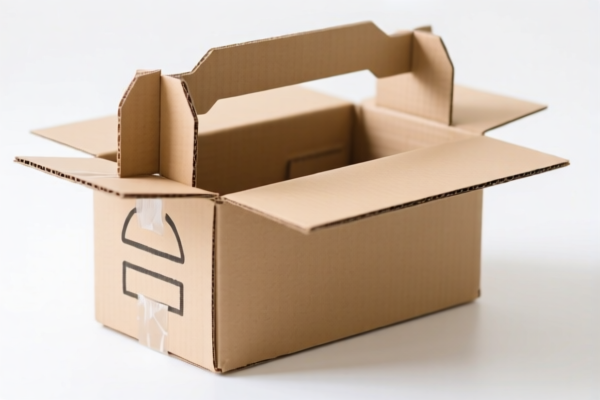



AI Analysis
📄 Paper & Paperboard Classification Guide (HS Code 4805.93.40.30)
🌐 HS Code Reference & Customs Clearance Guide | 2026 Latest Tariff Analysis | Professional Strategy for US Imports
📌 One, Product Definition & Classification: Do You Really Understand "Paper"?
Paper and Paperboard are foundational materials in global trade, widely used in packaging, printing, and industrial applications. However, the customs classification is not as simple as it seems. The key lies in the material composition, processing method, and specific end-use.
In international trade, "Paper" is broadly categorized into: * Uncoated Paper (Non-Coated): Raw paper or paperboard without significant surface treatment (e.g., base paper for corrugated boxes, kraft paper). * Coated/Processed Paper: Paper with surface treatments (e.g., coated cardboard for folding cartons).
⚠️ Key Distinction Point:
- If the product is a basic uncoated paper/board with specific basis weight and material properties → It may fall under 4805.93.40.30.
- If it is coated, bleached, or specifically for folding cartons → It might be classified under 4810.99.10.50 or other specific subheadings.
- If it does not fit any specific category (a "catch-all") → It may be classified under 4823.90 series.
📦 Two, HS Code Classification Details (2026 Latest Tariff Authority Comparison)
| HS Code | Product Description | Applicable Scenario | Material/Process Attribute |
|---|---|---|---|
4805.93.40.30 |
Paper & Paperboard, material and code fully consistent | Uncoated paper/board, specific basis weight, no specific functional coating | ✅ Material Match |
4810991050 |
Paper & Paperboard, direct match of material and specific use | Paper/board for folding cartons, coated or semi-coated | ✅ Direct Match |
4810.99.10.50 |
Paper & Paperboard, fits coated paper/board category for folding cartons | Coated cardboard used for packaging/folding boxes | ✅ Coated/Functional |
4823.90.86.80 |
Paper, as a fallback category, material attribute no conflict | Other paper products not fitting above categories | ✅ Fallback |
4823.90.67.00 |
Paper, belongs to other categories fallback, material consistent | Other miscellaneous paper products | ✅ Fallback |
🔍 Key Reminder:
-4805.93.40.30is the primary code for uncoated paper/board where the material specification exactly matches the tariff description.
-4810.99.10.50is crucial for coated paper/cardboard used in packaging. Misclassifying coated paper as uncoated can lead to severe penalties.
-4823.90series codes are "Fallback Categories". They are used when the product does not fit the specific definitions of Chapters 48.01-48.10. Use them only when no more specific code applies.
💰 Three, 2026 Latest Tariff Rate Details (Including Additional Taxes, Policy Additions)
✅ Applicable Country: United States (US)
✅ Country of Origin: China (CN)
✅ Effective Date: From November 10, 2025 (including subsequent imports)
🎯 1. 4805.93.40.30 —— Paper & Paperboard (Material Match)
| Item | Content |
|---|---|
| Base Tariff Rate | 0% (ad valorem) |
| Section 301 Surcharge | +25% |
| Section 122 Tariff | +10% (Specific US-China Trade Measure) |
| Total Tariff Rate | 35.0% |
| Tax Calculation | CIF Value × 35% |
| De Minimis Exemption Available? | ❌ No (deny_de_minimis) |
| Legal Basis Path | Base: 0% → Section 301: 25% → Section 122: 10% |
📌 Explanation:
- "Section 301 Surcharge 25%": Originates from the US Trade Act Section 301, targeting Chinese goods.
- "Section 122 Tariff 10%": A specific additional duty under Section 122 of the Trade Act, often applied to certain paper products to protect domestic industry or address trade deficits.
- Total 35%: This is a high tariff burden. Importers must factor this into their cost structure.
🎯 2. 4810991050 & 4810.99.10.50 —— Coated Paper/Cardboard (Folding Carton Use)
| Item | Content |
|---|---|
| Base Tariff Rate | 0% |
| Section 301 Surcharge | +25% |
| Section 122 Tariff | +10% |
| Total Tariff Rate | 35.0% |
| Tax Calculation | CIF Value × 35% |
| De Minimis Exemption Available? | ❌ No |
| Legal Basis Path | Base: 0% → Section 301: 25% → Section 122: 10% |
📌 Note:
- These codes also carry the 35% total tax.
- Even if the paper is coated for packaging, if it originates from China, the additional tariffs still apply.
- Do not assume that "coated" or "packaging" status automatically exempts you from Section 301/122 duties.
🎯 3. 4823.90.86.80 & 4823.90.67.00 —— Fallback Paper Categories
| Item | Content |
|---|---|
| Base Tariff Rate | 0% |
| Section 301 Surcharge | +25% |
| Section 122 Tariff | +10% |
| Total Tariff Rate | 35.0% |
| Tax Calculation | CIF Value × 35% |
| De Minimis Exemption Available? | ❌ No |
| Legal Basis Path | Base: 0% → Section 301: 25% → Section 122: 10% |
📌 Note:
- Even if classified under a "fallback" code (4823), if the product is essentially paper from China, the 35% total tariff applies.
- Misclassifying to avoid these taxes is considered fraud and can lead to severe penalties.
🛠️ Four, Customs Clearance Practical Advice (Battle-Tested Pitfall Avoidance Guide)
✅ 1. Documentation Checklist (All Required)
| Document | Mandatory? | Description |
|---|---|---|
| ✅ Product Specification Sheet | ✔️ | Must detail basis weight, GSM, material composition (e.g., 100% virgin fiber, recycled), coating type (if any). |
| ✅ Material Data Sheet (MSDS/TDS) | ✔️ | To prove material consistency with HS Code 4805.93.40.30. |
| ✅ Product Photos (Label & Surface) | ✔️ | Clear images of the paper roll/sheet, showing any branding, certification marks, or coating texture. |
| ✅ Commercial Invoice | ✔️ | Must clearly state "Paper and Paperboard" and include HS Code. |
| ✅ Packing List | ✔️ | Detail net weight, gross weight, and package dimensions. |
| ✅ Certificate of Origin (CO) | ✔️ | Essential for determining origin (China) and applying correct tariffs. |
✅ 2. Declaration Tips (Key Mantra)
🔥 "Material First, Use Second, Fallback Only If Necessary!"
| Situation | Correct Declaration | Wrong Practice |
|---|---|---|
| Uncoated paper, specific material match | 4805.93.40.30 |
Misdeclare as generic paper → 35% + Penalty |
| Coated cardboard for folding cartons | 4810.99.10.50 |
Misdeclare as uncoated → 35% + Potential Penalty for incorrect classification |
| Unique paper product, no specific code | 4823.90.86.80 |
Force a wrong code → High risk of audit |
| Paper from non-China origin (e.g., Vietnam) | Same HS Code | Claim China Origin when not → Fraud |
✅ 3. Special Handling for Specific Cases
| Situation | Handling Advice |
|---|---|
| OEM Custom Paper | Provide customer order + design/spec sheet. Ensure the description matches the technical specs exactly. |
| Paper with Moisture Barrier | If coated with plastic or wax, it may still fall under 4805 or 4810 depending on the coating thickness and nature. Provide coating details. |
| Recycled Paper | Must specify % of recycled content. Some codes have specific requirements for recycled materials. |
| Large Rolls vs. Cut Sheets | Declaration should match the actual form of import (rolls or cut). HS Code usually applies to both, but description matters. |
🌍 Five, Global Market Comparison (2026 Latest)
| Country/Region | Recommended HS Code | Tariff (China Origin) | Certification Requirements | Notes |
|---|---|---|---|---|
| 🇺🇸 USA | 4805.93.40.30 |
35% (Base 0% + 25% + 10%) | No specific certification | High tariff due to Section 301/122 |
| 🇨🇳 China | 4805.93.40.30 |
5-10% | GB Standards | No additional US tariffs |
| 🇪🇺 EU | 4805.93.40.30 |
0-6.5% | REACH (if chemicals in coating) | No Section 301 equivalent |
| 🇬🇧 UK | 4805.93.40.30 |
0-6.5% | UKCA | Post-Brexit rules apply |
| 🇯🇵 Japan | 4805.93.40.30 |
0-3% | JIS | No additional tariffs |
📌 Conclusion:
- USA is the most challenging market for Chinese paper imports due to the 35% total tariff.
- EU and Asia are more tariff-friendly, but other barriers (like environmental regulations) may apply.
- Diversify Supply Chain: Consider sourcing paper from countries not subject to Section 301 (e.g., Brazil, Indonesia, Vietnam) if possible.
📌 Six, Common Errors & Pitfall Avoidance Guide (Lessons from Blood & Tears)
❌ Error 1: Declaring coated paper as uncoated (4805.93.40.30)
👉 Consequence: Customs may reclassify to 4810.99.10.50, leading to audits, back taxes, and penalties.
👉 Result: Delay + Fines + Back Payment
❌ Error 2: Ignoring the "Section 122" tariff
👉 Consequence: Underestimating landed cost by 10%.
👉 Result: Profit Margin Erosion
❌ Error 3: Using generic "Paper" in the description without material details
👉 Consequence: Customs request additional information, causing clearance delays.
👉 Result: Storage Fees + Demurrage
❌ Error 4: Misclassifying as "Fallback" (4823) to avoid scrutiny
👉 Consequence: If the product clearly fits 4805 or 4810, this is seen as misclassification.
👉 Result: Audit & Penalties
✅ Correct Practice:
"Uncoated Paper Board, 250 GSM, 100% Virgin Wood Fiber, Matte Finish, Roll Format, Model XYZ, No Chemical Coating"
🎯 Seven, Conclusion: Professional Classification, Save Time & Money!
🎯 Remember the Mantra:
🔹 "Material Matches Code, Use Defines Sub-Code, Fallback is Last Resort!"
🔹 "HS Code Determines Destiny, 35% Tax is Heavy, Declaration Must Be Precise!"
📌 Pro Tip:
If your paper products originate from countries not subject to Section 301 or 122 (e.g., Southeast Asia, South America), the tariff could be 0-6%.
Consider supply chain optimization or substantial transformation rules to potentially benefit from lower tariffs.
Apply for Advance Ruling with US Customs and Border Protection (CBP) for complex cases to avoid surprises.
📣 Immediate Action:
📞 Contact a Professional Customs Broker + Provide Detailed Product Specs + Request HS Code Advance Ruling
🚀 Let your paper products clear customs smoothly, expand globally, and maximize profits!
✨ Professional Clearance Starts with Precise Classification!
💼 Every Cent of Cost Deserves Accurate Calculation!
Customer Reviews
About HS Code Classification
The Harmonized System (HS) is an internationally standardized nomenclature developed by the World Customs Organization (WCO) to classify traded products. Over 200 countries use the HS system as the basis for customs tariffs, trade statistics, and import/export regulations.
Each HS code follows a hierarchical structure:
- Chapter (2 digits) — Broad category of goods (e.g., Chapter 84: Machinery and Mechanical Appliances)
- Heading (4 digits) — More specific grouping within the chapter
- Subheading (6 digits) — Internationally standardized breakdown, used by all WCO member countries
- National subdivisions (8-10 digits) — Country-specific extensions for further classification, such as US HTSUS 10-digit codes
Correct HS code classification is essential for smooth customs clearance, accurate duty payment, and compliance with trade regulations. Misclassification can lead to customs delays, overpayment of duties, or penalties.
When importing from CN to US, the applicable tariff rates may include:
- Most-Favored-Nation (MFN) rate — The standard duty rate applied to WTO members
- General rate — Applied to countries without trade agreements
- Trade remedy duties — Additional tariffs such as Section 301 (anti-dumping), Section 232 (national security), or countervailing duties
The information provided on this page is for reference purposes only. For official classification, please consult with your local customs authority or a licensed customs broker.