Paper and paperboard cut to size or shape
CN → US| HS Code | Tariff Rate | Origin | Destination | Doc |
|---|---|---|---|---|
| 4823908000 | 35.0% | CN | US | Official Doc |
| 4823901000 | 35.0% | CN | US | Official Doc |
| 4819200020 | 35.0% | CN | US | Official Doc |
| 4819200040 | 35.0% | CN | US | Official Doc |
Product Images
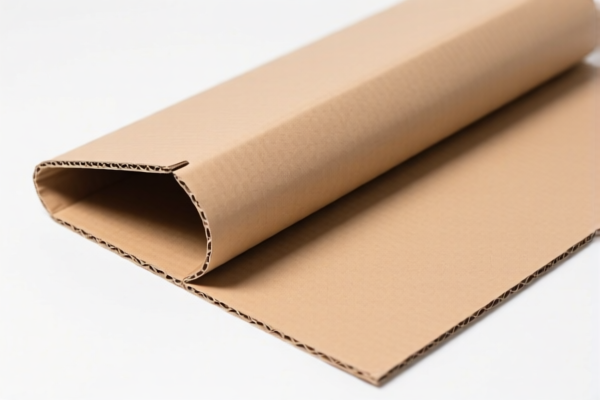
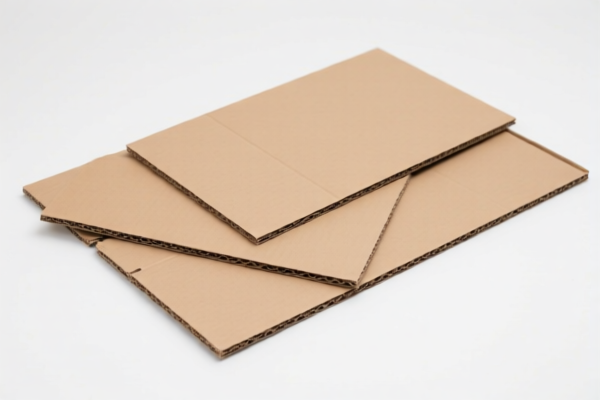
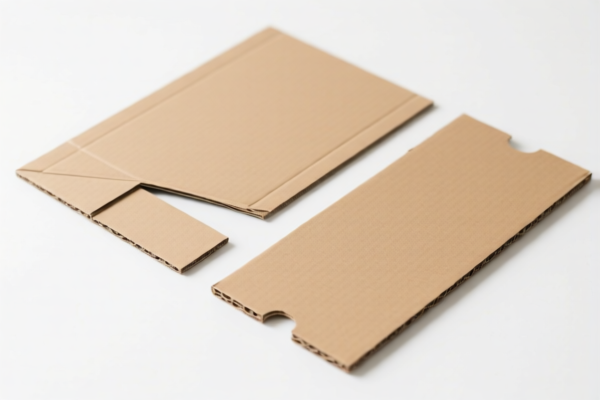
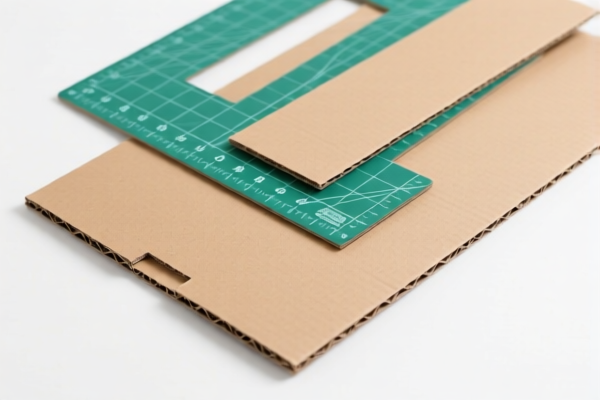
AI Analysis
📄 Paper & Paperboard Cut to Size or Shape (Packaging & Industrial)
🌐 HS Code Reference & Customs Clearance Guide | 2026 Latest Tariff Analysis | Professional Compliance Strategy
📌 1. Product Definition: What Exactly Is "Cut Paper"?
In international trade, "paper and paperboard cut to size or shape" is not a single unified category. It is classified based on end-use (packaging vs. industrial) and physical structure (corrugated vs. non-corrugated). Misclassification here leads to severe compliance risks due to current US-China trade policies.
⚠️ Key Distinction Point:
- Packaging Use: If used for boxes, folders, sacks, or protective packaging → Fall under Chapter 4819.
- Industrial/Other Use: If used for printing, drawing, or general industrial processing → Fall under Chapter 4823.
- Structure Matters: "Non-corrugated" packaging papers have specific subheadings different from standard boxes.
📦 2. HS Code Classification Details (2026 Tariff Schedule)
Based on the provided data, here are the four specific classifications:
| HS Code | Product Description | Application Scenario | Key Characteristics |
|---|---|---|---|
4823.90.80.00 |
Paper/paperboard cut to size/shape | Other Uses: Industrial paper base, printing paper, general processing | No specific packaging function; used as raw material or intermediate good. |
4823.90.10.00 |
Paper/paperboard cut to size/shape | Other Uses: Forms matching the code definition (e.g., specific industrial cards, labels not in chap. 49) | Consistent with code definition; generic cut paper/paperboard. |
4819.20.00.20 |
Paper/paperboard cut to size/shape | Packaging: Boxes, cartons, cases, cases properties | Rigid folding cartons, shipping boxes, protective casing. |
4819.20.00.40 |
Paper/paperboard cut to size/shape | Packaging: Non-corrugated paper packaging products | Sacks, bags, folders, other non-corrugated flexible or rigid packaging. |
🔍 Critical Reminder:
- Packaging (4819) vs. Industrial (4823): Do not mix these. A box used for shipping is4819. Paper used in a machine to wrap product is often4823unless it becomes part of the retail package.
- Corrugated vs. Non-Corrugated:4819.20covers non-corrugated packaging. Corrugated board has its own specific headings (e.g.,4819.10), which are not in this specific dataset but are common. Ensure your product is truly non-corrugated for4819.20.
💰 3. 2026 Latest Tariff Rate Breakdown (Including Additional Duties & Policy Surcharges)
✅ Applicable Country: United States (US)
✅ Country of Origin: China (CN)
✅ Effective Time: 2025+ (Current Active Rates)
All four HS codes listed below share the same total tariff structure under current Section 301 and IEEPA regulations.
🎯 Total Tax Rate: 35.0%
| Component | Rate | Legal Basis |
|---|---|---|
| Basic MFN Rate | 0.0% | Standard Most-Favored-Nation duty for most paper products. |
| Section 301 Additional Duty | +25.0% | USITC Footnote 9903.88.01 (Retaliatory tariffs on Chinese goods). |
| 122 Clause (IEEPA) Tariff | +10.0% | Executive Order 14117 (Section 122 of the Trade Expansion Act of 1962). |
| TOTAL EFFECTIVE RATE | 35.0% | Sum of 0% + 25% + 10% |
📌 Explanation of Components:
- Base Rate (0%): Paper products generally have low base duties to support domestic manufacturing and recycling.
- Section 301 (25%): This is the "China Tariff" imposed by the Trump administration and maintained by Biden. It applies broadly to Chinese imports, including paper.
- Section 122 (10%): A national security tariff imposed in early 2025 under IEEPA. It applies to all imports from China, regardless of other existing tariffs.
- De Minimis Exemption: ❌ NOT APPLICABLE. These goods do not qualify for the $800 de minimis exemption (Section 321) if they are subject to Section 301 or Section 122 tariffs, or if they violate intellectual property/anti-dumping rules. Full duty must be paid on shipments.
🛠️ 4. Customs Clearance Operational Advice (Practical Pitfall Guide)
✅ 1. Preparation Checklist (Mandatory Documents)
| Document | Required? | Notes |
|---|---|---|
| Commercial Invoice | ✔️ | Must clearly state "Paper/Paperboard Cut to Size/Shape" and specify End Use (Packaging vs. Industrial). |
| Product Photographs | ✔️ | Show the cut shape, edges, and any printing/logos. Crucial for proving it is cut and not just rolled. |
| Material Composition | ✔️ | Specify paper weight (GSM), type (kraft, liner, tissue), and whether it is corrugated or non-corrugated. |
| Certificate of Origin | ✔️ | Essential for verifying Country of Origin (China) to apply correct Section 301/122 rates. |
| Packing List | ✔️ | Detail net/gross weight, number of units, and dimensions. |
✅ 2. Declaration Tips (Key Rules)
🔥 Rule of Thumb:
"Define End-Use Precisely! Packaging = 4819, Industrial = 4823. Wrong Code = Audit Risk."
| Scenario | Correct HS Code | Risk of Wrong Code |
|---|---|---|
| Shipping Cartons (Boxes) | 4819.20.00.20 |
Declaring as 4823 may trigger customs inquiry on "packaging function." |
| Non-Corrugated Paper Bags/Folders | 4819.20.00.40 |
Declaring as 4823 might be accepted if not clearly packaging, but risky. |
| Industrial Die-Cut Paper (Gaskets, Masks) | 4823.90.80.00 |
Declaring as packaging is wrong; customs may downgrade or penalize. |
| Cut Paper Sheets for Printing | 4823.90.10.00 |
Generic code; ensure it doesn't look like a finished product (e.g., booklets) which might fall under Chap. 49. |
✅ 3. Special Cases & Mitigation
| Situation | Recommendation |
|---|---|
| Mixed Shipments | If a shipment contains both packaging (4819) and industrial paper (4823), declare separately. Do not consolidate under one HS code. |
| White-Spotted vs. Printed | Printing does not automatically change HS code from 4823/4819 to Chapter 49 (books/newspapers) unless it constitutes a publication. Simple commercial printing usually stays in 4819/4823. |
| Section 122 Impact | Since Section 122 (10%) applies universally to Chinese imports, no exclusion is possible. Budget for this extra 10% cost regardless of Section 301 exclusions. |
| De Minimis (Section 321) | ❌ Avoid Small Parcel Shipments for commercial goods. CBP is cracking down on paper products shipped via e-commerce platforms to avoid duties. Expect higher inspection rates. |
🌍 5. Global Market Comparison (2026)
| Region | Recommended HS Code | Tariff Rate (China Origin) | Notes |
|---|---|---|---|
| 🇺🇸 USA | 4819.20.00.20 / 4823.90.80.00 etc. |
35% (0% Base + 25% Sec 301 + 10% Sec 122) | High barrier. Cost-plus pricing essential. |
| 🇨🇳 China | Same | Varies (0-10%) | Import duty may be low, but VAT (13%) applies. |
| 🇪🇺 EU | 4819/4823 | ~5-6% (Most Favored Nation) | No Section 301/122 equivalent. Carbon Border Adjustment Mechanism (CBAM) may eventually apply if energy-intensive. |
| 🇲🇽 Mexico | Same | 0-5% | USMCA benefits may not apply to paper products, but lower tariffs than US. |
📌 Conclusion:
- The USA is the most expensive market for Chinese paper products due to the叠加 (stacking) of Section 301 and Section 122 tariffs.
- Margin Compression: With a 35% tariff, exporters must adjust FOB prices or absorb costs.
- Compliance is Key: Incorrect classification (e.g., trying to classify packaging as industrial paper to avoid stricter scrutiny) can lead to fines.
📌 6. Common Mistakes & Pitfalls (Lessons Learned)
❌ Mistake 1: Assuming "Paper" means "Exempt from Section 301."
👉 Fact: Paper products are explicitly listed in Section 301 tariff schedules. They are not exempt.
❌ Mistake 2: Using "De Minimis" for bulk shipments.
👉 Fact: CBP is increasing enforcement on Section 321 shipments for high-risk items. Paper products, especially from China, are under scrutiny.
❌ Mistake 3: Confusing 4819.20 (Packaging) with 4819.10 (Corrugated).
👉 Fact: If your product is corrugated fiberboard, it may belong to 4819.10, which has different tariff rates. Ensure your HS code matches the physical structure.
❌ Mistake 4: Ignoring the Section 122 (10%) tariff.
👉 Fact: Many brokers forget this newer 10% duty. It applies on top of the 25% Section 301 duty. Total is 35%, not 25%.
✅ Correct Declaration Example:
"Paperboard, non-corrugated, cut to size, for use as folding cartons (packaging), Origin: China, HS: 4819.20.00.20"
🎯 7. Conclusion: Professional Declaration, Cost Control, Risk Mitigation
🎯 Key Takeaways:
🔹 "Total Tariff is 35%: 0% Base + 25% Sec 301 + 10% Sec 122."
🔹 "Packaging (4819) vs. Industrial (4823): Define End-Use Clearly."
🔹 "No De Minimis Exemption for Commercial Paper Shipments from China."
📌 Pro Tip:
- For large volume imports, consider HTSUS Exclusions (if any remain for specific paper grades) or apply for Advance Rulings.
- Explore transshipment or assembly in third countries (e.g., Vietnam, Mexico) only if substantial transformation occurs, to mitigate Section 301/122 tariffs. However, be wary of CBP's anti-circumvention laws.
📣 Immediate Action:
📞 Consult a Customs Broker: Verify if your specific paper product has any exclusions.
📊 Calculate Landed Cost: Include the full 35% tariff in your pricing model.
📝 Document End-Use: Clearly state in invoices and packing lists whether the paper is for "Packaging" or "Industrial Use."
✨ Precision in Classification Saves Money!
💼 Your Profit Margin Depends on Accurate Tariff Application!
Customer Reviews
About HS Code Classification
The Harmonized System (HS) is an internationally standardized nomenclature developed by the World Customs Organization (WCO) to classify traded products. Over 200 countries use the HS system as the basis for customs tariffs, trade statistics, and import/export regulations.
Each HS code follows a hierarchical structure:
- Chapter (2 digits) — Broad category of goods (e.g., Chapter 84: Machinery and Mechanical Appliances)
- Heading (4 digits) — More specific grouping within the chapter
- Subheading (6 digits) — Internationally standardized breakdown, used by all WCO member countries
- National subdivisions (8-10 digits) — Country-specific extensions for further classification, such as US HTSUS 10-digit codes
Correct HS code classification is essential for smooth customs clearance, accurate duty payment, and compliance with trade regulations. Misclassification can lead to customs delays, overpayment of duties, or penalties.
When importing from CN to US, the applicable tariff rates may include:
- Most-Favored-Nation (MFN) rate — The standard duty rate applied to WTO members
- General rate — Applied to countries without trade agreements
- Trade remedy duties — Additional tariffs such as Section 301 (anti-dumping), Section 232 (national security), or countervailing duties
The information provided on this page is for reference purposes only. For official classification, please consult with your local customs authority or a licensed customs broker.