Paper or Cardboard Labels
CN → US| HS Code | Tariff Rate | Origin | Destination | Doc |
|---|---|---|---|---|
| 4911998000 | 17.5% | CN | US | Official Doc |
| 4911996000 | 17.5% | CN | US | Official Doc |
| 4823908680 | 35.0% | CN | US | Official Doc |
| 4823906700 | 35.0% | CN | US | Official Doc |
| 4821104000 | 35.0% | CN | US | Official Doc |
| 4821904000 | 35.0% | CN | US | Official Doc |
Product Images
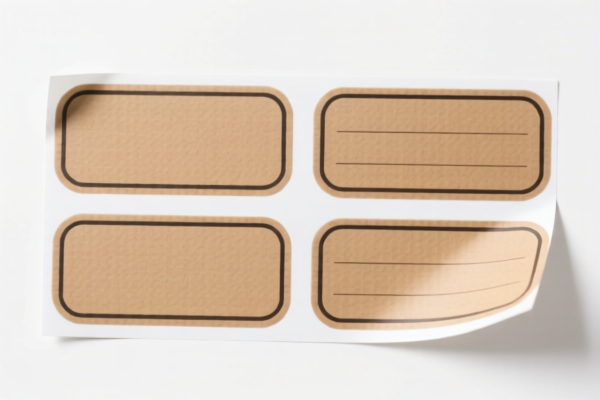
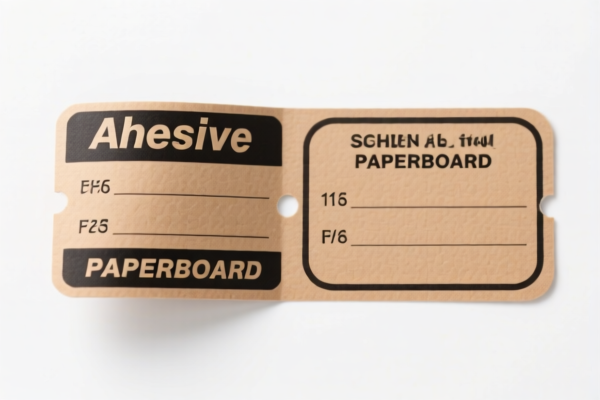
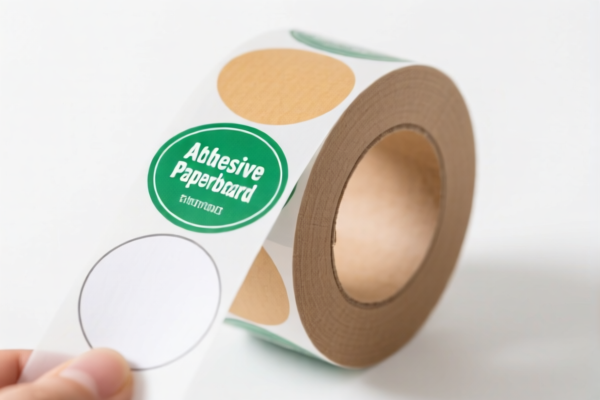
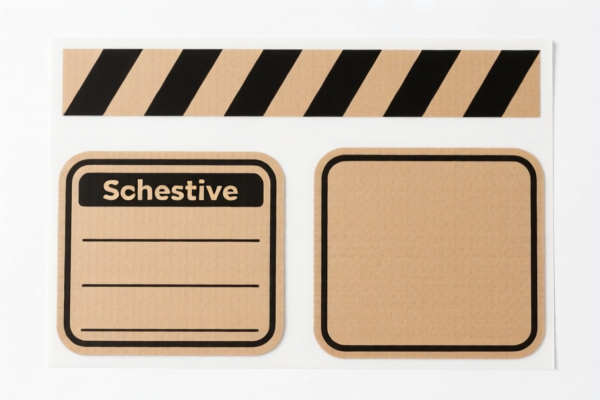
AI Analysis
🏷️ Paper & Cardboard Labels: HS Code Classification & Customs Clearance Guide
🌐 Global Trade Classification Guide | 2026 Updated Tariff Analysis | Strategic Customs Strategy
📌 1. Product Definition & Classification: Do You Know Your "Labels"?
Paper or Cardboard Labels are essential components in packaging, logistics, and branding. In international trade, they are primarily classified under Chapter 48 (Paper and Paperboard) or Chapter 49 (Printed Books, Newspapers, Pictures, and Other Products of the Printing Industry), depending on their specific material structure and printing status.
Key Distinctions: * Printed Paper Labels: Typically classified under Chapter 49 as "Other Printed Matter" if they are simple printed sheets. * Paper/Cardboard Products (Specific Types): Classified under Chapter 48 if they fall under specific subheadings for "Paper labels" or "Other paper articles."
⚠️ Critical Classification Point: - If the label is a printed piece of paper without specific structural features → Often 4911.99.xx (Other printed matter). - If the label is a specific paper product (like pre-printed labels) → Often 4821.10.xx or 4821.90.xx (Paper labels). - If it is a general paper product → 4823.90.xx (Other paper articles).
📦 2. HS Code Classification Details (2026 Latest Tariff Authority Comparison)
| HS Code | Product Description | Application Scenario | Material/State |
|---|---|---|---|
4911.99.80.00 |
Other printed matter | General printed labels, marketing labels, printed paper tags | Printed Paper |
4911.99.60.00 |
Other printed matter | Printed labels on paper, no specific craft described | Printed Paper |
4823.90.86.80 |
Other articles of paper/paperboard | General cut paper products, generic cardboard labels | Paper/Cardboard |
4823.90.67.00 |
Other articles of paper/board | Coated paper/cardboard products, cut labels | Coated Paper |
4821.10.40.00 |
Paper or paperboard labels | Match Success: Printed paper labels for identification | Printed Paper Labels |
4821.90.40.00 |
Other paper labels | Match Success: Other paper labels (e.g., drug labels, specific use) | Paper Labels |
🔍 Key Reminder: -
4821.10.40.00&4821.90.40.00: These are the most accurate for "Paper Labels" as they specifically target "labels" made of paper. -4911.99.xx: Used when the item is viewed primarily as "printed matter" rather than a "label product." -4823.90.xx: A fallback for general paper products if they don't fit the specific "label" definition in Chapter 48.
💰 3. 2026 Latest Tariff Rate Breakdown (Including Surtaxes, Policy Add-ons)
✅ Applicable Country: United States (US)
✅ Origin: China (CN)
✅ Effective Date: From November 10, 2025 (including subsequent imports)
🎯 1. 4821.10.40.00 —— Paper Labels (Printed)
| Item | Content |
|---|---|
| Base Rate | 0% (ad valorem) |
| USITC Surtax | +25% (from USITC Footnote 9903.25.00) |
| IEEPA Surtax | +10% (against China/HK products, from 2025-11-10) |
| Total Rate | 35% |
| Tax Calculation | CIF Value × 35% |
| De Minimis Exemption? | ❌ No (deny_de_minimis) |
| Legal Basis Path | IEEPA:9903.01.25 → IEEPA:9903.01.24 → USITC:4821.10.40.00 → FOOTNOTE:9903.25.00 |
📌 Explanation: - The 25% USITC surtax is under Section 301 of the Trade Act. - The 10% IEEPA surtax is the additional tariff on Chinese goods. - Total 35% is a high tariff for labels. Pre-calculation is essential!
🎯 2. 4821.90.40.00 —— Other Paper Labels
| Item | Content |
|---|---|
| Base Rate | 0% |
| USITC Surtax | +25% |
| IEEPA Surtax | +10% |
| Total Rate | 35% |
| Tax Calculation | CIF × 35% |
| De Minimis Exemption? | ❌ No |
| Legal Basis Path | IEEPA:9903.01.25 → IEEPA:9903.01.24 → USITC:4821.90.40.00 → FOOTNOTE:9903.25.00 |
📌 Note: - Same as above; applies to any paper label not specifically listed in 4821.10. - Includes drug labels, adhesive labels, etc., as long as they are paper-based.
🎯 3. 4911.99.80.00 & 4911.99.60.00 —— Other Printed Matter
| Item | Content |
|---|---|
| Base Rate | 0% |
| USITC Surtax | +7.5% |
| IEEPA Surtax | +10% |
| Total Rate | 17.5% |
| Tax Calculation | CIF × 17.5% |
| De Minimis Exemption? | ❌ No |
| Legal Basis Path | IEEPA:9903.01.25 → IEEPA:9903.01.24 → USITC:4911.99.xx → FOOTNOTE:9903.15.00 |
📌 Note: - If classified as "Other Printed Matter" instead of "Labels," the USITC surtax drops to 7.5%. - Total 17.5% is significantly lower than the 35% for labels. - Strategy: If the labels are simple printed sheets, consider arguing for 4911 classification to save 17.5% in tariffs.
🎯 4. 4823.90.86.80 & 4823.90.67.00 —— Other Paper Articles
| Item | Content |
|---|---|
| Base Rate | 0% |
| USITC Surtax | +25% |
| IEEPA Surtax | +10% |
| Total Rate | 35% |
| Tax Calculation | CIF × 35% |
| De Minimis Exemption? | ❌ No |
| Legal Basis Path | IEEPA:9903.01.25 → IEEPA:9903.01.24 → USITC:4823.90.xx → FOOTNOTE:9903.25.00 |
📌 Note: - These are fallback categories for general paper products. - High tariff (35%) applies because they are considered paper products subject to Section 301.
🛠️ 4. Customs Clearance Practical Advice (Battlefield Pit-Avoidance Guide)
✅ 1. Required Documentation Checklist (No Missing Parts)
| Document | Must Provide | Description |
|---|---|---|
| ✅ Product Specifications | ✔️ | Material (paper/cardboard), size, adhesive type, print content |
| ✅ Product Photos (with Label) | ✔️ | Clear image of the label, showing print and backing |
| ✅ Commercial Invoice | ✔️ | Must specify "Paper Labels" or "Printed Matter" |
| ✅ Packing List | ✔️ | Details quantity, weight, and packaging method |
| ✅ Certificate of Origin (CO) | ✔️ | If applicable for preferential treatment (e.g., Vietnam, Mexico) |
| ✅ Third-Party Test Report | ✔️ | FDA, REACH, or other regulatory compliance if needed |
✅ 2. Declaration Tips (Key Mantra)
🔥 "Label vs. Print: Classification is Key, Tax Difference 17.5%! Describe Precisely, Avoid Penalties!"
| Situation | Correct Declaration | Wrong Practice |
|---|---|---|
| Simple Printed Labels | 4911.99.60.00 or 4911.99.80.00 |
Misclassified as 4821 → 35% Tax |
| Specific Paper Labels (Drug/ID) | 4821.10.40.00 or 4821.90.40.00 |
Misclassified as 4911 → 17.5% Tax (if allowed) |
| General Paper Products | 4823.90.67.00 |
Misclassified as 4821 → 35% Tax |
| Coated Paper Labels | 4823.90.67.00 |
Misclassified as 4911 → 17.5% Tax (if allowed) |
✅ 3. Special Circumstances Handling
| Situation | Handling Advice |
|---|---|
| OEM Custom Labels | Provide customer order + design drawings to avoid "non-standard" classification |
| Adhesive Labels | Ensure "adhesive" is mentioned if it affects classification (though still often 4821/4911) |
| Labels for Medical Devices | If for drugs, 4821.90.40.00 is common; provide regulatory compliance docs |
| Labels for Military/Special Use | Apply for "special use" declaration; tax may be lower, but requires pre-approval |
🌍 5. Global Market Customs Clearance Comparison (2026 Latest)
| Country/Region | Recommended HS Code | Tariff (China Origin) | Certification Requirement | Notes |
|---|---|---|---|---|
| 🇺🇸 USA | 4821.10.40.00 / 4911.99.xx |
35% (Labels) / 17.5% (Printed) | No special certs | High tariff market; consider 4911 if possible |
| 🇨🇳 China | 4821.10.40.00 / 4911.99.xx |
0% - 5% | No special certs | No additional surtaxes |
| 🇪🇺 EU | 4821.10.40.00 / 4911.99.xx |
0% (if符合 CE/REACH) | CE + RoHS | No additional surtaxes |
| 🇦🇺 Australia | 4821.10.40.00 / 4911.99.xx |
5% | RCM | No additional surtaxes |
| 🇯🇵 Japan | 4821.10.40.00 / 4911.99.xx |
0% | PSE | No additional surtaxes |
📌 Conclusion: - The USA is the only market with high additional tariffs for Chinese paper labels. - Chinese paper labels face a 35% tariff if classified as "Labels" and 17.5% if classified as "Printed Matter." - China, EU, Australia, and Japan have low or zero tariffs.
📌 6. Common Mistakes & Pitfall Guide (Blood Lessons)
❌ Mistake 1: Declaring "Labels" as "General Paper Products" (4823)
👉 Consequence: Tax from 35% to 35% (no savings), but customs delay due to misclassification.
❌ Mistake 2: Declaring "Printed Labels" as "Other Printed Matter" (4911) when they are clearly "Labels"
👉 Consequence: If Customs disagrees, penalty + back tax + interest.
❌ Mistake 3: Not specifying "Adhesive" or "Material" in the invoice
👉 Consequence: Customs may reclassify to a higher tariff item.
❌ Mistake 4: Using "Label" as the only description
👉 Consequence: Ambiguity leads to random inspection and delays.
✅ Correct Practice:
"Paper Labels, Adhesive-backed, 100gsm White Paper, Printed with Barcodes, Model XYZ, For Product ID Use"
🎯 7. Conclusion: Professional Declaration, Save Time, Reduce Costs!
🎯 Remember the Mantra:
🔹 "Label vs. Print: Classify Accurately, Save 17.5%! Paper Labels 35%, Printed Matter 17.5%!"
🔹 "HS Code Determines Tax, 17.5% Difference, One Step Wrong, Thousands Lost!"
📌 Pro Tip:
If your labels are originally from Vietnam, Mexico, Thailand, or Malaysia, you may apply for IEEPA Exemption, with tariffs as low as 0%~5%. Recommend applying for Advance Ruling to avoid customs risks.
📣 Immediate Action:
📞 Contact professional customs brokers + Provide product photos + Apply for HS Code Advance Ruling
🚀 Let your labels clear customs smoothly, export efficiently, and double profits!
✨ Professional Customs Clearance Starts with Accurate Classification!
💼 Every Penny of Your Cost Deserves Precise Calculation!
Customer Reviews
About HS Code Classification
The Harmonized System (HS) is an internationally standardized nomenclature developed by the World Customs Organization (WCO) to classify traded products. Over 200 countries use the HS system as the basis for customs tariffs, trade statistics, and import/export regulations.
Each HS code follows a hierarchical structure:
- Chapter (2 digits) — Broad category of goods (e.g., Chapter 84: Machinery and Mechanical Appliances)
- Heading (4 digits) — More specific grouping within the chapter
- Subheading (6 digits) — Internationally standardized breakdown, used by all WCO member countries
- National subdivisions (8-10 digits) — Country-specific extensions for further classification, such as US HTSUS 10-digit codes
Correct HS code classification is essential for smooth customs clearance, accurate duty payment, and compliance with trade regulations. Misclassification can lead to customs delays, overpayment of duties, or penalties.
When importing from CN to US, the applicable tariff rates may include:
- Most-Favored-Nation (MFN) rate — The standard duty rate applied to WTO members
- General rate — Applied to countries without trade agreements
- Trade remedy duties — Additional tariffs such as Section 301 (anti-dumping), Section 232 (national security), or countervailing duties
The information provided on this page is for reference purposes only. For official classification, please consult with your local customs authority or a licensed customs broker.