Parboiled Coarse Grains
CN → US| HS Code | Tariff Rate | Origin | Destination | Doc |
|---|---|---|---|---|
| 1006301020 | 46.2% | CN | US | Official Doc |
| 1006301040 | 46.2% | CN | US | Official Doc |
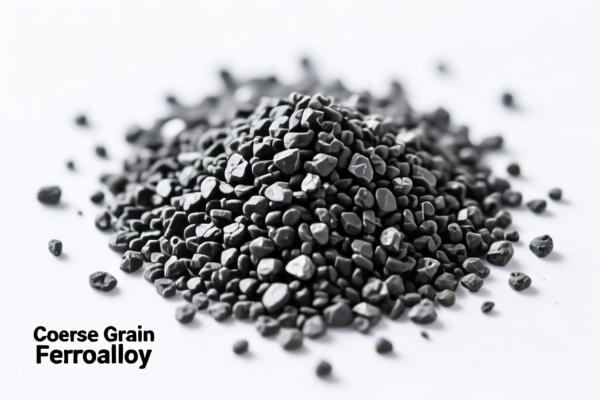
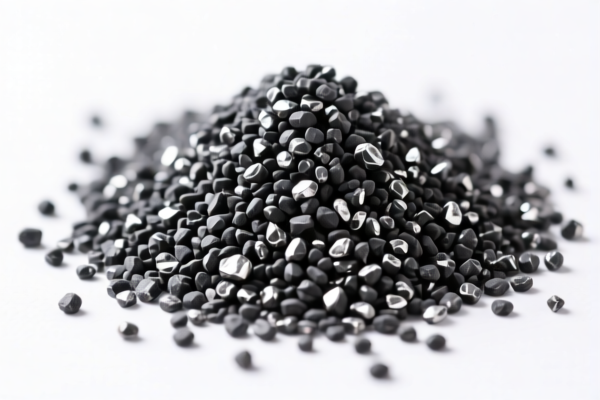
Product Images


AI Analysis
🌾 Parboiled Coarse Grains (Long Grain & Other)
🌐 HS Code Reference & Customs Clearance Guide | 2024/2025 Tariff Full Analysis | Professional Clearance Strategy
📌 I. Product Definition & Classification: Do You Truly Understand "Parboiled Rice"?
Parboiled Rice is a specific type of milled rice that has been partially boiled in its husk before milling. This process gelatinizes the starch, driving nutrients from the bran into the endosperm, resulting in firmer, separate grains that are less prone to breaking. In international trade, it is distinguished by grain length and milling type.
Key Distinctions: * Parboiled Long Grain: Specifically refers to long-grain varieties (typically length-to-width ratio > 3:1) that have undergone the parboiling process. * Parboiled Other: Includes medium/short grain, broken parboiled rice, or mixtures that do not fit the strict "Long Grain" definition.
⚠️ Critical Classification Point:
- If the rice is Long Grain and Parboiled →归入 1006.30.10.20
- If the rice is Not Long Grain (e.g., medium, short, or mixed) and Parboiled →归入 1006.30.10.40
- Note: "Coarse Grains" in this context specifically refers to Rice (HS Chapter 10), not wheat or corn. Misclassification as general "milled rice" without specifying "parboiled" can lead to errors, though the base tax rate here is uniform.
📦 II. HS Code Classification Details (Authoritative 2024/2025 Tariff Schedule)
| HS Code | Product Description | Application Scenario | Grain Type | Parboiled Status |
|---|---|---|---|---|
1006.30.10.20 |
Parboiled Long Grain Rice | Premium long-grain parboiled rice exports/imports | ✅ Long Grain | ✅ Yes |
1006.30.10.40 |
Parboiled Other, including mixtures | Medium/short grain, broken rice, or mixed parboiled rice | ❌ Not Long Grain (or Mixed) | ✅ Yes |
🔍 Key Reminder:
- 1006.30 is the subheading for "Semi-milled or wholly milled rice, parboiled." - The distinction between .20 and .40 is purely based on grain length. - "Wholely milled" means the bran layer is completely removed. "Semi-milled" means part of the bran remains, but for parboiled rice, the classification usually focuses on the treatment process.
💰 III. 2024/2025 Latest Tariff Rate Details (Including Surtaxes & Policy Add-ons)
✅ Applicable Country: USA (US)
✅ Origin: China (CN) [Assumed based on typical trade context; if other origin, verify]
✅ Effective Time: Current
🎯 1. 1006.30.10.20 —— Parboiled Long Grain Rice
| Item | Content |
|---|---|
| Base Duty (MFN) | 0.0% |
| Section 301 Surcharge | 0.0% |
| Total Tax Rate | 0.0% |
| Tax Calculation | CIF Value × 0.0% = $0 |
| De Minimis Eligibility | ✅ Yes (Subject to $800 limit) |
| Legal Basis | Standard HTSUS 1006.30.10.20 |
📌 Explanation:
- Unlike electronics or steel, parboiled rice currently faces zero additional tariffs from the US government under Section 301 or other executive orders as of the latest updates. - This makes it a low-tariff agricultural product for importers from eligible countries.
🎯 2. 1006.30.10.40 —— Parboiled Other, including mixtures
| Item | Content |
|---|---|
| Base Duty (MFN) | 0.0% |
| Section 301 Surcharge | 0.0% |
| Total Tax Rate | 0.0% |
| Tax Calculation | CIF Value × 0.0% = $0 |
| De Minimis Eligibility | ✅ Yes (Subject to $800 limit) |
| Legal Basis | Standard HTSUS 1006.30.10.40 |
📌 Note:
- Same tariff treatment as long-grain parboiled rice. - Even if the rice is a mixture of different grain types, as long as it is parboiled rice, it falls under this code with 0% total tax.
🛠️ IV. Customs Clearance Practical Advice (Real-World Pitfall Guide)
✅ 1. Required Documentation Checklist (All Are Essential)
| Document | Required | Explanation |
|---|---|---|
| ✅ Commercial Invoice | ✔️ | Must clearly state: "Parboiled Rice," specify Long Grain vs. Other, and list HS Code. |
| ✅ Packing List | ✔️ | Detail net/gross weight, number of bags/pallets. |
| ✅ Certificate of Origin | ✔️ | If claiming preferential treatment under FTAs (e.g., USMCA, if applicable to partner country). |
| ✅ Phytosanitary Certificate | ✔️ | Crucial for agriculture. Issued by the exporting country's agricultural authority to prove freedom from pests/quarantine organisms. |
| ✅ Fumigation Certificate | ✔️ | Often required to prove rice was treated for insects. |
| ✅ FDA Prior Notice | ✔️ | Mandatory for all food imports entering the US under the FDA Bioterrorism Act. |
✅ 2. Declaration Tips (Key Mnemonics)
🔥 "Specify 'Parboiled', Define Grain Length, Provide Phytosanitary, Avoid Delay!"
| Scenario | Correct Declaration | Wrong Practice |
|---|---|---|
| Long Grain Parboiled | HS Code: 1006.30.10.20Description: "Parboiled Long Grain Rice" |
Using generic "Rice" code 1006.20 → Risk of misclassification |
| Mixed/Other Parboiled | HS Code: 1006.30.10.40Description: "Parboiled Rice, Other/Mixed" |
Assuming all parboiled rice is 1006.30.10.20 |
| Unmilled/Polished vs. Parboiled | Clearly state "Parboiled" | Omitting "Parboiled" may lead to classification under normal milled rice (still 0%, but wrong code) |
| Bulk vs. Retail Packaging | Same HS code | No difference in tax, but affects phytosanitary requirements slightly |
✅ 3. Special Handling Cases
| Situation | Handling Advice |
|---|---|
| Mixture of Long and Other Grain | If the mixture is predominantly long grain, it may qualify for .20, but customs may require breakdown. Safe choice: Consult a broker. Often, if not strictly long grain, use .40. |
| Glazed Rice | Glazing is a finishing process. If rice is parboiled and glazed, it is still classified under parboiled codes (1006.30.xxxx), not general polished rice. |
| Organic Certification | While not affecting HS Code, having an organic certificate can facilitate faster FDA customs release if flagged for food safety. |
| Country of Origin | Parboiling is a "substantial transformation." If raw rice is from Country A, but parboiled in Country B, the origin may be considered Country B for labeling purposes (verify with CBP). |
🌍 V. Global Market Customs Comparison (2024/2025)
| Country/Region | Recommended HS Code | Duty Rate (China Origin) | Certification Requirements | Remarks |
|---|---|---|---|---|
| 🇺🇸 USA | 1006.30.10.20 / .40 |
0.0% | FDA Prior Notice, Phytosanitary | No Section 301 tariffs on rice. |
| 🇪🇺 EU | 1006.30 |
0% - 10% (varies) | Phytosanitary, Residue Limits | Strict pesticide residue limits. |
| 🇨🇳 China | 1006.30.10 |
0% - 5% | CIQ Inspection | Import quotas may apply for non-quota rice. |
| 🇦🇪 UAE | 1006.30 |
0% | Phytosanitary, Halal (if applicable) | Free trade zones offer duty-free entry. |
| 🇸🇬 Singapore | 1006.30 |
0% | SFA Permit | Very smooth clearance process. |
📌 Conclusion:
- USA is highly competitive with 0% total duty for parboiled rice. - FDA and Phytosanitary certificates are the biggest bottlenecks, not tariffs.
📌 VI. Common Mistakes & Pitfall Guide (Lessons Learned)
❌ Mistake 1: Declaring "Milled Rice" without specifying "Parboiled"
👉 Consequence: Wrong HS Code (e.g., 1006.20), potential audit for misdeclaration, though tax may be similar.
❌ Mistake 2: Forgetting FDA Prior Notice
👉 Consequence: Refusal of Entry or detention at port until notice is filed. This is the #1 reason for rice shipment delays.
❌ Mistake 3: Missing Phytosanitary Certificate
👉 Consequence: Customs will reject entry for pest risk. The shipment may be destroyed or re-exported.
❌ Mistake 4: Incorrect Grain Length Classification
👉 Consequence: If "Long Grain" is claimed but samples show short grain, customs may reclassify to .40 (same tax here, but creates compliance record issues) or demand penalties.
✅ Correct Practice:
"Parboiled Long Grain Rice, White, 50lb Bags, Net Weight 400kg, FDA Prior Notice #XXXX, Phytosanitary Certificate #YYYY, Origin: Thailand"
🎯 VII. Conclusion: Professional Clearance, Time & Cost Efficient!
🎯 Remember the Mantra:
🔹 "Parboiled is Key, Long Grain vs. Other Delineate, FDA & Phyto are Mandatory, Zero Tax Makes it Great!"
🔹 "HS Code 1006.30, Tax 0%, Don't Skip FDA, Or You Won't Enter!"
📌 Pro Tip:
- If importing in small quantities (under $800), ensure the carrier files for De Minimis Entry (Section 321).
- For large commercial shipments, pre-file FDA Prior Notice at least 4 hours before vessel arrival (or 2 hours for air).
- Always keep a sample of the rice for customs inspection if requested.
📣 Immediate Action:
📞 Contact a licensed customs broker to verify FDA registration and Phytosanitary requirements for your specific origin country.
🚀 Ensure your supplier provides Phytosanitary Certificates that meet USDA-APHIS standards.
✈️ Let your parboiled rice flow smoothly with 0% tariff and compliant documentation!
✨ Professional clearance starts with accurate classification!
💼 Your agricultural import, perfectly calculated!
Customer Reviews
About HS Code Classification
The Harmonized System (HS) is an internationally standardized nomenclature developed by the World Customs Organization (WCO) to classify traded products. Over 200 countries use the HS system as the basis for customs tariffs, trade statistics, and import/export regulations.
Each HS code follows a hierarchical structure:
- Chapter (2 digits) — Broad category of goods (e.g., Chapter 84: Machinery and Mechanical Appliances)
- Heading (4 digits) — More specific grouping within the chapter
- Subheading (6 digits) — Internationally standardized breakdown, used by all WCO member countries
- National subdivisions (8-10 digits) — Country-specific extensions for further classification, such as US HTSUS 10-digit codes
Correct HS code classification is essential for smooth customs clearance, accurate duty payment, and compliance with trade regulations. Misclassification can lead to customs delays, overpayment of duties, or penalties.
When importing from CN to US, the applicable tariff rates may include:
- Most-Favored-Nation (MFN) rate — The standard duty rate applied to WTO members
- General rate — Applied to countries without trade agreements
- Trade remedy duties — Additional tariffs such as Section 301 (anti-dumping), Section 232 (national security), or countervailing duties
The information provided on this page is for reference purposes only. For official classification, please consult with your local customs authority or a licensed customs broker.