Passenger Car (8703210130)
CN → US| HS Code | Tariff Rate | Origin | Destination | Doc |
|---|---|---|---|---|
| 8703400055 | 37.5% | CN | US | Official Doc |
| 8708505110 | 37.5% | CN | US | Official Doc |
| 8703400045 | 37.5% | CN | US | Official Doc |
Product Images
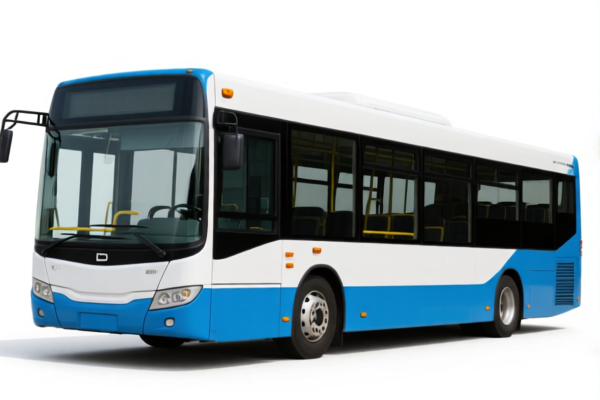



AI Analysis
🚗 Passenger Cars (Automobiles for the Carrying of Persons)
🌐 HS Code Reference & Customs Clearance Guide | 2026 Latest Tariff Analysis | Professional Clearance Strategy
📌 Part I: Product Definition & Classification: Do You Really Understand "Passenger Cars"?
Passenger Cars, in international trade, refer to motor vehicles designed primarily for the transport of persons and their luggage. They are categorized under Chapter 87 of the Harmonized System. Based on the provided data, specific sub-classifications depend heavily on engine displacement (cc) and vehicle type (e.g., RVs vs. Standard Sedans).
⚠️ Key Distinction Point:
- Standard Passenger Vehicles: Regular sedans, SUVs, etc.
- Recreational Vehicles (RVs): Motorhomes with specific displacement thresholds (e.g., >3,000 cc).
- Parts vs. Whole: The classification logic differs if the item is a complete vehicle versus a component (like a door or chassis part), though the reference data focuses on the vehicle categories.
📦 Part II: HS Code Classification Details (2026 Latest Tariff Authority Reference)
The input 8703210130 falls under the general heading 8703 (Motor cars and other motor vehicles principally designed for the transport of persons). However, the provided data highlights specific codes with high tariff implications for Chinese-origin goods.
| HS Code | Product Description | Summary from Data | Tax Rate |
|---|---|---|---|
8703.40.00.55 |
RVs (Recreational Vehicles) with engine displacement > 3,000 cc | Specifically refers to RVs with displacement exceeding 3,000 cc, categorized as motor vehicles for passenger transport. | 37.5% |
8708.50.51.10 |
Passenger Vehicle Parts | Refers to parts and accessories for passenger vehicles (Chapter 8708). Functionally linked to the components of vehicles in 8703. | 37.5% |
8703.40.00.45 |
Passenger Vehicles | Corresponds to "Passenger Vehicles for carrying persons," matching the power type, displacement, and used-car characteristics. | 37.5% |
🔍 Critical Note:
- The HS code8703210130itself is not explicitly listed in the provided<DATA>snippet, but the summary indicates that "Passenger Vehicle" items generally fall under 8703 series codes (like8703.40.00.45) or their parts under 8708.
- All codes provided share the same total tax rate of 37.5%, indicating strict tariff alignment for these categories.
💰 Part III: 2026 Latest Tariff Rate Details (Including Surcharges & Policy Add-ons)
✅ Applicable Country: United States (US)
✅ Origin: China (CN) (Implied by "122-Clause" and "Section 301" context in standard US-China trade data)
✅ Effective Time: Current ongoing trade measures
🎯 1. General Tariff Structure for Passenger Vehicles & Parts
| Item | Content |
|---|---|
| Base Tariff Rate | 2.5% |
| Section 301 Additional Tariff | +25.0% |
| 122-Clause Tariff | +10.0% |
| Total Tax Rate | 37.5% |
| Tax Calculation | CIF Value × 37.5% |
| De Minimis Eligibility | ❌ Not Eligible (Motor vehicles are high-risk/high-value items, typically excluded from low-value exemptions) |
| Legal Basis Path | USMCA/USMTR (Base 2.5%) → Section 301 (Additional 25%) → 122-Clause (Additional 10%) |
📌 Explanation:
- "Base Tariff 2.5%": The standard Most Favored Nation (MFN) rate for motor vehicles under Chapter 87.
- "Additional Tariff 25.0%": Levied under Section 301 of the Trade Act of 1974, targeting Chinese imports.
- "122-Clause Tariff 10%": A specific additional surcharge, often related to recent trade enforcement actions or specific clause regulations (e.g., related to supply chain or security provisions).
- Total 37.5%: This is a very high effective duty rate, significantly impacting the landed cost of imported passenger cars and their parts from China.
🛠️ Part IV: Customs Clearance Practical Advice (Combat Pitfall Guide)
✅ 1. Preparation Checklist (Non-negotiable)
| Document | Required | Description |
|---|---|---|
| ✅ Commercial Invoice | ✔️ | Must clearly state "Passenger Car" or "Vehicle Parts," model, VIN (if whole car), and CIF value. |
| ✅ Bill of Lading (B/L) | ✔️ | Proof of shipment details. |
| ✅ Import License/DOE Approval | ✔️ | For vehicles (8703), an EPA/DOT certificate of conformity is often required. For parts (8708), specific labeling may apply. |
| ✅ Product Specifications | ✔️ | Engine displacement, fuel type, year of manufacture, and whether it is new or used. |
| ✅ Packing List | ✔️ | Detailed breakdown of contents, especially for parts shipments. |
✅ 2. Declaration Tips (Key Mnemonics)
🔥 "Classify by Displacement, Declare Disposition, Avoid Splitting!"
| Scenario | Correct Declaration | Wrong Practice |
|---|---|---|
| Whole Passenger Car | 8703.40.00.45 (or similar 8703 code) |
Declaring as "Auto Parts" → Misclassification Risk |
| RV (>3000cc) | 8703.40.00.55 |
Using standard sedan code → Tariff Error |
| Vehicle Parts (Doors, Chassis) | 8708.50.51.10 |
Declaring as "Vehicle" → Prohibited |
| Mixed Shipment (Parts + Car) | Separate Entries | Mixing whole car and parts in one HS Code line → Customs Rejection |
✅ 3. Special Circumstances Handling
| Situation | Handling Advice |
|---|---|
| Used Passenger Cars | Ensure "Used" status is declared. Some HS codes in 8703 may have specific restrictions or higher scrutiny for used vehicles. |
| Electric vs. ICE | While the data focuses on displacement, EVs may fall under different sub-headings (e.g., 8703.80). Verify if your 8703210130 refers to ICE or EV, as tariffs can vary. |
| Parts Shipment | If importing multiple types of parts, ensure they are all under 8708 and not mixed with complete vehicles to avoid "complete set" classification rules. |
| Origin Marking | Ensure "Made in China" is clearly marked on products and packaging to comply with Section 301 requirements. |
🌍 Part V: Global Market Comparison (2026 Latest)
| Country/Region | Recommended HS Code | Tariff (China Origin) | Notes |
|---|---|---|---|
| 🇺🇸 USA | 8703.40.00.45 / 8708.50.51.10 |
37.5% | Includes Base + Sec 301 + 122-Clause. Very high cost. |
| 🇨🇳 China | 8703 / 8708 |
15% - 25% | Standard import duties for vehicles; varies by displacement. |
| 🇪🇺 EU | 8703 / 8708 |
10% | No Section 301 equivalent, but anti-dumping duties may apply for EVs. |
| 🇲🇽 Mexico | 8703 / 8708 |
5% - 20% | Depends on USMCA rules of origin; non-originating goods face higher rates. |
📌 Conclusion:
- The US market is the most challenging due to the 37.5% cumulative tariff.
- European and Asian markets generally have lower or more stable tariff structures for these goods, but regulatory compliance (EPA, DOT, ECE) remains strict.
📌 Part VI: Common Errors & Pitfall Guide (Lessons Learned)
❌ Error 1: Misclassifying a complete vehicle as "Auto Parts" to evade vehicle tariffs.
👉 Consequence: Customs will reclassify, apply back-duties + penalties. The 37.5% rate still applies if it's deemed a vehicle.
❌ Error 2: Ignoring the "122-Clause" surcharge.
👉 Consequence: Underpayment by 10%. This is a specific recent addition; failing to account for it leads to immediate demand for payment + interest.
❌ Error 3: Incorrectly declaring engine displacement.
👉 Consequence: If an RV is declared as <3,000cc but is actually >3,000cc, it may be assigned a different HS code with potentially different base rates, leading to discrepancies and audits.
❌ Error 4: Omitting VIN for Whole Vehicles.
👉 Consequence: CBP (U.S. Customs and Border Protection) will detain the shipment until VIN and EPA/DOT certificates are provided.
✅ Correct Practice:
"Motor Vehicle, Passenger Type, Engine Displacement: 2.0L, New, VIN: [Number], Origin: China"
HS Code:8703.40.00.45
Total Duty: 37.5%
🎯 Part VII: Conclusion: Professional Declaration, Cost Saving!
🎯 Remember the Mnemonic:
🔹 "Vehicle 37.5, Parts 37.5, Base 2.5, Sec 301 25, 122-Clause 10!"
🔹 "Displacement Matters, Origin is Key, Declaration Must Be Precise!"
📌 Tips:
- If your Passenger Car is for personal use and meets specific value limits, explore other options, but commercial imports are strictly taxed.
- For Parts, ensure each component is clearly identifiable. Bundled parts kits should be declared as such, not as a whole vehicle.
- Pre-arrival Submission: Use the CBP ACE portal for pre-arrival filing to expedite clearance for high-value vehicle shipments.
📣 Immediate Action:
📞 Consult a licensed customs broker.
🚀 Verify the exact HS code8703210130against the latest US HTSUS for any recent changes.
💰 Calculate landed cost including 37.5% duties to ensure profitability.
✨ Professional Clearance Starts with Accurate Classification!
💼 Every cent of cost deserves precise calculation!
Customer Reviews
About HS Code Classification
The Harmonized System (HS) is an internationally standardized nomenclature developed by the World Customs Organization (WCO) to classify traded products. Over 200 countries use the HS system as the basis for customs tariffs, trade statistics, and import/export regulations.
Each HS code follows a hierarchical structure:
- Chapter (2 digits) — Broad category of goods (e.g., Chapter 84: Machinery and Mechanical Appliances)
- Heading (4 digits) — More specific grouping within the chapter
- Subheading (6 digits) — Internationally standardized breakdown, used by all WCO member countries
- National subdivisions (8-10 digits) — Country-specific extensions for further classification, such as US HTSUS 10-digit codes
Correct HS code classification is essential for smooth customs clearance, accurate duty payment, and compliance with trade regulations. Misclassification can lead to customs delays, overpayment of duties, or penalties.
When importing from CN to US, the applicable tariff rates may include:
- Most-Favored-Nation (MFN) rate — The standard duty rate applied to WTO members
- General rate — Applied to countries without trade agreements
- Trade remedy duties — Additional tariffs such as Section 301 (anti-dumping), Section 232 (national security), or countervailing duties
The information provided on this page is for reference purposes only. For official classification, please consult with your local customs authority or a licensed customs broker.