Passenger Car Radial Tire (17 18 inch)
CN → US| HS Code | Tariff Rate | Origin | Destination | Doc |
|---|---|---|---|---|
| 4013100010 | 38.7% | CN | US | Official Doc |
| 4013905050 | 38.7% | CN | US | Official Doc |
| 4011101050 | 39.0% | CN | US | Official Doc |
| 4012114000 | 39.0% | CN | US | Official Doc |
| 4011101060 | 39.0% | CN | US | Official Doc |
Product Images
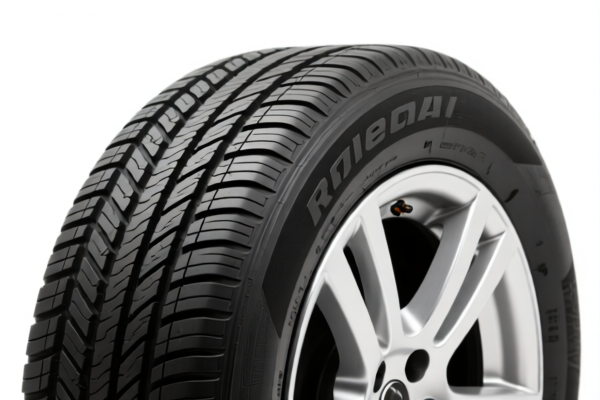
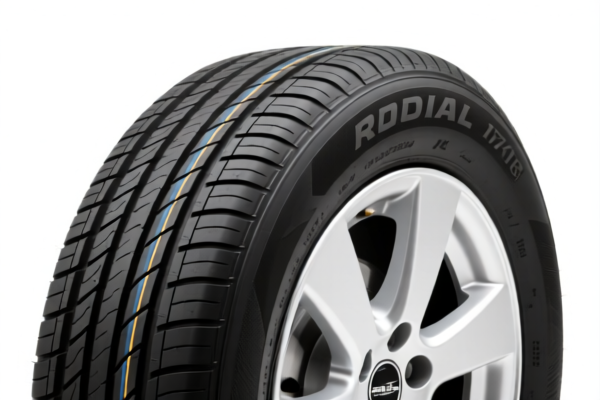
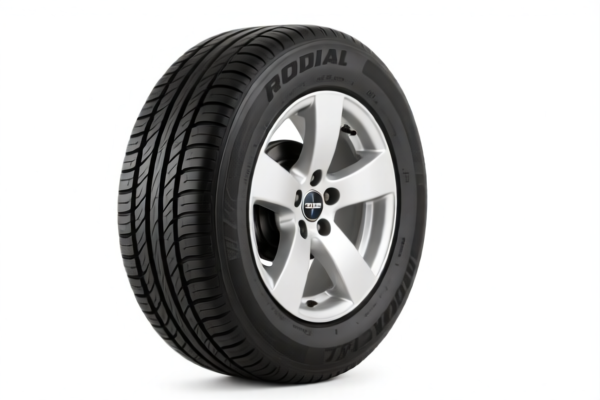
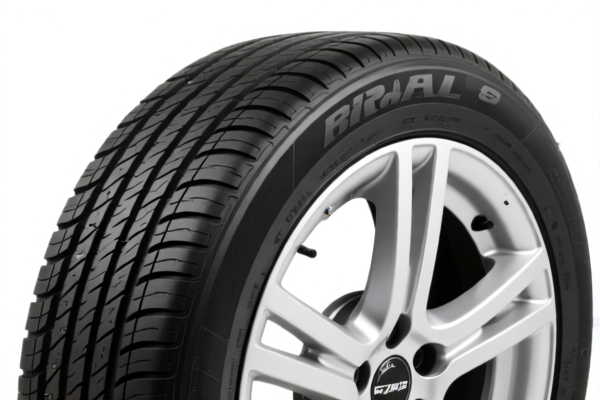
AI Analysis
🚗 Passenger Car Radial Tire (17-18 Inch)
🌐 HS Code Reference & Customs Clearance Guide | 2026 Latest Tariff Analysis | Professional Clearance Strategy
📌 I. Product Definition & Classification: Are You Clear on "Tires"?
Passenger Car Radial Tires are the primary rubber components that support the vehicle's weight and provide traction. In international trade, they are strictly classified based on material, structure (radial/bias), end-use (passenger car vs. truck/bus), and rim diameter.
For the input "Passenger Car Radial Tire (17-18 inch)", the key classification drivers are: * Material: Rubber (implied by "Tire"). * Structure: Radial (explicitly stated). * End-Use: Passenger Car ("Passenger Car"). * Size: 17-18 inches (approx. 43.18 cm – 45.72 cm rim diameter).
⚠️ Critical Distinction:
- If it is a new radial tire for passenger cars with rim diameter ≤ 43.18 cm → 4011.10.10.50 / 4011.10.10.60
- If it is a new radial tire for passenger cars with rim diameter > 43.18 cm but ≤ 45.72 cm → 4011.10.10.50 / 4011.10.10.60
- If it is a recanned/retreaded tire → 4012.11.40.00
- If it is an inner tube (not the outer tire) → 4013.10.00.10 / 4013.90.50.50
📦 II. HS Code Classification Details (2026 Latest Tariff Authority Comparison)
| HS Code | Product Description | Applicability | Rim Diameter Scope | Tax Rate |
|---|---|---|---|---|
4011.10.10.50 |
New pneumatic tires, of rubber, radial type, for passenger cars | New Radial Tires | ≤ 43.18 cm (approx. ≤ 17 inches) | 39.0% |
4011.10.10.60 |
New pneumatic tires, of rubber, radial type, for passenger cars | New Radial Tires | > 43.18 cm & ≤ 45.72 cm (approx. 17-18 inches) | 39.0% |
4012.11.40.00 |
Retreaded pneumatic tires, of rubber, new casings, for passenger cars | Recanned/Retreaded Tires | Any (if new casing) | 39.0% |
4013.10.00.10 |
Inner tubes, of rubber, for bicycles or motor vehicles | Inner Tubes Only | N/A (Accessory) | 38.7% |
4013.90.50.50 |
Other inner tubes, of rubber, for other vehicles | Other Inner Tubes | N/A (Accessory) | 38.7% |
🔍 Key Notes: - The product name "Passenger Car Radial Tire" strongly suggests a new outer tire, making
4011.10.10.50or4011.10.10.60the most likely candidates. - The size "17-18 inch" spans two sub-categories in some tariff schedules. 17 inches typically falls under the ≤ 43.18 cm bracket, while 18 inches may exceed it depending on exact rim width specifications. Always verify the exact rim diameter in centimeters for precise classification. - If the product is merely an inner tube (not the full tire), it must be declared under 4013. However, "Tire" usually refers to the outer rubber shell. If the shipment contains both tires and tubes, they must be declared separately or as a set if legally permissible (usually not for high-tax items).
💰 III. 2026 Latest Tariff Rate Breakdown (Including Surtaxes & Policy Add-ons)
✅ Applicable Country: United States (US)
✅ Origin: China (CN)
✅ Effective Time: From November 10, 2025 (and subsequent imports)
🎯 1. 4011.10.10.50 & 4011.10.10.60 —— New Radial Tires for Passenger Cars
| Item | Content |
|---|---|
| Base Duty Rate | 4.0% (ad valorem) |
| USITC Surtax (Section 301) | +25.0% |
| IEEPA Surtax | +10.0% (For products from China/HK, effective Nov 10, 2025) |
| Total Effective Rate | 39.0% |
| Tax Calculation | CIF Value × 39.0% |
| De Minimis Exemption Eligibility | ❌ Denied (deny_de_minimis) |
| Legal Basis Path | IEEPA:9903.01.25 → IEEPA:9903.01.24 → USITC:4011.10.10.50/60 → FOOTNOTE:301 |
📌 Explanation: - "USITC Surtax 25%" comes from Section 301 of the Trade Act under the "Additional Duties." - "IEEPA 10%" is an additional tariff under the International Emergency Economic Powers Act targeting Chinese products. - Total 39.0% is a high tariff. Misclassification can lead to severe penalties or back taxes.
🎯 2. 4012.11.40.00 —— Retreaded Radial Tires for Passenger Cars
| Item | Content |
|---|---|
| Base Duty Rate | 4.0% (ad valorem) |
| USITC Surtax (Section 301) | +25.0% |
| IEEPA Surtax | +10.0% |
| Total Effective Rate | 39.0% |
| Tax Calculation | CIF Value × 39.0% |
| De Minimis Exemption Eligibility | ❌ Denied |
| Legal Basis Path | IEEPA:9903.01.25 → IEEPA:9903.01.24 → USITC:4012.11.40.00 → FOOTNOTE:301 |
📌 Note: - Retreaded tires have the same high tariff burden as new tires due to Section 301 and IEEPA measures. - Ensure the product is correctly labeled as "Retreaded" or "Recanned" to avoid misdeclaration as "New," which carries similar rates but different regulatory scrutiny.
🎯 3. 4013.10.00.10 & 4013.90.50.50 —— Inner Tubes
| Item | Content |
|---|---|
| Base Duty Rate | 3.7% (ad valorem) |
| USITC Surtax (Section 301) | +25.0% |
| IEEPA Surtax | +10.0% |
| Total Effective Rate | 38.7% |
| Tax Calculation | CIF Value × 38.7% |
| De Minimis Exemption Eligibility | ❌ Denied |
| Legal Basis Path | IEEPA:9903.01.25 → IEEPA:9903.01.24 → USITC:4013.10.00.10/90.50.50 → FOOTNOTE:301 |
📌 Note: - Inner tubes are taxed slightly lower than tires (38.7% vs. 39.0%), but the difference is negligible compared to the total cost. - Do not declare outer tires as inner tubes to save 0.3%. This is a common audit trigger and can result in heavy fines for fraud.
🛠️ IV. Customs Clearance Practical Advice (Real-World Pitfall Guide)
✅ 1. Required Document Checklist (All are Mandatory)
| Document | Required? | Notes |
|---|---|---|
| ✅ Product Specification Sheet | ✔️ | Must include size (e.g., 225/60R17), load index, speed rating, and construction (Radial). |
| ✅ Product Photos (Labeled) | ✔️ | Clear images of the sidewall showing "RADIAL," "PASSENGER CAR," and size. |
| ✅ Commercial Invoice | ✔️ | Must explicitly state "New Pneumatic Radial Tire" or "Retreaded Tire." Avoid vague terms like "Auto Parts." |
| ✅ Packing List | ✔️ | Detail quantity per box/pallet. |
| ✅ Certificate of Origin | ✔️ | To confirm Chinese origin for IEEPA assessment. |
| ✅ Third-Party Test Reports | ✔️ | DOT approval, ECE certification, or US FMVSS compliance if applicable. |
✅ 2. Declaration Tips (Key Mnemonics)
🔥 "Tire Type, Rim Size, Origin Truth!"
| Situation | Correct Declaration | Wrong Practice |
|---|---|---|
| New Radial Tire, 17" | 4011.10.10.50 |
Declaring as "Automotive Accessory" → Higher risk, audit |
| New Radial Tire, 18" | 4011.10.10.60 (if >43.18cm) |
Assuming all are 4011.10.10.50 → Misclassification |
| Retreaded Tire | 4012.11.40.00 |
Declaring as "New Tire" → Fraud/Surveillance |
| Inner Tube Only | 4013.10.00.10 |
Declaring as "Tire" → Over-taxation (minor) or Under-taxation (if swapped) |
| Tire + Rim Set | Declare Separately | Bundling → Complex valuation, potential delays |
✅ 3. Special Cases Handling
| Situation | Handling Advice |
|---|---|
| OEM Custom Tires | Provide original equipment manufacturer contracts and design specs to prove end-use. |
| Mixed Sizes (17" & 18") | Declare each size under its respective HS Code (...10.50 vs ...10.60) on the same entry, or split into separate entries. |
| Retreaded vs. New | Provide proof of retreading process (e.g., manufacturing records). Mislabeling retreads as new can lead to penalties. |
| Bilateral Trade Agreements | Note: No preferential tariff for China origin under USMCA or other major FTAs for these HS codes. |
🌍 V. Global Main Market Customs Comparison (2026 Latest)
| Country/Region | Recommended HS Code | Tariff | Certification | Remarks |
|---|---|---|---|---|
| 🇺🇸 USA | 4011.10.10.50/60 |
39.0% | DOT, FMVSS | Highest burden due to 301/IEEPA |
| 🇨🇳 China | 4011.10.10.50/60 |
~5-10% | CCC (if for domestic sale) | Low import duty, but high VAT |
| 🇪🇺 EU | 4011.10 |
4.5% | E-mark, UZEM | No Section 301/IEEPA |
| 🇯🇵 Japan | 4011.10 |
5% | JIS, PSE | Moderate duty |
| 🇦🇺 Australia | 4011.10 |
5% | RCM | Moderate duty |
📌 Conclusion: - The USA is the most challenging market for Chinese-origin tires due to the 39.0% total tariff rate. - No Free Trade Agreement benefits apply for tires from China to the US. - Cost Management is Critical: A $100 tire costs $139 at US customs. Budget accordingly.
📌 VI. Common Errors & Pitfall Guide (Blood & Tears Lessons)
❌ Error 1: Declaring 18-inch tires under 4011.10.10.50 (which is for ≤43.18 cm)
👉 Consequence: Customs may reject the entry or reclassify it to 4011.10.10.60, causing delays. Although the tax rate is the same, inaccurate description triggers audits.
❌ Error 2: Declaring Retreaded Tires as New Tires
👉 Consequence: Severe penalties for misdeclaration. Retreaded tires require specific documentation and labeling.
❌ Error 3: Using vague terms like "Auto Parts" or "Rubber Goods"
👉 Consequence: Customs will classify under the most specific code, which is the high-tax tire code, or hold the shipment for inspection.
❌ Error 4: Assuming De Minimis Exemption applies
👉 Consequence: Tires are explicitly excluded from de minimis. Every single unit, regardless of value, is subject to duty and surtax.
✅ Correct Approach:
"New Radial Pneumatic Tire, Passenger Car, Size 225/60R17, DOT Approved, Made in China"
🎯 VII. Conclusion: Precise Declaration Saves Money & Time
🎯 Remember the Mnemonic:
🔹 "Radial New, 39% Tax; Retread Same, Don't Play Back."
🔹 "Size Matters: 17 vs 18, Check the CM."
🔹 "No De Minimis, Pay Full Price, Every Day."
📌 Pro Tip:
- If your tires are originating from Vietnam, Mexico, or Thailand, you may qualify for lower tariffs (potentially 0-2.5% base, plus any applicable surtaxes depending on current policy).
- Always apply for an Advance Ruling from US CBP if you have mixed shipments or unusual sizes.
- Partner with a licensed customs broker experienced in rubber products to ensure correct HS code selection (...10.50 vs ...10.60) and documentation.
📣 Take Action Now:
📞 Contact a Customs Broker + Provide Tire Sidewall Photo + Verify Rim Diameter in CM
🚀 Ensure your Passenger Car Radial Tires clear US Customs smoothly, efficiently, and without hidden costs!
✨ Professional Clearance Starts with Accurate Classification!
💼 Every Dollar of Tariff is Predictable, Not a Surprise!
Customer Reviews
About HS Code Classification
The Harmonized System (HS) is an internationally standardized nomenclature developed by the World Customs Organization (WCO) to classify traded products. Over 200 countries use the HS system as the basis for customs tariffs, trade statistics, and import/export regulations.
Each HS code follows a hierarchical structure:
- Chapter (2 digits) — Broad category of goods (e.g., Chapter 84: Machinery and Mechanical Appliances)
- Heading (4 digits) — More specific grouping within the chapter
- Subheading (6 digits) — Internationally standardized breakdown, used by all WCO member countries
- National subdivisions (8-10 digits) — Country-specific extensions for further classification, such as US HTSUS 10-digit codes
Correct HS code classification is essential for smooth customs clearance, accurate duty payment, and compliance with trade regulations. Misclassification can lead to customs delays, overpayment of duties, or penalties.
When importing from CN to US, the applicable tariff rates may include:
- Most-Favored-Nation (MFN) rate — The standard duty rate applied to WTO members
- General rate — Applied to countries without trade agreements
- Trade remedy duties — Additional tariffs such as Section 301 (anti-dumping), Section 232 (national security), or countervailing duties
The information provided on this page is for reference purposes only. For official classification, please consult with your local customs authority or a licensed customs broker.