Patent Composite Leather
CN → US| HS Code | Tariff Rate | Origin | Destination | Doc |
|---|---|---|---|---|
| 4205008000 | 35.0% | CN | US | Official Doc |
| 4205001000 | 35.0% | CN | US | Official Doc |
| 6217109550 | 32.1% | CN | US | Official Doc |
| 6217909095 | 32.1% | CN | US | Official Doc |
Product Images

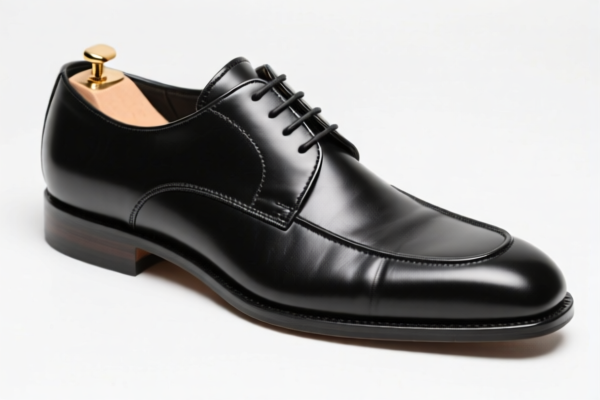


AI Analysis
🧵 Patent Composite Leather Apparel Accessories & Parts
HS Code Classification & Customs Clearance Guide | 2026 Latest Tariff Analysis | Professional Strategy
📌 Disclaimer: This guide is based strictly on the provided
<DATA>content. It covers Patent Composite Leather products classified under specific HS Codes for customs purposes. The focus is on US Import Duties (implied by "122 Clauses" and additional tariffs typical in recent US-China trade contexts).
🌐 I. Product Definition & Classification: What is "Patent Composite Leather"?
Patent Composite Leather refers to a engineered material made by bonding a layer of patent leather (high-gloss, finished leather) or synthetic leather with other backing materials (such as fabric, foam, or paper). It is widely used in the fashion industry for: * Garment Accessories: Belts, straps, trims, cuffs, and decorative patches. * Fashion Parts: Zipper pulls, buttons, hooks, and other findings. * Apparel Components: Non-structural parts of clothing that require aesthetic finish.
⚠️ Key Distinction:
- If it is a finished accessory ready for use (e.g., a belt or strap), it may fall under Chapter 42 (Articles of leather).
- If it is a part or accessory of clothing (e.g., a trim attached to a jacket), it may fall under Chapter 62 (Articles of apparel and clothing accessories).
- Misclassification Risk: Declaring a "composite leather garment part" as "composite leather goods" or vice versa can lead to significant tariff differences.
📦 II. HS Code Classification Details (2026 Latest Tariff Data)
Based on the provided data, the following HS Codes are applicable for Patent Composite Leather products:
| HS Code | Summary / Description | Category Logic | Total Tax Rate |
|---|---|---|---|
4205.00.80.00 |
Composite leather apparel accessories, classified as other leather or synthetic leather articles | General composite leather goods (non-apparel specific or broad category) | 35.0% |
4205.00.10.00 |
Composite leather apparel accessories, classified as other leather articles (parts/accessories) | Specific sub-category within leather articles | 35.0% |
6217.10.95.50 |
Composite leather apparel accessories, classified as other clothing accessories | Parts of garments (e.g., trims, bands) | 32.1% |
6217.90.90.95 |
Composite leather apparel accessories, classified as other clothing accessories (catch-all/fallback) | Fallback for miscellaneous clothing accessories not elsewhere specified | 32.1% |
🔍 Critical Insight:
- Chapters 42 vs. 62: The choice between4205(Leather Articles) and6217(Clothing Accessories) depends on whether the item is considered a "standalone leather article" or a "part of a garment."
- Tariff Gap: There is a 2.9% difference in the total tax rate between Chapter 42 (35.0%) and Chapter 62 (32.1%). Proper classification can save costs.
💰 III. 2026 Tariff Rate Breakdown (Detailed Analysis)
✅ Applicable Jurisdiction: United States (US)
✅ Origin: China (CN) (Implied by "122 Clauses" and additional tariffs)
✅ Effective Date: Current regulations apply as per provided data.
🎯 1. HS Code 4205.00.80.00 & 4205.00.10.00
(Category: Other Leather Articles / Composite Leather Accessories)
| Item | Detail |
|---|---|
| Base Tariff | 0.0% |
| Additional Tariff (Section 301) | +25.0% |
| Section 122 Tariff | +10.0% |
| Total Effective Rate | 35.0% |
| Calculation Basis | CIF Value × 35% |
| De Minimis Exemption? | ❌ No (Subject to full duty) |
| Legal Basis | USITC Section 4205 → Section 301 Footnote → Section 122 Provision |
📌 Explanation:
- These codes fall under Chapter 42 (Articles of Leather).
- The 0% base rate is offset by heavy additional tariffs: 25% (Section 301) + 10% (Section 122).
- Risk: High sensitivity to trade policy changes affecting "leather articles."
🎯 2. HS Code 6217.10.95.50 & 6217.90.90.95
(Category: Other Clothing Accessories / Parts of Apparel)
| Item | Detail |
|---|---|
| Base Tariff | 14.6% |
| Additional Tariff (Section 301) | +7.5% |
| Section 122 Tariff | +10.0% |
| Total Effective Rate | 32.1% |
| Calculation Basis | CIF Value × 32.1% |
| De Minimis Exemption? | ❌ No (Subject to full duty) |
| Legal Basis | USITC Section 6217 → Section 301 Footnote → Section 122 Provision |
📌 Explanation:
- These codes fall under Chapter 62 (Articles of Apparel and Clothing Accessories).
- Although the base tariff is higher (14.6%), the Section 301 additional tariff is lower (7.5%) compared to Chapter 42 (25%).
- Result: The total rate (32.1%) is slightly lower than Chapter 42 (35.0%).
- Strategy: If the product qualifies as a "clothing accessory" (e.g., a strap on a jacket), classifying under 6217 is more cost-effective.
🛠️ IV. Customs Clearance Practical Advice (Avoid Pitfalls)
✅ 1. Documentation Checklist
| Document | Required | Purpose |
|---|---|---|
| Commercial Invoice | ✅ Yes | Must clearly describe goods as "Composite Leather Apparel Accessories" or "Parts of Clothing." |
| Product Specification | ✅ Yes | Detail composition: Layer 1 (Patent Leather), Layer 2 (Backing Material). |
| Photos | ✅ Yes | Show final product usage: Is it a standalone belt (4205) or a trim on a jacket (6217)? |
| Bill of Lading | ✅ Yes | Standard shipping document. |
| Certificate of Origin | ✅ Yes | Confirm country of origin to apply correct additional tariffs. |
✅ 2. Classification Strategy (Key Takeaway)
🔥 Golden Rule:
"Is it a standalone leather good or a part of clothing?"
- If it’s a standalone item (e.g., a leather strap sold separately for general use) → Consider4205(35.0%).
- If it’s a component of apparel (e.g., a decorative patch on a shirt) → Consider6217(32.1%).
- Tip: If the item can be classified as a "clothing accessory," choose6217to save 2.9% in total tariffs.
✅ 3. Common Mistakes to Avoid
| Mistake | Consequence |
|---|---|
| Declaring as "Leather Garments" | May incur higher duties or require additional certifications (Chapter 61/62). |
| Ignoring Section 122 | Failure to include the 10% Section 122 tariff leads to underpayment and potential penalties. |
| Incorrect Base Tariff Assumption | Assuming 0% total duty for Chapter 62 items without adding 14.6% base + 17.5% additional. |
| Missing Product Photos | Customs may reclassify goods, leading to delays and higher duties. |
🌍 V. Global Market Comparison (Contextual Note)
| Market | Recommended HS Code | Total Tariff (Est.) | Notes |
|---|---|---|---|
| 🇺🇸 United States | 6217.10.95.50 or 6217.90.90.95 |
32.1% | Lower than Chapter 42 (35.0%). |
| 🇪🇺 European Union | Varies (Chapter 42 or 62) | ~0% - 12% | No Section 301/122 tariffs. MFN rates apply. |
| 🇨🇳 China (Import) | Varies | ~0% - 10% | FTA benefits may apply for some materials. |
📌 Conclusion:
- US Importers: Prioritize6217classification if the product qualifies as a "clothing accessory" to minimize the Section 301 impact.
- Documentation: Ensure product descriptions explicitly state "Apparel Accessory" or "Part of Clothing" to support Chapter 62 classification.
📌 VI. Final Recommendations
✅ Action Plan for Importers
- Verify Product Nature:
- Is the item sold as a standalone leather good? → Use
4205. -
Is the item a trim, band, or part of a garment? → Use
6217. -
Calculate Cost Impact:
4205: 35.0% total duty.6217: 32.1% total duty.-
Savings: 2.9% per unit by choosing
6217(if applicable). -
Prepare for Audits:
-
Keep photos and specifications ready to prove the item’s use as a clothing accessory.
-
Monitor Policy Changes:
- Section 122 and Section 301 tariffs are subject to change. Regularly check USITC updates.
🎯 VII. Conclusion
🎯 Remember:
🔹 "Classify as Clothing Accessory (6217) for 32.1% Duty."
🔹 "Classify as Leather Article (4205) for 35.0% Duty."
🔹 "Always include Section 122 (10%) in your calculations."
📌 Pro Tip:
If your product is a composite leather strap used on a jacket, argue for 6217.10.95.50 to reduce your tariff burden by 2.9%. This small difference can add up to significant savings in high-volume shipments.
📣 Immediate Action:
📞 Consult with a customs broker to confirm if your product qualifies as a "clothing accessory" under HTS 6217.
📄 Ensure your commercial invoice and packing list reflect this classification clearly.
🚀 Optimize your supply chain by minimizing duty costs through precise HS Code selection!
✨ Precision in Classification = Savings in Cost!
💼 Every percentage point counts in global trade.
Customer Reviews
About HS Code Classification
The Harmonized System (HS) is an internationally standardized nomenclature developed by the World Customs Organization (WCO) to classify traded products. Over 200 countries use the HS system as the basis for customs tariffs, trade statistics, and import/export regulations.
Each HS code follows a hierarchical structure:
- Chapter (2 digits) — Broad category of goods (e.g., Chapter 84: Machinery and Mechanical Appliances)
- Heading (4 digits) — More specific grouping within the chapter
- Subheading (6 digits) — Internationally standardized breakdown, used by all WCO member countries
- National subdivisions (8-10 digits) — Country-specific extensions for further classification, such as US HTSUS 10-digit codes
Correct HS code classification is essential for smooth customs clearance, accurate duty payment, and compliance with trade regulations. Misclassification can lead to customs delays, overpayment of duties, or penalties.
When importing from CN to US, the applicable tariff rates may include:
- Most-Favored-Nation (MFN) rate — The standard duty rate applied to WTO members
- General rate — Applied to countries without trade agreements
- Trade remedy duties — Additional tariffs such as Section 301 (anti-dumping), Section 232 (national security), or countervailing duties
The information provided on this page is for reference purposes only. For official classification, please consult with your local customs authority or a licensed customs broker.