Patent Leather
CN → USProduct Images


AI Analysis
👜 Patent Leather: The Glossy Icon of Style & Substance
🌐 Global Classification & Customs Guide | 2026 Tariff Analysis | Premium Material Decoding
📌 What is "Patent Leather"? The Definitive Distinction
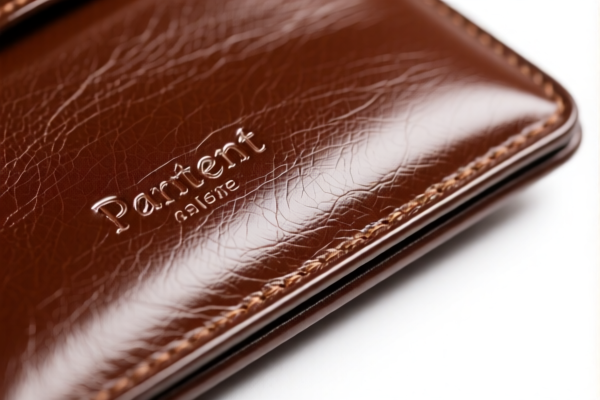
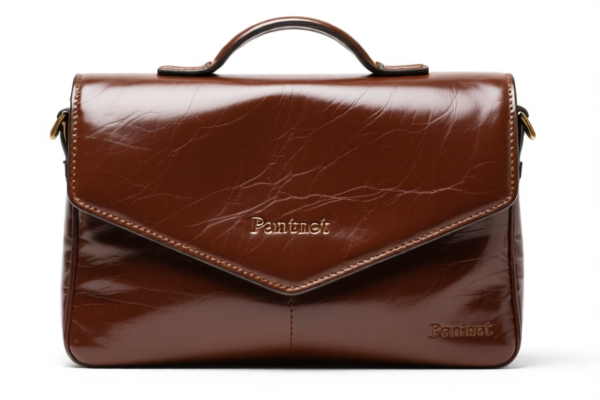
Patent Leather is not a biological leather; it is finished leather (usually cowhide) treated with a high-gloss lacquer or polyurethane coating to achieve a mirror-like shine, water resistance, and durability.
⚠️ Critical Customs Warning:
- Do NOT classify as "Natural Leather" (Chapter 41) unless the coating is superficial.
- If coated heavily with plastic/polymer to create the "patent" effect, it often falls under Chapter 39 (Plastics) or Chapter 42 (Leather Articles) depending on the substrate and manufacturing process.
- HS Code 4205.00 is common for "Leather Goods," but the coating method dictates the final rate.
📦 II. HS Code Classification Matrix (2026 Customs Authority Reference)
| HS Code | Product Description | Substrate Material | Coating Type | Key Application |
|---|---|---|---|---|
| 4205.00.90.00 | Other articles of leather or of composite leather | Natural Leather (Cattle, Sheep) | Lacquer/Polyurethane | Handbags, Wallets, Shoes (Patent Finish) |
| 3926.90.99.00 | Other articles of plastics | Synthetic Leather / PU "Patent" | Thick Plastic Layer | Fake Patent Leather, Costume Accessories |
| 6406.10.00.00 | Uppers and parts thereof (Footwear) | Leather or Synthetic | Patent Finish | Patent Leather Shoes, Boots, Sandals |
| 4202.32.00.00 | Wallets and similar containers | Leather or Plastic | Patent Coating | Patent Leather Wallets, Cardholders |
| 4202.12.00.00 | Trunks, suitcases, vanity cases | Leather or Plastic | Patent Coating | Patent Leather Luggage, Travel Cases |
🔍 Key Distinction:
- Real Patent Leather: Leather base + Lacquer. → Chapter 42.
- Synthetic "Patent": Full Plastic/PU base. → Chapter 39 (Often misclassified as 4205 to avoid duties).
- Footwear: The upper material determines the code, regardless of the gloss (6406 series).
💰 III. 2026 Tariff Rate Deep Dive (US Market Focus)
✅ Country of Origin: China (CN)
✅ Destination: United States (US)
✅ Effective Date: November 10, 2025 (Section 301 & IEEPA)
🎯 Scenario A: Real Patent Leather (HS Code 4205.00.90.00)
Item: Handbag, Wallet, Accessories (Leather Base)
| Item | Content |
|---|---|
| Base MFN Rate | 6.0% – 8.0% (ad valorem) |
| Section 301 (China) Add-on | +25% |
| IEEPA (Emergency Power) Add-on | +10% (if applicable to specific leather categories) |
| Total Effective Duty | ~41% – 43% |
| De Minimis Exemption | ❌ NO (Value > $800 not exempt for China) |
| Legal Reference | HTSUS: 4205.00.90.00 → USITC: 9903.88.01 |
📌 Interpretation:
- Real patent leather items from China face heavy tariffs.
- The "patent" finish does not reduce the leather duty rate; it may even trigger stricter scrutiny for "coating" classification disputes.
🎯 Scenario B: Synthetic "Patent" Leather (HS Code 3926.90.99.00)
Item: PU Handbag, Plastic Wallet
| Item | Content |
|---|---|
| Base MFN Rate | 5.3% – 7.0% (ad valorem) |
| Section 301 (China) Add-on | +25% |
| Total Effective Duty | ~30% – 32% |
| De Minimis Exemption | ❌ NO (If >$800) |
📌 Interpretation:
- Synthetic patent leather is slightly cheaper but still heavily taxed.
- Risk: Customs may re-classify "Synthetic Patent" as "Real Leather" if the material analysis is ambiguous, leading to higher duties (Leather is often taxed higher than Plastic).
🛠️ IV. Customs Clearance Strategy: Pro Tips for Patent Leather
✅ 1. Material Verification is Mandatory
海关 (Customs) officers will test the material.
- Burn Test: Real leather smells like burnt hair; plastic smells like burning rubber.
- Solvent Test: Acetone removes the patent coating but leaves the leather texture (Real). It melts the whole thing (Synthetic).
- Action: Submit a Material Composition Certificate from an independent lab (e.g., SGS, Intertek) confirming "Leather Base: 100% Bovine" or "Synthetic Base: 100% Polyurethane."
✅ 2. Description Precision in Invoice
❌ Wrong: "Plastic Leather Handbag" or "Leather Handbag" (Too vague)
✅ Right: "Womens Patent Leather Handbag, Surface: Lacquer-coated Bovine Leather, Lining: Polyester, HS 4205.00.90.00"
💡 Why? Vague descriptions trigger "Examination" flags, causing delays and potential re-classification by CBP officers.
✅ 3. Footwear vs. Accessories
- Shoes: If the shoe is patent leather, it falls under 6402-6403 series.
- Accessories: If it's a bag or wallet, it falls under 4202-4205.
- Mistake Alert: Do not classify a patent leather shoe as "Leather Handbag" (4205) to save duty. The function dictates the code, not just the material.
🌍 V. Global Market Comparison (2026)
| Market | Recommended HS Code | Tariff Rate (China) | Key Requirement |
|---|---|---|---|
| 🇺🇸 USA | 4205.00.90.00 |
~42% | FCC (if electronics), Labeling (Textile) |
| 🇪🇺 EU | 4205.00.90.00 |
12.5% (General) | CE (Safety), TSCA (Chemicals) |
| 🇨🇦 Canada | 4205.00.90.00 |
10.5% | Canadian Consumer Product Safety Act |
| 🇯🇵 Japan | 4205.00.90.00 |
15.0% | FSC (Forestry), if wooden parts |
| 🇦🇺 Australia | 4205.00.90.00 |
10.0% | RCM (Electrical), Textile Labeling |
📌 Note:
- EU & Canada generally have lower base rates but stricter chemical compliance (REACH in EU) for the lacquer used in patent leather.
- USA has the highest effective duty due to Section 301/IEEPA.
🚨 VI. Common Pitfalls & How to Avoid Them
❌ Pitfall 1: "Fake Patent" Misclassification
👉 Claiming synthetic patent leather as "Natural Leather" (4205) to avoid plastic duties.
👉 Result: CBP re-classification + Penalty + 25% Additional Duty.
❌ Pitfall 2: Ignoring the "Finish" Declaration
👉 Failing to declare the "Lacquer/Polymer" coating in the description.
👉 Result: Customs suspects hidden plastic content; delays + 30% penalty.
❌ Pitfall 3: Confusing Footwear Codes
👉 Classifying patent leather shoes under general leather codes (4205) instead of Footwear (6400).
👉 Result: Wrong duty rate, potential audit.
✅ Golden Rule:
"Material Base + Function + Finish = Correct HS Code"
"Patent = Lacquer + Leather = 4205"
"Patent = Plastic + Plastic = 3926"
🎯 VII. Conclusion: Shine Bright, Clear Smart
Patent leather is a high-value material that attracts both fashion love and customs scrutiny.
🔹 Real Patent Leather: High duty (~42% in US), strict chemical testing.
🔹 Synthetic Patent: Slightly lower duty (~30% in US), but risky if mislabeled.
🚀 Pro Tip:
If you are importing patent leather goods from China, budget for ~40% duty. Consider supply chain shifts to Vietnam, Thailand, or Mexico to leverage FTZ (Free Trade Zone) benefits and avoid Section 301 tariffs.
📌 Final Call to Action:
Prepare your Material Analysis Report NOW!
Define your HS Code with 100% Accuracy!
Let your patent leather shine without the customs glare!
✨ Professional Customs Clearance Starts with Precise Classification!
💼 Every Shine has a Price – Let's Make it Legal and Affordable!
Customer Reviews
About HS Code Classification
The Harmonized System (HS) is an internationally standardized nomenclature developed by the World Customs Organization (WCO) to classify traded products. Over 200 countries use the HS system as the basis for customs tariffs, trade statistics, and import/export regulations.
Each HS code follows a hierarchical structure:
- Chapter (2 digits) — Broad category of goods (e.g., Chapter 84: Machinery and Mechanical Appliances)
- Heading (4 digits) — More specific grouping within the chapter
- Subheading (6 digits) — Internationally standardized breakdown, used by all WCO member countries
- National subdivisions (8-10 digits) — Country-specific extensions for further classification, such as US HTSUS 10-digit codes
Correct HS code classification is essential for smooth customs clearance, accurate duty payment, and compliance with trade regulations. Misclassification can lead to customs delays, overpayment of duties, or penalties.
When importing from CN to US, the applicable tariff rates may include:
- Most-Favored-Nation (MFN) rate — The standard duty rate applied to WTO members
- General rate — Applied to countries without trade agreements
- Trade remedy duties — Additional tariffs such as Section 301 (anti-dumping), Section 232 (national security), or countervailing duties
The information provided on this page is for reference purposes only. For official classification, please consult with your local customs authority or a licensed customs broker.