Pine Logs with Cross Section 15 cm or More
CN → US| HS Code | Tariff Rate | Origin | Destination | Doc |
|---|---|---|---|---|
| 4403210125 | 35.0% | CN | US | Official Doc |
| 4403210130 | 35.0% | CN | US | Official Doc |
| 4401110000 | 35.0% | CN | US | Official Doc |
| 4403210165 | 35.0% | CN | US | Official Doc |
| 4407110053 | 35.0% | CN | US | Official Doc |
Product Images
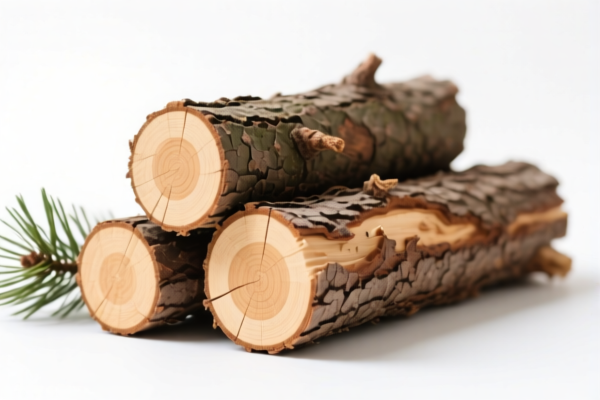
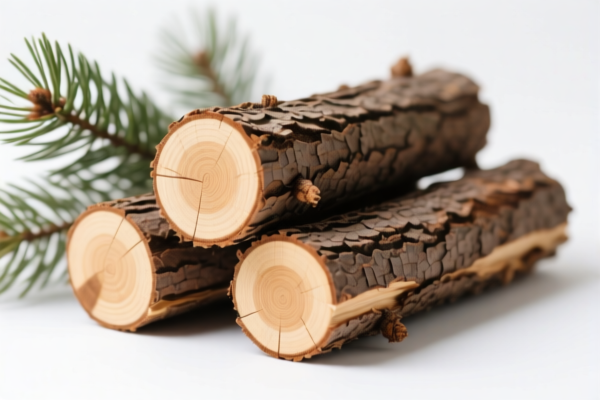
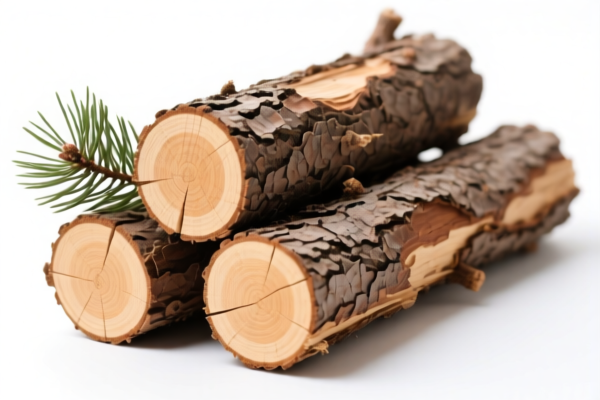
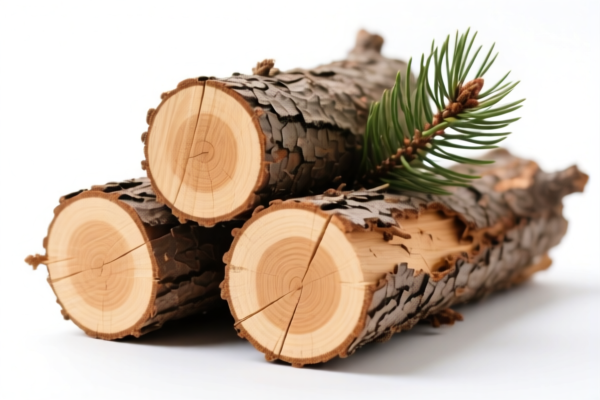
AI Analysis
🌲 Pine Logs with Cross Section 15 cm or More
🌐 HS Code Reference & Customs Clearance Guide | 2024/2025 Tariff Analysis | Professional Clearance Strategy
📌 I. Product Definition and Classification: Do You Truly Understand "Pine Logs"?
Pine Logs, specifically defined in this context as raw timber from pine trees (Pinus species), are a critical raw material for construction, furniture, and paper industries. In international trade, they are strictly regulated under Chapter 44 (Wood and articles of wood).
Key Distinctions:
* Solid Wood Logs vs. Fuel Wood: Logs with a cross-section of 15cm or more are typically classified as solid wood products (4403) rather than fuel wood (4401), unless specifically processed or designated as such.
* Unworked vs. Processed: These logs are "unworked," meaning they have not been sawn, planed, or chemically treated beyond basic preservation.
⚠️ Critical Distinction Point:
- If the log is unprocessed pine timber with a minimum cross-section of 15cm → Classify under 4403 (Wood freshly felled, whether or not stripped of bark or sapwood).
- If the log is declared as fuel wood (often irregular sizes, smaller diameters, or specific chipped forms) → Classify under 4401 (Wood in the form of fuel).
- Note: Even if declared as fuel, if it meets the physical description of pine logs ≥15cm, customs may reclassify it based on physical evidence.
📦 II. HS Code Classification Details (Latest Tariff Authority Match)
Based on the provided <DATA>, the following HS Codes apply to "Pine Logs with Cross Section 15 cm or More":
| HS Code | Product Description | Specific Criteria | Tax Rate Detail |
|---|---|---|---|
4403.21.01.25 |
Pine Logs, min cross-section 15cm | Solid wood, pine species, ≥15cm diameter | 35.0% (Base 0% + Section 301 25% + Section 122 10%) |
4403.21.01.30 |
Pine Logs, min cross-section 15cm | Solid wood, pine species, ≥15cm diameter | 35.0% (Base 0% + Section 301 25% + Section 122 10%) |
4401.11.00.00 |
Pine Logs, defined as coniferous fuel wood | Fuel wood definition, coniferous (pine) | 35.0% (Base 0% + Section 301 25% + Section 122 10%) |
4403.21.01.65 |
Pine Logs, diameter ≥15cm | Solid wood, pine, ≥15cm diameter | 35.0% (Base 0% + Section 301 25% + Section 122 10%) |
4407.11.00.53 |
Coniferous Pine Logs, unworked, diameter ≥15cm | Unprocessed pine, ≥15cm | 35.0% (Base 0% + Section 301 25% + Section 122 10%) |
🔍 Important Note:
- All listed HS Codes in the source data carry a Total Tax Rate of 35.0%.
- There is no variation in the final tax burden among these specific pine log classifications in this dataset.
- The primary difference lies in the legal description (Solid Wood4403vs. Fuel Wood4401), which affects phytosanitary requirements and import licenses, not just the tariff rate.
💰 III. 2024/2025 Tariff Rate Breakdown (Detailed Policy Analysis)
✅ Applicable Country: United States (US)
✅ Origin: China (CN) (Implied by Section 122 and Section 301 references)
✅ Effective Date: Current enforcement period
🎯 Tariff Structure Analysis
| Component | Rate | Legal Basis | Explanation |
|---|---|---|---|
| Base Duty | 0.0% | HTSUS General Rate | Most pine logs from eligible countries enjoy 0% base duty. |
| Section 301 Duty | +25.0% | USITC Footnote 9903.88.01 (China) | Additional tariff imposed on Chinese-origin goods under Trade Act of 1974, Section 301. |
| Section 122 Duty | +10.0% | Section 122 of the Trade Act of 1974 | Special tariff provision often applied to specific wood products to protect domestic timber industries. |
| Total Tax Rate | 35.0% | Sum | 0% + 25% + 10% = 35% |
📌 Explanation:
- The 25% Section 301 tariff is non-negotiable for Chinese-origin pine logs.
- The 10% Section 122 tariff is a specific provision for wood products.
- Combined Burden: Importers must budget for a 35% ad valorem tax on the CIF (Cost, Insurance, Freight) value.
- De Minimis Exemption: ❌ NOT APPLICABLE. Shipments valued under $800 (Section 321) do not qualify for exemption when Section 301 or Section 122 duties apply. Full duty is payable.
🛠️ IV. Customs Clearance Practical Advice (Expert Pitfall Avoidance)
✅ 1. Required Documentation Checklist (Non-Negotiable)
| Document | Mandatory? | Description |
|---|---|---|
| ✅ Phytosanitary Certificate | ✔️ YES | Issued by the country of origin's plant protection agency. Essential for pine logs to prove freedom from pests (e.g., Emerald Ash Borer, Pine Beetle). |
| ✅ Commercial Invoice | ✔️ YES | Must clearly state: "Pine Logs," "HS Code," "Origin: [Country]," "Diameter: ≥15cm," "Volume: [CBM]." |
| ✅ Packing List | ✔️ YES | Detailed list of logs, including diameter measurements and volume per package. |
| ✅ Bill of Lading (B/L) | ✔️ YES | Standard shipping document. |
| ✅ Timber Harvest License | ✔️ YES | Proof of legal harvesting in the country of origin (required under Lacey Act if US-bound). |
| ✅ ISPM 15 Marking | ❌ N/A | Usually for wood packaging, not the logs themselves, but logs may require heat treatment certification. |
✅ 2. Declaration Strategy (Key Mantra)
🔥 "Declare Nature, Declare Size, Declare Origin!"
| Scenario | Correct Declaration | Wrong Practice |
|---|---|---|
| Solid Pine Logs (Construction/Furniture) | HS 4403.xxxx |
Declare as 4401 (Fuel) to avoid scrutiny → High Risk of Penalty |
| Fuel Wood Logs | HS 4401.11 |
Declare as 4403 (Solid Wood) → May trigger unnecessary phytosanitary delays or misclassification fines |
| Mixed Diameter Logs | Specify "Min. Cross Section 15cm" | Vague description like "Wood Logs" → Customs Rejection |
| Treated Logs | State "Heat Treated" + HT Symbol | Claim "Untreated" if treated → Violation of Phytosanitary Rules |
✅ 3. Special Considerations
| Issue | Handling Advice |
|---|---|
| Phytosanitary Inspection | Pine logs are high-risk for invasive species. Expect physical inspection by USDA APHIS. Ensure logs are clean, free of bark (if required), and accompanied by valid certificates. |
| Section 122 Impact | Verify if your specific pine species is covered. If not, the 10% may not apply, but based on <DATA>, it is included. Always confirm with a customs broker. |
| Origin Marking | Clearly mark "Made in [Country]" on packaging or logs. Mislabeling origin can trigger fraud investigations. |
🌍 V. Global Market Comparison (Contextual)
| Country/Region | Recommended HS Code | Base Tariff | Additional Duties (China Origin) | Total Est. Tariff |
|---|---|---|---|---|
| 🇺🇸 USA | 4403.21.01.xx |
0% | +25% (Sec 301) + 10% (Sec 122) | 35.0% |
| 🇨🇳 China | 4403.21.01.xx |
0% - 5% | None | ~0-5% |
| 🇪🇺 EU | 4403.21.00 |
0% | None | 0% |
| 🇬🇧 UK | 4403.21.00 |
0% | None | 0% |
| 🇦🇺 Australia | 4403.21.00 |
5% | None | 5% |
📌 Conclusion:
- The US is the most expensive market for Chinese pine logs due to Section 301 and Section 122 tariffs.
- EU and UK are tariff-free for many pine products, but have strict EUDR (European Union Deforestation Regulation) compliance requirements.
- Australia requires rigorous biosecurity checks despite low tariffs.
📌 VI. Common Mistakes & Pitfalls (Lessons Learned)
❌ Mistake 1: Declaring Pine Logs as "Fuel Wood" (4401) to avoid Section 301 scrutiny.
👉 Consequence: USDA APHIS will inspect for pests. If logs are suitable for sawing (≥15cm), customs may reclassify to 4403 and penalize for misdeclaration. Duty remains 35% anyway!
❌ Mistake 2: Omitting Phytosanitary Certificate.
👉 Consequence: Immediate Hold. Logs will be destroyed or re-exported at your cost. Total Loss.
❌ Mistake 3: Ignoring Section 122 Tariff.
👉 Consequence: Underpayment of duties. CBP will assess back duties + interest + penalties. Financial Liability.
❌ Mistake 4: Vague Description ("Wood Logs").
👉 Consequence: Customs will request clarification, causing delays of 2-4 weeks. Supply Chain Disruption.
✅ Correct Approach:
"Pine Logs, Pinus spp., Unworked, Min. Diameter 15cm, Heat Treated, Origin: [Country], HS Code: 4403.21.01.25, Value: $XX,XXX"
🎯 VII. Conclusion: Professional Clearance, Cost Efficiency
🎯 Remember the Mantra:
🔹 "Logs ≥15cm = 4403 (or 4401 if Fuel), Tax = 35% (China Origin)."
🔹 "Phytosanitary Certificate is Life or Death for Pine Logs."
🔹 "Never Split Declaration, Always Declare Volume and Origin."
📌 Pro Tip:
If your pine logs are not from China (e.g., from Russia, Canada, or New Zealand), the 25% Section 301 tax does NOT apply. However, Section 122 may still apply depending on the specific HTSUS entry. Always verify origin-based tariffs!
📣 Immediate Action:
📞 Consult a Licensed Customs Broker + Secure Phytosanitary Certificate + Verify HS Code 4403.21.01.xx
🚀 Ensure Smooth Clearance, Avoid Port Delays, Protect Margins!
✨ Professional Clearance Starts with Accurate Classification!
💼 Your Cost Savings Are Worth the Precision!
Customer Reviews
About HS Code Classification
The Harmonized System (HS) is an internationally standardized nomenclature developed by the World Customs Organization (WCO) to classify traded products. Over 200 countries use the HS system as the basis for customs tariffs, trade statistics, and import/export regulations.
Each HS code follows a hierarchical structure:
- Chapter (2 digits) — Broad category of goods (e.g., Chapter 84: Machinery and Mechanical Appliances)
- Heading (4 digits) — More specific grouping within the chapter
- Subheading (6 digits) — Internationally standardized breakdown, used by all WCO member countries
- National subdivisions (8-10 digits) — Country-specific extensions for further classification, such as US HTSUS 10-digit codes
Correct HS code classification is essential for smooth customs clearance, accurate duty payment, and compliance with trade regulations. Misclassification can lead to customs delays, overpayment of duties, or penalties.
When importing from CN to US, the applicable tariff rates may include:
- Most-Favored-Nation (MFN) rate — The standard duty rate applied to WTO members
- General rate — Applied to countries without trade agreements
- Trade remedy duties — Additional tariffs such as Section 301 (anti-dumping), Section 232 (national security), or countervailing duties
The information provided on this page is for reference purposes only. For official classification, please consult with your local customs authority or a licensed customs broker.