Pine Wood Pole (Raw Log)
CN → US| HS Code | Tariff Rate | Origin | Destination | Doc |
|---|---|---|---|---|
| 4403210112 | 35.0% | CN | US | Official Doc |
| 4403260112 | 35.0% | CN | US | Official Doc |
Product Images
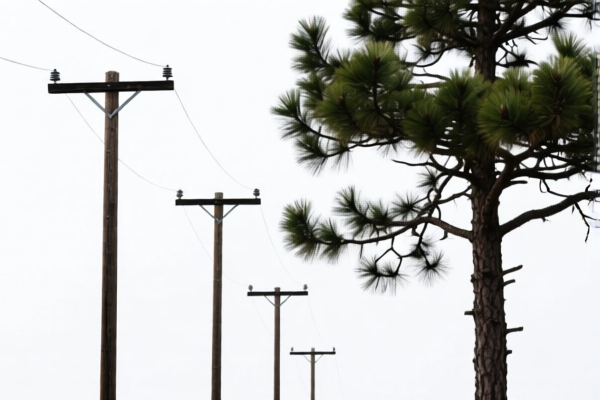
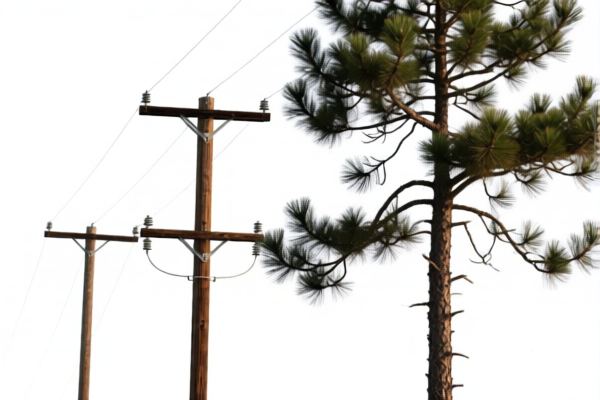
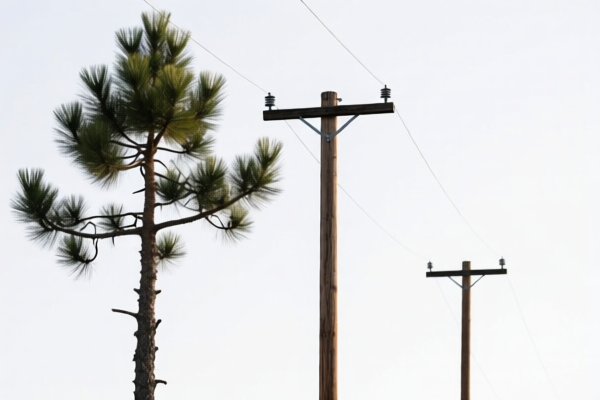
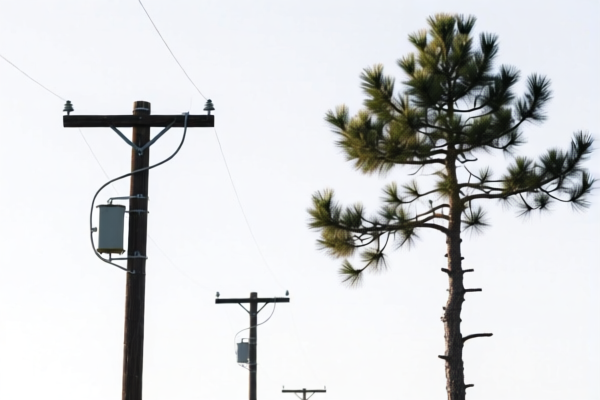
AI Analysis
🌲 Pine Wood Pole (Raw Log)
🌐 HS Code Reference & Customs Clearance Guide | 2026 Latest Tariff Analysis | Professional Clearance Strategy
📌 I. Product Definition and Classification: Do You Really Understand "Pine Wood Poles"?
Pine wood poles, specifically raw logs used for telecommunication, telegraphy, and electrical power distribution, represent a critical infrastructure component in global trade. In international trade, these are strictly classified under "Wood in the rough."
Raw Logs (Pine Species): * Definition: Wood that has been stripped of bark or sapwood, or roughly squared, but not treated or shaped into finished poles beyond basic geometric requirements. * Key Threshold: For the specific "Pine (Pinus spp.)" category, the smallest cross-sectional dimension must be 15 cm or more. * End Use: Telephone, telegraph, and electrical power poles.
⚠️ Key Distinction:
- If the wood is smaller than 15 cm in its smallest cross-sectional dimension, it does NOT fall under the specific "Pine Pole" HS codes listed below. It may fall under general "Other" coniferous wood categories.
- If the wood has been treated (chemically impregnated), it moves out of Chapter 44 (Raw Wood) and into Chapter 47 or 49 depending on processing. The HS codes below apply to natural/rough pine.
📦 II. HS Code Classification Details (2026 Latest Tariff Authority Comparison)
| HS Code | Product Description | Application Scenario | Smallest Cross-Section |
|---|---|---|---|
4403.21.01.12 |
Pine (Pinus spp.) poles, piles, and posts; Telephone, telegraph, and electrical power poles | Utility poles, telecom lines, power grids | ✅ ≥ 15 cm |
4403.26.01.12 |
Other coniferous wood poles, piles, and posts; Telephone, telegraph, and electrical power poles | Poles from coniferous species other than Pine (e.g., Spruce, Fir) | ✅ Any size (if classified as "Other") |
🔍 Critical Note:
- The first code (4403.21) is specific to Pine. The second (4403.26) is a catch-all for Other Coniferous wood used for poles.
- Ensure the wood is Coniferous. If it is Broadleaf, it falls under a completely different section (e.g., 4403.49).
- Both codes explicitly mention "Telephone, telegraph and electrical power poles," confirming their end-use classification.
💰 III. 2026 Latest Tariff Rate Details (Including Additional Taxes)
✅ Applicable Country: United States (US)
✅ Origin: China (CN) (Note: Tariff structures vary by origin; this reflects the provided data which implies a high-tariff scenario typical of US-China trade for this category)
✅ Effective Time: Current as per provided data (25% Total Tax)
🎯 1. 4403.21.01.12 —— Pine Wood Poles (Smallest Cross-Section ≥ 15 cm)
| Item | Content |
|---|---|
| Base Tariff Rate | 0.0% (Ad valorem) |
| Section 301 / Additional Tariff | +25.0% |
| Total Tariff Rate | 25.0% |
| Tax Calculation | CIF Value × 25% |
| De Minimis Eligibility | ❌ Not Applicable (Wood products typically excluded from de minimis thresholds) |
| Legal Basis Path | HTSUS 4403.21.01.12 → Section 301 Trade Relations |
📌 Explanation:
- "Base Tariff 0.0%": Raw wood products often enjoy low or zero base duties to encourage infrastructure development.
- "+25.0% Additional Tariff": This is the critical cost driver. Under current US trade policies (Section 301), many Chinese-origin wood products face this surcharge.
- Total Cost Impact: For every $10,000 CIF value, you pay $2,500 in duties. This significantly impacts margin for raw material imports.
🎯 2. 4403.26.01.12 —— Other Coniferous Wood Poles
| Item | Content |
|---|---|
| Base Tariff Rate | 0.0% (Ad valorem) |
| Section 301 / Additional Tariff | +25.0% |
| Total Tariff Rate | 25.0% |
| Tax Calculation | CIF Value × 25% |
| De Minimis Eligibility | ❌ Not Applicable |
| Legal Basis Path | HTSUS 4403.26.01.12 → Section 301 Trade Relations |
📌 Note:
- Identical tariff treatment to Pine poles.
- Even if the wood is not "Pine" but another conifer (e.g., Hemlock, Spruce), if it is used for poles, it falls here with the same 25% total rate.
🛠️ IV. Customs Clearance Practical Advice (Battle-Tested Pitfall Guide)
✅ 1. Documentation Checklist (Must-Haves)
| Document | Mandatory? | Description |
|---|---|---|
| ✅ Commercial Invoice | ✔️ | Must clearly state "Pine Wood Poles" or "Coniferous Wood Poles." Avoid vague terms like "Timber." |
| ✅ Packing List | ✔️ | Detail dimensions (min. cross-section ≥ 15cm for Pine). Weight (Gross/Net). |
| ✅ Species Declaration | ✔️ | Explicitly state "Pinus spp." (e.g., Loblolly, Slash Pine) for 4403.21 or generic "Coniferous" for 4403.26. |
| ✅ Phytosanitary Certificate | ✔️ | CRITICAL: Required to prove the wood is free from pests/diseases (ISPM 15 standard). |
| ✅ Fumigation/Treatment Certificate | ✔️ | Proof of heat treatment or fumigation if required by destination country regulations. |
| ✅ Bill of Lading | ✔️ | Clean on-board B/L. |
✅ 2. Declaration Techniques (Key Mantra)
🔥 “Dimension Matters, Species Specific, Phytosanitary Key!”
| Scenario | Correct Declaration | Wrong Practice |
|---|---|---|
| Pine Poles, ≥ 15cm | 4403.21.01.12 |
Misclassifying as "General Timber" → Higher scrutiny |
| Pine Poles, < 15cm | Do NOT use 4403.21.01.12 | Using wrong HS Code → Rejection/Fines |
| Other Conifer (Spruce) | 4403.26.01.12 |
Claiming "Pine" falsely → Fraud penalties |
| Treated Poles | Check Chapter 47/49 | Declaring as "Raw Log" → Misdeclaration |
✅ 3. Special Situation Handling
| Situation | Handling Advice |
|---|---|
| Mixed Species | If a shipment contains Pine and Spruce, split the declaration or declare the majority species with clear separation in packing list. Mixing HS codes in one line item causes delays. |
| Dimension Dispute | Customs may measure randomly. Ensure ALL poles meet the ≥ 15 cm requirement for 4403.21. If some are smaller, they must be reclassified or separated. |
| Bark Removal | "Stripped of bark" is allowed under 4403. If bark is present, it may still qualify, but be prepared for inspection. "Roughly squared" is also acceptable. |
| Origin Tracing | Provide proof of origin (Forest Management Certification) to ensure no illegal logging (Lacey Act compliance in the US). |
🌍 V. Global Main Market Comparison (2026 Latest)
| Country/Region | Recommended HS Code | Tariff (China Origin) | Certification Req. | Remarks |
|---|---|---|---|---|
| 🇺🇸 USA | 4403.21.01.12 / 4403.26.01.12 |
25.0% | Phytosanitary + Lacey Act | High tariff barrier |
| 🇨🇳 China | 4403.21 / 4403.26 | ~5-15% | Phytosanitary | Importing raw pine |
| 🇪🇺 EU | 4403.21 / 4403.26 | ~0-6% | EUTR (Timber Regulation) | Strict legality proof |
| 🇯🇵 Japan | 4403.21 / 4403.26 | ~3-5% | Phytosanitary | Strict pest control |
📌 Conclusion:
- The USA applies a heavy 25% surcharge on top of zero base duty.
- EU and Japan focus more on phytosanitary and legality (EUTR) rather than high tariffs, but compliance costs are high.
- Always verify if the wood is Heat Treated (HT) or Methyl Bromide (MB) treated, as this affects entry into all major markets.
📌 VI. Common Errors & Pitfall Guide (Blood & Tears Lessons)
❌ Error 1: Ignoring the 15 cm Cross-Section Rule for Pine
👉 Consequence: If poles are 14 cm, they cannot use 4403.21.01.12. Misclassification leads to audits and penalties.
❌ Error 2: Missing Phytosanitary Certificate
👉 Consequence: Rejection at port or forced re-export. Wood is high-risk for pests.
❌ Error 3: Vague Description "Wood Poles"
👉 Consequence: Customs will ask for species and dimensions, causing 3-7 day delays.
❌ Error 4: Not Separating Treated vs. Raw
👉 Consequence: Treated wood requires different documentation (chemical lists). Mixing them causes Hazardous Material flags.
✅ Correct Practice:
"Pine Wood Poles, Pinus spp., Stripped of Bark, Smallest Cross-Section 18cm, Length 10m, Untreated, Phytosanitary Cert Attached, Lacey Act Compliant"
🎯 VII. Conclusion: Professional Declaration, Save Time, Reduce Costs!
🎯 Remember the Mantra:
🔹 "Pine ≥ 15cm, HS .21.01; Other Conifer, HS .26.01."
🔹 "25% Tax is Real, Phyto Cert is Key."
🔹 "Wrong Dimension, Wrong Code, Huge Fine!"
📌 Tips:
- If your pine wood poles are heat-treated, ensure the HT Mark is visible on the wood.
- For US Imports, consider Advance Ruling if dimensions are borderline (14-16 cm).
- Always double-check if the poles are used or new. Used wood poles may fall under different headings (e.g., 4403.90) with different tax implications.
📣 Immediate Action:
📞 Contact a licensed customs broker + Provide Cross-Section Measurements + Secure Phytosanitary Cert
🚀 Let your pine poles clear smoothly, avoid penalties, and protect your margins!
✨ Professional Clearance Starts with Precise Classification!
💼 Your Cost Depends on the Centimeter!
Customer Reviews
About HS Code Classification
The Harmonized System (HS) is an internationally standardized nomenclature developed by the World Customs Organization (WCO) to classify traded products. Over 200 countries use the HS system as the basis for customs tariffs, trade statistics, and import/export regulations.
Each HS code follows a hierarchical structure:
- Chapter (2 digits) — Broad category of goods (e.g., Chapter 84: Machinery and Mechanical Appliances)
- Heading (4 digits) — More specific grouping within the chapter
- Subheading (6 digits) — Internationally standardized breakdown, used by all WCO member countries
- National subdivisions (8-10 digits) — Country-specific extensions for further classification, such as US HTSUS 10-digit codes
Correct HS code classification is essential for smooth customs clearance, accurate duty payment, and compliance with trade regulations. Misclassification can lead to customs delays, overpayment of duties, or penalties.
When importing from CN to US, the applicable tariff rates may include:
- Most-Favored-Nation (MFN) rate — The standard duty rate applied to WTO members
- General rate — Applied to countries without trade agreements
- Trade remedy duties — Additional tariffs such as Section 301 (anti-dumping), Section 232 (national security), or countervailing duties
The information provided on this page is for reference purposes only. For official classification, please consult with your local customs authority or a licensed customs broker.