Pipe Cleaning Tool
CN → US| HS Code | Tariff Rate | Origin | Destination | Doc |
|---|---|---|---|---|
| 8467891000 | 17.5% | CN | US | Official Doc |
| 8467990190 | 35.0% | CN | US | Official Doc |
| 8205591000 | 42.2% | CN | US | Official Doc |
| 8205593080 | 35.0% | CN | US | Official Doc |
Product Images
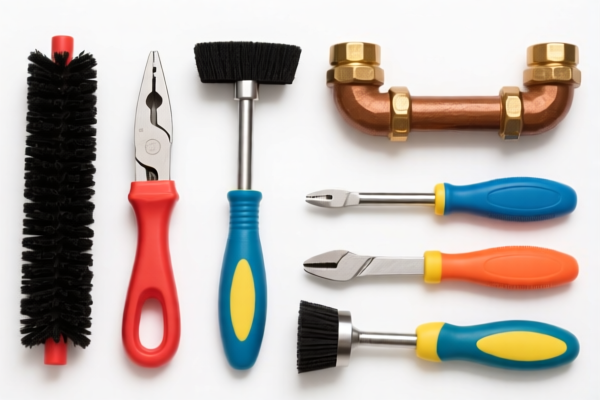
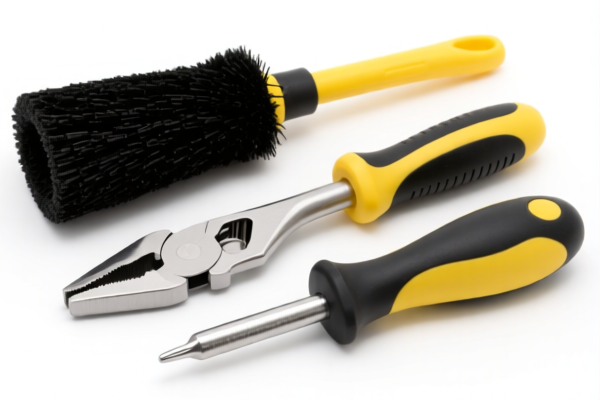
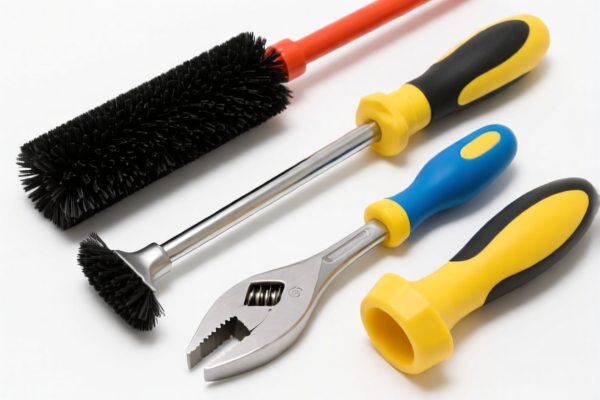
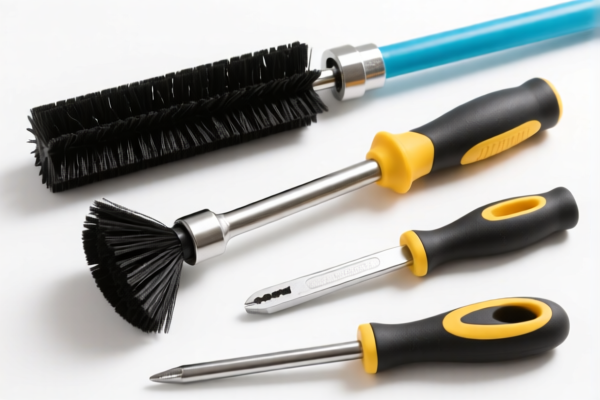
AI Analysis
🔧 Pipe Cleaning Tools & Hydraulic Tools | 2026 Customs Clearance Guide
🌐 HS Code Reference & Customs Clearance Strategy | 2026 Latest Tariff Analysis | Professional Level Compliance
📌 I. Product Definition & Classification: What Exactly is a "Pipe Cleaning Tool"?
In the complex world of industrial hardware, "Pipe Cleaning Tools" is a broad and ambiguous term that can lead to significant customs errors. To ensure accurate classification, we must distinguish between manual hand tools used for clearing blockages and power tools used for maintenance or metalworking.
The classification depends entirely on: 1. Power Source: Is it manual, pneumatic, hydraulic, or electric? 2. Function: Is it strictly for clearing pipes (cleaning) or working on metal surfaces (grinding/cutting)? 3. Components: Is it a complete tool or just a part/accessory?
⚠️ Key Distinction Points: * Manual Tools: Simple physical devices like drain snakes, augers, or high-pressure water wands (if passive) often fall under Hand Tools (Chapter 82). * Power Tools: Pneumatic, hydraulic, or electric tools (e.g., hydro-jetting guns, electric drain cleaners) fall under Tools for Working in the Hand with Motors (Chapter 84). * Parts: Accessories or spare parts for the above are classified separately under Parts (8467.99).
📦 II. HS Code Classification Details (2026 Latest Tariff Authority Comparison)
Based on the provided data, here are the specific HS Codes for "Pipe Cleaning Tools" and related items, along with their tax implications.
| HS Code | Product Description | Application Scenario | Tax Rate (China to US) | Notes |
|---|---|---|---|---|
| 8205.59.10.00 | Pipe Tools (Manual) Pipe wrenches, manual drain snakes, augers, and their parts. |
Manual plumbing maintenance, clearing simple clogs without power. | Base: 0% Additional: 0% Total: 0% |
✅ Most Favorable Lowest risk, zero duty. |
| 8205.59.30.80 | Other Hand Tools (Crowbars, Track Tools) Includes some specialized manual pipe removal or prying tools. |
Manual force-based pipe removal, wedges, crowbars. | Base: 0% Additional: 25% Total: 25% |
⚠️ High Risk Often misclassified. Ensure it's not a "pipe tool" but a "crowbar/lever". |
| 8467.89.10.00 | Hydraulic/Pneumatic Tools for Metal Working Hydro-jetting units, pneumatic drain snakes, electric pipe cleaners suitable for metal. |
Powered pipe cleaning, metal surface preparation, industrial maintenance. | Base: 0% Additional: 7.5% Total: 7.5% |
🔍 Check Function Must be "suitable for metal working" or powered. |
| 8467.99.01.90 | Parts for Powered Tools Nozzles, hoses, drill bits for pipe cleaning machines, replacement heads. |
Spare parts for hydro-jetters or electric drain cleaners. | Base: 0% Additional: 25% Total: 25% |
⚠️ Parts Penalty Parts of powered tools often attract higher additional duties. |
🔍 Important Note: * 8205.59.10.00 is the most common and safest classification for manual pipe tools (like manual drain snakes or pipe wrenches). * 8467.89.10.00 applies if the tool is powered (electric/pneumatic/hydraulic) and used for working on metal/pipes. * 8467.99.01.90 is strictly for parts of the powered tools. Do not misclassify a whole tool as a part to avoid duties; this is a common audit trigger.
💰 III. 2026 Latest Tariff Rate Breakdown (Detailed Tax Clauses)
✅ Applicable Country: United States (US) ✅ Origin: China (CN) ✅ Effective Date: Post-November 2025 (Current 2026 Status)
🎯 1. 8205.59.10.00 —— Manual Pipe Tools (The "Zero Duty" Option)
| Item | Content |
|---|---|
| Base Tariff | 0% (ad valorem) |
| USITC Additional Tariff | 0% |
| IEEPA Additional Tariff | 0% |
| Total Tariff | 0% |
| Tax Calculation | CIF Value × 0% = $0 |
| De Minimis Eligibility | ✅ Yes (if under $800, though manual tools are often bulk shipped) |
| Legal Basis | Standard HTSUS Chapter 82, no Section 301 or IEEPA penalty applied to this specific subheading. |
📌 Explanation: * This is the best-case scenario for importers. * Includes manual drain snakes, pipe wrenches, and simple mechanical pipe cleaners. * No additional penalties apply, making it the preferred classification if the tool is truly manual.
🎯 2. 8205.59.30.80 —— Other Hand Tools (Crowbars, Wedges)
| Item | Content |
|---|---|
| Base Tariff | 0% |
| USITC Additional Tariff | +25% |
| IEEPA Additional Tariff | 0% (Not specifically targeted by IEEPA, but Section 301 applies) |
| Total Tariff | 25% |
| Tax Calculation | CIF Value × 25% |
| De Minimis Eligibility | ❌ No (Section 301 goods are generally excluded from de minimis) |
| Legal Basis | Section 301 Trade Act, Footnote 9903.88.01 |
📌 Warning: * This code is for crowbars, track tools, and wedges. * Do not classify manual pipe cleaners here unless they are specifically wedges or prying tools. Misclassification here leads to a 25% duty.
🎯 3. 8467.89.10.00 —— Powered Tools (Hydraulic/Pneumatic)
| Item | Content |
|---|---|
| Base Tariff | 0% |
| USITC Additional Tariff | +7.5% |
| IEEPA Additional Tariff | 0% (Specific subheading has lower penalty) |
| Total Tariff | 7.5% |
| Tax Calculation | CIF Value × 7.5% |
| De Minimis Eligibility | ❌ No (Powered tools are usually high-value items) |
| Legal Basis | Section 301, specific footnote for powered hand tools |
📌 Note: * Applies to electric, pneumatic, or hydraulic pipe cleaning tools. * The 7.5% rate is significantly lower than the 25% for general hand tools. * Ensure the tool is described as "suitable for metal working" or "powered tool" to fit this category.
🎯 4. 8467.99.01.90 —— Parts of Powered Tools
| Item | Content |
|---|---|
| Base Tariff | 0% |
| USITC Additional Tariff | +25% |
| IEEPA Additional Tariff | 0% |
| Total Tariff | 25% |
| Tax Calculation | CIF Value × 25% |
| De Minimis Eligibility | ❌ No |
| Legal Basis | Section 301, Parts of powered tools are penalized at the higher rate |
📌 Critical Insight: * Parts of powered tools are taxed at 25%, which is higher than the tool itself (7.5%). * This encourages importers to classify complete tools rather than disassembled parts. * Examples: Replacement nozzles for hydro-jetters, drill bits for pipe cleaners.
🛠️ IV. Customs Clearance Practical Advice (Real-World Pitfall Guide)
✅ 1. Documentation Checklist (Essential)
| Document | Required? | Explanation |
|---|---|---|
| ✅ Product Specifications | ✔️ | Must specify: Manual vs. Powered, Power Source (V/A/Bar), Material. |
| ✅ Function Description | ✔️ | Clearly state "Pipe Cleaning" or "Drain Clearing." Avoid vague terms like "Hardware." |
| ✅ Photos (Labeled) | ✔️ | Show the tool in use or detached, highlighting power cords, nozzles, or handles. |
| ✅ Commercial Invoice | ✔️ | Must match HS Code exactly. Use "Manual Pipe Wrench" or "Electric Drain Snake" as per classification. |
| ✅ Part Number List | ✔️ | If shipping parts, provide a clear list distinguishing tool vs. accessory. |
✅ 2. Declaration Tips (Key Mantras)
🔥 "Manual is 0%, Powered is 7.5%, Parts are 25%!"
| Scenario | Correct Declaration | Wrong Approach |
|---|---|---|
| Manual Drain Snake | 8205.59.10.00 - "Manual Pipe Cleaning Tool" |
Classify as 8467 (Powered) → Higher complexity, potential error. |
| Electric Pipe Cleaner | 8467.89.10.00 - "Electric Hand Tool for Pipe Maintenance" |
Classify as 8205 (Manual) → False declaration, penalties! |
| Replacement Nozzle | 8467.99.01.90 - "Part for Electric Drain Cleaner" |
Classify as 8205 (Hand Tool) → Incorrect, 25% duty applies. |
| Crowbar Used for Pipe Removal | 8205.59.30.80 - "Crowbar" |
Classify as "Pipe Tool" → Misclassification, 25% duty. |
✅ 3. Special Situations
| Situation | Handling Advice |
|---|---|
| Hydro-Jetting Machine | If it's a large machine, it might be under Chapter 84 (Machinery), not hand tools. Consult customs broker for large units. |
| Set of Tools | If a box contains both manual and powered tools, declare them separately. Do not bundle into one HS Code. |
| Chinese-Origin Components | Even if assembled in Vietnam, if the core parts are Chinese, Section 301/IEEPA may still apply. Check origin rules carefully. |
🌍 V. Global Market Comparison (2026)
| Country/Region | Recommended HS Code | Tariff (China Origin) | Certification Required | Remarks |
|---|---|---|---|---|
| 🇺🇸 USA | 8205.59.10.00 (Manual)8467.89.10.00 (Powered) |
0% (Manual) 7.5% (Powered) |
None generally, but check for safety standards | Parts attract 25% |
| 🇨🇳 China | 8205.59.10.00 |
~5-10% | CCC (if electric) | No additional duties |
| 🇪🇺 EU | 8205.59.10.00 |
~5% | CE Mark (if powered) | No Section 301 penalties |
| 🇬🇧 UK | 8205.59.10.00 |
~5% | UKCA Mark (if powered) | Post-Brexit rules apply |
📌 Conclusion: * USA has the most complex tariff structure due to Section 301 and IEEPA. * Manual tools are the most tariff-efficient (0%). * Powered tools have a moderate penalty (7.5%). * Parts are the most expensive (25%) due to punitive clauses.
📌 VI. Common Mistakes & Pitfalls (Lessons Learned)
❌ Mistake 1: Classifying electric pipe cleaners as manual tools (8205).
👉 Consequence: Customs audit, back-taxes, and potential seizure. The duty difference is 7.5% vs 0%, but the legal risk is high.
❌ Mistake 2: Classifying replacement nozzles as hand tools (8205.59.10.00).
👉 Consequence: If they are parts of powered tools, they should be 8467.99.01.90 (25%). Misclassification can lead to underpayment of 25%.
❌ Mistake 3: Using vague descriptions like "Hardware" or "Tool" on the invoice. 👉 Consequence: Customs may classify based on their own judgment, often leading to the highest possible duty (25%).
❌ Mistake 4: Ignoring the origin of the tool. 👉 Consequence: If the tool is Chinese-made but shipped from a third country, the China-specific tariffs still apply.
✅ Correct Approach:
"Manual Pipe Wrench, 10-inch, Steel, No Power Source" →
8205.59.10.00(0%) "Electric Drain Snake, 120V, for Household Pipes" →8467.89.10.00(7.5%)
🎯 VII. Conclusion: Smart Classification, Lower Costs!
🎯 Remember the Mantra:
🔹 "Manual is Zero, Powered is Seven-and-Half, Parts are Twenty-Five!"
🔹 "Be Specific: 'Manual' or 'Electric'? Don't Leave it Ambiguous!"
📌 Pro Tip: If you are importing mixed batches (some manual, some electric), declare them separately. Do not try to bundle them into one line item. This ensures compliance and prevents customs delays.
📣 Immediate Action:
📞 Contact Your Customs Broker + Provide Clear Product Photos + Specify Power Source
🚀 Avoid the 25% Penalty on Parts and Ensure 0% Duty on Manual Tools
✨ Professional Clearance Starts with Accurate Classification! 💼 Every Percentage Point Counts in International Trade!
Customer Reviews
About HS Code Classification
The Harmonized System (HS) is an internationally standardized nomenclature developed by the World Customs Organization (WCO) to classify traded products. Over 200 countries use the HS system as the basis for customs tariffs, trade statistics, and import/export regulations.
Each HS code follows a hierarchical structure:
- Chapter (2 digits) — Broad category of goods (e.g., Chapter 84: Machinery and Mechanical Appliances)
- Heading (4 digits) — More specific grouping within the chapter
- Subheading (6 digits) — Internationally standardized breakdown, used by all WCO member countries
- National subdivisions (8-10 digits) — Country-specific extensions for further classification, such as US HTSUS 10-digit codes
Correct HS code classification is essential for smooth customs clearance, accurate duty payment, and compliance with trade regulations. Misclassification can lead to customs delays, overpayment of duties, or penalties.
When importing from CN to US, the applicable tariff rates may include:
- Most-Favored-Nation (MFN) rate — The standard duty rate applied to WTO members
- General rate — Applied to countries without trade agreements
- Trade remedy duties — Additional tariffs such as Section 301 (anti-dumping), Section 232 (national security), or countervailing duties
The information provided on this page is for reference purposes only. For official classification, please consult with your local customs authority or a licensed customs broker.