Plain Cloth (43 68 Count)
CN → USProduct Images
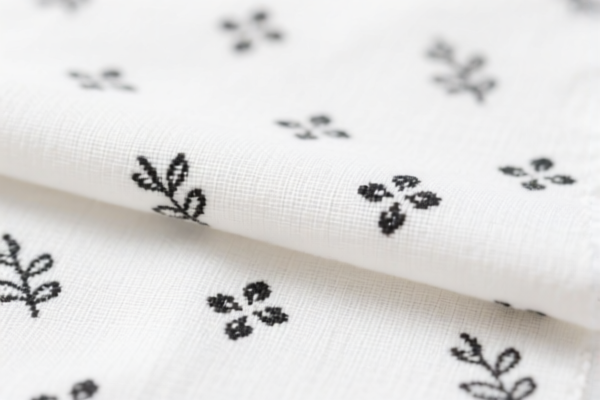
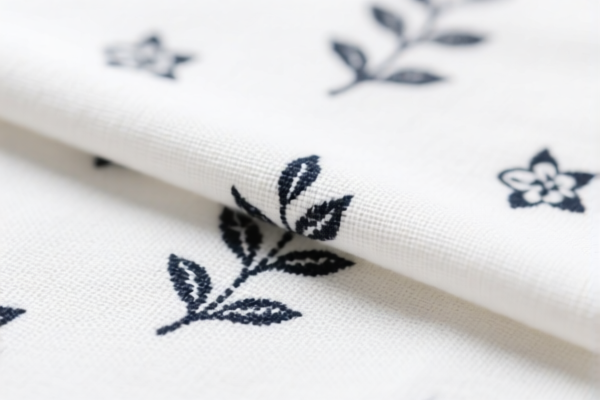
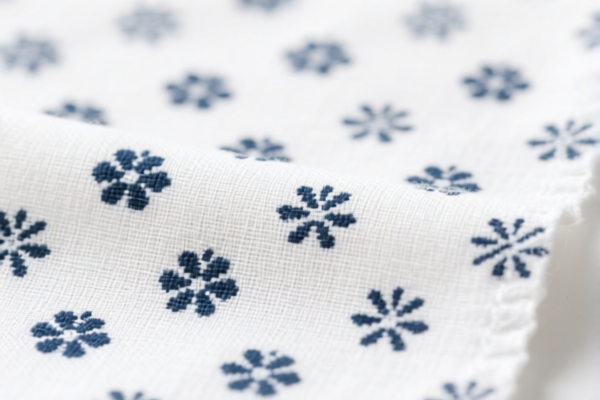
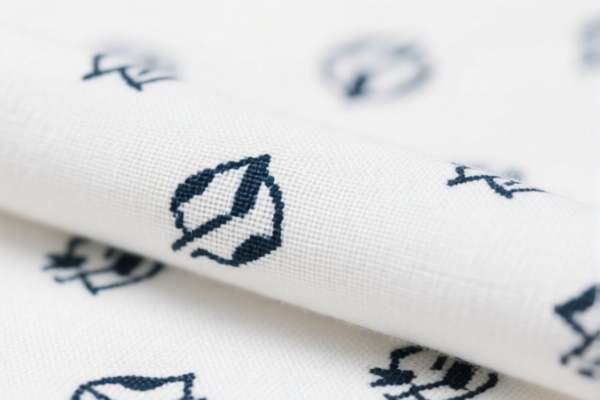
AI Analysis
🧵 Plain Cloth (43 x 68 Count)
🌐 HS Code Classification & Duty Guide | 2026 Latest Tariff Rules | Expert Customs Clearance Strategy
📌 One, Product Definition & Classification: What Exactly Is "Plain Cloth (43 x 68 Count)"?
"Plain Cloth (43 x 68 Count)" refers to a woven textile fabric made from natural or synthetic fibers, typically cotton, polyester, or blends, with 43 warp threads per inch and 68 weft threads per inch. This count defines its density and weave tightness, commonly used in:
- Apparel manufacturing (e.g., shirts, pants, underwear)
- Home textiles (e.g., bed sheets, pillowcases)
- Industrial uses (e.g., packaging, filtration)
⚠️ Critical Distinction:
- If the fabric is unfinished (greige) → must be classified as "unbleached, uncolored, or unprocessed"
- If dyed, printed, or finished → different HS codes apply (e.g., 5208, 5210, 5407)
- "Count" alone does not change classification — it's a technical specification, not a legal criterion.
📦 Two, HS Code Classification Details (2026 Official Tariff Matrix)
| HS Code | Product Description | Use Case | Finished? | Fiber Type |
|---|---|---|---|---|
5208.11.00.00 |
Cotton woven fabric, unbleached, uncolored, not mercerized, 43 x 68 count | Basic garment fabric, raw material for apparel | ✅ Yes | Cotton |
5208.12.00.00 |
Cotton woven fabric, bleached, not dyed, not printed, 43 x 68 count | Light-colored clothing fabric | ✅ Yes | Cotton |
5208.13.00.00 |
Cotton woven fabric, dyed, not printed, 43 x 68 count | Colored cotton fabric for shirts, dresses | ✅ Yes | Cotton |
5208.19.00.00 |
Other cotton woven fabrics, 43 x 68 count | Blends, special finishes, non-standard | ✅ Yes | Cotton |
5407.10.00.00 |
Synthetic filament woven fabric, polyester, 43 x 68 count, not dyed or printed | Lightweight polyester fabric for garments | ✅ Yes | Polyester |
5407.99.00.00 |
Other synthetic woven fabrics, 43 x 68 count | Blends, textured, industrial use | ✅ Yes | Polyester/Blends |
🔍 Key Insight:
- The "43 x 68 count" is not a separate HS code — it's a technical detail used to distinguish within a subcategory.
- The primary classification depends on fiber type and processing status (bleached, dyed, etc.).
💰 Three, 2026 Latest Tariff Rate Breakdown (With附加 Taxes & Policies)
✅ Target Country: United States (US)
✅ Origin: China (CN)
✅ Effective Date: November 10, 2025 (including subsequent imports)
🎯 1. 5208.11.00.00 — Unbleached, Uncolored Cotton Fabric (43 x 68 Count)
| Item | Detail |
|---|---|
| Base Duty | 0% (ad valorem) |
| USITC Section 301 Tariff | +25% (from USITC Footnote 9903.88.01) |
| IEEPA Emergency Tariff | +10% (for products from China/HK, effective Nov 10, 2025) |
| Total Effective Rate | 45% |
| Tax Calculation | CIF Value × 45% |
| De Minimis Threshold | ❌ Not applicable (denied) |
| Legal Basis Path | IEEPA:9903.01.25 → IEEPA:9903.01.24 → USITC:5208.11.00.00 → FOOTNOTE:9903.88.01 |
📌 Explanation:
- This is highly penalized under U.S. trade policy due to China-origin cotton fabric. - Even if unprocessed, the combined 25% + 10% makes this one of the most taxed textile items in the U.S.
🎯 2. 5208.13.00.00 — Dyed Cotton Fabric (43 x 68 Count)
| Item | Detail |
|---|---|
| Base Duty | 0% |
| USITC Section 301 Tariff | +25% |
| IEEPA Emergency Tariff | +10% |
| Total Effective Rate | 45% |
| Tax Calculation | CIF × 45% |
| De Minimis | ❌ Not allowed |
| Legal Path | IEEPA:9901.25 → IEEPA:9903.01.24 → USITC:5208.13.00.00 → FOOTNOTE:9903.88.01 |
📌 Note:
- Dyeing does not reduce tariff — the origin and fiber type determine the rate. - Even light-colored or pastel dyed fabric is subject to 45% if from China.
🎯 3. 5407.10.00.00 — Polyester Woven Fabric (43 x 68 Count)
| Item | Detail |
|---|---|
| Base Duty | 0% |
| USITC Section 301 Tariff | +25% |
| IEEPA Emergency Tariff | +10% |
| Total Effective Rate | 45% |
| Tax Calculation | CIF × 45% |
| De Minimis | ❌ Not applicable |
| Legal Path | IEEPA:9903.01.25 → IEEPA:9903.01.24 → USITC:5407.10.00.00 → FOOTNOTE:9903.88.01 |
📌 Important:
- Polyester fabric from China is equally penalized as cotton under U.S. trade law. - No exemption for synthetic fibers — all textile fabrics from China face 45% if not under a preferential trade agreement.
🛠️ Four, Customs Clearance Best Practices (Real-World Tips)
✅ 1. Required Documentation Checklist (Must-Have)
| Document | Required? | Purpose |
|---|---|---|
| ✅ Product Specification Sheet | ✔️ | Include fiber content, count, weight (gsm), width, finish |
| ✅ Lab Test Report (e.g., AATCC, ISO) | ✔️ | Prove fiber type, dye stability, shrinkage |
| ✅ Commercial Invoice | ✔️ | Accurately describe: “Cotton Woven Fabric, 43 x 68 Count, Unbleached, 100% Cotton” |
| ✅ Packing List | ✔️ | Show roll count, length, weight per roll |
| ✅ Certificate of Origin (CO) | ✔️ | Critical — if from Vietnam, Mexico, or India, may qualify for lower tariffs |
| ✅ Mill Test Certificate (MTC) | ✔️ | For cotton/polyester blend verification |
| ✅ Photos of Fabric (with label/roll mark) | ✔️ | Visual proof of product condition and finish |
✅ 2.申报技巧 (Pro Tips – “Don’t Get Caught”)
🔥 “Fiber First, Finish Second, Count is Just a Number!”
| Scenario | Correct HS Code | Wrong Approach |
|---|---|---|
| Unbleached cotton fabric from China | 5208.11.00.00 |
Claimed as “general textile” → 0% → penalty |
| Dyed polyester fabric from China | 5407.10.00.00 |
Reported as “cotton” → duty audit & fines |
| Fabric from Vietnam (100% cotton) | 5208.11.00.00 |
Claimed as “China origin” → 45% tariff |
| Blended fabric (50% cotton, 50% polyester) | 5208.19.00.00 |
Split申报 → each item taxed at 45% |
✅ 3. Special Cases Handling
| Situation | Recommended Action |
|---|---|
| Fabric for medical use (e.g., surgical gowns) | Apply for "non-commercial" or "medical device" exemption — requires FDA/CE documentation |
| Fabric used in defense or aerospace | Apply for special export license — may qualify for reduced or zero duty |
| Custom dyeing after import | If fabric is imported uncolored, and dyeing occurs domestically, tariff applies only on original value |
| Fabric with digital printing | Still falls under 5208.13.00.00 or 5407.10.00.00 — printing does not change HS code |
🌍 Five, Global Market Comparison (2026)
| Country/Region | Recommended HS Code | Tariff Rate | Certification | Notes |
|---|---|---|---|---|
| 🇺🇸 USA | 5208.11.00.00 / 5407.10.00.00 |
45% (China-origin) | None (unless for medical) | Highest tariff globally |
| 🇨🇳 China | 5208.11.00.00 |
5% | CCC, RoHS | No extra tariffs |
| 🇪🇺 EU | 5208.11.00.00 |
0% (if origin from non-China) | CE, REACH | No IEEPA/USITC tariffs |
| 🇦🇺 Australia | 5208.11.00.00 |
5% | RCM | No附加税 |
| 🇯🇵 Japan | 5208.11.00.00 |
0% | PSE | No extra charges |
| 🇲🇾 Malaysia | 5208.11.00.00 |
0% (under ASEAN FTA) | None | Preferred origin |
📌 Key Takeaway:
- China-origin fabric is hit hardest in the U.S. — 45% is the standard. - Vietnam, India, Malaysia, Mexico offer 0% or 5% tariffs under trade agreements. - Shift production or sourcing to these countries to cut duty by 40%+.
📌 Six, Common Mistakes & How to Avoid Them (Real Cases)
❌ Mistake 1: Calling "unbleached cotton fabric" as "cotton textile" without specifying count or finish
👉 Result: Customs delays, reclassification, 45% tax + interest
❌ Mistake 2: Using “plain weave fabric” instead of “woven fabric, 43 x 68 count”
👉 Result: Ambiguity → higher scrutiny, potential duty audit
❌ Mistake 3: Not declaring fiber content in commercial invoice
👉 Result: Classification error → rejection or seizure
❌ Mistake 4: Importing from China, claiming "Vietnam origin" without CO
👉 Result: Penalties, fines, blacklisting
✅ Correct Declaration Example:
“Cotton Woven Fabric, 43 x 68 Count, Unbleached, 100% Cotton, 150 gsm, 58” Width, Roll Length: 50m, Origin: Vietnam, FCC/CE Certified (if applicable)”
🎯 Seven, Final Verdict: Precision Saves Money
🎯 Remember the Golden Rule:
🔹 “Fiber Type First, Finish Second, Count is Just a Detail”
🔹 “If from China → 45% in the U.S. | If from Vietnam/Malaysia → 0%”
🔹 “One wrong label → 45% tax, one wrong origin → 100% penalty”
📌 Pro Tip:
✅ Apply for a Pre-Ruling (Advance Ruling) from U.S. Customs before shipment — get a binding decision on HS code and tariff.
✅ Switch origin to Vietnam, India, or Mexico — even if manufacturing is in China, relocate final processing to qualify for zero tariff.
📣 Act Now!
📞 Contact a licensed customs broker + Submit product photos + Request HS Code Pre-Approval
🚀 Cut your U.S. import cost by 40%+ — don’t let 45% ruin your margins!
✨ Smart Sourcing. Smart Classification. Smart Profits.
💼 Your fabric’s HS code isn’t just a number — it’s your profit margin!
Customer Reviews
About HS Code Classification
The Harmonized System (HS) is an internationally standardized nomenclature developed by the World Customs Organization (WCO) to classify traded products. Over 200 countries use the HS system as the basis for customs tariffs, trade statistics, and import/export regulations.
Each HS code follows a hierarchical structure:
- Chapter (2 digits) — Broad category of goods (e.g., Chapter 84: Machinery and Mechanical Appliances)
- Heading (4 digits) — More specific grouping within the chapter
- Subheading (6 digits) — Internationally standardized breakdown, used by all WCO member countries
- National subdivisions (8-10 digits) — Country-specific extensions for further classification, such as US HTSUS 10-digit codes
Correct HS code classification is essential for smooth customs clearance, accurate duty payment, and compliance with trade regulations. Misclassification can lead to customs delays, overpayment of duties, or penalties.
When importing from CN to US, the applicable tariff rates may include:
- Most-Favored-Nation (MFN) rate — The standard duty rate applied to WTO members
- General rate — Applied to countries without trade agreements
- Trade remedy duties — Additional tariffs such as Section 301 (anti-dumping), Section 232 (national security), or countervailing duties
The information provided on this page is for reference purposes only. For official classification, please consult with your local customs authority or a licensed customs broker.